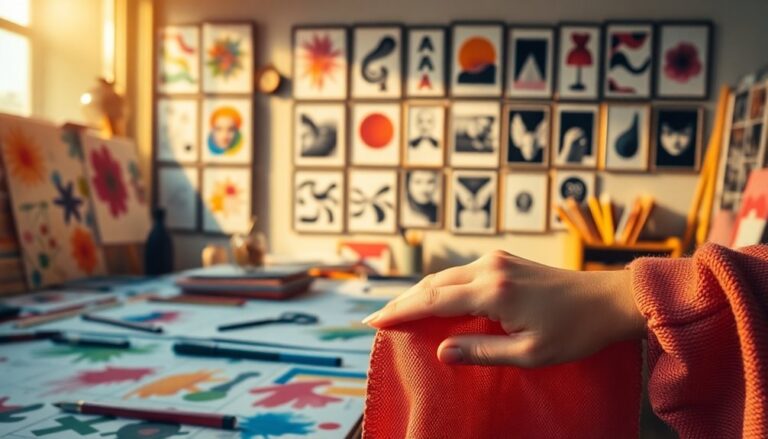
You're motivated to create a unique design style that showcases your artistic voice and values. To get started, pinpoint what fuels your creative vision and shape your design philosophy. Then, experiment with new techniques, exploring unconventional art sources, and discovering fresh inspiration. Develop a visual vocabulary by focusing on color harmony, texture, and shape language. Analyze the work of others, learn from their principles, and create a design library to refine your aesthetic. As you commence on this journey, remember that embracing failure and iteration is key to refining your unique style, and there's more to uncover along the way.
Define Your Design Philosophy
To establish a unique design style, you need to pin down what drives your creative vision, starting by asking yourself what design means to you. This introspection will help you uncover your personal values and core principles, which will, in turn, shape your artistic voice. Your Design DNA is a reflection of your values, and understanding them will enable you to create authentic work that resonates with your audience.
Your creative purpose is rooted in your personal values, and it's essential to identify what drives you to create. What problems do you want to solve through your design? What message do you want to convey? When you know your purpose, you'll be able to craft a unique design style that aligns with your values and speaks to your audience.
As you explore your design philosophy, consider what makes your work unique. What sets you apart from others? What's your artistic voice? Your authentic vision should be rooted in your personal values and creative purpose. By understanding what drives your design, you'll be able to create work that's genuine, meaningful, and impactful. Take the time to reflect on your design philosophy, and you'll be well on your way to developing a unique design style that truly represents you.
Experiment With New Techniques
As you continue to develop your unique design style, it's essential to experiment with new techniques that challenge your creative boundaries. You'll discover new creative outlets by exploring unconventional art sources, such as street art, graffiti, or even abstract photography. By doing so, you'll uncover fresh perspectives that will help you refine your design philosophy.
New Creative Outlets
You'll likely stumble upon fresh inspiration when you venture into unconventional creative outlets, such as collage-making, sculpture, or even pottery. These new creative outlets can help you tap into fresh ideas and perspectives, which can, in turn, influence your design style. For instance, trying your hand at Digital Sketching can help you develop your skills in precision and detail. Experimenting with Mixed Media can introduce you to new textures and colors, while Art Journaling can help you tap into your emotions and thoughts. Abstract Painting can help you explore new color palettes, and Paper Crafting can introduce you to new techniques. Fiber Artistry can help you explore new materials and textures. The key is to be open to trying new things and embracing the unknown. As you explore these new creative outlets, you'll likely find that your design style begins to take shape, and you'll develop a unique voice that sets you apart from others.
Unconventional Art Sources
By delving into unconventional art sources, such as graffiti, street art, or even tattoo design, you can uncover innovative techniques that challenge your traditional design thinking. These sources can inspire fresh perspectives and unique approaches to visual storytelling. For instance, street art can teach you about bold color choices and urban textures, while nature forms can guide you in creating organic shapes and patterns. Vintage ads can show you how to craft compelling narratives, and ancient textiles can introduce you to intricate patterns and motifs. Tribal patterns can add a sense of cultural depth to your designs, and retro furniture can inspire nostalgic and playful elements. By exploring these unconventional art sources, you'll develop a distinct design style that blends different influences and aesthetics. Remember, the key is to experiment and have fun! Don't be afraid to combine seemingly disparate elements to create something truly original.
Develop a Visual Vocabulary
As you work on developing a unique design style, you'll want to focus on creating a visual vocabulary that's all your own. This means identifying the visual elements that matter most to you, such as color, texture, and shape, and understanding how to use them to convey your message. By pinpointing the key design principles that resonate with you, you'll be able to craft a visual language that's authentic and recognizable.
Visual Elements Matter
Developing a unique design style relies heavily on creating a visual vocabulary that effectively communicates your message through deliberate choices in visual elements. As you build your visual vocabulary, you'll want to focus on the essential elements that make up your design language. Start by exploring color harmony, where you balance contrasting colors to evoke emotions and convey meaning. Next, delve into texture exploration, where you incorporate tactile sensations to add depth and interest.
Shape language is another vital aspect, where geometric forms and organic shapes convey different messages. Don't forget pattern play, where repeating elements create visual interest and rhythm. Form simplicity guarantees your design remains uncluttered, while line quality adds expressiveness and emotion. Space hierarchy helps guide the viewer's attention, and materiality focus adds authenticity and tactility. By mastering these visual elements, you'll develop a distinct design style that sets you apart and resonates with your audience.
Key Design Principles
Establish your design foundation by identifying the key principles that will define your visual vocabulary. As you develop your unique design style, it’s crucial to understand the fundamental principles that govern good design. These principles include balance, contrast, alignment, and repetition, which serve as the building blocks for effective visual communication. By mastering these concepts, you can ensure that your designs not only look appealing but also convey the intended message clearly. This understanding is especially important when creating cohesive branding strategies, as it ensures that all elements work together harmoniously to strengthen brand identity and recognition.
You'll want to focus on the following key design principles to create a cohesive visual language:
- Balance elements: Guarantee that visual elements are balanced to create a sense of harmony and stability.
- Visual flow: Guide the viewer's attention through your design using principles like hierarchy, alignment, and proximity.
- Design unity: Create a sense of oneness by using consistent typography, color, and imagery.
- Form simplicity: Use simple shapes to create complex forms, and make sure that each element serves a purpose.
Analyze the Work of Others
By studying the portfolios of designers you admire, you'll gain insight into what makes their work successful and how you can apply those principles to your own design style. Analyzing the work of others is an essential step in developing your unique design style. You'll discover what resonates with you and what doesn't, helping you refine your aesthetic.
Identify your artistic influences, design mentors, and creative heroes. Research their stylistic evolution, understanding how they've developed their unique voice. Study their use of color, typography, and composition. Note how they balance simplicity and complexity, and how they incorporate visual elements to convey their message.
Your inspirational icons and aesthetic ancestors can inspire you to experiment with new techniques and push your creative boundaries. As a visual voyeur, examine the work of others with a critical eye, analyzing what makes their designs effective. Ask yourself, what cultural critics might say about their work? What cultural references do they incorporate, and how do they make their designs relevant to their audience?
Create a Design Library
As you analyze the work of others, you'll likely start to notice recurring themes, styles, and elements that resonate with you, and now it's time to collect and organize these influences in a design library that's all your own. This library will serve as a valuable resource, helping you to clarify your design voice and refine your unique style.
To build your design library, consider the following steps:
- Create digital archives: Scan or photograph your favorite designs, save inspiring images, and organize them into digital folders or boards.
- Develop mood boards: Physical or digital boards that visually represent your design aesthetic, helping you to identify patterns and themes.
- Catalog your influences: Document the designers, artists, and styles that inspire you, and analyze what specifically resonates with you about their work.
- Curate your library regularly: Set aside time to review and refine your library, ensuring it remains a reflection of your evolving design style.
Embrace Failure and Iteration
Through experimentation and risk-taking, you'll inevitably encounter setbacks, but it's in these moments of failure that you'll discover opportunities to learn and refine your unique design style. Embracing failure and iteration is vital to developing a distinctive aesthetic. It takes a high level of risk tolerance to venture into uncharted territories, but this fearlessness factor is essential to creating something truly innovative.
To cultivate this mindset, adopt an iterative process that encourages trial runs and mistake analysis. Instead of viewing failures as setbacks, treat them as valuable learning experiences. Analyze what went wrong and use that knowledge to refine your approach. This iterative process allows you to distill your design style, weeding out what doesn't work and amplifying what does.
Creative freedom is key to this process. Give yourself permission to take risks and try new things, even if they might not work out. Remember, every failure brings you closer to your unique design style. By embracing iteration cycles, you'll develop a failure mindset that views mistakes as stepping stones to success. So, don't be afraid to take risks and push boundaries – it's the only way to truly develop a design style that's authentic and uniquely yours.
Frequently Asked Questions
How Do I Balance Creativity With Client Expectations?
You're torn between tapping into your creativity and meeting client expectations. To strike a balance, prioritize Client Communication and Expectation Management. Set clear goals and boundaries from the start, ensuring you're on the same page as your client. Be open to feedback, and don't be afraid to push back with well-reasoned design decisions. By doing so, you'll create a harmonious blend of innovation and client satisfaction.
Can I Still Be Unique if I'm Inspired by Others' Work?
You wonder if drawing inspiration from others' work means sacrificing your uniqueness. Not necessarily! You can still be unique while being inspired by others. Think of inspirational sources as sparks that fuel your creative fire. They can inform your work without defining it. As you incorporate these influences, you're exercising your creative freedom, making choices that reflect your perspective. By doing so, you're not copying, but rather, filtering inspiration through your own lens, resulting in something truly yours.
What if My Design Style Evolves Over Time?
As you navigate the twists and turns of your artistic journey, remember that your design style is a living, breathing entity – a butterfly emerging from its cocoon, transformed by time and experience. It's natural for your aesthetic to evolve, and that's where the magic happens. Embrace this style metamorphosis, and you'll find that personal growth fuels your artistic voice, ultimately shaping your design legacy.
How Do I Know When My Style Is Truly Unique?
You wonder how you'll know when your design style is truly unique. It's a valid concern! One way to determine this is by evaluating your personal branding. Take a step back and examine your body of work. Do your designs share a common thread? Conduct a consistency check: do your pieces evoke a distinct emotional response? If so, you're likely onto something unique.
Is It Possible to Have Multiple Design Styles?
Did you know that 75% of designers experiment with multiple styles before finding their unique voice? You're probably wondering, is it possible to have multiple design styles? Absolutely! Embracing Design Duality, you can seamlessly merge contrasting styles, creating a unique fusion. Style Fusion allows you to express different facets of your creativity, making your designs more versatile and interesting. So, don't be afraid to explore and combine different styles – it might just lead to your next breakthrough!