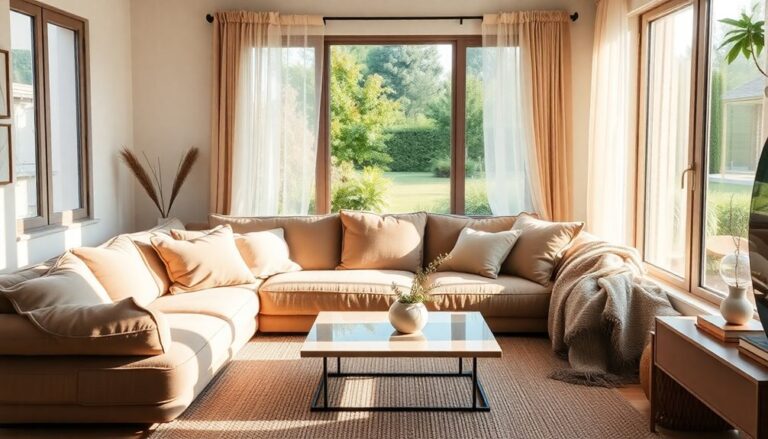
To create a home that evolves with your style, embrace flexible furniture that adapts to your needs. Start with a neutral color palette to set a calm backdrop, allowing you to play with bold accessories. Incorporate statement pieces for a personal touch and define spaces with multi-functional furniture. Regularly update your decor and experiment with seasonal swaps to keep things fresh. Don't forget to create a gallery wall showcasing meaningful artwork and reassess your lighting and layout to reflect your changing tastes. By following these tips, you'll discover even more ways to improve your living space.
Embrace Flexible Furniture
In the context of creating a home that adapts to your evolving style, flexible furniture is key. You want pieces that not just look great but also work hard for you. Enter modular designs—these innovative creations allow you to customize your space effortlessly. Whether you prefer a cozy nook for reading or an open area for entertaining, modular furniture can be rearranged to fit your needs.
Think about your lifestyle. Do you host frequent gatherings? Opt for a sectional sofa that can be easily reconfigured to accommodate guests. Want to create a tranquil workspace? Use modular shelving that can transform into a desk when you need it. This adaptability guarantees your furniture grows with you, supporting both your aesthetic and functional demands.
Adaptable layouts are likewise vital for maximizing your space. With flexible furniture, you can switch up your room's arrangement without the hassle of heavy lifting. Need a quick change for a seasonal refresh? Move a few pieces around, and voilà! You've got a fresh look that reinvigorates your environment.
Moreover, investing in flexible furniture means you're choosing sustainability. By selecting pieces that can evolve, you're reducing the need for constant replacements, aligning your home with a greener lifestyle. So, embrace flexible furniture, and let your space reflect your experience as it shifts and grows with you.
Use Neutral Base Colors
A well-chosen neutral base color can serve as the perfect canvas for your evolving style. By opting for neutral palettes, you're not merely creating a versatile backdrop; you're additionally tapping into the principles of color psychology. Shades like soft grays, creamy whites, and muted beiges can evoke feelings of calm and balance, making your space feel both inviting and sophisticated.
When you select a neutral base, you're setting the stage for innovation. These colors allow you to experiment with bold accents and unique decor without overwhelming your space. Whether you decide to incorporate lively artwork or striking textiles, your neutral foundation will help those elements shine. Plus, as your style shifts, your neutral tones will seamlessly adapt, ensuring that you won't feel the need to repaint every year.
Think about how natural light interacts with your chosen colors. Neutrals can reflect light beautifully, enhancing your home's ambiance. This adaptability can be particularly useful as you change your design based on trends or personal preferences. You might find that a light taupe feels invigorating in the spring but transforms into a cozy haven during the winter months.
In essence, using neutral base colors gives you the freedom to innovate during the process of maintaining a cohesive look. It's a smart choice that complements your current style while evolving with you, making your home a true reflection of who you are.
Incorporate Statement Pieces
Incorporating statement pieces can instantly improve your space and reflect your evolving style. Think of these bold elements as the heart of your home, drawing attention and sparking conversation. When you choose statement pieces, look for items that feature bold colors or unique textures that contrast beautifully with your neutral base. This creates a dynamic visual experience that keeps your space feeling fresh and exciting.
Start with a standout artwork or a lively rug that introduces a splash of color to an otherwise calm palette. A large painting can act as a focal point, and a colorful rug can anchor your furniture arrangement. Don't shy away from incorporating oversized furniture or eye-catching decor—these elements can redefine a room and make it feel more personalized.
Explore unique textures, too. A chunky knit throw, a sleek glass vase, or a reclaimed wood coffee table adds depth and interest to your design. Mixing materials not only improves the aesthetic but creates a tactile experience that invites interaction.
Prioritize Multi-Functional Spaces
To create a home that adapts to your changing needs, prioritizing multi-functional spaces is crucial. Consider flexible furniture solutions that allow you to easily transform a room for different activities. By implementing zone-based design strategies, you can maximize your space as you maintain a stylish and cohesive look.
Flexible Furniture Solutions
Creating a dynamic living space starts with flexible furniture solutions that adapt to your changing needs. Embracing modular designs allows you to craft adaptable layouts that can evolve along with your lifestyle. Whether you're hosting friends or seeking solitude, your furniture can transform to fit the occasion.
Consider these innovative options for your space:
| Furniture Type | Functionality | Benefits |
|---|---|---|
| Modular Sofa | Rearranged into different shapes | Customizable for gatherings |
| Foldable Dining Table | Expands for guests, shrinks for daily use | Space-saving and versatile |
| Murphy Bed | Hidden during the day, pulled down at night | Maximizes floor space |
These solutions not only optimize your living area but likewise allow for personal expression. By integrating flexible furniture into your home, you can easily adapt your environment to reflect your evolving style. Invest in pieces that offer versatility, and you'll find it easier to maintain a space that feels fresh and functional. Embrace the potential of your home with innovative designs that truly work for you!
Zone-Based Design Strategies
Zone-based design strategies prioritize multi-functional spaces that cater to your diverse needs and activities. By embracing a zone layout, you can create distinct areas that serve multiple purposes without sacrificing style or comfort. Think of your living room transforming into a workspace during the day and a cozy retreat at night. This adaptability improves your design flow, making your home feel more connected and cohesive.
Begin by evaluating how you use each space. Consider furniture that can be easily rearranged or repurposed, like a sleek sofa that converts into a bed or a dining table that doubles as a workspace. Use area rugs to visually define different zones, ensuring each area feels intentional and inviting.
Incorporate innovative storage solutions to keep clutter at bay, allowing your spaces to remain functional and stylish. By prioritizing these multi-functional elements, you'll create a home that evolves with your changing lifestyle as you maintain a fresh aesthetic. Embrace the flexibility of zone-based design and watch your living space flourish, effortlessly adjusting to your personal style and daily activities.
Experiment With Accessories
Experimenting with accessories can instantly transform your home's aesthetic and reflect your evolving style. Accessories are the perfect way to showcase your personality as well as allowing you to play with different themes and moods. By embracing accessory layering, you can create depth and visual interest in any space.
Consider making seasonal swaps to keep your home feeling fresh. Changing out cushions, throws, or vases can breathe new life into a room. Here's a simple table to help you visualize some accessory options:
| Season | Accessories |
|---|---|
| Spring | Floral pillows, pastel throws |
| Summer | Bright ceramics, lightweight fabrics |
| Autumn | Earthy-toned decor, cozy blankets |
| Winter | Metallic accents, warm layers |
Start small by mixing textures and colors within your current setup. Experiment with layering different materials—like combining wood, metal, and textiles—to create an inviting atmosphere. Don't shy away from bold patterns or unexpected pops of color; these can make a significant impact.
Create a Gallery Wall
Creating a gallery wall is a fantastic way to showcase your personality and style. Start by choosing meaningful artwork that resonates with you, then mix different frame styles to add visual interest. Finally, arrange your pieces in a way that creates an impactful focal point in your space.
Choose Meaningful Artwork
Frequently, the artwork you choose can transform a space and reflect your personality. When curating your gallery wall, focus on art selection that resonates with you on a personal level. Think about the pieces that tell your story, evoke memories, or inspire you daily. This isn't just about aesthetics; it's about the emotional connection you have with each piece.
Consider integrating artwork from local artists, travel souvenirs, or family heirlooms. These elements add depth and personal significance to your collection, making your wall uniquely yours. Don't shy away from mixing mediums—paintings, photography, and even textiles can create a dynamic display that speaks to your experience.
As you assemble your gallery, keep in mind the balance and flow of your chosen pieces. Arrange them in a way that feels organic, allowing each artwork to shine as it contributes to the overall narrative. Remember, this is a canvas for your life's experiences, so let your creativity flow. Embrace the process of discovering artworks that not only beautify your home but enrich your life. Your gallery wall should evolve with you, reflecting your ever-changing style.
Mix Frame Styles
As you curate your gallery wall, mixing frame styles can add an exciting layer of depth and character to your space. Embrace diverse frame combinations that reflect your personality and aesthetic, creating a dialogue between different textures, colors, and materials. Think rustic wood, sleek metal, and lively acrylics all coexisting in harmony.
To achieve visual balance, consider the size and shape of each piece. You might opt for a bold statement frame alongside a delicate one, ensuring that no single piece overpowers the others. This juxtaposition not only draws the eye but invites exploration as well.
When selecting frames, choose a mix that complements your artwork while allowing each piece to shine. A gallery wall isn't just about displaying art; it's about showcasing your evolving tastes and memories.
Don't shy away from asymmetry; a well-placed odd frame can create focal points that intrigue and inspire. Remember, your gallery wall should feel dynamic, just like your style. Let your creativity flow, and trust your instincts to craft a captivating visual narrative that transforms your space into a true reflection of you.
Arrange for Impact
Arranging your gallery wall for impact means considering the visual flow and overall balance of the pieces you choose. Start by selecting a strong focal point—perhaps a large artwork that captures attention. This piece sets the tone for your gallery and helps anchor the surrounding artwork.
Next, play with scale and orientation. Balance smaller pieces around your focal point to create visual harmony. Use a mix of sizes, but keep the arrangement cohesive with a unifying theme or color palette. This approach guarantees that each piece complements the others while maintaining a dynamic feel.
Don't hesitate to experiment with different layouts on the floor before committing to the wall. You might find that an asymmetrical design adds a fresh twist, whereas a symmetrical arrangement offers timeless elegance.
Lastly, consider the spacing between your pieces. Consistent gaps create visual balance and make your gallery appear curated rather than chaotic. With thoughtful placement and a sharp eye for detail, you'll craft a gallery wall that not only reflects your style but equally evolves with it, becoming a conversation starter in your home.
Update Lighting Fixtures
Updating your lighting fixtures can dramatically transform the ambiance of your home. Outdated or mismatched fixtures can drag down your space, whereas modern fixtures can breathe new life into it. Think about how a sleek pendant light or an innovative floor lamp could become a statement piece that reflects your evolving style.
When considering new lighting, focus on the type of ambient lighting you want to create. Layering your lights is key—combine overhead fixtures, task lighting, and accent lights to achieve a well-rounded atmosphere. For instance, a modern chandelier can provide a stunning focal point in your dining area, whereas adjustable wall sconces can improve the coziness of your living room.
Don't shy away from experimenting with different materials and colors. Metallic finishes, bold hues, or even minimalist designs can all contribute to a fresh, contemporary look. Pay attention to the wattage and bulb types as well; LED options are energy-efficient and can help set the desired mood with different color temperatures.
Finally, think about smart lighting solutions. These allow you to control brightness and color with your smartphone or voice, adding functionality and flair to your home. By updating your lighting fixtures, you're not just illuminating your space; you're similarly creating an environment that evolves with your style and reflects your unique personality. So, go ahead—light up your life with innovation!
Regularly Reevaluate Your Space
Regularly reevaluating your space helps guarantee it continues to reflect your personal style and needs. As your tastes and lifestyle evolve, so should your home. Conducting a thorough space assessment every few months can reveal areas that may no longer serve you. Look for pieces or arrangements that feel outdated or misaligned with your current aesthetic. You might be surprised at how a simple shift can breathe new life into your environment.
Consider the emotional impact of your space. Are there rooms that inspire creativity or relaxation? If not, it's time to rethink those areas. Experimenting with colors, textures, or furniture styles can ignite excitement and facilitate a style evolution. Don't hesitate to play with layouts or repurpose items you already own—sometimes, a fresh perspective is all it takes.
Your home should adapt to your changing preferences, so embrace the concept of fluidity in design. This means being open to letting go of items that no longer resonate and welcoming new pieces that spark joy. Remember, it's not about maintaining a static look; it's about creating a dynamic environment that grows with you.
Finally, document your progress. Take photos of your space at different stages, so you can appreciate your evolution. Regularly reevaluating your space isn't just about aesthetics; it's about cultivating a sanctuary that embodies who you are today and who you aspire to be in the future.
Frequently Asked Questions
How Often Should I Change My Home Decor Style?
Think of your home like a garden; just as flowers bloom and fade with the seasons, your decor should evolve, too. You don't have to overhaul everything at once. Instead, consider making seasonal updates to refresh your space. Every few months, introduce a new trend or swap out accessories. This keeps your environment lively and aligned with your style. Embrace change, and let your home reflect your path and passions!
What Is the Best Way to Store Unused Home Accessories?
The best way to store unused home accessories is to invest in smart storage solutions that prioritize accessory organization. Use clear bins for visibility, and label them for easy access. Consider vertical shelving to maximize space, or decorative boxes that blend with your decor. Don't forget about under-bed storage for seasonal items. By creating an organized system, you'll make it simple to switch up your decor whenever inspiration strikes!
How Can I Incorporate Personal Items Into My Decor?
To incorporate personal items into your decor, think about how you can create personalized accents that reflect your personality. Use sentimental displays, like framed photos or cherished mementos, to tell your story. Mix these items with modern decor for an innovative twist. Don't shy away from bold arrangements; a gallery wall or a dedicated shelf can showcase your unique style. Remember, it's all about making your space feel authentically you!
Are There Budget-Friendly Options for Statement Pieces?
You can find budget-friendly options for statement pieces by exploring thrift stores or crafting your own DIY art. At thrift stores, keep an eye out for unique items like vintage mirrors or bold paintings that can serve as focal points. If you're feeling creative, gather supplies and make your own wall art or sculptures. This way, you not just save money but additionally add a personal touch that truly reflects your style.
What Are Some Tips for Decluttering My Space Effectively?
Did you know that 80% of what we own is rarely used? Adopting a minimalist mindset can transform your space. Start by tackling one area at a time—like your closet or kitchen. Use the "one-year rule": if you haven't used it in a year, it's time to let it go. Don't forget digital decluttering—organize files and delete apps you don't use. This way, you'll create a serene environment that truly reflects your style.