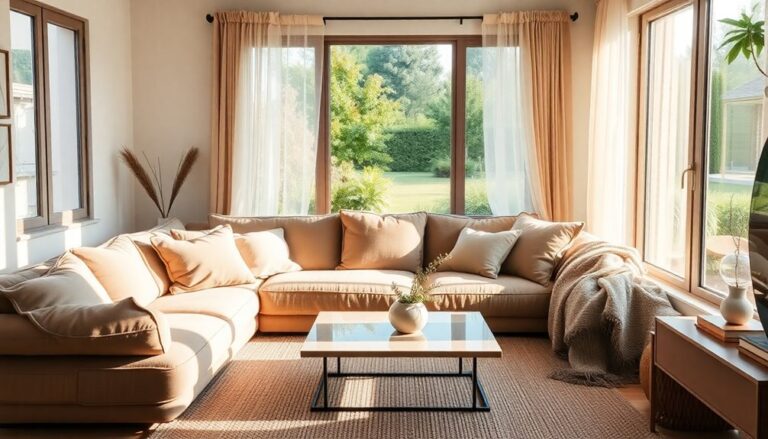
Ceiling design greatly impacts your room's aesthetics, affecting mood and space perception. A high ceiling can create feelings of openness and creativity, whereas a cozier, lower ceiling might evoke intimacy. Your choice of color plays an essential role, with light hues making a space feel airy and dark tones providing depth. Incorporating textures and innovative lighting improves the overall vibe, creating focal points and adding dimension. In the end, a well-designed ceiling unifies the room's theme and raises its look. There's plenty more on how to optimize your ceiling design for the best results, ready for you to explore further.
Importance of Ceiling Design
When you think about room design, don't overlook the ceiling—it can make or break your space. The ceiling's importance often gets overshadowed by walls and furniture, but it's an essential element that contributes greatly to the overall aesthetic impact of a room. A well-designed ceiling can enhance your interior, creating a sense of height, openness, or coziness, depending on your vision.
Innovative ceiling designs can transform an ordinary room into an extraordinary one. Envision stepping into a space with a beautifully coffered ceiling or a strikingly painted surface that draws your eye upward. Such features not only add character but additionally influence how you feel in that environment. You might want to take into account how light interacts with your ceiling; reflective surfaces can amplify natural light, making the room feel lively and inviting.
Moreover, the ceiling can serve as a canvas for creativity. Whether you opt for bold patterns, unique textures, or even integrated lighting solutions, these elements can create a cohesive look that resonates with your personal style. A thoughtfully designed ceiling can harmonize with other design aspects, establishing a fluid connection throughout the room.
Types of Ceiling Styles
Ceiling styles come in a variety of forms, each offering unique characteristics that can dramatically alter the feel of a room. If you're looking to make a statement, consider coffered ceilings, where recessed panels create depth and sophistication. Vaulted ceilings invite a sense of grandeur, perfect for those who want to uplift their space both literally and aesthetically.
For a more contemporary twist, tray ceilings provide a sleek, layered look that can improve modern designs. Beamed ceilings, conversely, add warmth and charm, making them ideal for rustic interiors. If you're aiming for functionality along with style, suspended ceilings can cleverly conceal wiring as well as allowing for innovative lighting options.
Acoustic ceilings are excellent for soundproofing, particularly in media rooms or open offices. Domed ceilings serve as a stunning focal point, channeling a sense of elegance and drama. Flat ceilings might seem simple, but they offer a clean canvas for creativity, allowing for patterned or painted ceilings that can introduce color and texture to your design.
For minimalist enthusiasts, modern ceilings utilize sleek lines and subtle features to maintain an uncluttered look. Artistic ceilings can serve as a conversation starter, showcasing unique designs that capture attention. Textured ceilings add dimension, creating a tactile experience that improves the overall ambiance. With so many styles available, you're sure to find one that perfectly aligns with your vision for innovative room aesthetics.
Influence on Room Height
When you think about ceiling design, consider how it affects the perception of room height. Low ceilings can make a space feel cramped, whereas high ceilings often create a sense of openness and grandeur. Architectural elements like beams or moldings can similarly play a significant role in influencing how you experience the height of a room.
Visual Perception of Height
The visual perception of height in a room can dramatically affect how spacious and inviting it feels. You can employ various perception techniques to create stunning height illusions that transform your space. For instance, using vertical lines in wall treatments or furniture can draw the eye upward, making the ceiling seem higher than it is.
Consider painting the ceiling a lighter color than the walls; this classic trick can create an airy feel. Furthermore, installing tall bookshelves or artwork that extends closer to the ceiling can improve that verticality, giving the impression of a grander space.
Innovative lighting solutions also play an important role. Recessed lighting positioned strategically can highlight the ceiling, tricking your mind into perceiving more height. Mirrors are another game-changer; placing them opposite windows can reflect light and create depth, improving the room's overall height perception.
Low Ceilings vs. High
Low ceilings can create a cozy, intimate atmosphere, but they often make a room feel cramped. When you step into a space with lower ceiling height, your spatial perception shifts; the walls seem to close in, limiting your sense of freedom. This can be beneficial in certain settings, like a reading nook or a den, where you might want warmth and comfort. Nevertheless, if you're aiming for a more open and airy vibe, low ceilings can hinder your design goals.
On the other hand, high ceilings transform a room dramatically. They allow for verticality, giving the illusion of expansiveness. This height not only improves spatial perception but additionally encourages creative possibilities—think grand chandeliers or tall bookshelves that draw the eye upward. High ceilings can invigorate a space, making it feel more dynamic and inviting.
Ultimately, your choice between low and high ceilings should align with the atmosphere you want to cultivate. Consider how ceiling height influences the overall aesthetics, and let your innovative spirit guide you in maximizing each room's potential.
Architectural Elements and Height
Architectural elements play a crucial role in shaping a room's height perception and overall ambiance. When you think about it, your choice of architectural styles can dramatically alter the feeling of space. For instance, high, coffered ceilings create an air of grandeur, whereas intricate ceiling patterns can draw the eye upward, tricking you into perceiving added height.
Incorporating vertical lines through wall paneling or tall windows can amplify this effect, guiding your gaze and enhancing the sense of openness. You might additionally consider using light colors or reflective materials on the ceiling, which can further uplift the atmosphere.
Conversely, if you're working with lower ceilings, opt for streamlined designs that minimize visual clutter. Simple architectural elements, like flat ceilings with subtle molding, can maintain a clean look whilst still feeling innovative.
Color Choices and Effects
When choosing colors for your ceiling, consider how warm and cool tones can drastically change the room's atmosphere. Bold colors can make a statement, whereas neutrals create a calming backdrop. Your choice will not just influence the aesthetic but additionally the overall mood of the space.
Warm vs. Cool Tones
Choosing the right color tones for your ceiling can greatly impact the overall ambiance of a room. Warm colors, like reds and yellows, draw people in, creating a cozy and inviting atmosphere. This is rooted in warm color psychology, which evokes feelings of comfort and energy. Conversely, cool tones such as blues and greens promote a sense of calm and tranquility. Their cool color effects can make a space feel larger and more open.
To help you visualize the effects of these colors, here's a quick comparison:
| Color Type | Effect |
|---|---|
| Warm Tones | Inviting, Energizing |
| Cool Tones | Calming, Expansive |
| Examples | Red, Orange, Yellow |
| Examples | Blue, Green, Purple |
When you choose between warm and cool tones for your ceiling, consider the mood you want to establish. Warm tones can energize and engage, whereas cool tones can relax and soothe. By being intentional with your color choices, you can effectively transform the atmosphere of any room.
Bold Colors vs. Neutrals
As you choose the right tones can set the mood, deciding between bold colors and neutrals for your ceiling can further elevate a room's character. Bold colors can transform a space, invoking energy and creativity through bold color psychology. Envision a striking red or deep blue overhead; these hues can make your room feel dynamic and alive, inspiring those who enter. A daring ceiling color invites conversation and can become the focal point of your design.
On the other hand, neutral color schemes offer a calming effect, promoting relaxation and versatility. Soft whites, grays, or beiges can create an inviting atmosphere, allowing furniture and decor to shine without overwhelming the senses. Neutrals provide a blank canvas, making it easier for you to experiment with various accents and styles.
Ultimately, your choice should reflect your personality and the mood you wish to cultivate. If you want to energize, go bold; if you prefer serenity, stick with neutrals. Both options can enrich your space, so consider how each will complement the rest of your aesthetic vision. Choose wisely, and watch your room come to life!
Lighting Options and Techniques
Lighting plays a crucial role in enhancing the aesthetics of any room, influencing mood and functionality. To create a dynamic space, you'll want to employ a mix of ambient, task, and accent lighting. Ambient lighting provides the foundational glow, setting the overall atmosphere. Consider installing sleek ceiling fixtures that distribute light evenly as you highlight your room's design elements.
Task lighting focuses on specific areas, perfect for reading nooks or kitchens. Stylish decorative sconces can be both functional and visually pleasing, guiding your eye along walls and enhancing architectural features.
Don't underestimate the influence of accent lighting. It draws attention to artwork or architectural details, creating depth and interest. Use lighting layers to achieve balance, adjusting brightness to suit various activities or times of day. This layering approach allows for flexibility in how you experience the space.
With the rise of smart lighting, you can customize color temperature and intensity at the touch of a button. This technology lets you shift from warm to cool light, influencing mood and productivity. Moreover, consider incorporating reflective surfaces like mirrors to bounce light around, maximizing brightness and creating an illusion of space.
Finally, pay attention to light placement. A well-placed light can transform a room, adding drama or elegance. By thoughtfully combining these lighting techniques, you'll reveal the full potential of your ceiling design and enhance your room's overall aesthetics.
Textures and Materials
When you explore the domain of textures and materials, you'll discover how they can dramatically improve your ceiling design and overall room aesthetics. The right combination of textured finishes can transform a mundane space into a visually striking environment. Think about incorporating materials that offer depth and variation, like wood, metal, or even fabric. Each option brings a unique character that can resonate with your design vision.
Consider the impact of material contrasts. For instance, pairing a smooth, glossy ceiling finish with a rugged, wooden beam creates a dynamic interplay that draws the eye. This juxtaposition not just adds visual interest but also enriches the sensory experience of the room. You can mix and match materials to reflect your personal style—perhaps a sleek, modern finish with the warmth of natural textures.
Don't shy away from bold choices, either. A ceiling adorned with intricate plasterwork can serve as a stunning centerpiece, whereas a simple, painted ceiling can feel modern and minimalist. Textured finishes, like stucco or reclaimed wood, can likewise evoke a sense of coziness and charm, making a space feel welcoming.
Ultimately, exploring innovative textures and materials allows you to redefine the atmosphere of any room. By thoughtfully selecting and contrasting these elements, you'll create a ceiling that not only complements your décor but also elevates your overall aesthetic experience. Embrace the opportunity to innovate, and watch your space transform.
Creating Focal Points
A stunning chandelier can instantly draw the eye upward, transforming your ceiling into a mesmerizing focal point. By employing innovative focal point techniques, you can create statement ceilings that enhance the entire aesthetic of your room. Envision walking into a space where the ceiling isn't just an afterthought but a enchanting feature that commands attention.
Here are some ideas to inspire your design:
- Dramatic Lighting: Use bold fixtures that resonate with your style and illuminate the space.
- Bold Paint Colors: A striking hue can redefine the ceiling, making it an unforgettable backdrop.
- Textured Panels: Incorporate 3D elements that add depth and intrigue, inviting exploration.
- Architectural Beams: Exposed beams can add character and warmth, enhancing the room's personality.
- Artistic Murals or Patterns: A painted ceiling can serve as a canvas, turning an ordinary space into an extraordinary experience.
These elements not just serve to create stunning focal points but equally influence how you feel within the space. By embracing statement ceilings, you invite innovation into your home, transforming everyday rooms into extraordinary retreats. You don't want to overlook the influence of your ceiling; it's an opportunity to express your creativity and style. So, take a moment to reflect on how you can make your ceiling a statement, and watch as your entire room transforms into a cohesive and inspiring environment.
Integrating With Room Themes
Seamlessly integrating your ceiling design with the overall room theme can improve the entire aesthetic and create a harmonious atmosphere. When you think about theme consistency, every element in the room should resonate with the others, including your ceiling. This makes it vital to choose ceiling motifs that reflect your desired style, whether it's modern minimalism, rustic charm, or eclectic vibrancy.
For instance, if you're going for a contemporary look, sleek, geometric patterns can add a state-of-the-art feel. Alternatively, if you prefer a more traditional vibe, ornate plasterwork or wooden beams can bring warmth and character. You want to guarantee that your ceiling doesn't just exist as an afterthought; it should play an integral role in the overall design narrative.
Think about the colors, textures, and patterns you're using throughout the room. A cohesive color palette will unify the space and make the ceiling feel like a natural extension of your walls and furnishings. Consider using paint, wallpaper, or even wood paneling that echoes the room's theme.
Lighting is another significant factor. Innovative fixtures can serve as both functional and aesthetic elements, complementing your ceiling motifs while improving theme consistency. By creatively blending these components, you can transform your ceiling from a blank canvas into a transformative design feature that raises the entire room. In the end, this thoughtful integration will impress and make your space feel intentional and inviting.
Enhancing Natural Light
To brighten your space, consider integrating skylights, which can transform how natural light fills a room. You can likewise use color reflection techniques to boost that light, making your space feel airier and more inviting. Let's explore how these elements can improve your room's aesthetics.
Skylight Integration Benefits
Skylights can transform a dull room into a lively space filled with natural light. By integrating skylights into your ceiling design, you invite an abundance of natural illumination that can raise your room's aesthetics and atmosphere. Here are some compelling skylight benefits you might consider:
- Boosts Mood: Natural light has been shown to improve wellbeing and reduce stress.
- Energy Efficiency: Skylights can help lower your electricity bills by reducing the need for artificial lighting.
- Increases Property Value: Homes with skylights often attract buyers because of their innovative design and bright ambiance.
- Improves Design Flexibility: You can place skylights in various locations to create unique focal points and improve architectural features.
- Connects You to Nature: Enjoy the views of the sky and changing weather, all from the comfort of your home.
Incorporating skylights into your ceiling design not just illuminates your space but additionally adds a touch of elegance and innovation. So why not embrace the natural illumination they offer? Your room deserves to shine!
Color Reflection Techniques
Utilizing color reflection techniques can greatly improve the natural light flooding into your space. By strategically choosing colors and reflective surfaces, you can elevate the ambiance and functionality of any room. Light colors, particularly soft whites, pale blues, and light grays, can amplify brightness, making the most of the sunlight available.
Consider the principles of color psychology when selecting your palette. Warmer tones can create a cozy environment, whereas cooler hues tend to open up spaces, making them feel larger. Pairing these colors with reflective surfaces like glossy paints or metallic accents can further increase light reflection. Think about including mirrors or glass elements in your ceiling design; they'll not only serve as artistic features but will additionally bounce light around the room, creating an inviting atmosphere.
Moreover, don't overlook the impact of your furnishings. Light-colored furniture can complement your walls and ceilings, improving the overall effect. By employing these innovative color reflection techniques, you'll transform your space into a radiant haven filled with natural light, boosting both aesthetics and mood. Embrace the potential of your ceiling to redefine your living experience.
Tips for Choosing Ceiling Designs
When selecting ceiling designs, it is essential to contemplate how often the style will complement your overall decor. The ceiling is often overlooked, yet it can be a game-changer in your room's aesthetics. By considering modern trends and cultural influences, you can create a space that feels fresh and innovative.
Here are some tips to help you choose the right ceiling design:
- Think about the height: A coffered ceiling can improve a room's vertical space, whereas a flat ceiling might create a more intimate atmosphere.
- Embrace texture: Incorporating materials like wood, metal, or even fabric adds depth and interest, sparking conversation and admiration.
- Play with color: A bold ceiling color can dramatically alter the mood of a room, making it feel lively or serene depending on your choice.
- Consider lighting: Integrating lighting fixtures that complement the ceiling design can create dynamic visual effects, improving the overall ambiance.
- Stay true to your style: Whether you lean in the direction of minimalism, bohemian, or art deco, make sure the ceiling design reflects your personality and artistic vision.
Frequently Asked Questions
How Do Ceiling Designs Affect Room Acoustics?
Ceiling designs play an essential role in room acoustics. When you choose materials that improve sound absorption, you're not just enhancing sound quality; you're achieving an aesthetic balance that raises the entire space. Innovative ceiling shapes can diffuse sound waves, reducing echoes and creating a harmonious atmosphere. By strategically incorporating textures and colors, you can transform the acoustics at the same time making a bold design statement that reflects your unique style.
Can Ceiling Design Influence Home Resale Value?
Absolutely, ceiling design can influence your home's resale value. Innovative ceiling styles, like coffered or vaulted ceilings, often attract buyers and can boost your property's appeal. As resale trends shift, unique and stylish ceilings set your home apart from others on the market. When you invest in these design elements, you're not just enhancing aesthetics; you're additionally potentially increasing your home's worth and making it more desirable to future buyers.
What Are Common Mistakes in Ceiling Design?
In terms of ceiling design, skipping the basics can be like painting a masterpiece on a blank canvas—without a solid foundation, it'll fall flat. You might underestimate ceiling height, making a space feel cramped, or choose lighting that doesn't complement your design. Avoiding these common mistakes guarantees a harmonious atmosphere. By focusing on height and innovative lighting choices, you'll enhance your space and create an inviting, fresh ambiance that captivates.
How Do Cultural Differences Impact Ceiling Design Choices?
Cultural differences greatly influence your ceiling design choices. You'll find that architectural styles often reflect cultural symbolism, shaping how spaces feel and function. For instance, in some cultures, intricate woodwork signifies craftsmanship and tradition, whereas others might favor minimalist designs for a modern touch. By comprehending these cultural nuances, you can innovate your space, creating ceilings that resonate with deeper meanings and improve the overall experience for those who enter.
Are There Eco-Friendly Materials for Ceiling Designs?
Yes, there are plenty of eco-friendly materials for ceiling designs that you can explore. You can choose recycled materials like reclaimed wood or metal, which not just reduce waste but additionally add character to your space. Sustainable options such as bamboo or cork provide natural beauty and durability. By opting for these innovative materials, you'll create a stunning ceiling at the same time minimizing your environmental impact, showcasing your commitment to both style and sustainability.