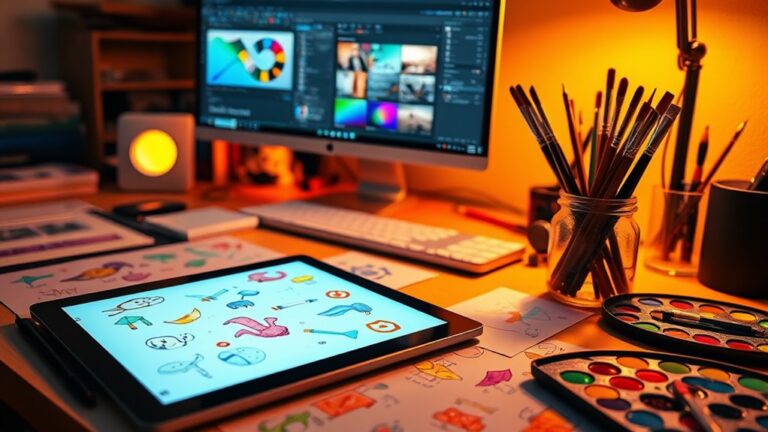
Balancing digital and physical elements in product design requires a holistic approach. Start by prioritizing user experience, guaranteeing seamless interactions that create an emotional connection. Employ user research to understand needs, guiding design decisions effectively. Utilize prototyping to blend digital interfaces with tangible components, enabling real-world feedback. Choose materials that improve both functionality and aesthetics during consideration of sustainability. Testing and continuous feedback loops guarantee the design remains user-centric and adaptable. By integrating these strategies, designers can create products that resonate with users. Explore further to uncover additional techniques for refining this balance in your product designs.
Understanding Digital vs. Physical Design
In today's swiftly changing design atmosphere, a clear grasp of the distinctions between digital and physical design is vital for creating effective products. Digital design encompasses the creation of interfaces, graphics, and interactions that exist in a virtual domain, whereas physical design pertains to tangible objects and their usability in the real world. Recognizing these two areas allows designers to apply appropriate design principles that cater to user expectations and improve overall functionality.
The integration of digital and physical design is increasingly important, particularly as technology adoption accelerates. Designers must navigate the unique constraints of each medium, ensuring that digital interfaces improve physical experiences and vice versa. For instance, a smart device that relies on both digital and physical components must seamlessly merge these elements to provide an intuitive user experience.
The product lifecycle further complicates this balance, as designers must anticipate how digital and physical interactions evolve over time. This includes adapting to changing user needs, technological advancements, and market shifts. As designers engage with both fields, they must remain vigilant about the design constraints that can arise from integrating digital functionalities into physical products.
Importance of User Experience
User experience is a critical factor in product design, as it encompasses seamless interaction, emotional connections, and the principles of accessibility and inclusivity. By prioritizing these elements, designers can create products that not just fulfill functional requirements but additionally resonate with users on a deeper level. This holistic approach guarantees that both digital and physical components work harmoniously to improve overall satisfaction.
Seamless Interaction Design
A seamless interaction design is fundamental in improving the overall user experience, as it establishes a fluid connection between digital and physical elements of a product. This integration allows users to navigate and engage with a product intuitively, in the end cultivating a sense of familiarity and comfort. Intuitive interfaces are vital in achieving this goal, as they minimize cognitive load and allow users to focus on their tasks rather than deciphering complex controls.
Moreover, tactile feedback plays a significant role in enriching user interactions. By providing sensory responses, such as vibrations or subtle resistance, designers can bridge the gap between the digital and physical domains. This feedback not only reinforces the effectiveness of an action but also improves the overall satisfaction of the user experience. When users receive immediate, tangible responses, they feel more connected to the product and its functionalities.
In today's fast-paced technological environment, prioritizing seamless interaction design is critical. By crafting cohesive experiences that harmonize tactile feedback with intuitive interfaces, designers can boost user engagement, ensuring that products resonate with users and meet their evolving needs effectively. This approach in the end leads to innovative solutions that stand out in a competitive market.
Emotional Connection Factors
Creating an emotional connection with users greatly improves their overall experience with a product. By cultivating emotional resonance, designers can craft products that not just meet functional needs but engage users on a deeper level. This engagement is crucial in today's competitive environment, where user empathy can differentiate a brand.
To illustrate the factors that contribute to emotional connections, consider the following table:
| Factor | Description | Impact on User Experience |
|---|---|---|
| Storytelling | Narratives that resonate with users' values | Builds a sense of belonging |
| Aesthetic Appeal | Visual elements that evoke positive emotions | Improves overall satisfaction |
| Personalization | Tailoring experiences to individual preferences | Increases user loyalty and engagement |
Accessibility and Inclusivity
Designing products that promote emotional connections naturally leads to a broader consideration of accessibility and inclusivity within the user experience. To create innovative solutions, designers must adopt principles of universal design, ensuring that products are usable by individuals of all abilities and ages. This approach not only improves user satisfaction but also nurtures a sense of belonging among diverse user groups.
Adaptive interfaces play a critical role in achieving inclusivity. By employing dynamic elements that respond to user interactions, designers can create experiences that cater to individual needs. For instance, adjustable text sizes, color contrasts, and alternative navigation methods can greatly improve usability for people with visual impairments or cognitive disabilities.
Moreover, the integration of physical and digital elements must prioritize seamless accessibility. Products that bridge these domains should provide intuitive tactile feedback alongside digital cues, ensuring that users can engage fully regardless of their physical or cognitive limitations.
Ultimately, embracing accessibility and inclusivity is not merely a regulatory obligation; it is an opportunity for innovation that can lead to improved emotional connections and a broader market reach, enriching the overall user experience.
Identifying User Needs
Identifying user needs is vital for creating effective product designs that seamlessly integrate digital and physical elements. By comprehending user behavior, conducting thorough user research, and analyzing pain points, designers can tailor solutions that truly resonate with their target audience. This user-centric approach not merely improves the overall experience but additionally drives innovation in product development.
Understanding User Behavior
User behavior serves as a critical compass in the domain of product design, guiding teams to uncover and prioritize user needs effectively. Grasping user preferences and behavioral patterns allows designers to tap into user motivations, enhancing the emotional triggers that drive engagement strategies. By analyzing interaction habits within specific usage contexts, teams can craft experiences that resonate deeply with users.
A thorough understanding of design psychology is fundamental, as it informs the decision processes that users undergo when interacting with a product. Implementing robust feedback mechanisms guarantees that user insights are integrated into the design cycle, promoting continuous improvement and innovation.
| User Behavior Aspect | Key Considerations |
|---|---|
| User Preferences | Tailor features to meet specific likes and dislikes. |
| Behavioral Patterns | Identify trends in how users interact with products. |
| User Motivations | Comprehend what drives users to engage or disengage. |
Conducting User Research
An effective grasp of user behavior lays the groundwork for conducting user research, which is crucial for pinpointing user needs. Employing diverse research methods such as user interviews and observational studies enables designers to gather rich qualitative data. By closely examining user demographics, researchers can tailor their inquiries to resonate with specific segments, ensuring relevance and depth in the findings.
Feedback collection is pivotal in refining product concepts. Usability testing allows designers to observe real-time interactions, providing insights that might not surface through traditional surveys. Contextual inquiries further improve comprehension by capturing users in their natural environments, revealing genuine behaviors and preferences.
Data analysis plays a critical role in synthesizing findings from various research methodologies. It aids in identifying patterns and trends, which inform persona development. By creating detailed personas, designers can visualize user needs more effectively, nurturing empathy in the design process.
Lastly, user segmentation enables targeted design solutions, ensuring that innovations cater to diverse user profiles. Balancing these research techniques equips designers with the necessary insights to create products that harmoniously integrate digital and physical elements, eventually improving user experience and satisfaction.
Analyzing User Pain Points
Uncovering user pain points is essential for developing products that truly meet their needs. An effective approach to pain point identification involves gathering thorough user feedback, which serves as a cornerstone for grasping challenges users face. By actively engaging with users, designers can pinpoint specific areas of frustration that may hinder product usability.
User frustration often stems from a disconnect between user expectations and product functionality. Innovations can only thrive when designers embrace this feedback loop, transforming insights into actionable solutions. For instance, through interviews or surveys, designers can identify recurring issues that contribute to user dissatisfaction, allowing for targeted improvements.
Moreover, employing usability testing can further illuminate pain points that may not surface through direct feedback. Observing users in real-time reveals their interactions with both digital and physical elements, highlighting inefficiencies and emotional triggers tied to frustration.
Ultimately, analyzing user pain points not just informs design decisions but also cultivates a culture of empathy within product development teams. By prioritizing user needs, businesses can create innovative solutions that not only alleviate frustration but also raise the overall user experience.
Prototyping for Integration
In the domain of product design, effective prototyping serves as a crucial bridge between digital and physical elements, enabling designers to test and refine their concepts in a tangible format. Rapid prototyping techniques have transformed the design process, allowing teams to quickly iterate on both digital mockups and physical models. This iterative design approach cultivates a culture of innovation, where each prototype can evolve based on real-world feedback.
Utilizing collaborative tools, designers can engage stakeholders in user simulations and feedback sessions, capturing insights that drive concept validation. These interactions are essential for comprehending how users will interact with the final product, ensuring that both digital interfaces and physical components integrate seamlessly. The iterative nature of this process allows for multiple design iterations, each informed by user input and testing outcomes.
During prototyping, material selection can greatly impact the functionality and aesthetics of the product. Nonetheless, the focus should remain on refining user experience and achieving alignment between digital and physical aspects. Prototyping not only identifies technical challenges but additionally highlights opportunities for innovation, eventually leading to a more cohesive design.
Choosing the Right Materials
Selecting appropriate materials is vital in product design, as it directly influences both functionality and user experience. Designers must balance the need for innovative textures with considerations of material durability and cost-effective options. Sustainable materials are increasingly at the forefront of this decision-making process, allowing designers to create aesthetically appealing products that as well align with eco-friendly choices.
When choosing materials, it is fundamental to evaluate their physical properties, such as weight and strength. Lightweight designs not just improve usability but additionally contribute to energy efficiency in manufacturing and transportation. The incorporation of innovative textures can raise a product's tactile feedback, enriching the user's interaction and making the product more engaging.
Moreover, the aesthetic appeal of materials plays a significant role in consumer attraction and brand identity. A well-chosen material can communicate a brand's values, particularly when those choices reflect a commitment to sustainability. Products crafted from eco-friendly materials resonate with environmentally conscious consumers and promote a sense of trust and loyalty.
Ultimately, the right selection of materials can transform a product from mere functionality to an experience that captivates and delights users. By prioritizing sustainable and innovative options, designers can create compelling products that stand out in a crowded marketplace and encourage responsible consumption. This approach not just improves the overall design but additionally contributes positively to the environment, a significant consideration in today's design environment.
Leveraging Technology Effectively
To effectively leverage technology in product design, it is crucial to integrate smart features that improve functionality and user engagement. By prioritizing user interaction, designers can create intuitive experiences that resonate with consumers. Furthermore, streamlining production processes through technology can greatly enhance efficiency and reduce costs, leading to a more sustainable design approach.
Integrating Smart Features
Integrating smart features into product design requires a thoughtful approach that balances functionality with user experience. As technology continues to evolve, the integration of smart devices
Enhancing User Interaction
How can designers leverage technology to create more engaging user interactions? The integration of tactile feedback and digital interfaces can greatly improve user experiences, making them more immersive and intuitive. Tactile feedback, such as vibrations or pressure changes, allows users to feel their interaction with a product, bridging the gap between the digital and physical environments. This sensory engagement cultivates a deeper emotional connection, encouraging users to explore functionalities with increased enthusiasm.
Furthermore, the concept of interactive storytelling can be effectively employed to guide users through their experiences. By weaving narratives into product interactions, designers can transform mundane tasks into enchanting expeditions. For instance, a fitness app could use storytelling to motivate users, presenting their progress as a heroic quest rather than mere statistics.
Streamlining Production Processes
An effective approach to streamlining production processes involves the strategic application of advanced technologies throughout the design and manufacturing stages. By leveraging technology effectively, companies can improve efficiency, reduce costs, and guarantee a seamless shift from concept to market.
Key strategies include:
- Production Automation: Implementing automated systems not just accelerates manufacturing but also minimizes human error. Robotics and AI can optimize repetitive tasks, allowing human resources to focus on innovation and problem-solving.
- Supply Chain Optimization: Utilizing data analytics and machine learning can greatly improve supply chain management. Real-time insights enable businesses to anticipate demand, manage inventory levels, and reduce lead times, thereby boosting overall productivity.
- Integrated Digital Platforms: Employing collaborative tools that connect design, engineering, and production teams cultivates communication and transparency. This integration guarantees that all stakeholders are aligned, reducing bottlenecks and facilitating faster decision-making.
Creating Seamless Interactions
What strategies can designers employ to guarantee users experience fluidity between digital and physical interactions? To create seamless interactions, it is fundamental to develop an integrated design ecosystem where digital touchpoints and physical interfaces converge harmoniously. By leveraging interaction models that prioritize user experience mapping, designers can identify key moments where users shift between digital and physical environments, ensuring an uninterrupted experience.
Incorporating feedback mechanisms is essential for improving sensory experiences. By providing real-time responses during multitouch interactions, users are more likely to feel engaged and connected. This can be achieved through haptic feedback or visual cues that bridge the gap between the digital and physical domains.
Contextual awareness plays a significant role in designing for immersive environments. Comprehending the user's context—such as their location, time, and preferences—enables designers to create customized experiences that facilitate smooth shifts. This contextual awareness should inform the design of both digital touchpoints and physical interfaces, ensuring they complement one another and meet user expectations.
Moreover, designers should explore innovative technologies like augmented reality (AR) and the Internet of Things (IoT), which can further improve the interaction environment. By integrating these technologies, users can enjoy a cohesive experience that blurs the boundaries between the physical and digital worlds. Ultimately, achieving seamless interactions requires a commitment to comprehending user behavior, deploying advanced technologies, and nurturing a culture of innovation that keeps the user at the forefront of design decisions.
Balancing Aesthetics and Functionality
Seamless interactions between digital and physical elements highlight the importance of balancing aesthetics and functionality in product design. The challenge lies in creating products that not just captivate users with their aesthetic appeal but additionally deliver outstanding functional design. Achieving this balance is crucial for nurturing user satisfaction and loyalty in an increasingly competitive marketplace.
To effectively harmonize aesthetics and functionality, consider the following strategies:
- User-Centric Design: Begin with comprehending the needs and preferences of your target audience. Engage in thorough research and persona development to guarantee that your design resonates emotionally while serving practical purposes.
- Iterative Prototyping: Create multiple iterations of your product, integrating both visual and functional elements. This process allows you to refine the aesthetic appeal without sacrificing usability, confirming that each aspect complements the other.
- Material Selection: Choose materials that improve both the look and feel of the product while maintaining its functionality. Innovative materials can raise the aesthetic appeal and contribute to a more efficient, durable design.
Testing and Feedback Loops
In the domain of product design, the integration of testing and feedback loops serves as a fundamental mechanism for refining both digital and physical components. Utilizing user feedback effectively allows designers to identify pain points and opportunities for improvement. Usability testing becomes a critical tool in this process, enabling teams to observe real-world interactions and gather performance metrics that inform design decisions.
The iterative design process thrives on the principles of prototype evaluation and design critiques. By continuously testing and refining prototypes, designers can guarantee that each iteration aligns closely with user expectations and needs. This approach not only cultivates user satisfaction but additionally boosts the overall quality of the final product.
Feature prioritization is an integral part of product development, guaranteeing that the most impactful functionalities receive the focus they deserve. Interaction testing plays a significant role in this scenario, as it assesses how users engage with both digital interfaces and physical elements. The insights gained from these evaluations inform design validation, guaranteeing that the product not only meets aesthetic criteria but also delivers functionality.
Moreover, establishing robust feedback loops creates a culture of continuous improvement, where insights from testing inform future iterations. This cycle of testing, feedback, and refinement is crucial for creating innovative products that resonate with users. In the end, the thoughtful application of these methodologies empowers designers to balance the intricacies of digital and physical elements, paving the way for successful and user-centric product outcomes.
Future Trends in Product Design
As we look ahead, the landscape of product design is poised for significant transformation driven by technological advancements and evolving consumer expectations. The fusion of the digital and physical domains will yield innovative solutions that prioritize sustainability and user experience. Designers are increasingly influenced by biomimicry principles, drawing inspiration from nature to create adaptive designs that seamlessly integrate into everyday life.
The following trends will shape the future of product design:
- Sustainable Materials: The shift in the direction of eco-friendly practices will result in the widespread adoption of sustainable materials, improving the lifecycle of products while minimizing environmental impact.
- Modular Components: As consumer needs become more diverse, modular components will allow for customization and adaptability, enabling users to modify products easily, thereby extending their usability.
- Augmented Reality and Wearable Technology: The integration of interactive interfaces and augmented reality will redefine user engagement, providing immersive experiences that improve functionality. Furthermore, smart textiles will enable clothing and accessories to collect data, respond to environmental changes, and interact with users in unprecedented ways.
With futuristic aesthetics and a focus on both form and function, product designers will create solutions that not only meet consumer demands but also promote a more sustainable future. By embracing these trends, the industry can lead the charge in the direction of innovative designs that harmoniously blend the digital and physical environments.
Frequently Asked Questions
How Can I Measure the Success of Digital-Physical Integration?
Measuring the success of digital-physical integration requires a multifaceted approach. Primary metrics include user feedback, which can provide qualitative insights into user satisfaction and experience. Furthermore, tracking user engagement through analytics can reveal how effectively users interact with both digital and physical components. By analyzing these data points, organizations can assess the effectiveness of their integration strategies and identify areas for innovation, in the end enhancing the overall user experience and product performance.
What Tools Help in Managing Digital and Physical Design Workflows?
What tools can truly streamline the intricacies of managing design workflows? Innovative collaboration tools, such as Figma or Miro, empower teams to engage seamlessly in both digital and physical environments. Furthermore, workflow automation platforms like Zapier can improve efficiency by integrating various processes, reducing manual tasks. By leveraging these technologies, organizations can boost productivity and nurture creativity, ensuring that design teams are well-equipped to navigate the challenges of modern product development.
How Do Cultural Differences Affect Digital and Physical Design Preferences?
Cultural differences greatly influence design preferences, impacting both cultural aesthetics and design usability. For instance, Western cultures often favor minimalism and functionality, whereas Eastern designs may emphasize intricate details and symbolism. These preferences guide how users interact with products, requiring designers to contemplate local tastes and usability standards. Comprehending these variations nurtures innovation, enabling the creation of products that resonate deeply with diverse audiences, thereby enhancing user experience and satisfaction across global markets.
What Are Common Pitfalls in Digital-Physical Design Balance?
In the quest for innovation, many designers encounter common pitfalls that hinder user experience and disrupt design cohesion. Overemphasizing digital elements can lead to a disjointed user interface, whereas neglecting physical aspects may compromise tactile engagement. Conversely, undervaluing user feedback can result in solutions that fail to resonate with target audiences. Striking the right balance between digital and physical components is crucial to nurturing an integrated approach that improves overall product effectiveness.
How Can Sustainability Be Incorporated in Both Digital and Physical Elements?
Incorporating sustainability into both digital and physical elements requires a multifaceted approach. Utilizing sustainable materials in physical products minimizes environmental impact, whereas integrating eco-friendly technologies improves digital experiences. For instance, employing renewable energy sources for data centers and optimizing software for energy efficiency can greatly reduce a product's carbon footprint. Emphasizing lifecycle assessments throughout the design process guarantees that both digital and physical components contribute to a cohesive, innovative, and sustainable product ecosystem.