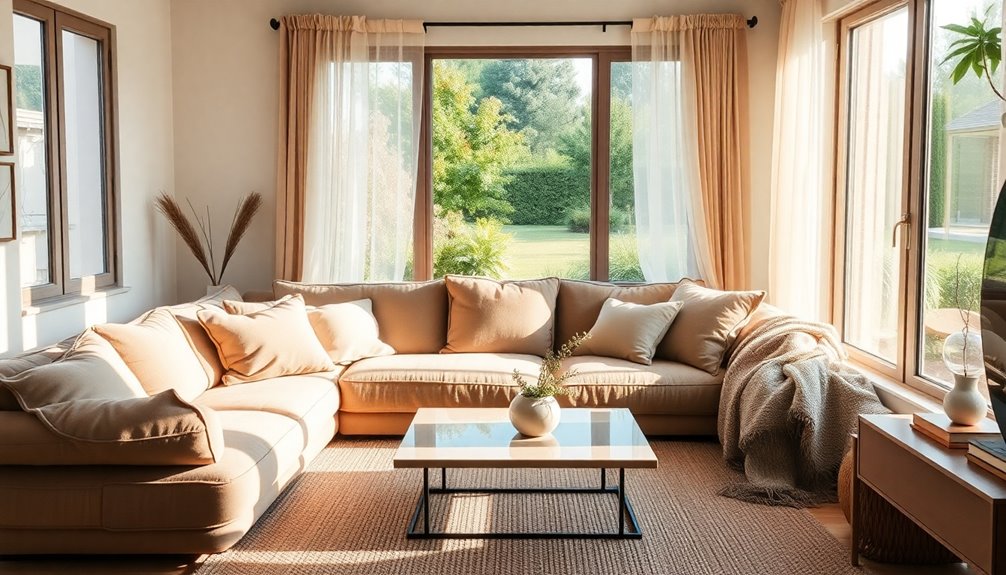

To transform your home with soft furnishings, start by choosing a mix of textures and materials like velvet, linen, and knits for depth. Layer items such as cushions and throws in varying sizes and patterns to add interest and warmth. Use complementary colors to create striking contrasts, or opt for a monochromatic palette for sophistication. Incorporate decorative pillows to improve style during ensuring comfort and functionality. Don't forget to introduce cozy nooks with blankets and lighting for inviting spaces. With the right approach, you can raise your home's vibe, and there's even more to explore.
Choosing the Right Fabrics
Choosing the right fabrics for your soft furnishings can make all the difference in your home's look and feel. When you explore fabric types, think beyond just color and pattern; focus on how they interact with one another. Innovative combinations can boost your design, creating a space that feels both fresh and inviting.
Start by considering the texture contrast between fabrics. Mixing smooth and textured materials can add depth and interest to your decor. For instance, pairing a sleek velvet sofa with a chunky knitted throw creates a dynamic visual appeal. This contrast not only improves the aesthetic but invites tactile engagement, making your home feel more welcoming.
Don't shy away from experimenting with different fabric types. Linen brings a casual, airy vibe, whereas heavier fabrics like tweed or canvas can provide a more grounded feel. You might find that incorporating unexpected materials, like faux fur or metallics, can spark a modern twist in your overall design.
Additionally, think about the practicality of your choices. Performance fabrics, which resist stains and wear, can be great for high-traffic areas, allowing you to maintain that innovative look without sacrificing durability.
Incorporating a thoughtful selection of fabric types and embracing texture contrast will help you achieve a curated aesthetic. As you choose, keep in mind that each fabric tells a story, contributing to the overall narrative of your home's design. So, go ahead and get creative; your space deserves it!
Layering Textures for Depth
To truly improve your space, layering textures adds depth and complexity to your soft furnishings. By combining various textile combinations, you create a rich, inviting atmosphere that encourages tactile experiences. Think beyond single fabrics; it's about how they interact and complement each other.
Consider using a mix of materials like velvet, linen, and knit. A velvet throw draped over a linen sofa can create a striking visual contrast as it invites touch. Similarly, a chunky knit pillow on a smooth cotton chair adds dimension and warmth. Experiment with different textures to find what resonates with your style.
Here's a quick guide to inspire your layering exploration:
| Textile | Effect |
|---|---|
| Velvet | Luxurious and rich, perfect for elegance |
| Linen | Breathable and casual, ideal for a relaxed vibe |
| Knit | Cozy and inviting, great for comfort |
| Faux Fur | Soft and plush, adds a touch of glam |
Don't be afraid to mix and match! The key is to maintain a balance; the goal is to improve your space without overwhelming it. You'll find that layering textures not just boosts visual interest but creates a warm, cozy environment. Immerse yourself in your creativity and start experimenting with different combinations to truly transform your home into a sanctuary of style and comfort.
Color Coordination Techniques
In relation to soft furnishings, color coordination can make a huge difference in your space. You can choose complementary color schemes for contrast, explore the benefits of a monochromatic palette for a cohesive look, or incorporate accent colors to add pops of interest. Comprehending these techniques will help you create a harmonious and inviting home.
Complementary Color Schemes
A complementary color scheme can dramatically improve the look of your home by pairing colors that sit opposite each other on the color wheel. This technique isn't just about aesthetics; it's rooted in color theory, which emphasizes how contrasting hues can create striking visual dynamics. When you implement these bold combinations, you're not just decorating; you're crafting an environment that promotes color harmony, making your spaces feel lively and alive.
Start by choosing a dominant color for larger soft furnishings like sofas or curtains, then introduce its complementary color through smaller accents—think throw pillows or rugs. For instance, if your main color is a rich blue, consider adding orange-toned accessories to create that eye-catching contrast. It's all about balance; too much of either color can overwhelm the space.
Don't shy away from experimenting! Try different shades and tones within your complementary palette to find the perfect balance that resonates with your personal style. By thoughtfully applying complementary colors, you'll transform your home into a harmonious haven that feels fresh and innovative. Embrace this color coordination technique and watch your living spaces come alive!
Monochromatic Palette Benefits
Embracing a monochromatic palette can simplify your design choices as you create a sophisticated and cohesive look in your home. The monochromatic benefits extend beyond mere aesthetics; they offer a unique opportunity for innovative design simplicity. When you choose shades of a single color, you can achieve a harmonious environment that feels both calming and inviting.
Consider these three key elements to maximize your monochromatic scheme:
- Layered Textures: Incorporate various materials—think velvet cushions, woven throws, and silk curtains—to add depth and interest during maintaining color consistency.
- Varying Shades: Use a range of tints and tones within your chosen color family. This not merely improves visual intrigue but equally guarantees a dynamic atmosphere without overwhelming the senses.
- Strategic Patterns: Integrate subtle patterns in your soft furnishings, like striped or geometric designs, to provide contrast during keeping your color palette intact.
Accent Colors Techniques
Often, incorporating accent colors can transform a monochromatic space into a lively and inviting environment. Comprehending accent color psychology helps you choose hues that not just catch the eye but also evoke specific emotions. When selecting your accent colors, consider how they'll be placed within your space—this is where accent color placement becomes essential.
Here's a quick guide to help you select and position your accent colors effectively:
| Accent Color | Emotional Impact | Ideal Placement |
|---|---|---|
| Blue | Calmness | Cushions, Throws |
| Yellow | Cheerfulness | Artwork, Lamps |
| Green | Balance | Rugs, Curtains |
| Red | Energy | Pillows, Decorative Items |
Statement Cushions and Throws
Though you might think of cushions and throws as mere accessories, they can actually transform your space into a stylish haven. By carefully selecting pieces with bold patterns and tactile appeal, you can enhance your décor and create a cozy atmosphere that invites relaxation and conversation.
Here are three innovative ways to use statement cushions and throws in your home:
- Layering Textures: Mix and match cushions with varying textures—think velvet, linen, and faux fur. This not only adds visual interest but also invites touch, making your living space feel warm and inviting.
- Creating Focal Points: Choose cushions with striking bold patterns to serve as focal points on your sofa or bed. A geometric print or an oversized floral can draw the eye and become a conversation starter, effortlessly boosting your room's personality.
- Cohesive Color Schemes: Use throws to tie together different elements in the room. Select a throw that complements the colors in your cushions and other furnishings. This seamless integration can transform a chaotic space into a harmonious retreat.
Incorporating statement cushions and throws into your home isn't merely about aesthetics; it's about creating a space that feels uniquely yours. So, embrace the bold and the tactile, and watch your rooms come to life with innovative flair!
Transforming With Curtains
In regard to transforming your space with curtains, choosing the right fabric is key to setting the mood. You can likewise layer your curtains for added depth and texture, creating a more dynamic look. Let's explore how these elements can completely change your room's atmosphere.
Choosing the Right Fabric
Selecting the right fabric for your curtains can dramatically transform the look and feel of your space. The fabric you choose not just impacts aesthetics but is equally important for light control and privacy. Consider these three key factors when selecting your curtain fabric:
- Fabric Types: Explore options like sheer for a light, airy vibe, velvet for a touch of luxury, or linen for a casual yet sophisticated look. Each type creates a distinct atmosphere.
- Fabric Durability: Think about how much wear and tear your curtains will face. If you're in a high-traffic area, opt for durable fabrics like polyester blends that withstand time while maintaining their beauty.
- Color and Pattern: Choose colors and patterns that resonate with your overall design. Bold prints can act as a focal point, whereas solid colors can unify your decor.
Layering for Depth
Once you've chosen the right fabric for your curtains, layering them can improve your space even further. By combining different textures and colors, you can create visual layers that add depth and intrigue to any room. Picture starting with a sheer curtain for a soft texture that gently filters light, then adding a heavier drape in a complementary hue to frame your windows beautifully.
Consider using a patterned curtain as a focal point, paired with solid colors that echo elements in your decor. This contrast not just brings dynamism but invites your eye to explore the space. Don't shy away from experimenting with lengths; a floor-to-ceiling combination can create an illusion of height, whereas shorter panels can make a cozy nook feel inviting.
To truly innovate, think about mixing materials—perhaps linen with velvet or cotton with silk. Each layer contributes to the overall aesthetic, ensuring your windows become a statement rather than an afterthought. Remember, layering isn't solely about functionality; it's an art form that transforms your home into a sanctuary of style and comfort. So, get creative and let those curtains do the talking!
Area Rugs for Definition
Area rugs can dramatically improve the definition of a space, serving as both a functional and aesthetic element in your home. When you think about how to best utilize area rugs, consider their styles and placement. The right choice can raise your interior design, creating distinct zones that amplify flow and purpose.
Here are three innovative ways to use area rugs for definition:
- Zoning: Use an area rug to delineate different areas within an open floor plan. For example, place a bold geometric rug under a coffee table to define a cozy seating area, whereas a softer, neutral rug can create a warm atmosphere in a reading nook.
- Contrast: Choose contrasting area rug styles to bring visual interest. A plush shag rug can soften a sleek, modern space, whereas a lively Persian rug can add timeless elegance against minimalist furniture.
- Layering: Don't shy away from layering rugs. By placing a smaller, patterned rug over a larger, solid one, you can create depth and texture, making the space feel more inviting and sophisticated.
When considering area rug placement, verify they're proportionate to your furniture. Ideally, all legs of your furniture should sit on the rug, or at least the front legs, to cultivate a cohesive look. By thoughtfully incorporating area rugs, you'll redefine your space with flair and functionality.
Seasonal Updates With Soft Furnishings
Switching up your soft furnishings can refresh your space with each season. You can play with color palettes to match the mood of the time, and layering different textures adds depth and warmth. Let's explore how these simple updates can transform your home throughout the year.
Color Palette Changes
Your home's ambiance can transform dramatically with seasonal updates, and soft furnishings play a crucial role in this shift. By embracing color psychology and aligning with seasonal trends, you can create a fresh and inviting atmosphere that reflects the changing seasons.
Consider these three impactful changes:
- Warm Earthy Tones: As autumn arrives, swap out cool colors for warm, earthy shades like terracotta, mustard, and deep burgundy. These hues evoke coziness and comfort.
- Refreshing Pastels: Spring is the perfect time to lighten up. Incorporate pastel shades such as soft mint, blush pink, and light lavender. These colors not only breathe life into your space but likewise promote a sense of tranquility.
- Bold Jewel Tones: In the winter months, enrich your home with bold jewel tones like emerald green, sapphire blue, and rich plum. These lively colors add a touch of luxury and warmth during the colder season.
Texture and Layering
Incorporating texture and layering into your soft furnishings can improve the seasonal updates you've made with color. By experimenting with texture contrasts, you can create a dynamic and inviting atmosphere that reflects the season's spirit. Layering techniques allow you to build depth, making your space feel more luxurious and curated.
Here's a quick guide to help you mix textures and layers effectively:
| Texture Type | Layering Ideas |
|---|---|
| Soft Velvet | Pair with a chunky knit throw |
| Crisp Linen | Layer over a plush faux fur blanket |
| Textured Wool | Combine with smooth cotton cushions |
Start with a base layer, like a textured rug, and build up with throws and cushions. Don't shy away from mixing materials, as this can add interesting depth and warmth. Remember, the goal is to create a cozy haven that feels fresh with each seasonal change. So go ahead, play with these ideas, and watch your home transform into a stylish sanctuary!
Mixing Patterns and Prints
Mixing patterns and prints can transform a dull space into a lively and dynamic environment. The key is to embrace eclectic styles and daring combinations that reflect your personality and creativity. Here's how to master the art of mixing:
- Choose a Color Palette: Start with a cohesive color scheme. Select three to five colors that resonate throughout your space. This unifying element will help tie various patterns together, ensuring harmony amidst the chaos.
- Vary Scale and Texture: Combine patterns of different sizes and textures. For instance, pair a large floral print with a smaller geometric design. This contrast creates visual interest and depth, adding a layer of sophistication to your decor.
- Consider the Space: Think about the overall vibe you want to achieve in the room. A cozy living area might benefit from warm, inviting patterns, whereas a bright and airy kitchen could showcase playful, bold combinations. Each choice should improve the atmosphere you're aiming for.
When you mix patterns and prints, don't shy away from experimenting. Play with stripes, florals, and abstract designs; let your imagination guide you. The result will be a lively, personalized space that showcases your innovative spirit and makes a lasting impression. So, go ahead, take the plunge into the realm of eclectic styles, and watch your home come alive!
Creating Cozy Nooks
Creating cozy nooks can instantly improve the comfort of your home, offering inviting spaces for relaxation and rejuvenation. These snug corners can become your personal retreat, where you can escape the hustle and bustle of daily life. To start, identify areas in your home that could use a little warmth and character. Think about underutilized spaces, like a corner of your living room or a section of your bedroom, and transform them into enticing reading nooks.
Next, focus on soft furnishings to achieve that cozy vibe. Layer your textures with plush blankets and cushy cushions that not only provide comfort but also add a pop of personality. Choose fabrics in rich colors or interesting patterns to create visual interest. Consider a stylish armchair or a floor cushion that invites you to sink in with a good book.
Lighting plays an important role in setting the mood, so don't overlook it. A warm-toned lamp or string lights can help create a soft, inviting glow that beckons you to settle in. Surround your cozy corner with items that inspire you, whether it's a small bookshelf filled with your favorite reads or a few cherished trinkets.
Finally, add some greenery with potted plants or fresh flowers to breathe life into your space. With just a few thoughtful touches, you'll have a cozy nook that reflects your style and becomes a cherished spot for unwinding.
Utilizing Decorative Pillows
Transforming your space with decorative pillows can dramatically improve both comfort and style. These versatile accents provide an opportunity to showcase your personality and enhance the atmosphere in any room. By experimenting with different decorative styles and pillow arrangements, you can create a unique and inviting environment. Here are three innovative ways to utilize decorative pillows:
- Layering for Depth: Start by layering pillows of varying sizes and shapes. Combine large, plush pillows with smaller, more structured ones to create visual interest. Don't shy away from mixing materials, such as velvet, linen, and cotton, to add texture.
- Color Coordination: Choose a color palette that complements your existing decor. You can opt for bold, contrasting colors to make a statement or select softer hues for a more cohesive look. Throw in a patterned pillow for a pop of excitement, ensuring it harmonizes with the overall scheme.
- Strategic Placement: Reflect on where you want to make an impact. Place larger pillows at the back of your sofa or bed, whereas smaller ones can accentuate the front. Don't forget to reflect on the functionality; pillows can invite relaxation and should be easy to rearrange as needed.
Maintenance and Care Tips
Keeping your soft furnishings in top condition is vital for maintaining their beauty and longevity. Regular upkeep can transform your space and extend the life of your investments. Start with fabric cleaning—scheduling a deep clean every six months can work wonders. Use a vacuum with an upholstery attachment to remove dust and debris. For spills, tackle them immediately with a soft cloth to blot, not rub, and use a fabric-specific cleaner to avoid damage.
When it comes to upholstery care, consider the fabric type. Natural fibers like cotton and linen often require different treatments compared to synthetics like polyester. Always check the manufacturer's care label for specific instructions. For upholstery, rotating cushions and pillows regularly can help prevent uneven wear and maintain their shape.
Don't underestimate the strength of protective treatments. Applying a fabric protector can repel stains and spills, making future cleaning much easier. When cleaning, avoid harsh chemicals that can degrade fibers over time. Instead, opt for eco-friendly solutions that are tough on dirt but gentle on fabrics.
Lastly, consider the environment your soft furnishings are in. Keep them out of direct sunlight to prevent fading and avoid high-moisture areas that can lead to mold. With these maintenance and care tips, you'll guarantee your soft furnishings remain a stunning focal point in your home for years to come.
Frequently Asked Questions
How Can I Incorporate Soft Furnishings in a Small Space?
Wondering how to make a small space feel inviting? You can easily incorporate soft furnishings for a cozy touch. Look for space-saving solutions like foldable cushions or lightweight throws that add texture without cluttering. Opt for multifunctional furniture, such as an ottoman that doubles as storage. Adding a few strategic pillows can enhance your aesthetic as you ensure comfort. With these innovations, your small area can transform into a stylish haven you'll love.
What Are the Best Materials for Allergy Sufferers?
If you're an allergy sufferer, choosing the right materials is essential. Opt for hypoallergenic fabrics like microfiber or organic cotton, as they resist allergens and irritants. You'll additionally want to take into account dust resistant materials like polyester blends, which repel dust mites and are easy to clean. By selecting these innovative options, you can create a comfortable, stylish space that minimizes allergy triggers, allowing you to breathe easier and enjoy your surroundings.
How Often Should I Update My Soft Furnishings?
You should update your soft furnishings at least every season to keep your space vibrant and aligned with current color trends. This doesn't mean a complete overhaul; even small changes can make a big impact. Rotate cushions and throws, or introduce new patterns that reflect seasonal vibes. By regularly revitalizing your decor, you not only improve your home's aesthetic but additionally keep it innovative and inviting for everyone who enters.
Can Soft Furnishings Improve My Home's Acoustics?
Yes, soft furnishings can greatly improve your home's acoustics! By incorporating items like acoustic panels, curtains, and cushions, you boost sound absorption, reducing echoes and creating a more inviting atmosphere. You might not realize it, but layering textures and materials can absorb unwanted noise, transforming your space into a tranquil haven. Experiment with different fabrics in your decor to achieve that innovative, sound-friendly environment you're after!
What Budget-Friendly Options Are Available for Soft Furnishings?
In terms of soft furnishings, your budget doesn't have to feel like a tightrope walk. Think of DIY cushions as your creative canvas; you can sew or even upcycle old fabric into stylish pieces. Thrift store finds can be treasure troves, hiding unique fabrics and quirky designs just waiting to be revived. With a little imagination, you'll transform your space without breaking the bank, turning your home into a cozy haven.