You've witnessed the transformation of graphic design from handmade craftsmanship to digital mastery, with pioneers like William Morris and Walter Crane paving the way for the rise of digital tools, postmodern eclecticism, and today's tech-driven, sustainable design landscape. As you explore the decades, you'll see how design shifted from elegant typography to bold, vibrant styles and minimalist approaches. You'll discover how technology revolutionized the process, enabling collaboration, automation, and innovative solutions. And, as you continue, you'll uncover the latest trends shaping the industry, from eco-friendly practices to AR/VR experiences that are redefining the future of graphic design.
Early Experimentation and Handmade Craft
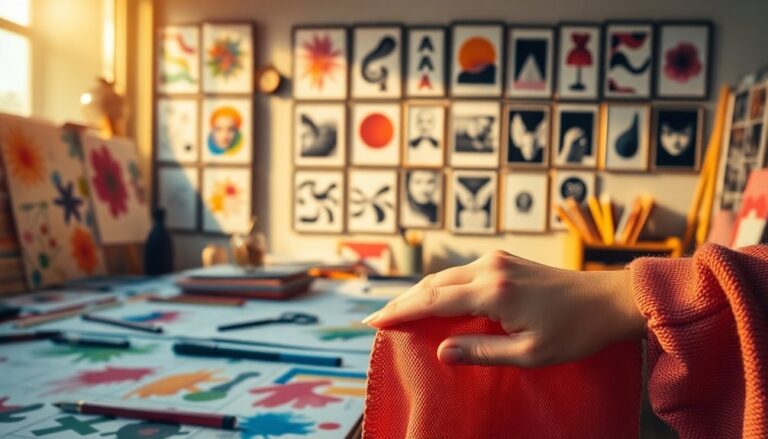
As you investigate the early days of graphic design, you'll discover that pioneers like William Morris and Walter Crane were experimenting with handmade crafts, pushing the boundaries of visual storytelling. This era, marked by an Artisanal Aesthetics, was characterized by a strong emphasis on Craftsmanship Revival. Designers were more concerned with the tactile qualities of their work, often incorporating intricate illustrations, ornate typography, and elaborate patterns.
As you explore further, you'll notice that these early designers were driven by a desire to revive traditional crafts, such as bookbinding, printmaking, and calligraphy. This revival was a direct response to the Industrial Revolution, which had made mass production possible, but also led to a decline in craftsmanship. Designers like Morris and Crane sought to reclaim the human touch in their work, often spending hours perfecting their craft.
The result was a distinctive visual language that was both beautiful and expressive. You'll see this in the elegant typography, elaborate borders, and ornate illustrations that adorned books, posters, and advertisements of the time. This early experimentation laid the groundwork for the diverse range of styles and techniques that would emerge in the decades to come. As you continue to investigate the evolution of graphic design, you'll see how this emphasis on craftsmanship and artisanal aesthetics continued to influence the development of the field.
Rise of Digital Design Tools
You're about to witness a seismic shift in the graphic design landscape, as the rise of digital design tools revolutionizes the way designers work, introducing unprecedented speed, flexibility, and creative freedom. Suddenly, you're empowered to experiment, iterate, and refine your designs with ease. With the advent of digital tools, the tedious and time-consuming tasks of traditional graphic design are a thing of the past.
Vector graphics, once a labor-intensive process, are now effortlessly created and edited with software like Adobe Illustrator. You can manipulate shapes, colors, and textures with precision, achieving a level of accuracy and consistency that was previously unimaginable. The possibilities are endless, and your imagination is the only limit.
As digital design tools continue to evolve, you're no longer confined to traditional 2D design. Virtual reality (VR) and augmented reality (AR) technologies are becoming increasingly accessible, allowing you to create immersive experiences that transport users to new dimensions. The boundaries between reality and fantasy are blurring, and the possibilities for innovative storytelling are limitless.
The rise of digital design tools has democratized graphic design, making it more accessible to creatives from diverse backgrounds. You're now free to focus on the creative process, unencumbered by the technical constraints of the past. The future of graphic design is bright, and the possibilities are endless. Buckle up, because the digital design revolution is just getting started!
Emergence of Postmodern Design
One notable consequence of the digital design revolution is the emergence of postmodern design, which rejects traditional notions of aesthetic unity and coherence in favor of eclecticism, irony, and playfulness. You, as a designer, are no longer bound by the rules of modernism, with its emphasis on simplicity, clarity, and function. Postmodern design is all about embracing complexity, ambiguity, and contradiction. This shift has led to a vibrant array of styles that often blend historical references with contemporary elements, resulting in a rich tapestry of visual expression. Today, social media influencing design styles has further accelerated this trend, allowing designers to draw inspiration from global cultures and diverse artistic movements instantaneously. As a result, the lines between high art and popular culture blur, creating a unique dialogue where design becomes a playful exploration of ideas rather than a strict adherence to conventional aesthetics.
In this new era, you're encouraged to experiment with diverse styles, juxtapose disparate elements, and celebrate the beauty of imperfection. You'll often find yourself drawn to Deconstructivism, an architectural movement that questions traditional notions of form and function. This influence is evident in graphic design, where you'll see fragmented shapes, distorted typography, and a general sense of disorder.
Some key characteristics of postmodern design include:
- Irony and humor: Using humor to subvert expectations and challenge conventions.
- Eclecticism: Combining disparate styles, periods, and references to create something new.
- Appropriation: Borrowing from other art forms, like architecture, fashion, or music, to create a unique visual language.
- Chaos and disorder: Embracing the beauty of imperfection and the unpredictability of life.
- Questioning authority: Challenging traditional notions of good design and pushing the boundaries of what's acceptable.
As you explore postmodern design, remember that it's not about creating something new, but about recontextualizing the old. You're not bound by rules; you're free to experiment, subvert, and create something truly innovative.
Digital Age and Web Design
Your design canvas has expanded exponentially with the advent of the digital age, where web design has become an essential aspect of graphic design. You're no longer limited to print materials; the internet has opened up a world of possibilities. With the rise of web design, you can now create immersive experiences that engage users like never before. Interactive storytelling has become a vital element in capturing audiences' attention, and you're at the forefront of this revolution.
As you venture into the digital domain, you'll encounter the significance of responsive layouts. With the majority of users accessing websites through mobile devices, your designs need to adapt seamlessly to different screen sizes and orientations. This requires a deep understanding of user experience (UX) and user interface (UI) principles. You'll need to take into account how users interact with your design, ensuring that it's intuitive, visually appealing, and loads quickly.
The digital age has also brought about an era of accessibility and inclusivity. You're no longer designing solely for aesthetics; you're creating experiences that cater to diverse user needs. With the power of coding and design tools, you can craft websites that are not only visually stunning but also accessible to users with disabilities. As you navigate the world of web design, remember that your creations have the potential to inspire, educate, and connect people worldwide.
Contemporary Design and Beyond
As we step into the world of contemporary design, the boundaries of creativity are constantly being pushed, and innovative technologies are redefining the graphic design landscape. You're likely to notice a significant shift towards sustainable aesthetics, where eco-friendliness and minimalism take center stage. This movement is driven by the growing awareness of environmental issues and the need for responsible design practices.
In this era, you'll find designers leveraging cutting-edge tools and technologies to create immersive experiences. Virtual Reality (VR) and Augmented Reality (AR) are becoming increasingly popular, allowing designers to craft interactive and engaging experiences that blur the lines between the physical and digital worlds.
Some key trends shaping contemporary graphic design include:
- Sustainable Aesthetics: A focus on eco-friendly design practices, minimalism, and reducing waste.
- Virtual Reality (VR) and Augmented Reality (AR): Immersive experiences that redefine interaction and engagement.
- Dynamic Storytelling: Interactive and immersive narratives that unfold across multiple platforms.
- Data-Driven Design: The use of data analytics to inform design decisions and optimize user experiences.
- Motion Graphics: The integration of animation and video to create dynamic, attention-grabbing visuals.
As you explore the world of contemporary design, you'll discover a vibrant landscape of innovation, creativity, and experimentation. The boundaries of what's possible are constantly being pushed, and the future of graphic design has never been more exciting.
Frequently Asked Questions
What Is the Role of Typography in Graphic Design Evolution?
You're about to reveal the vital role of typography in graphic design evolution. As you explore the world of typography, you'll uncover how Font Revolutions have transformed the way designers communicate. Typographic Storytelling emerges as a powerful tool, allowing designers to convey complex ideas and emotions through carefully chosen fonts, sizes, and arrangements. By mastering typography, you'll access the secrets to creating visually stunning and meaningful designs that resonate with your audience.
How Did Cultural Movements Influence Design Trends?
You're about to discover how cultural movements shaped design trends. The Punk Rebellion, with its DIY ethos, inspired a gritty, anti-establishment aesthetic, characterized by ripped fonts and bold colors. Meanwhile, the Feminist Aesthetic promoted a softer, more inclusive approach, featuring flowing typography and pastel hues. As you explore these movements, you'll notice how they influenced design, reflecting the era's values and attitudes.
What Is the Impact of Technology on Design Accessibility?
As you explore the impact of technology on design accessibility, you'll realize it's a double-edged sword. On one hand, digital tools have made design more accessible to a broader audience. On the other hand, the Digital Divide still exists, leaving some without access to these tools. Additionally, emerging technologies like Virtual Realities have the potential to further marginalize those who can't afford them.
Can Graphic Design Be Considered an Art Form?
You might be surprised to know that 90% of information transmitted to the brain is visual, making graphic design a powerful tool for communication. So, can graphic design be considered an art form? Absolutely! It's a creative expression that combines visual communication with emotional resonance. When done well, graphic design evokes feelings, sparks imagination, and conveys complex ideas. By tapping into human emotions, graphic design transcends mere aesthetics, becoming a true art form that speaks to our souls.
How Does Sustainability Factor Into Modern Design Practices?
As you explore modern design practices, you'll notice sustainability taking center stage. You're likely wondering how it factors in. These days, designers prioritize eco-friendly materials and conscious consumerism. You're seeing a shift towards minimal waste, recyclable materials, and energy-efficient production. By incorporating sustainable practices, designers reduce their ecological footprint and appeal to environmentally-aware consumers. It's no longer just about aesthetics; it's about responsibility and creating a better future.