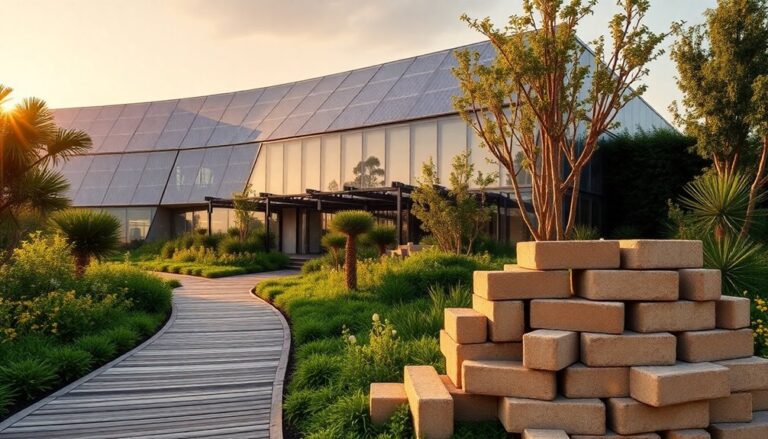
Innovative materials are transforming the future of construction. Self-healing concrete repairs cracks autonomously, while recycled plastic bricks offer a sustainable solution to waste. Energy-generating windows utilize sunlight for electricity, and smart glass technology optimizes energy use. 3D-printed components streamline building processes, enhancing customization and efficiency. In addition, insulating aerogels provide superior thermal performance, and transparent solar panels blend aesthetics with energy generation. Sustainable wood alternatives like bamboo and hempcrete contribute to eco-friendly practices. Each of these materials not just boosts durability and efficiency but also supports a greener planet. Exploring more can reveal even further advancements shaping tomorrow's architecture.
Self-Healing Concrete
Self-healing concrete represents a groundbreaking advancement in construction materials, addressing the persistent issue of cracks and deterioration. This innovative solution employs self-repairing mechanisms that considerably improve concrete durability, making it a game-changer in the construction industry. By integrating specialized materials and bacteria that activate upon contact with water, the concrete can autonomously repair itself, effectively sealing cracks as they appear and preventing further damage.
The implications of self-healing concrete extend far beyond mere aesthetics. With the ability to maintain structural integrity over time, it reduces long-term maintenance costs and extends the lifespan of buildings and infrastructure. This is particularly essential for high-stakes projects where safety and reliability are non-negotiable. By investing in self-healing concrete, developers not only bolster their structures but additionally strengthen their bottom lines.
Moreover, the adaptability of these self-repairing mechanisms guarantees that concrete can withstand various environmental pressures, from extreme weather to chemical exposure. As cities face increasing challenges from climate change, the durability of construction materials becomes paramount. Self-healing concrete stands as a proactive solution, offering resilience and sustainability, which appeals to stakeholders enthusiastic to embrace state-of-the-art technology.
In a world where resources are finite and demands are high, self-healing concrete empowers the construction industry to build smarter, stronger, and more sustainable structures. This innovation is not just a trend; it's a necessary evolution in the quest for durability and efficiency in modern architecture.
Energy-Generating Windows
As buildings evolve to meet the demands of energy efficiency, energy-generating windows are emerging as a revolutionary solution. These innovative windows utilize solar energy, converting sunlight into usable electricity without compromising aesthetics or functionality. By integrating state-of-the-art photovoltaic technology directly into the glass, they provide a seamless blend of form and function, allowing buildings to generate their own electricity during enhancing urban integration.
Energy-generating windows enable architects and developers to rethink traditional designs. They can transform entire cityscapes, cultivating sustainable urban environments that prioritize renewable energy. With cities facing increasing energy demands, these windows offer a dual benefit: they reduce reliance on external energy sources and lower energy costs for occupants. As a result, they become a strategic asset in the quest for energy independence.
Moreover, energy-generating windows contribute to the overall sustainability of buildings, making them an impactful tool in reducing carbon footprints. Building owners can achieve greater energy efficiency, enhancing their property's value and appeal. The potential for retrofitting existing structures with this technology presents a significant opportunity for revitalizing urban areas while promoting environmental stewardship.
In a world where energy efficiency is paramount, energy-generating windows stand out as a game-changer. They represent a forward-thinking approach to modern architecture, where energy production and urban integration converge to create resilient, sustainable communities. Embracing this technology not just paves the way for innovative buildings but additionally nurtures a greener future for generations to come.
3D-Printed Building Components
D-Printed building components are revolutionizing construction by streamlining the design and fabrication process. This innovative approach leverages 3D printing technology, allowing architects and builders to create highly customizable components that cater to particular project needs. The design flexibility inherent in 3D printing empowers professionals to push the boundaries of architectural innovation, transforming traditional ideas into bold realities.
Furthermore, D-Printed components greatly improve construction efficiency. With automated fabrication, projects can progress faster, reducing labor costs and minimizing delays. This rapid production not only accelerates timelines but also contributes to overall cost reduction, making it a compelling choice for developers aiming to maximize their investments.
Sustainable sourcing is another critical advantage of D-Printed materials. By utilizing recycled and eco-friendly materials, builders can minimize their environmental impact while maintaining the durability and performance of their structures. This commitment to sustainability resonates with a growing market that values responsible construction practices.
Material durability is paramount in modern construction, and D-Printed components excel in this area. With the ability to engineer materials tailored for performance, these components withstand the test of time, offering long-lasting solutions for various building applications.
Smart Glass Technology
With the rise of smart glass technology, buildings are becoming more energy-efficient and adaptable to their environments. This revolutionary approach to design and construction empowers architects and developers to utilize the dynamic capabilities of smart window technology. By incorporating adaptive glazing, buildings can respond in real time to changing environmental conditions, optimizing energy use and enhancing occupant comfort.
Smart glass functions by altering its transparency based on external factors like sunlight, temperature, and even occupancy. This means that during peak sunlight hours, the glass can darken to reduce glare and heat, whereas at night, it can allow more light in, creating a welcoming atmosphere. Such flexibility not only cuts down on energy costs but also greatly reduces the reliance on artificial lighting and climate control systems.
Moreover, the integration of smart window technology contributes to a building's aesthetic appeal. These sleek, modern installations can enhance the design of any structure, showcasing state-of-the-art innovation while maintaining functionality. As cities evolve, the demand for sustainable architecture grows, and adaptive glazing stands at the forefront of this movement.
Incorporating smart glass technology into future buildings isn’t just an upgrade; it’s a strategic decision that positions developers as leaders in sustainable design. By investing in these advanced materials, they can create spaces that are not only visually striking but also environmentally responsible, paving the way for a more sustainable future. Furthermore, integrating smart glass technology allows for enhanced energy efficiency, reducing reliance on artificial lighting and heating. As the construction industry evolves, the synergy between smart glass and smart home technology advancements can lead to innovative environments that adapt to the needs of their occupants. This holistic approach not only contributes to lower energy consumption but also elevates the overall living experience, making these developments highly desirable in a competitive market.
Recycled Plastic Bricks
The construction industry is increasingly exploring innovative solutions to reduce waste and improve sustainability, leading to the rise of recycled plastic bricks. These bricks, made from post-consumer plastic waste, demonstrate how sustainable sourcing can transform the outlook of modern architecture. By utilizing materials that would otherwise end up in landfills, builders are not merely minimizing environmental impact but also pushing the boundaries of design innovations.
Recycled plastic bricks offer a myriad of advantages, from durability to thermal insulation. Their lightweight nature simplifies transport and installation, making them an attractive option for developers keen to cut costs and timelines. Furthermore, the versatility in color and texture allows architects to release their creativity, integrating these materials into various aesthetic styles.
| Feature | Benefits | Impact on Construction |
|---|---|---|
| Eco-Friendly | Reduces landfill waste | Promotes a circular economy |
| Lightweight | Easier transport and handling | Lowers transportation costs |
| Insulation Properties | Improves energy efficiency | Reduces long-term operational costs |
| Versatile Design | Customizable aesthetics | Expands creative potential for projects |
As the industry shifts in the direction of more sustainable practices, recycled plastic bricks stand out as a formidable option. They uphold the principles of innovation while addressing pressing environmental concerns. By embracing these materials, construction professionals can wield influence not just in their projects, but in the broader fight against climate change.
Bio-Based Materials
Utilizing the strength of nature, bio-based materials are emerging as a significant solution in modern construction. These materials utilize the energy of renewable resources, offering builders an environmentally-friendly alternative that does not compromise on performance. Among the most promising innovations are biodegradable composites, which combine natural fibers with polymers to create strong, lightweight structures. These composites not only reduce reliance on fossil fuels but also guarantee that buildings can be dismantled and returned to the earth, minimizing waste.
Natural fiber insulation is another game-changer in the sector of bio-based materials. Made from materials like hemp, cotton, and sheep's wool, this insulation offers superior thermal and acoustic properties whilst promoting sustainability. By effectively regulating indoor temperatures, natural fiber insulation reduces energy consumption, empowering architects and builders to craft energy-efficient spaces.
The rise of bio-based materials aligns with the growing demand for sustainable building practices. Developers and contractors are increasingly recognizing the value these materials bring to the table, from enhancing the aesthetic appeal of structures to improving occupant health. By integrating biodegradable composites and natural fiber insulation into their projects, they not only contribute to a healthier planet but also position themselves as leaders in the construction industry.
In a world where environmental responsibility is paramount, bio-based materials represent a significant shift toward a sustainable future. Their potential to transform construction is undeniable, making them an essential component in shaping the buildings of tomorrow.
Nanomaterials in Construction
As the construction industry embraces innovative solutions like bio-based materials, it similarly turns its attention to nanomaterials, which are reshaping the terrain of modern building techniques. These advanced materials, engineered at the molecular level, offer unparalleled benefits that drive structural optimization and improve performance across various applications.
Nanomaterial applications in construction include concrete reinforcement, where nanosilica improves strength and durability, ensuring structures can withstand the test of time. By incorporating nanomaterials, builders can achieve lighter, yet stronger, components that reduce resource consumption without compromising integrity. This shift not just leads to cost savings but also promotes sustainability, aligning with the industry's growing focus on ecological responsibility.
Furthermore, nanomaterials improve thermal and acoustic properties, allowing for more efficient energy use and enhanced comfort in residential and commercial spaces. Innovations in coatings and finishes featuring nanotechnology provide superior resistance to wear, corrosion, and UV damage, extending the lifespan of buildings and reducing maintenance needs.
The potential of nanomaterials extends beyond mere performance improvements; they enable architects and engineers to push boundaries, designing structures that were previously unimaginable. As the construction sector continues to evolve, embracing these state-of-the-art materials paves the way for a future where buildings are smarter, stronger, and more sustainable.
Insulating Aerogels
Insulating aerogels boast unique properties, such as their remarkable lightweight structure and impressive thermal resistance. Architects are increasingly incorporating these materials into their designs, enhancing energy efficiency and aesthetic appeal. Nonetheless, it is crucial to take into account the environmental impact of aerogel production and disposal as the construction industry moves toward sustainable practices.
Unique Properties of Aerogels
Aerogels stand out as remarkable materials in the domain of insulation, known for their incredibly low thermal conductivity and lightweight structure. These unique properties make aerogel insulation a potent choice for a variety of applications, enhancing energy efficiency and reducing material weight in construction.
- Exceptional Thermal Performance: Aerogels boast thermal conductivities as low as 0.013 W/m·K, far surpassing traditional insulating materials.
- Lightweight Design: Weighing only a fraction of conventional insulation, aerogels allow for easier installation and reduced structural load.
- High Porosity: Their porous structure enables aerogels to retain air, which is crucial for efficient insulation during minimal weight.
- Versatile Applications: From space missions to modern building designs, aerogel applications are increasing, showcasing their adaptability in various environments.
Due to these compelling characteristics, aerogel insulation is becoming increasingly sought after in sectors demanding superior performance and innovation. As architects and engineers pursue state-of-the-art solutions, the unique properties of aerogels position them as a formidable contender in the quest for sustainable, efficient building materials.
Applications in Architecture
Architects are increasingly integrating insulating aerogels into their designs, leveraging their extraordinary thermal efficiency and lightweight nature. These advanced materials enable the realization of smart buildings that not just optimize energy performance but also improve occupant comfort. By utilizing aerogels, architects can create structures that maintain stable indoor climates, reducing reliance on traditional heating and cooling systems.
In the domain of adaptive reuse, insulating aerogels play a pivotal role. They allow architects to preserve historical facades while updating the thermal performance of older buildings. This innovative approach breathes new life into aging structures, ensuring they meet modern energy standards without compromising their historical integrity.
Moreover, the versatility of aerogels supports diverse architectural applications, from insulating walls to innovative glazing solutions. In high-performance buildings, reducing thermal bridging becomes achievable, leading to substantial energy savings. As architects embrace these materials, they're not merely constructing buildings; they're shaping the future of architecture.
With insulating aerogels, the potential for groundbreaking design and sustainability is immense, making them a formidable tool in the architect's arsenal. The synergy of innovation and tradition is truly the hallmark of today's architectural environment.
Environmental Impact Considerations
Many are recognizing the significant environmental advantages of insulating aerogels in the construction industry. These lightweight materials not merely improve energy efficiency but additionally contribute to a reduced carbon footprint throughout their lifecycle. With an extensive lifecycle assessment, stakeholders can accurately evaluate the environmental impacts of aerogels from production to disposal.
Here are four key environmental benefits of insulating aerogels:
- Energy Efficiency: Aerogels provide superior thermal insulation, minimizing energy consumption for heating and cooling.
- Resource Conservation: Their lightweight nature means less material is needed, reducing the demand for raw resources.
- Reduced Waste: The longevity of aerogels leads to less frequent replacements, minimizing waste generation over time.
- Lower Emissions: By decreasing energy needs, aerogels indirectly lower greenhouse gas emissions associated with energy production.
Incorporating insulating aerogels into building designs not only aligns with sustainability goals but also positions builders as leaders in the green construction movement. The strategic use of these innovative materials empowers architects and developers to create structures that are not merely resilient but additionally environmentally responsible.
Transparent Solar Panels
Transparent solar panels represent a groundbreaking advancement in renewable energy technology. These innovative materials provide a dual function, allowing buildings to capture solar energy as they maintain aesthetic appeal. As society pushes toward sustainability, transparent technology advancements redefine how architects and builders approach energy efficiency. By integrating solar energy seamlessly into windows and facades, they empower structures to produce their own energy without compromising design.
To illustrate the impact of transparent solar panels, consider the following table:
| Feature | Benefits |
|---|---|
| Aesthetics | Maintains natural light and views |
| Efficiency | Generates energy without visible panels |
| Versatility | Compatible with various building designs |
| Environmental Impact | Reduces reliance on fossil fuels |
The integration of solar energy into everyday architecture is more than just a trend; it's a necessity for future sustainability. As urban areas evolve, the demand for energy-efficient solutions grows. Transparent solar panels not just fulfill this need but additionally increase property value. Developers and homeowners alike are drawn to their potential, recognizing that these panels can transform ordinary structures into energy-generating assets.
The future of construction lies in this dynamic fusion of form and function. As transparent solar technology matures, its widespread adoption will reshape urban environments, ensuring that energy production and architectural beauty go hand in hand. By capturing the sun's energy through innovative design, society can stride confidently into a greener, more sustainable future.
Sustainable Wood Alternatives
In the quest for environmentally friendly construction materials, sustainable wood alternatives have emerged as a crucial solution. As architects and builders seek innovative methods to reduce their environmental footprint, materials like cross laminated timber and bamboo composites are taking center stage. These alternatives not only offer structural integrity but furthermore boast impressive sustainability credentials.
Here are four remarkable sustainable wood alternatives reshaping the construction environment:
- Cross Laminated Timber (CLT): This engineered wood product consists of layers of lumber glued together at right angles. Its strength and versatility make it an ideal choice for multi-story buildings, allowing for quicker construction and reduced carbon emissions.
- Bamboo Composites: Known for their rapid growth and renewability, bamboo composites are gaining traction. They combine bamboo fibers with resins to create durable, lightweight materials that outperform traditional wood in many applications.
- Reclaimed Wood: Sourced from old structures, reclaimed wood is an influential choice. It reduces waste and adds character and history to new builds, appealing to those who value uniqueness in design.
- Hempcrete: Although not a structural wood substitute, hempcrete offers insulation and durability. It's made from hemp hurds and lime, creating a breathable material that sequesters carbon, further enhancing its eco-friendly profile.
As the demand for sustainable building practices increases, these wood alternatives showcase the potential for a greener future in construction. Embracing these materials enables builders to create structures that are not only innovative but furthermore environmentally responsible.
Modular Construction Systems
Sustainable building practices are paving the way for innovative construction methods, and modular construction systems are at the forefront of this movement. These systems transform the traditional construction environment by utilizing prefabricated units that are manufactured off-site and assembled on-site. This shift not only accelerates the building process but additionally improves quality control, as each unit is crafted in a controlled environment.
Modular construction allows for flexible designs that adapt to various site conditions and client needs. Architects and builders can create bespoke structures that maintain aesthetic appeal while optimizing functionality. This adaptability makes modular construction a potent tool in addressing the diverse demands of modern architecture.
Moreover, modular systems greatly reduce waste and lower carbon footprints. By streamlining the construction process, they minimize material usage and transportation emissions, aligning perfectly with global sustainability goals. The efficiency of prefabricated units means projects can be completed faster, allowing for quicker return on investment.
In an era where time, cost, and environmental impact are paramount, modular construction systems stand out as a compelling solution. They enable developers and stakeholders to seize opportunities in a competitive marketplace while nurturing innovative building practices. As cities evolve and the need for sustainable infrastructure grows, the adoption of modular systems will certainly play a critical role in shaping the buildings of the future, ensuring they are not only functional but also environmentally responsible.
Frequently Asked Questions
How Do These Materials Impact Construction Costs Over Time?
The question of how materials impact construction costs over time reveals significant insights into cost efficiency and long-term savings. By utilizing advanced materials, builders streamline processes and reduce labor expenses. These innovations often lead to lower maintenance requirements, which further decreases overall expenditure. As a result, stakeholders who embrace these materials find themselves reaping substantial financial benefits, making informed choices that not just improve their projects but likewise secure their economic future.
What Are the Environmental Impacts of Producing These Innovative Materials?
In a kingdom where giants built castles from whispers of the earth, the production of innovative materials casts shadows on their domain. These creations, although mighty, often bear a heavy carbon footprint, threatening the very air they breathe. Resource depletion lurks like a thief in the night, stealing the essence of their land. As the giants forge ahead, they must weigh their ambitions against the environmental toll, ensuring their legacy doesn't crumble beneath their feet.
Are There Any Regulations Governing the Use of These Materials?
There're certainly regulations governing the use of innovative materials, ensuring material safety and regulatory compliance. Authorities establish stringent guidelines to protect both the environment and public health. These regulations address material sourcing, production processes, and end-of-life disposal. Organizations that incorporate these materials must stay informed about evolving standards, as non-compliance can lead to significant penalties and reputational damage. By adhering to these regulations, companies can confidently leverage materials as they demonstrate their commitment to responsible practices.
How Do These Materials Perform in Extreme Weather Conditions?
During intimidating downpours and blistering blizzards, the performance of materials is paramount. These state-of-the-art compounds boast remarkable thermal resistance, ensuring that structures stay cozy and energy-efficient. They excel in moisture management, preventing water intrusion that could weaken foundations. When faced with extreme weather, these materials demonstrate durability and dependability, providing builders and occupants with the confidence they crave. In the end, they transform challenges into opportunities for resilient, long-lasting architecture.
What Is the Lifespan of These Innovative Construction Materials?
The lifespan of innovative construction materials often varies, but their durability stands out in comparison to traditional options. Engineers typically assess these materials for their resistance to wear, environmental factors, and overall structural integrity. As some may last decades, others can endure over a century with minimal maintenance. By prioritizing material durability, builders guarantee that investments yield long-term benefits, in the end enhancing the strength and longevity of their structures in a competitive environment.