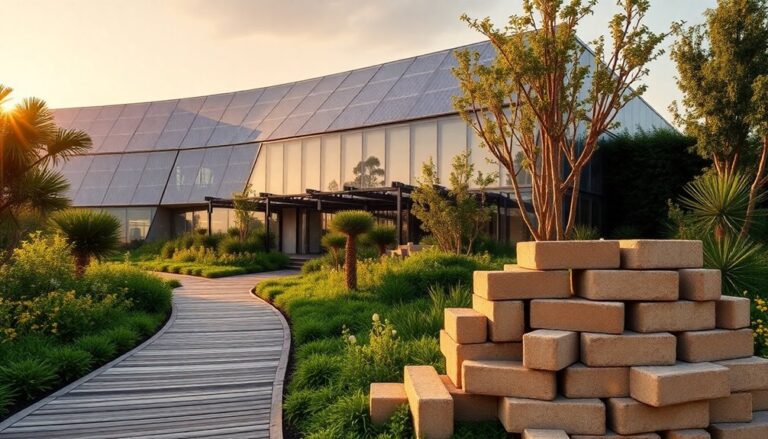
Architectural symmetry, a timeless design principle, has its roots in ancient cultures, where it was used to convey strength, wisdom, and spiritual connection. Symmetry’s power was recognized by civilizations like Egyptians and Greeks, who incorporated geometric codes into their architectural designs. Today, modern designers continue to draw from these fundamental principles, balancing innovation with tradition to create enduring structures. From iconic landmarks to modern twists on symmetrical design, the art of architectural symmetry remains a cornerstone of building design, shaping cultural legacies and influencing urban planning. As we explore the intricacies of symmetry, its beauty and significance will reveal themselves. Architects today often experiment with geometric patterns in modern architecture, bringing a fresh perspective to the time-honored principle of symmetry. These patterns not only enhance the visual appeal of structures but also serve functional purposes, allowing for improved airflow, natural lighting, and spatial organization. As cities evolve, the fusion of traditional symmetry with contemporary design language continues to inspire both creators and observers, ensuring that this architectural ethos remains relevant in the face of changing aesthetics and needs.
The Ancient Roots of Symmetry
Symmetry's ancient roots stretch back to the dawn of human civilization, where it emerged as a fundamental principle in the design of sacred structures and monuments. Ancient civilizations, from the Egyptians to the Greeks, recognized the power of symmetry in creating a sense of balance, harmony, and grandeur. They incorporated geometric codes into their architectural designs, imbuing their creations with an aura of majesty and authority.
In ancient Egypt, the pyramids' precise geometry and symmetrical layout were believed to bridge the mortal world with the divine domain. The Greeks, too, employed symmetry in their iconic temples, where columns and arches were carefully arranged to evoke a sense of proportion and beauty. These ancient architects understood that symmetry wasn't just aesthetically pleasing, but also conveyed a sense of power and prestige.
Throughout history, symmetry has been used to convey messages of strength, wisdom, and spiritual connection. From the intricate mandalas of Hindu temples to the majestic cathedrals of medieval Europe, symmetrical design has played a significant role in shaping the architectural landscape. By decoding the geometric patterns and symmetrical principles of ancient civilizations, modern architects can tap into the timeless power of symmetry, creating structures that inspire awe, reverence, and a sense of connection to the divine.
Principles of Symmetrical Design
By examining the timeless examples of ancient architecture, modern designers can distill the fundamental principles of symmetrical design, which continue to influence contemporary building practices. These principles are rooted in the deliberate use of design elements, such as lines, shapes, and forms, to create a sense of balance and order. Symmetrical design is not just about aesthetics; it's about creating a spatial hierarchy that guides the viewer's attention and movement.
A well-designed symmetrical composition can evoke feelings of power, stability, and grandeur. It's no coincidence that many iconic landmarks, from the White House to the Taj Mahal, feature symmetrical designs. By employing symmetrical principles, architects can create a sense of unity and cohesion, drawing the viewer's eye to the central axis. This, in turn, can create a sense of importance and significance.
In symmetrical design, every element is carefully considered and balanced to create a sense of harmony. From the placement of columns to the arrangement of windows, every detail is deliberate and intentional. By mastering these principles, architects can create buildings that exude confidence, authority, and sophistication. Whether designing a grand monument or a modern skyscraper, understanding the principles of symmetrical design is essential for creating structures that inspire and awe.
Balance and Harmony in Architecture
When architects aim for balance and harmony in their designs, they carefully consider the visual weight distribution of elements to create a sense of stability. They also focus on achieving important proportions, as this is vital in establishing a sense of unity and coherence. By doing so, they're able to create an aesthetic harmony that engages and inspires occupants and observers alike.
Visual Weight Distribution
Distributing visual weight effectively is vital in architectural design, as it creates a sense of balance and harmony that guides the viewer's eye through the composition. Visual weight distribution is the delicate balance of visual elements, such as shape, size, color, and texture, to create a sense of stability and equilibrium. A well-designed visual hierarchy guarantees that the most important elements stand out, while less important ones recede, creating a clear path for the viewer's eye to follow.
Structural balance is also essential in visual weight distribution. Symmetrical compositions can create a sense of order and stability, while asymmetrical ones can generate a sense of tension and dynamism. By carefully balancing visual elements, architects can create a sense of harmony and balance, drawing the viewer's eye to the focal points of the design. Effective visual weight distribution is critical in creating a powerful and engaging architectural design that commands attention and inspires awe. By mastering this subtle yet essential aspect of design, architects can create buildings that truly make a statement.
Perfect Proportions Matter
Architects have long recognized that perfect proportions are the foundation of balance and harmony in architectural design, as they create a sense of unity and cohesion that engages the viewer on a deeper level. These proportions are not just aesthetically pleasing, but they also contribute to the Structural Integrity of a building, ensuring that it stands the test of time. By applying Mathematical Beauty principles, architects can create a sense of harmony that resonates with the human psyche. Perfect proportions can be achieved by using ratios, such as the golden ratio, to create a sense of balance and symmetry. This attention to detail is what sets apart iconic buildings from mere structures. When architects prioritize perfect proportions, they create spaces that exude confidence, stability, and power. The result is a building that not only looks magnificent but also feels rock-solid, conveying a sense of authority and grandeur. By mastering the art of perfect proportions, architects can create structures that inspire awe and command respect.
Aesthetic Harmony Found
Balanced compositions, where every element works in harmony, create a sense of aesthetic harmony that draws the viewer in and refuses to let go. This symphony of forms and structures is the hallmark of exceptional architecture, where each component complements the others to create a cohesive whole. In this domain, architects wield immense power, shaping the visual narrative that unfolds before our eyes.
Aesthetic harmony is not just a byproduct of careful planning; it's a deliberate design choice that can elevate a building from mere functionality to a work of art. Cultural fusion, for instance, can lead to intriguing juxtapositions of styles, creating a unique visual language that resonates with diverse audiences. As design evolves, architects must navigate the delicate balance between innovation and tradition, ensuring that their creations not only push boundaries but also pay homage to the past. By mastering the art of aesthetic harmony, architects can craft structures that inspire, uplift, and endure – a tribute to the transformative power of symmetrical design.
Symmetry in Sacred Spaces
In sacred spaces, architects often employ symmetry to evoke a sense of spirituality and connection to the divine. They achieve this by incorporating divine proportion in design, which creates a sense of balance and harmony. By balancing sacred forms, architects can create an atmosphere that inspires contemplation and reverence.
Divine Proportion in Design
Sacred spaces, from ancient temples to modern cathedrals, have long incorporated divine proportion in their design to evoke a sense of harmony and spirituality. This concept is rooted in Sacred Mathematics, which believes that certain numerical ratios possess sacred significance. One such ratio is the golden ratio (1.618:1), found in Fractal Geometry, which is believed to create a sense of balance and unity.
| Sacred Space | Divine Proportion Example |
|---|---|
| Parthenon, Greece | 9:14 ratio in column spacing |
| Taj Mahal, India | Golden ratio in dome design |
| Notre Dame, France | 1.618:1 ratio in nave width |
| Angkor Wat, Cambodia | Fibonacci sequence in temple layout |
Balance in Sacred Forms
Symmetry plays a significant role in creating a sense of harmony and unity in sacred spaces, as it mirrors the intrinsic balance found in nature and the human experience. In these spaces, architects often employ Sacred Geometry, an ancient design philosophy that harnesses Formative Energy to create a sense of awe and connection to the divine. By incorporating symmetrical elements, such as arches, domes, and mandalas, architects can tap into the spiritual essence of a space, creating an atmosphere of reverence and contemplation.
In sacred spaces, symmetry serves as a visual representation of the balance and harmony that exists within the universe. It's a powerful tool for evoking emotions, inspiring spiritual growth, and fostering a sense of community. By carefully balancing form and function, architects can create sacred spaces that not only inspire, but also nurture the human spirit. Through the strategic use of symmetry, these spaces become vessels for spiritual exploration, guiding individuals towards a deeper understanding of themselves and the world around them.
The Psychology of Symmetrical Design
Frequently, architects and designers deliberately incorporate symmetrical elements into their work because they instinctively understand the profound impact it has on human emotions and behavior. This incorporation is not merely aesthetically driven, but rather rooted in the psychology of symmetrical design. Symmetry has the power to evoke emotional responses, influence cognitive biases, and even trigger emotional reactions.
The human brain is wired to respond positively to symmetrical compositions, as they convey a sense of order, balance, and harmony. This innate preference is rooted in our evolutionary past, where symmetry was often associated with health, beauty, and survival. As a result, architects and designers can leverage this cognitive bias to create spaces that feel more comforting, inviting, and even prestigious. Symmetrical design can also be used to create a sense of grandeur, authority, and power, making it a popular choice for institutional and government buildings.
Furthermore, symmetrical elements can be used to manipulate emotional triggers, such as feelings of calmness, excitement, or even reverence. By carefully balancing symmetrical and asymmetrical elements, designers can create a sense of tension and release, guiding the viewer's emotional response. This subtle yet powerful manipulation of emotional triggers is a hallmark of effective symmetrical design. By understanding the psychology behind symmetrical design, architects and designers can create spaces that not only look beautiful but also evoke a desired emotional response, making them more effective and impactful.
Famous Examples of Symmetry
From the Taj Mahal's perfect reflection pools to the White House's stately columns, some of the world's most iconic structures have famously employed symmetry to create an unforgettable visual impact. These masterpieces of architecture have captivated audiences for centuries, showcasing the power of symmetry to evoke feelings of grandeur, elegance, and sophistication.
Here are some of the most striking examples of symmetrical design in iconic landmarks and historical marvels:
- The Taj Mahal: This Indian mausoleum is renowned for its perfect reflection pools, which create a stunning display of symmetry. The intricate marble inlays and ornate arches are carefully balanced to create a sense of harmony and beauty.
- The White House: The neoclassical design of the White House features stately columns, perfectly symmetrical windows, and a central dome that creates a sense of balance and proportion.
- St. Peter's Basilica: This iconic Vatican City landmark boasts a stunning display of symmetry, with its imposing dome, ornate fountains, and perfectly balanced colonnades.
- The Alhambra: This ancient Moorish palace in Spain is a masterclass in symmetrical design, with its intricate arches, ornate tile work, and perfectly balanced courtyards.
These iconic landmarks and historical marvels demonstrate the timeless appeal of symmetrical design, showcasing its ability to evoke feelings of power, elegance, and sophistication. By incorporating symmetry into their designs, architects have created structures that continue to inspire and awe audiences around the world.
Modern Twists on Symmetrical Design
In recent years, architects have been experimenting with innovative ways to incorporate symmetry into their designs, often blending traditional elements with modern twists and unconventional materials. This fusion of old and new has led to the creation of visually striking and thought-provoking structures that push the boundaries of architectural symmetry.
| Design Element | Traditional Symmetry | Modern Twist |
|---|---|---|
| Geometric Patterns | Repetitive and uniform | Algorithmic innovation, generating complex patterns |
| Materials | Marble, stone, and wood | Unconventional materials like recycled plastic and metal alloys |
| Facade Design | Mirrored reflections | Parametric complexity, creating unique, curved lines |
By embracing algorithmic innovation and parametric complexity, architects can create buildings that are not only aesthetically pleasing but also highly functional and sustainable. For instance, the use of recycled materials can reduce waste and minimize environmental impact. Additionally, the incorporation of complex geometric patterns can improve natural lighting and ventilation, reducing the need for artificial lighting and heating.
As architects continue to experiment with modern twists on symmetrical design, we can expect to see even more breathtaking and innovative structures that redefine the boundaries of architectural symmetry. With the ability to push the limits of design and materials, architects are empowered to create buildings that are not only visually striking but also environmentally conscious and functional.
The Role of Symmetry in Urban Planning
As cities evolve and grow, architects and urban planners turn to symmetry as a tool to craft cohesive, efficient, and visually appealing urban landscapes. By incorporating symmetrical elements, they can create a sense of order and harmony, fostering a strong urban identity. Symmetry plays an important role in city governance, as it helps to organize and manage urban spaces effectively. This, in turn, promotes a sense of community and social cohesion among citizens.
Here are four ways symmetry shapes urban planning:
- Grid systems: Symmetrical grid systems simplify navigation, making it easier for residents and visitors to move around the city.
- Public spaces: Symmetrical public spaces, such as parks and plazas, create a sense of balance and harmony, encouraging social interaction and community engagement.
- Building placement: Strategically placing buildings and landmarks in symmetrical arrangements enhances the city's aesthetic appeal and creates a sense of visual unity.
- Infrastructure design: Symmetrical infrastructure design, such as roads and bridges, improves traffic flow and reduces congestion, making cities more efficient and livable.
Symmetry's Enduring Influence on Architecture
Symmetry's timeless appeal has architects continually drawing upon its principles to craft iconic, visually stunning buildings that stand the proof of time. This enduring influence is evident in the world's most renowned structures, from the majestic Taj Mahal to the majestic White House. Symmetry's ability to evoke feelings of balance, harmony, and grandeur has made it a cornerstone of architectural design, transcending styles and eras.
Throughout history, symmetry has played a significant role in shaping cultural legacies. The ancient Greeks, for instance, employed symmetry to create iconic structures like the Parthenon, which has become an emblem of Greek cultural heritage. Similarly, the Renaissance saw a resurgence of symmetry in architecture, with masterpieces like St. Peter's Basilica in Rome, which continues to inspire awe and reverence.
Symmetry's historical significance extends beyond aesthetics, as it has also been used to convey power, authority, and prestige. From grand monuments to government buildings, symmetry has been employed to instill a sense of reverence and respect. This is particularly evident in the design of national capitals, where symmetry is often used to create a sense of gravitas and importance. As architects continue to push the boundaries of design, symmetry remains an indispensable element, ensuring that buildings not only inspire but also endure as proofs to human ingenuity and creativity.
Frequently Asked Questions
Can Asymmetrical Designs Be Visually Appealing Too?
She acknowledges that asymmetrical designs can be visually appealing, embracing the beauty of aesthetic chaos. By breaking free from traditional symmetry, architects can create a sense of visual freedom, where unconventional forms and shapes come together in harmony. This bold approach can result in iconic, attention-grabbing structures that exude power and sophistication, defying the norms of traditional design.
Is Symmetry Only Limited to Building Facades?
She asserts that symmetry extends far beyond building facades, playing an essential role in structural integrity and urban planning. Symmetrical designs can optimize load distribution, reducing the risk of collapse, while also creating a sense of balance and harmony in urban landscapes. By incorporating symmetry into the overall design, architects can craft buildings that not only look impressive but also stand the test of time.
Do Symmetrical Designs Require More Construction Costs?
As the behemoth of a building rises, its symmetrical design casts a majestic shadow. But, does this harmony of form come at a hefty price? Not necessarily, experts argue. Symmetrical designs can actually optimize material usage and enhance structural efficiency, ultimately reducing construction costs. By cleverly leveraging mirrored elements, architects can streamline the building process, saving time and resources.
Can Symmetry Be Used in Interior Design as Well?
She knows that symmetry isn't limited to exterior structures. In interior design, it's a powerful tool to create a sense of balance and harmony. By strategically placing focal points and directing visual flow, she can craft spaces that exude luxury and sophistication. Symmetry can be used to draw attention to statement pieces or create a sense of calm, making it a versatile technique for interior designers who want to make a statement.
Are There Any Cultural Restrictions on Using Symmetry in Architecture?
Like a master chef seasoning a dish, cultural nuances flavor the use of symmetry in architecture. When it comes to cultural restrictions, religious edicts and regional taboos can be major obstacles. In some cultures, symmetry is seen as a symbol of perfection, reserved for sacred spaces, while in others, it's viewed as arrogant or even evil. Architects must navigate these complexities to create structures that not only please the eye but also respect local sensitivities.