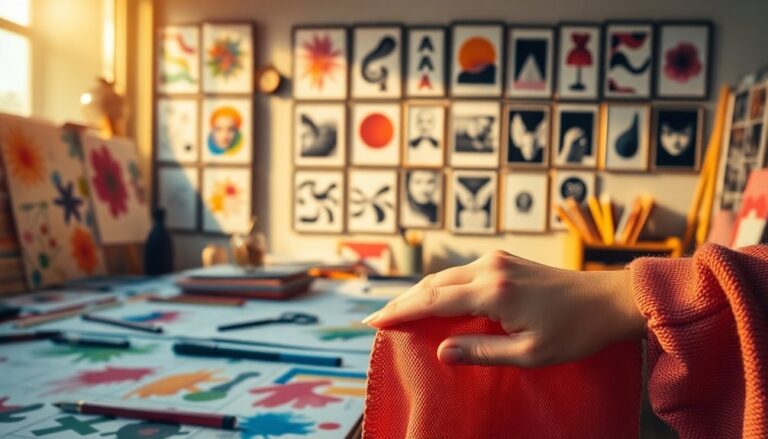
To blend organic and geometric shapes for unique designs, it is crucial to understand the distinctions between the two. Organic shapes evoke fluidity and dynamism, whereas geometric shapes convey stability and cohesion. Balancing soft and hard edges, textures, and patterns can create striking contrasts and visual tension. Harmonizing shape textures and colors improves visual harmony, whereas layering and scale techniques add complexity and interest. By embracing creativity and experimenting with different combinations, designers can create visually impactful and emotionally resonant compositions that engage the viewer. As you explore these techniques, new possibilities for unique designs will emerge.
Understanding Organic and Geometric Shapes
What distinguishes organic from geometric shapes, and how do these distinctions impact design? Organic shapes are characterized by free-form, curvilinear lines and irregular boundaries, often reminiscent of natural forms. In comparison, geometric shapes are defined by precise, angular lines and uniform boundaries, evoking a sense of structure and order. These fundamental differences in shape language influence design principles, as organic shapes tend to create a sense of fluidity and dynamism, whereas geometric shapes convey stability and cohesion.
The distinction between organic and geometric shapes has a profound impact on visual balance and shape interaction. Organic shapes can create a sense of tension and movement, whereas geometric shapes can establish a sense of harmony and stability. Effective design often relies on the strategic use of both shape types to achieve a balance between creativity and structure. The creative process benefits from the exploration of both shape languages, as designers can exploit the variation between organic and geometric shapes to create visually striking compositions.
The aesthetic appeal of a design is often tied to the successful integration of organic and geometric shapes. Form exploration, which involves the manipulation and combination of shapes, is a critical aspect of the design process. By comprehending the unique properties of organic and geometric shapes, designers can utilize their distinct strengths to create innovative, visually appealing designs that engage and inspire users.
Balancing Soft and Hard Edges
Balancing soft and hard edges is an essential aspect of blending organic and geometric shapes, since it enables designers to create visually appealing contrasts and harmonies. By combining soft, curved edges with hard, angular ones, designers can add depth and dimensionality to their designs. Effective balance requires careful consideration of edge types, in addition to the textures and angles of the shapes being used.
Contrasting Edge Types
Three key elements come together to create visually striking designs that blend organic and geometric shapes: harmony, distinction, and balance. One vital aspect of achieving this balance is perfecting contrasting edge types. By combining soft, rounded edges with hard, angular ones, designers can create dynamic distinctions that captivate the viewer's attention. Soft edges, often found in organic shapes, can add a sense of fluidity and naturalness to a design. Conversely, hard edges, characteristic of geometric shapes, can introduce a sense of structure and precision.
When used together, these contrasting edges can create a visually appealing tension that guides the viewer's eye through the composition. The key to success lies in striking a balance between the two. Too many soft edges can result in a design that feels mushy or undefined, whereas an overabundance of hard edges can make a design feel rigid or cold. By carefully balancing contrasting edge types, designers can create a sense of harmony and visual interest that draws the viewer in.
Softening Geometry's Angles
As designers endeavor to achieve harmony between organic and geometric shapes, they must likewise consider the role of angles in creating visual interest. Geometry's sharp angles can be jarring when paired with soft, organic curves. To balance these contrasting elements, designers can soften geometry's angles, creating a more harmonious visual experience.
To achieve this balance, designers can employ the following techniques:
- Rounding corners: Softening sharp corners can help geometric shapes blend more seamlessly with organic forms.
- Using curves to connect shapes: Creating smooth, flowing curves to connect geometric shapes can help reduce angular contrasts.
- Employing subtle bevels: Adding subtle bevels or chamfers to geometric shapes can help soften their edges, creating a more organic feel.
Harmonizing Shape Textures
Beyond the domain of shape and form, texture plays a crucial role in harmonizing organic and geometric elements. The interplay between soft and hard edges can greatly impact the overall aesthetic of a design. Harmonizing shape textures involves striking a balance between the two, creating a visual harmony that engages the viewer.
Soft textures, often associated with organic shapes, can add warmth and tactility to a design. Conversely, hard textures, commonly found in geometric shapes, can introduce a sense of modernity and sleekness. By combining these textures thoughtfully, designers can create a visually appealing contrast that adds depth and interest to their work. Achieving texture harmony requires consideration of the shape dynamics at play. For instance, pairing a smooth, curved organic shape with a geometric shape featuring sharp, angular edges can create an enchanting juxtaposition. By balancing soft and hard edges, designers can craft unique designs that showcase the beauty of blending organic and geometric shapes.
Contrasting Textures and Patterns
When combining organic and geometric shapes, contrasting textures and patterns can add an extra layer of visual interest to a design. Rough, organic textures can be paired with smooth, geometric surfaces to create a striking visual contrast. By juxtaposing different patterns, such as organic florals with geometric grids, designers can create unique and enthralling visual effects.
Rough Meets Smooth
Three distinct visual languages emerge when organic and geometric shapes converge: harmony, tension, and contrast. One of the most fascinating aspects of this convergence is the interplay between rough textures and smooth surfaces. This contrast can add depth, visual interest, and emotional resonance to a design.
- Rough textures can evoke a sense of naturalness, earthiness, and tactility, whereas smooth surfaces convey a sense of modernity, sleekness, and sophistication. By combining these two, designers can create a dynamic visual dialogue that engages the viewer.
- The roughness of organic shapes can be tempered by the smoothness of geometric shapes, creating a sense of balance and harmony. Conversely, the smoothness of geometric shapes can be disrupted by the roughness of organic shapes, generating a sense of tension and visual intrigue.
- This contrast can likewise be used to guide the viewer's attention, with rough textures drawing the eye in the direction of certain elements and smooth surfaces creating a sense of calm and visual respite. By thoughtfully combining rough and smooth elements, designers can craft unique and enchanting designs that resonate with their audience.
Pattern Playoffs
The interplay between rough textures and smooth surfaces can also be observed in the domain of patterns, where organic and geometric shapes converge to create visually striking contrasts. This fusion of dissimilar patterns can yield enchanting designs that intrigue the viewer's eye. By juxtaposing organic patterns, such as botanical motifs or natural textures, with geometric patterns, like chevrons or hexagons, designers can create intriguing visual tensions.
Pattern exploration is an essential aspect of design experimentation, as it allows designers to test the boundaries of visual harmony and discord. By combining patterns with varying scales, orientations, and levels of complexity, designers can craft unique and eye-catching designs. Furthermore, the contrast between organic and geometric patterns can add depth, rhythm, and emotion to a design, making it more engaging and memorable. When executed thoughtfully, pattern playoffs can enhance a design from mundane to mesmerizing, inviting the viewer to explore and interact with the visual narrative.
Creating Harmony With Color Palettes
- Color Theory: Understand how colors interact with each other, taking into account color harmony, color psychology, and the emotional responses they evoke. Warm tones can stimulate emotions, whereas cool tones can calm them.
- Complementary Colors: Pair colors that are opposite each other on the color wheel to create visual interest and balance. This technique can add depth and dimensionality to your design.
- Monochromatic Schemes and Color Gradients: Use different shades of a single color to create a cohesive look, or shift between colors to add visual flow. This approach can help to tie together disparate elements and create a sense of unity.
Geometric Shapes in Nature
Intricate snowflakes, with their delicate patterns and symmetries, exemplify the ubiquity of geometric shapes in nature. From the branching patterns of trees to the spiral arrangements of seashells, natural symmetry is a fundamental aspect of the world around us. This symmetry is often accompanied by fractal patterns, which repeat at different scales to create visually striking and harmonious forms.
| Natural Form | Geometric Shape |
|---|---|
| Seashells | Spiral |
| Trees | Branching Fractal |
| Romanesco Broccoli | Fibonacci Spiral |
The study of organic geometry in nature has inspired biomimetic design, where designers draw inspiration from natural forms to create sustainable and visually balanced solutions. By examining nature's rhythm and the evolution of shapes in the natural world, we can develop ecological aesthetics that not only please the eye but likewise promote harmony with the environment. This fusion of natural and geometric forms can lead to innovative design inspiration, as seen in the use of fractal patterns in architecture and product design.
Organic Forms in Urban Landscapes
In urban environments, architects are increasingly incorporating organic forms to create harmonious juxtapositions of nature and concrete. This fusion is evident in urban jungle architecture, where buildings appear to be overgrown with lush vegetation, and in the revival of green spaces, which provide oasis-like escapes from the hustle and bustle of city life. By integrating organic forms into urban design, cities can become more sustainable, livable, and visually striking.
Urban Jungle Architecture
How can we revitalize urban environments by infusing them with organic forms, reminiscent of the natural world? Urban Jungle Architecture is an innovative approach that brings together the harmony of nature and the functionality of urban settings. By incorporating organic forms into urban design, we can create a sense of balance and tranquility amidst the hustle and bustle of city life.
To achieve this, architects can focus on the following key elements:
- Urban greenery: Incorporating lush vegetation and green spaces into urban design can help to purify the air, reduce noise pollution, and create a calming atmosphere.
- Architectural harmony: By blending organic forms with geometric shapes, architects can create a sense of cohesion and balance in urban settings.
- Sustainable materials: Using sustainable materials and energy-efficient systems can help to reduce the carbon footprint of urban development and promote a healthier environment.
Nature Meets Concrete
Many urban environments are now embracing the fusion of organic forms and concrete structures, giving rise to a new wave of innovative designs. This blend of nature-inspired elements and industrial materials creates unique visual interest and functionality. By incorporating organic forms into urban settings, designers can soften the harshness of concrete accents, creating a more harmonious relationship between built and natural environments.
Nature-inspired designs can be integrated into urban spaces through various means, such as incorporating curved lines, asymmetrical shapes, and natural materials like wood and stone. Concrete accents, in contrast, provide a sense of solidity and permanence, grounding the organic forms in the urban context. The juxtaposition of these two opposing elements creates a striking visual contrast, making the design more engaging and memorable.
Ultimately, the fusion of organic forms and concrete structures in urban environments can lead to the creation of dynamic, visually appealing spaces that celebrate the beauty of both nature and industry. By balancing these opposing elements, designers can create unique and enchanting designs that redefine the urban environment.
Green Space Revival
One of the most impactful ways to incorporate organic forms into urban environments is through the revival of green spaces. This approach not only improves the aesthetic appeal of cities but likewise contributes to urban biodiversity and sustainability. Green space design involves integrating natural habitats, wildlife corridors, and eco-friendly materials into urban settings, creating a harmonious blend of organic and geometric shapes.
Here are three key benefits of green space revival:
- Urban Ecology: Green spaces help to mitigate the urban heat island effect, improve air quality, and provide habitats for urban wildlife, eventually improving urban ecology.
- Community Engagement: Community gardens, public parks, and green roofs promote a sense of community and encourage biophilic design, motivating individuals to connect with nature.
- Sustainable Landscaping: Green architecture and landscape architecture prioritize sustainable landscaping practices, reducing the environmental impact of urban development as well as promoting environmental art and nature integration.
Combining Shapes With Negative Space
To effectively combine shapes with negative space, designers should consider the visual weight of each shape and the negative space surrounding it. By balancing these elements, designers can create compositions that are both aesthetically pleasing and thought-provoking. By experimenting with different negative space techniques and shape interplay, designers can reveal new possibilities for creating unique and enchanting designs.
Using Gradients and Transitions
Beyond the domain of solid shapes and negative space, designers can further improve their compositions by incorporating gradients and changes in value, creating a sense of depth and visual interest. Gradients, in particular, can be used to blend organic and geometric shapes seamlessly, producing a harmonious balance between the two.
To effectively utilize gradients and transitions in your design, consider the following:
- Gradient Blending: Use gradients to merge organic and geometric shapes, creating a smooth change between the two. This can help to create a sense of cohesion and visual flow in your composition.
- Smooth Transitions: Employ gradients to create smooth changes between different elements in your design, such as between a geometric shape and the background. This can help to guide the viewer's eye through the composition.
- Value Shifts: Use gradients to create subtle shifts in value, adding depth and dimension to your design. This can help to create a sense of hierarchy and visual interest.
Adding Visual Interest With Layers
Designers can inject a new level of sophistication into their compositions by incorporating layers, which offer a strong means of adding visual interest and complexity. Layering techniques allow designers to create a sense of depth and dimensionality, drawing the viewer's eye through the composition. By combining organic and geometric shapes in a layered design, designers can create fascinating visual dynamics that capture the viewer's attention.
To achieve effective layering, designers should consider the relationships between shapes, colors, and textures. By thoughtfully arranging these elements, designers can create a sense of harmony and balance, or deliberately disrupt it to create visual tension. The use of transparent or semi-transparent layers can add an extra level of sophistication, allowing designers to blend shapes and colors in unique and enchanting ways.
When incorporating layers, designers should likewise consider the overall visual flow of the composition. By guiding the viewer's eye through the design, layering techniques can help create a sense of narrative or emotional resonance. By experimenting with different layering techniques, designers can develop a unique visual language that sets their work apart and adds an extra level of depth and complexity to their compositions.
Experimenting With Scale and Proportion
- Scale exploration: Enlarging or shrinking a shape can transform its character, making it more dominant or submissive within the composition. This can lead to intriguing contrasts and dynamics.
- Proportion dynamics: Adjusting the proportions of shapes can create a sense of movement or tension, as the viewer's eye is drawn to the areas of greatest contrast. This can be particularly effective when combining organic and geometric shapes.
- Visual hierarchies: By manipulating scale and proportion, artists can establish visual hierarchies, guiding the viewer's attention through the composition and creating a sense of balance or imbalance.
Geometric Patterns in Organic Forms
How can organic forms be infused with geometric patterns to create visually striking contrasts? This fusion can result in enchanting designs that balance natural elegance with structural sophistication. By incorporating geometric patterns into organic forms, designers can create a sense of dynamic flow, as the fluid curves of the organic shape are interrupted by the crisp lines and shapes of the geometric pattern.
One effective approach is to identify areas of natural symmetry within the organic form and use geometric patterns to accentuate these symmetries. For example, a floral motif can be improved by incorporating geometric shapes that mirror the natural symmetry of the flower's petals. This fusion of organic and geometric elements creates a visually striking contrast that draws the viewer's attention.
Alternatively, designers can use geometric patterns to create a sense of tension or movement within the organic form. By introducing geometric shapes that disrupt the natural flow of the organic shape, designers can create a sense of dynamic energy that adds visual interest to the design. When done effectively, this fusion of organic and geometric elements can result in unique and enchanting designs that showcase the best of both worlds. By balancing the free-form nature of organic shapes with the structural precision of geometric patterns, designers can create truly innovative and eye-catching designs.
Breaking Rules and Embracing Chaos
- Experiment with unexpected combinations: Pair organic shapes with geometric patterns, or vice versa, to create intriguing juxtapositions that challenge the viewer's expectations.
- Disrupt symmetry and proportion: Abandon traditional notions of balance and harmony, and instead, create visually striking compositions that celebrate imperfection and irregularity.
- Embrace accidents and mistakes: Allow for the unexpected to occur, and incorporate happy accidents into your design to add an element of surprise and unpredictability.
Frequently Asked Questions
Can I Use Scanned Textures to Add Organic Feel to Digital Designs?
Did you know that 75% of consumers perceive brands with natural and organic designs as more trustworthy? Scanned textures can certainly be a great way to add an organic feel to digital designs. By incorporating high-resolution scans of natural materials, such as wood, stone, or fabric, designers can create unique, tactile elements that bring a sense of authenticity to their digital work. This technique allows for the perfect blend of organic and geometric shapes, resulting in visually striking and engaging designs that resonate with audiences.
How Do I Prevent Geometric Shapes From Feeling Too Cold or Sterile?
To counterbalance the inherent rigidity of geometric shapes, it is crucial to incorporate softening elements that evoke a sense of warmth and tactility. Softening edges by adding subtle rounded corners or gentle curves can help mitigate the cold, sterile feel. Furthermore, warm color palettes with earthy tones can infuse a sense of coziness and approachability, effectively humanizing the design. By striking a balance between structure and softness, you can create a visually appealing and inviting visual language.
Can I Mix and Match Shapes From Different Cultural or Historical Styles?
Envision a master chef combining exotic spices from far-flung lands to create a dish that transcends borders. Similarly, blending shapes from diverse cultural or historical styles can yield a visually stunning fusion. By embracing cultural influences and respecting their historical context, designers can craft unique visual narratives that tell stories of heritage and innovation. Mix African tribal patterns with Art Deco geometries, or merge ancient Greek motifs with modernist lines – the possibilities are endless, and the results, truly enchanting.
What Is the Best Way to Create a Sense of Movement With Shapes?
To create a sense of movement with shapes, designers can employ various techniques that exploit movement dynamics. One approach is to manipulate shape interaction, where forms appear to intersect, overlap, or cascade, generating a sense of flow. By cleverly arranging shapes to suggest tension, release, and trajectory, designers can craft a visual narrative that propels the viewer's eye through the composition, effectively conveying movement and energy.
How Do I Know When to Stop Adding Elements and Simplify the Design?
The age-old conundrum: when to halt the creative frenzy and simplify the design. It's akin to trying to hold water in your hands – the more you add, the more it slips away. To achieve design balance, establish an element hierarchy, prioritizing key components. Stop adding when the design feels cohesive, yet still visually appealing. Remember, sometimes less is more; the sweet spot lies in the subtle nuances between complexity and simplicity.