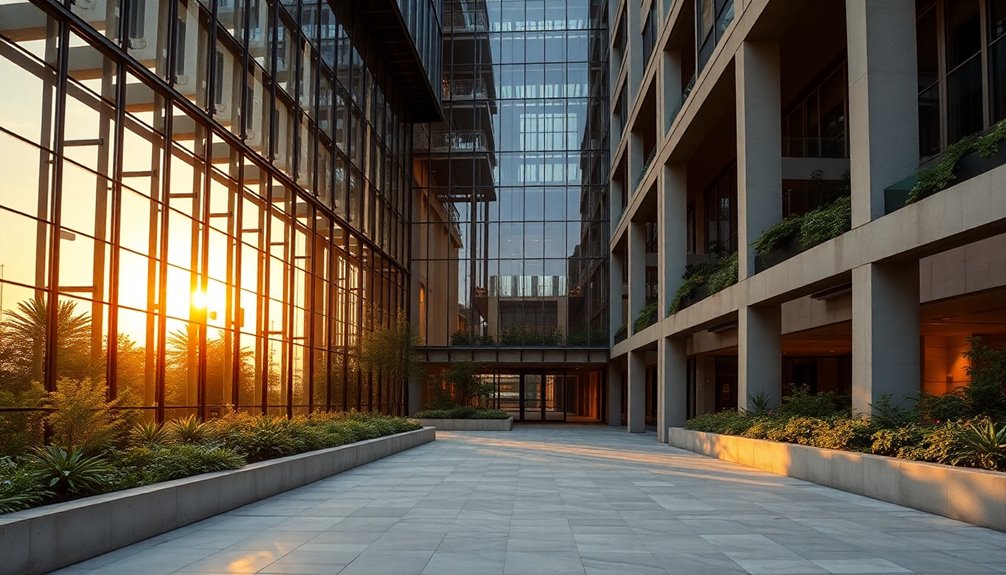

Architectural storytelling blends design with narrative, turning spaces into impactful experiences that reflect cultural, historical, and personal meanings. By utilizing design symbolism and emotional connections, architects craft environments that resonate deeply with users and communities. These narratives can evoke memories, promote interaction, and celebrate local heritage. Techniques like visual metaphors and structured storytelling improve audience engagement, creating lasting impressions. Successful projects, such as Milan's Bosco Verticale and NYC's High Line, exemplify this approach by integrating nature and history into design. Exploring these themes reveals how storytelling in architecture can transform the built environment in profound and meaningful ways.
The Essence of Architectural Storytelling
At its core, architectural storytelling weaves a narrative through the design and structure of buildings. This art form transforms mere construction into significant expressions of identity and purpose. When architects engage in this practice, they expertly utilize design symbolism to convey deeper meanings. Each element, from the grandeur of a façade to the intimate spaces within, serves as a chapter in a broader narrative structure.
Consider how a soaring spire can symbolize aspiration and ambition, or how the warmth of natural materials might evoke a sense of belonging. These choices aren't arbitrary; they're deliberate strategies designed to resonate with the audience, crafting a compelling story that captivates and inspires.
Moreover, successful architectural storytelling demands a sharp comprehension of context and audience. It's not just about aesthetics; it's about creating an emotional connection that enables individuals and communities. When a building articulates a shared vision or embodies collective values, it transcends its physical form, becoming a catalyst for action and change.
The essence of architectural storytelling lies in its ability to evoke responses—drawing people in, invoking their emotions, and motivating them to engage with the space. By excelling in design symbolism and narrative structure, architects can create environments that are not merely lived in but are experienced, remembered, and revered. In this way, architectural storytelling asserts its influence, shaping not just skylines, but the very fabric of society.
Historical Context and Influence
Historical context plays a crucial role in shaping architectural storytelling. It acts as the backbone, providing the framework upon which narratives develop. Architects and designers utilize historical influences to create structures that resonate with strength and purpose. By comprehending the past, they weave stories that not only reflect contemporary values but also pay homage to the legacies that came before.
The progression of narrative in architecture is deeply rooted in significant historical milestones. For instance, the grandiosity of ancient Roman architecture often tells tales of empire and dominance, whereas the austerity of medieval structures speaks to the religious fervor of the time. These influences shape not only aesthetics but also the intended message behind each design. By engaging with historical context, architects can craft spaces that resonate with authority and gravitas, positioning their work within a larger historical continuum.
Moreover, the narrative evolution within architecture often mirrors societal transformations. As cultures shift, so do the stories told through design. The shift from ornate Baroque to minimalist modernism illustrates how historical influences can dictate architectural language, reflecting broader societal aspirations and values. This dynamic interplay guarantees that every structure carries a narrative, inviting observers to engage with its history and significance.
In summation, grasping historical context empowers architects to create compelling stories through their designs. By acknowledging past influences, they can forge connections that transcend time, making certain their narratives remain relevant and impactful in a constantly changing world.
Cultural Narratives in Design
Through the lens of cultural narratives, design becomes an expressive medium that reflects the values, beliefs, and traditions of a community. Designers utilize cultural symbols to craft spaces that resonate with the narrative identity of the people they serve. These symbols transcend mere aesthetics; they serve as conduits for deeper storytelling, intertwining the built environment with the cultural essence of its inhabitants.
Consider the following table, which illustrates how various design elements embody cultural narratives:
| Design Element | Cultural Symbol | Narrative Identity |
|---|---|---|
| Architectural Style | Traditional motifs | Heritage and history |
| Color Palette | Regional colors | Emotional connection |
| Material Choices | Local materials | Sustainability and pride |
| Spatial Arrangement | Community layout | Social interaction |
Each entry in this table highlights how design choices can evoke a sense of belonging and pride within a community. By integrating cultural symbols into their work, designers can create spaces that tell impactful stories, reinforcing the community's narrative identity.
In an era where global connectivity often dilutes local culture, it's vital for designers to engage with and promote these narratives. They possess the ability to shape environments that honor tradition while encouraging a contemporary dialogue. In the end, embracing cultural narratives in design enriches the aesthetic experience and empowers communities to celebrate their unique identities in an increasingly homogenized world.
Personal Experiences and Memories
Design isn't merely about cultural narratives; it further weaves personal experiences and memories into the fabric of a space. Every design decision can evoke significant emotions, grounding individuals in their past as it propels them toward the future. Architects and designers leverage this potential through memory mapping, a process that identifies key personal touchpoints that resonate with users. By integrating these elements, they create environments that not only serve a functional purpose but also nurture a deep emotional connection.
Experiential design emphasizes this connection, prioritizing how individuals interact with their surroundings. When designers understand their clients' histories, they can infuse a project with elements that reflect those experiences. A lively mural might evoke childhood memories, whereas the choice of materials could recall family traditions. These details transform a mere structure into a narrative-rich environment.
Ultimately, the influence of personal experiences in design lies in its ability to create spaces that resonate on a profound level. When individuals step into a thoughtfully crafted environment, they don't just see walls and furniture; they experience a rich tapestry of their own memories intertwined with the designer's vision. This synergy nurtures a sense of belonging and ownership, making the space not just a place to inhabit but a sanctuary of shared history and future aspirations. By prioritizing personal narratives in architectural storytelling, designers can enhance their work, ensuring it speaks to the hearts and minds of those who experience it.
Techniques for Effective Storytelling
Effective storytelling in architecture hinges on a few key techniques that draw audiences into the narrative. One of the most influential tools is the use of visual metaphors. These metaphors serve as bridges, connecting complex architectural ideas with familiar, relatable images. When architects skillfully employ visual metaphors, they create an immediate impact, allowing viewers to grasp the core of a design without needing extensive explanation. This connection nurtures an emotional response, making the narrative more compelling.
Another critical technique is the careful construction of narrative structure. A well-defined structure guides the audience through the architectural story, establishing a clear beginning, middle, and end. By laying out the narrative in a coherent manner, architects can convey not just the physical attributes of a space but in addition its purpose and significance. This structure encourages audiences to engage with the design on a deeper level, transforming passive observation into active participation.
Incorporating these techniques enables architects to craft stories that resonate with their audience, empowering them to visualize the potential impact of a space. This empowerment is fundamental, as it not merely highlights the architect's vision but invites stakeholders to invest emotionally and intellectually in the project. In the end, leveraging visual metaphors and a strong narrative structure can enhance architectural storytelling from mere presentation to a significant experience, leaving a lasting impression on those who encounter it.
Case Studies of Successful Projects
As a multitude of architectural projects exist, a few stand out as exemplary case studies that illustrate the strength of storytelling in design. The Bosco Verticale in Milan, for instance, showcases sustainable design with its vertical forest concept. This project tells a compelling narrative about urban reforestation, emphasizing the need for green spaces in dense city environments. By integrating nature into high-rise living, it engages users in a dialogue about environmental stewardship, pushing the boundaries of traditional architecture.
Another notable case study is the High Line in New York City, which transformed an abandoned railway into a thriving public park. This project not only revitalized a neglected space but also created a significant story of urban renewal. The High Line engages users through its innovative design, weaving narratives of history, art, and nature into the urban fabric. It stands as a demonstration to the impact of thoughtful storytelling in architecture, inviting visitors to explore and connect with their surroundings.
Additionally, the Eden Project in Cornwall, England, integrates sustainable design with educational storytelling. It invites users to experience the interconnectedness of ecosystems through its biomes, making complex environmental themes accessible. The narrative of conservation and biodiversity drives user engagement, ensuring that visitors leave with a deeper comprehension of their role in protecting the planet.
These case studies exemplify how architecture can serve as a significant medium for storytelling, nurturing sustainable practices while enhancing user engagement in meaningful ways.
Frequently Asked Questions
How Can Storytelling Enhance Sustainability in Architecture?
Storytelling can greatly improve sustainability in architecture by weaving narratives around sustainable materials and their ecological impact. It engages stakeholders, making them more aware of their choices. When designers share compelling stories about the origins and benefits of eco-friendly materials, they inspire innovation and responsible decision-making. This connection nurtures a culture of sustainability, empowering architects and builders to create spaces that not only meet aesthetic goals but likewise respect and protect the environment.
What Role Does Technology Play in Architectural Storytelling?
In a world where stark concrete often clashes with lively nature, technology weaves a bridge through digital narratives, transforming architectural storytelling. It crafts immersive experiences that captivate audiences, drawing them into a space's history and purpose. With virtual reality and augmented reality, architects can present visions that resonate on a deeper level, engaging emotions and igniting ambition. This fusion of art and innovation empowers creators to redefine how stories shape our environments.
Are There Specific Architectural Styles That Lend Themselves to Storytelling?
Certain architectural styles do lend themselves to storytelling. Gothic Revival, with its intricate details and grandeur, evokes a sense of history and drama, inviting narratives of the past. Conversely, Minimalist Aesthetics strips away excess, allowing the simplicity of form to speak volumes, encouraging personal interpretation. Both styles create an impactful connection with viewers, transforming spaces into compelling narratives that resonate deeply, regardless of the observer's background or experience.
How Do Architects Balance Aesthetics and Narrative in Their Designs?
Architects constantly navigate the tension between aesthetics and narrative. They understand that form vs. function isn't merely a debate; it's a pathway to impactful design. By incorporating cultural context, they create spaces that resonate with users on a deeper level. When they prioritize both beauty and story, architects craft environments that not only captivate but additionally communicate. In the end, this balance transforms structures into influential symbols of identity and purpose.
Can Storytelling Influence Urban Planning and Community Development?
Storytelling's like a compass, guiding urban planning and community development. It weaves together historical context and community engagement, creating a fabric of shared experiences. By utilizing narratives, planners can ignite passion and participation among residents, ensuring their voices shape the future. This collaborative approach raises projects, transforming mere structures into lively spaces that reflect the community's essence. In the end, storytelling empowers communities, nurturing a sense of belonging and pride in their shared environment.