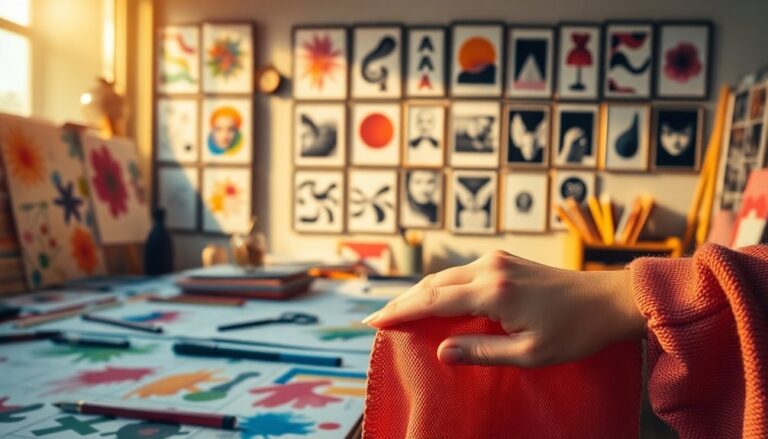
You’re influenced by shapes every day, from your phone’s curves to the geometric patterns on your coffee mug. It’s no coincidence, as research suggests that shapes can sway your emotions and perceptions. In fact, 75% of consumers cite shape as a key factor in their brand preferences. Curves evoke warmth and comfort, while geometric precision adds sophistication and harmony. Symmetry creates a sense of calmness and stability, while angles inject tension and dynamism. Irregular shapes bring playfulness and whimsy. As you explore the psychology of shapes in design, you’ll discover how to harness their emotional power to create deeper connections with your audience. Understanding these nuances allows designers to craft visuals that resonate on a subconscious level, shaping user experiences and brand identities. The proportion in aesthetic appeal also plays a critical role, ensuring that shapes are balanced and visually pleasing to the viewer. By thoughtfully blending shapes and proportions, designers can create compelling compositions that evoke the desired emotions and foster lasting connections.
The Emotional Resonance of Curves
As you navigate the visual landscape of design, you're likely to find that curves evoke a sense of comfort, approachability, and warmth, which is why they're often used in branding and packaging for food, healthcare, and family-oriented products. This emotional resonance stems from the way curves interact with our subconscious mind, creating a sense of fluid dynamics that guides our eyes smoothly through the design. Soft contours, in particular, have a profound impact on our emotional response, as they create a sense of protection, nurturing, and safety.
When you incorporate curves into your design, you're tapping into these emotional associations, which can lead to increased brand recognition, trust, and loyalty. Consider the swooping lines of a food brand's logo or the gentle arcs of a healthcare company's packaging – these curves create an instant sense of comfort and approachability, making us more receptive to the brand's message.
The use of curves in design can also communicate a sense of movement and energy, without being too aggressive or jarring. By incorporating fluid curves into your design, you can create a sense of dynamism that engages the viewer without overwhelming them. By understanding the emotional resonance of curves, you can harness their power to create designs that resonate with your audience on a deeper level.
The Power of Geometric Precision
You step into a world of precision and clarity when you incorporate geometric shapes into your design, leveraging the structural integrity of triangles, the symmetry of squares, and the dynamic balance of polygons to create a visual language that's both modern and sophisticated. Geometric shapes bring a sense of order and harmony to your design, making it more engaging and aesthetically pleasing.
Geometric precision is all about creating a sense of fractal harmony, where each element is intricately connected to create a cohesive whole. This harmony is achieved through the use of mathematical elegance, where every shape and line is carefully crafted to create a sense of balance and proportion.
Here are three ways geometric precision can elevate your design:
- Crisp and Clean Visuals: Geometric shapes add a level of sophistication and modernity to your design, making it stand out in a crowded market.
- Visual Hierarchy: Geometric shapes help create a clear visual hierarchy, guiding the viewer's attention to the most important elements of your design.
- Emotional Resonance: Geometric shapes can evoke emotions and create a sense of harmony, making your design more engaging and memorable.
Symmetry and the Sense of Order
One fundamental aspect of geometric precision is symmetry, which creates a sense of order by mirroring elements around a central axis, fostering a deep-seated human desire for balance and harmony. When you're exposed to symmetrical compositions, you feel a sense of calmness and stability. This is because symmetry taps into your innate need for visual harmony, where every element is in its rightful place. As a result, you perceive the design as more aesthetically pleasing and easier to navigate.
Symmetry also plays a vital role in creating aesthetic balance. By mirroring elements, designers can distribute visual weight evenly, making the composition feel more stable and cohesive. This balance is important in design, as it guides your attention and creates a sense of flow. When you encounter a symmetrical design, your brain quickly processes the mirrored elements, allowing you to focus on the message or content being conveyed.
In design, symmetry is used to convey a sense of sophistication, elegance, and professionalism. It's commonly seen in logos, architecture, and product design, where a sense of refinement and attention to detail is essential. By incorporating symmetry into their designs, creators can evoke feelings of trust, reliability, and timelessness. So, the next time you're designing something, consider the power of symmetry in creating a sense of order and balance – it might just be the key to engaging your audience.
The Aggressive Edge of Angles
Angles, with their sharp, cutting edges, inject a sense of tension and dynamism into designs, making them ideal for conveying a bold, aggressive, or even rebellious tone. When you see an angular design, you can't help but feel a sense of Angular Anxiety – it's as if the sharp edges are piercing through the calmness, creating a sense of unease. This unease can be leveraged to grab attention, evoke emotions, and even create a sense of urgency.
In Edgy Minimalism, angles are used to strip away unnecessary elements, leaving only the bare essentials. This creates a sense of raw energy, as if the design is stripped down to its most primal form. The result is a design that's both sleek and aggressive, perfect for conveying a bold message.
Here are three ways angles can be used to create a bold, aggressive tone in design:
- Accentuate the edges: Use bold, thick lines to create a sense of tension and dynamism.
- Play with geometry: Experiment with unusual angles and geometric shapes to create a sense of unease or discomfort.
- Emphasize the corners: Use sharp, pointed corners to create a sense of aggression or rebellion.
The Playful Nature of Irregularity
Irregular shapes, with their unpredictable curves and wobbly lines, inject a sense of whimsy and playfulness into designs, making them perfect for conveying a carefree, youthful tone. You might find yourself drawn to these shapes when creating designs that require a lighthearted, spontaneous feel. The fractured freedom of irregular shapes allows you to break away from the rigidity of traditional geometric shapes, giving you the creative license to experiment and have fun.
As you play with irregular shapes, you'll notice how they can create a sense of movement and energy in your design. This is because our brains are wired to respond to irregular shapes as more dynamic and engaging than their symmetrical counterparts. When used effectively, irregular shapes can add a touch of playfulness to your design, making it more approachable and inviting.
But don't be fooled – irregular shapes can also be used to create a sense of whimsy boundaries, where the rules of traditional design are gently pushed and pulled. By embracing the unpredictability of irregular shapes, you can create designs that are truly one-of-a-kind, with a personality that shines through. So, don't be afraid to get creative and let your designs take on a life of their own – after all, that's where the magic happens!
Frequently Asked Questions
Can Cultural Backgrounds Influence Individual Shape Preferences?
Imagine your cultural background is a rich tapestry, woven with threads of tradition and upbringing. As you navigate the world, you're drawn to shapes that resonate with your personal experience. Your cultural identity influences your preferences, like a magnet attracting certain forms. For instance, some cultures emphasize harmony and balance, leading individuals to prefer rounded shapes. Others value strength and resilience, drawing them to angular forms. Your cultural roots subtly guide your shape preferences, shaping your unique perspective.
Do Shape Associations Remain Consistent Across Different Industries?
You might wonder if shape associations stay the same across different industries. The answer is, they don't. Industry norms and brand identity play a significant role in shaping (pun intended) our perceptions of shapes. For instance, a circle might evoke trust in the finance sector, but signify fun in the entertainment industry. Brands often tailor their shape choices to resonate with their target audience, making shape associations industry-specific.
How Do Shapes Interact With Color in Design Psychology?
As you explore the world of design, you'll discover that shapes and colors have a profound impact on our emotions and perceptions. When combining shapes with color, you'll want to achieve Visual Harmony, which creates a sense of balance and stability. However, using contrasting colors can create a bold, eye-catching effect through Color Contrast. By mastering the interplay between shapes and colors, you'll reveal the secrets to engaging your audience and conveying your message effectively.
Can Shapes Evoke Emotions Without Conscious Recognition?
You might be surprised to know that 90% of our decisions are made subconsciously! Now, can shapes evoke emotions without conscious recognition? Yes, they can. Subliminal cues from shapes can trigger emotional responses, even if you're not aware of them. This is because shapes can tap into our emotional resonance, influencing our mood and behavior. For instance, rounded shapes can evoke feelings of comfort and safety, while angular shapes can stimulate excitement and energy.
Are There Universal Shape Preferences Across Age Groups?
You might wonder if people of all ages share similar shape preferences. Research suggests that, despite differing tastes, some universal preferences exist. This consistency is attributed to developmental phases, where brain maturation influences visual processing. As you grow, your brain refines its ability to process shapes, leading to shared preferences across age groups. Remarkably, these preferences emerge early in life and persist, indicating a strong innate component.