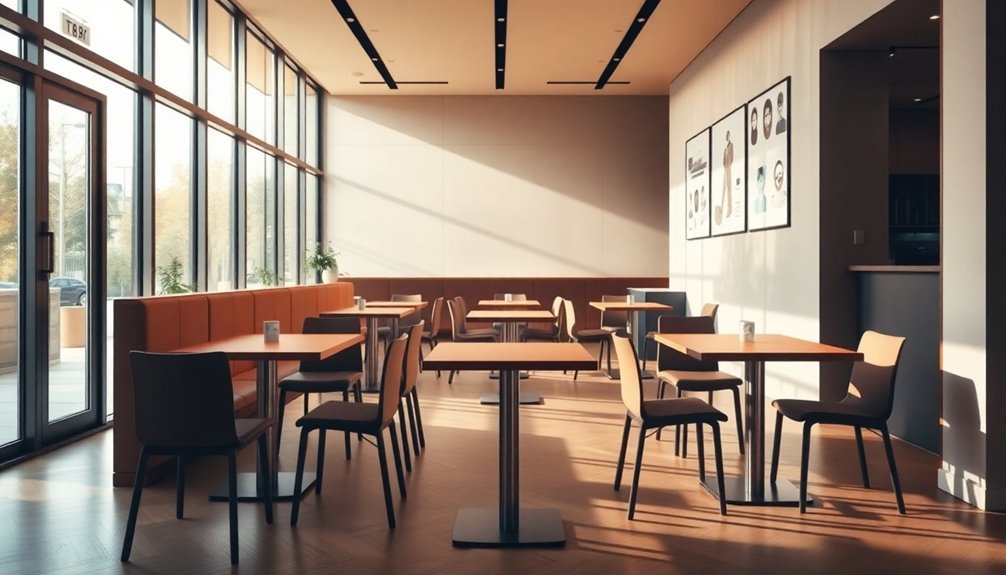

Gestalt principles, rooted in early 20th-century psychological research, continue to shape the fundamentals of modern design, influencing the way designers create visually appealing and effective compositions that communicate their intended message. By applying principles such as proximity, similarity, and symmetry, designers can guide the viewer's attention, create balance and harmony, and evoke emotions. Effective use of these principles improves visual flow, leading to a more engaging user experience. As designers aim to create cohesive and impactful designs, a deeper comprehension of Gestalt principles is crucial to revealing the secrets of successful visual communication, and there's more to explore in this captivating domain.
Proximity in Visual Hierarchy
Proximity additionally influences the way we perceive spatial relationships between elements. When elements are placed close together, they create a sense of connection, whereas elements with more distance between them appear separate. By carefully controlling the proximity of elements, designers can create a visual flow that guides the viewer's attention through the design, creating a more engaging and effective user experience. By applying the principle of proximity, designers can create a clear, organized, and visually appealing design that communicates their message effectively.
Similarity in Design Elements
Designers can group elements together by creating visual similarity, which enables the viewer to instantly perceive relationships between them. This principle of similarity is a fundamental aspect of Gestalt theory, as it allows designers to organize complex compositions into cohesive and meaningful units. By creating similarity between design elements, designers can establish a sense of harmony and balance, making it easier for the viewer to navigate and comprehend the design.
One way to achieve similarity is through color association. By using a consistent color palette or repeating specific colors, designers can create a visual connection between elements. This association can be further reinforced by using similar typography, shapes, or textures. Pattern recognition in addition plays a significant role in creating similarity. By repeating patterns or using similar motifs, designers can create a sense of continuity and cohesion.
The application of similarity in design elements can have a profound impact on the viewer's experience. It can help guide the viewer's attention, create a sense of unity, and improve the overall aesthetic appeal of the design. By leveraging the capability of similarity, designers can create more effective and engaging designs that communicate their message with clarity and precision. By grasping how to create visual similarity, designers can reveal the full potential of their designs and create a lasting impression on their audience.
Guiding the Viewer's Attention
Visual pathways can be further improved by using Gestalt principles such as continuation and closure. By creating a visual connection between elements, designers can lead the viewer's eye through the composition, creating a sense of continuity and coherence. By carefully controlling the visual flow, designers can create a design that is both aesthetically pleasing and effective in communicating its message. By incorporating these principles into their design, designers can create a visual experience that engages and informs the viewer.
Balancing Figure and Ground
In modern design, balancing figure and ground is critical in creating effective compositions. By carefully considering the figure-ground relationships, designers can create a visual hierarchy that guides the viewer's perception and attention. This, in turn, improves the overall visual communication and guarantees that the intended message is conveyed effectively. By comprehending the principles of figure-ground relationships, designers can create designs that are aesthetically pleasing, easy to grasp, and effective in communicating their message.
Symmetry in Composition Design
Most compositions rely on symmetry to create a sense of order and stability, as it provides a clear and organized visual structure. Symmetry in composition design is a fundamental principle that guides the arrangement of visual elements to create a sense of balance and harmony. When used effectively, symmetry can evoke feelings of calmness, serenity, and even grandeur.
Symmetrical balance is achieved when identical or similar elements are arranged on either side of a central axis, creating a mirror-like effect. This type of balance is often used in architectural design, where it can create a sense of monumentality and importance. In graphic design, symmetry can be used to create a sense of unity and cohesion, drawing the viewer's attention to a central element or message.
Visual harmony is likewise a key benefit of symmetrical composition. When elements are arranged in a symmetrical pattern, the viewer's eye is able to move effortlessly along the central axis, creating a sense of flow and continuity. This harmony can be particularly effective in designs where simplicity and elegance are desired, such as in luxury branding or high-end product design. By incorporating symmetry into their designs, artists and designers can create a sense of order and stability, in the end enhancing the overall aesthetic appeal of their work.
Frequently Asked Questions
How Do Gestalt Principles Apply to Digital Product Design?
In digital product design, Gestalt principles considerably improve the user experience by organizing visual elements in a way that guides the user's attention. A well-designed visual hierarchy, for instance, helps users quickly identify key features and navigate through the product. By applying principles such as proximity, similarity, and closure, designers can create a clear and intuitive interface that reduces cognitive load and enhances overall usability, eventually leading to a more engaging and satisfying user experience.
Can Gestalt Principles Be Used in Interior Design?
Did you know that 68% of people form an opinion about a space within 7-10 seconds of entering it? This fleeting impression is largely influenced by spatial organization and visual hierarchy. Gestalt principles can be effectively applied in interior design to create a cohesive and aesthetically pleasing environment. By arranging elements in a way that guides the viewer's attention, designers can craft a visual flow that improves the user experience and nurtures a sense of harmony.
Do Gestalt Principles Work for Colorblind Users?
When designing for colorblind users, it is crucial to take into account color perception and accessibility considerations. Gestalt principles can still be effective, but designers must adapt their approach. By using high contrast colors, avoiding color-based information, and providing alternative cues, designers can guarantee that their visual organization and grouping techniques remain accessible to colorblind users. This inclusive design approach enables users with color vision deficiencies to perceive and understand the intended message, guaranteeing equal access to information.
How Do Cultural Differences Affect Gestalt Principles?
Research indicates that 75% of cross-cultural miscommunications are attributed to nonverbal cues, highlighting the importance of cultural differences in visual perception. Cultural perception plays an essential role in shaping our comprehension of visual hierarchy, as what may be perceived as simple and clear in one culture may be complex and confusing in another. Gestalt principles, although universal, are influenced by cultural nuances, and designers must consider these differences to create effective and inclusive visual communications that resonate across cultures.
Are Gestalt Principles Still Relevant in Modern Design?
In an era of rapid design evolution, the question arises: are Gestalt principles still relevant? In spite of the emergence of new design trends and technologies, the fundamental principles of Gestalt theory – proximity, similarity, and continuity – remain crucial. These principles continue to influence human perception and behavior, making them timeless and universally applicable. As design evolves, Gestalt principles adapt, ensuring their continued significance in shaping effective, user-centered design solutions.