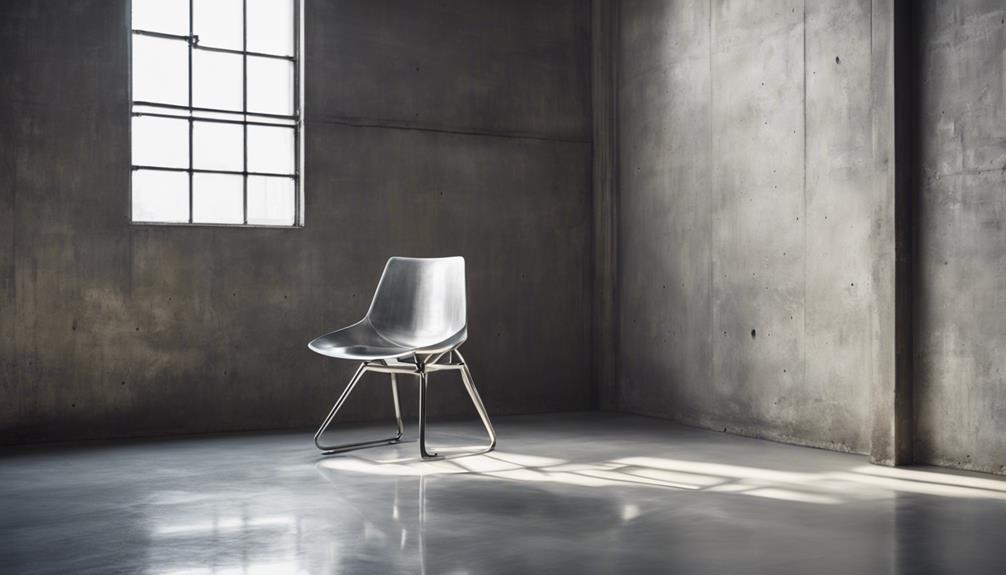

Industrial design's shift towards minimalism reflects a broader cultural desire for clarity, simplicity, and functionality, rejecting ornate aesthetics in favor of intuitive, user-centric products that prioritize usability and sustainability. This paradigm shift is driven by the need for efficient, accessible, and environmentally conscious design. Minimalist industrial design harmoniously converges aesthetics and usability, fostering a deeper connection between user and product. As we explore the intricacies of minimalist design, we uncover the nuances of form, function, and sustainability, ultimately revealing the profound impact of simplicity on our daily lives and the world around us.
The Rise of Minimalist Design
The Rise of Minimalist Design
Emerging as a reaction against the ornate and cluttered aesthetic of the Victorian era, minimalist design began to take shape in the early 20th century. This design revival was sparked by a growing desire for simplicity, functionality, and clarity in a world that had become overwhelmed by excessive ornamentation. The modernist movement, led by pioneers like Le Corbusier and Ludwig Mies van der Rohe, sought to strip design of its unnecessary embellishments, focusing instead on clean lines, minimal ornamentation, and an emphasis on function over form.
This cultural shift towards minimalism was not limited to the design world; it was a reflection of a broader societal desire for simplicity and efficiency. As the world became increasingly industrialized, people began to crave a more streamlined, efficient way of living. Minimalist design responded to this need, providing a visual language that was both modern and timeless.
The rise of minimalist design marked a significant departure from the opulence of the past, signaling a new era of design that prioritized simplicity, functionality, and innovation. This design revival paved the way for a new generation of designers, thinkers, and innovators who would go on to shape the modern design landscape. By embracing minimalism, designers were able to create products, spaces, and experiences that were not only aesthetically pleasing but also functional, efficient, and sustainable.
Embracing Simplicity in Product Design
In the field of product design, a paradigm shift towards simplicity has led to the creation of intuitive, user-centric products that effortlessly blend form and function. This design philosophy has been instrumental in redefining the way products interact with users. By stripping away unnecessary complexities, designers can focus on creating seamless user experiences that meet evolving user expectations.
Embracing simplicity in product design has resulted in the development of more approachable, accessible, and efficient products. This approach has far-reaching implications, as it enables users to intuitively navigate products without requiring extensive instruction or training. Moreover, simplicity in design has been shown to reduce cognitive load, minimizing user frustration and anxiety.
A key advantage of simplicity in product design is its ability to foster a deeper connection between the user and the product. By eliminating distractions and focusing on the essential elements, designers can create products that are both aesthetically pleasing and highly functional. As user expectations continue to evolve, embracing simplicity in product design has become a critical aspect of creating innovative, user-centric products that meet the needs of a rapidly changing world. By adopting a simplicity-driven design philosophy, designers can create products that are not only visually appealing but also highly effective in meeting user needs.
Form Meets Function in Industrial Design
Seventy years of industrial design evolution have led to a harmonious convergence of form and function, where aesthetics and usability seamlessly intersect. This synergy has enabled designers to create products that not only look visually appealing but also provide an excellent user experience. The key to achieving this balance lies in the careful consideration of material selection and design constraints.
Material selection plays an essential role in industrial design, as it directly impacts the product's functionality, durability, and sustainability. Designers must carefully choose materials that meet the product's functional requirements while also considering factors such as cost, sustainability, and aesthetics. For instance, a product requiring high strength and durability may necessitate the use of metals or advanced composites, whereas a product demanding flexibility and lightness may benefit from the use of polymers or smart materials.
Design constraints, on the other hand, serve as a catalyst for innovation, pushing designers to think creatively and develop novel solutions. By embracing these constraints, designers can create products that are not only functional but also visually stunning. For example, a design constraint such as limited space can lead to the development of compact, space-saving products that are both functional and aesthetically pleasing. By embracing the interplay between form and function, industrial designers can create products that are both beautiful and functional, ultimately enhancing the user experience.
Sustainable Design for a Better Future
As industrial designers continue to refine their approach to form and function, they must also prioritize sustainability, recognizing that the beauty of a product lies not only in its aesthetics and usability but also in its environmental footprint. In today's era of environmental awareness, sustainable design is no longer a nicety, but a necessity. By incorporating eco-friendly materials and circular systems, designers can create products that not only minimize waste but also promote a culture of reuse and recycling.
Here are four key strategies for achieving sustainable design:
- Material selection: Choose materials that are recycled, recyclable, or biodegradable, reducing the demand for virgin resources and minimizing waste.
- Design for disassembly: Design products that can be easily disassembled, repaired, and recycled, reducing electronic waste and promoting the reuse of components.
- Circular business models: Implement product-as-a-service models, where companies retain ownership of products and are incentivized to design for longevity and recyclability.
- Closed-loop production: Design systems where materials are constantly cycled back into production, eliminating waste and the continuous demand for new resources.
The Beauty of Clean Lines
The Beauty of Clean Lines is a cornerstone of minimalist industrial design, where simplicity and elegance converge. By embracing simple shapes and stripping away unnecessary embellishments, designers can create products that exude sophistication and refinement. Through the thoughtful use of clean lines, functionality and aesthetics merge, giving rise to a new standard of elegance in restraint.
Simple Shapes Unite
Clean lines and simple shapes converge to create a visual harmony that elevates industrial design to an art form. The beauty of minimalist design lies in its ability to distill complex forms into their essence, revealing the purity of the design. This convergence of simplicity and elegance is a hallmark of innovative design.
In minimalist industrial design, simple shapes unite to create a symphony of clean lines, organic geometry, and spatial harmony. This synergy gives rise to designs that are at once aesthetically pleasing and highly functional. Consider the following key elements that contribute to this harmony:
- Geometric simplicity: The use of basic shapes, such as circles, squares, and triangles, to create clean and uncluttered forms.
- Streamlined profiles: Smooth, flowing lines that eliminate unnecessary clutter and visual noise.
- Monochromatic color schemes: A limited palette that creates a sense of cohesion and visual calm.
- Negative space: The strategic use of empty space to create a sense of breathability and visual balance.
Functionality Meets Aesthetics
By stripping away extraneous elements, minimalist industrial design reveals the intrinsic beauty of clean lines, where form and function converge to create a seamless union of aesthetics and usability. This harmonious balance is achieved when designers prioritize simplicity, allowing the essential features of a product to shine. The result is a visual language that is both intuitive and elegant.
| Design Element | Functionality | Aesthetic |
|---|---|---|
| Clean lines | Enhanced usability | Visual simplicity |
| Material harmony | Tactile experience | Cultural relevance |
| Negative space | Breathability | Visual calm |
In minimalist industrial design, the beauty of clean lines lies in their ability to facilitate seamless interactions between the user and the product. By emphasizing material harmony, designers can create products that not only look and feel cohesive but also resonate with their cultural context. The interplay between functionality and aesthetics gives rise to a design language that is at once intuitive, elegant, and culturally relevant. This approach fosters a strong sense of purpose, where every element serves a functional and aesthetic role, ensuring that the user’s experience is both enjoyable and meaningful. Furthermore, embracing collaboration in design engineering allows for the integration of diverse perspectives and expertise, leading to innovative solutions that enhance the user-product relationship. Ultimately, this intersection of design philosophy and collaborative practice cultivates products that not only meet practical needs but also enrich the cultural narrative of the environments they inhabit.
Elegance in Restraint
How do the elimination of extraneous elements and the emphasis on simplicity give rise to a visual language that is at once elegant, intuitive, and intellectually stimulating? The answer lies in the cultural significance of minimalism in industrial design. By stripping away the superfluous, designers can create products that exude elegance through restraint. This design philosophy is rooted in the understanding that true beauty lies in the essence of an object, rather than its ornamentation.
Here are some key aspects of elegance in restraint:
- Clean lines: The absence of clutter and ornamentation allows the user's eye to flow effortlessly across the product's surface, creating a sense of harmony and balance.
- Negative space: The strategic use of empty space creates a sense of breathability, making the product feel more refined and sophisticated.
- Material honesty: The use of high-quality materials, unadorned and unpretentious, speaks to a design philosophy that values authenticity over artifice.
- Intuitive functionality: The elimination of unnecessary features and controls allows the user to focus on the product's core purpose, fostering a deeper connection with the object.
Intuitive Design for Everyday Use
In the pursuit of minimalist industrial design, intuitive interfaces have emerged as an essential element, allowing users to effortlessly interact with products and systems in their daily lives. By streamlining user experience, designers can create seamless interactions that simplify daily routines. Intuitive design enables users to focus on the task at hand, rather than being greatly affected by complex instructions or confusing interfaces.
In today's fast-paced world, people crave simplicity and ease of use. Minimalist design philosophy recognizes this need, prioritizing user experience above aesthetics or feature sets. By stripping away unnecessary elements, designers can reveal the essence of a product or system, making it more accessible and enjoyable to use. This, in turn, enhances the overall user experience, fostering a deeper connection between the user and the product.
In the context of daily routines, intuitive design can significantly impact our lives. Imagine being able to effortlessly brew a cup of coffee, adjust the thermostat, or navigate a new city without hassle. By simplifying these everyday interactions, designers can free up mental and emotional energy, allowing individuals to focus on more meaningful pursuits. As we continue to navigate the complexities of modern life, the importance of intuitive design will only continue to grow, shaping the future of industrial design and beyond.
Breaking Free From Visual Clutter
As we seek to simplify our interactions with products and systems, a parallel pursuit of visual clarity becomes equally important, as visual clutter can be just as overwhelming as complex interfaces. A cluttered visual landscape can lead to cognitive overload, making it difficult for users to focus and navigate. By breaking free from visual clutter, designers can create calm environments that promote intuitive use and reduce user anxiety.
To achieve visual clarity, designers should consider the following principles:
- Simplify typography: Limit font styles and sizes to create a clear design hierarchy.
- Use whitespace effectively: Balance content with negative space to create a sense of breathability.
- Prioritize content: Focus on essential information and eliminate unnecessary elements.
- Establish a clear visual order: Organize elements in a logical and intuitive manner to guide the user's attention.
Minimalism in Modern Technology
In the world of modern technology, minimalism has revolutionized the way devices and interfaces are designed. The emphasis on sleek device design has led to a shift towards clean lines, simplicity, and an overall reduction of visual noise. Moreover, streamlined user interfaces have become essential in facilitating intuitive user experiences, allowing users to navigate complex systems with ease.
Sleek Device Design
Modern technology has witnessed a paradigm shift towards sleek device design, where functionality converges with aesthetics to create a seamless user experience. This shift has led to the development of devices that exude compact luxury and modern sophistication, making them a statement piece in any setting.
Some key features of sleek device design include:
- Streamlined profiles: Devices with clean lines, minimal curves, and a focus on simplicity.
- Premium materials: The use of high-quality materials such as aluminum, glass, and stainless steel to create a sense of luxury.
- Minimal ornamentation: A focus on simplicity, with minimal branding, logos, and other visual distractions.
- Ergonomic design: Devices designed to fit comfortably in the hand, with intuitive controls and an emphasis on usability.
Streamlined User Interface
Beyond the sleek device design, the true hallmark of minimalist industrial design lies in the streamlined user interface, where intuitive navigation and simplicity converge to create a seamless user experience. This is where the principles of minimalism are put to the challenge, as designers aim to create an interface that is both aesthetically pleasing and functional.
| Design Element | Characteristics | Benefits |
|---|---|---|
| Flat Design | 2D elements, solid colors, simple shapes | Simplifies visual hierarchy, reduces clutter |
| Silent Interactions | Subtle animations, intuitive gestures | Enhances user experience, reduces cognitive load |
| Minimal Typography | Limited font styles, optimized font sizes | Improves readability, reduces visual noise |
| Intuitive Navigation | Clear information architecture, simple menus | Streamlines user flow, reduces confusion |
In a streamlined user interface, every element serves a purpose, and nothing is superfluous. By embracing minimalism, designers can create an interface that is both beautiful and functional, allowing users to focus on the task at hand. By incorporating design elements such as flat design, silent interactions, minimal typography, and intuitive navigation, designers can create a seamless user experience that is both efficient and enjoyable.
Frequently Asked Questions
Can Minimalist Design Be Applied to Complex Industrial Systems?
Can minimalist design be applied to complex industrial systems? Absolutely. By embracing System Simplification and Process Streamlining, industries can strip away unnecessary complexities, revealing a more efficient and effective core. This approach enables the elimination of redundant components, streamlines production, and optimizes performance. The result is a leaner, meaner system that operates with precision and clarity, revealing new levels of innovation and competitiveness.
How Does Minimalism Impact the Cost of Product Manufacturing?
When evaluating the cost of product manufacturing, minimalism plays a significant role. By simplifying designs, companies can reduce material sourcing costs and optimize production efficiency. Fewer components and simplified assemblies lead to decreased material expenditures and reduced labor costs. This streamlined approach enables manufacturers to allocate resources more effectively, resulting in cost savings and improved profitability.
Are Minimalist Designs Always More Environmentally Friendly?
As the veil of complexity lifts, a fundamental truth emerges: minimalist designs are not always the epitome of environmental friendliness. While they often reduce material usage, their life cycle impact can be more nuanced. A minimalist product's longevity, recyclability, and end-of-life disposal must be considered. A design that is initially minimalist can ultimately prove more wasteful if not designed with a cradle-to-cradle approach, highlighting the need for a more holistic understanding of environmental responsibility.
Can Minimalist Design Principles Be Applied to Historic Preservation?
Applying minimalist design principles to historic preservation presents a unique opportunity for innovative restoration. By striking a balance between restoration and cultural simplicity, preservationists can conscientiously intervene in historic sites while maintaining their original essence. This approach guarantees that the cultural significance of the site remains intact, while subtle, minimalist interventions enhance the overall experience.
Does Minimalism Limit Creativity in Industrial Design?
The notion that minimalism stifles creativity in industrial design is a common misconception. In reality, embracing minimalism can foster design freedom by establishing creative constraints. By stripping away unnecessary elements, designers are forced to think more innovatively, leveraging simplicity to create impactful solutions. This paradigm shift sparks novel approaches, as creatives must adapt to the constraints, ultimately yielding innovative designs that resonate with users.