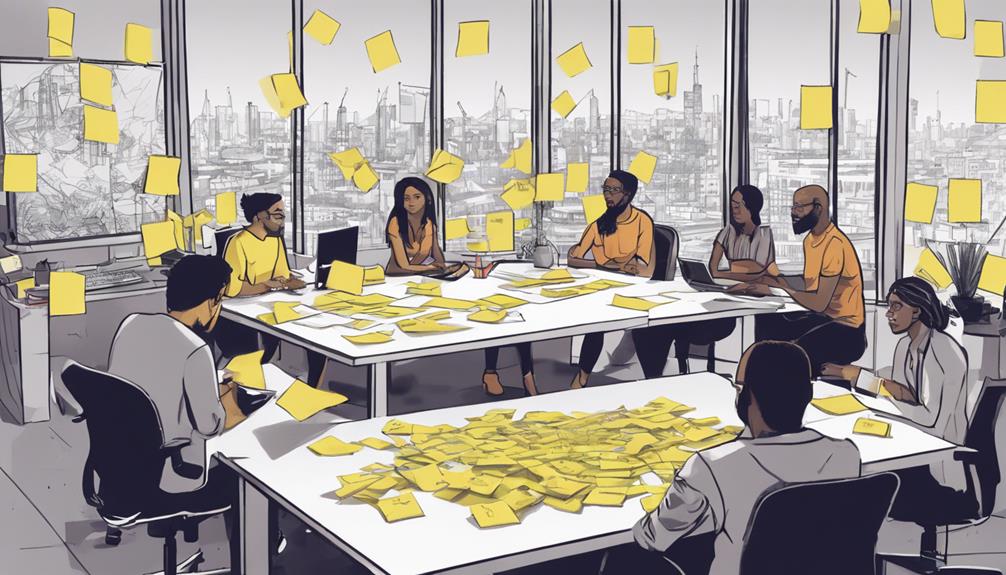

Human-centered design has become an essential differentiator in today's competitive industry landscape, as it recognizes that understanding and catering to human needs, desires, and limitations is vital for fostering a culture of innovation and driving business success. By putting users at the forefront, businesses can empathize with their needs, design for emotional connections, and create intuitive user experiences. By adopting human-centered design principles, companies can overcome industry-specific challenges and achieve business success through increased customer loyalty, improved brand reputation, and competitive differentiation. As we explore the complexities of human-centered design, the benefits of this approach will become even more apparent.
Understanding Human-Centered Design Principles
Human-centered design principles are rooted in a profound understanding of human needs, desires, and limitations, recognizing that products and services must be designed to accommodate the intricacies of human behavior and cognition. This approach acknowledges that humans are complex, multifaceted beings with unique experiences, values, and motivations. By adopting a design mindset, innovators can create solutions that truly resonate with their target audience.
At the core of human-centered design lies a deep respect for human values, recognizing that people are not just users, but individuals with emotions, biases, and aspirations. This empathetic approach enables designers to craft experiences that are intuitive, accessible, and meaningful. By putting human values at the forefront, innovators can create products and services that not only meet but exceed user expectations.
A design mindset is essential in fostering a culture of innovation, where creativity, experimentation, and iteration are encouraged. It allows designers to navigate the complexities of human behavior, balancing functionality with aesthetics, and usability with desirability. By embracing human-centered design principles, industries can discover new opportunities for growth, differentiation, and brand loyalty. As we continue to navigate the complexities of the modern world, it is essential to prioritize human-centered design, ensuring that our creations are not only innovative but also humane. Moreover, the role of ethics in design cannot be overstated, as it guides decision-making processes that prioritize the well-being of users and society at large. By integrating ethical considerations into the design process, we can cultivate products and services that not only meet consumer needs but also promote sustainability and social responsibility. Ultimately, a design mindset infused with ethical perspectives fosters a deeper connection between creators and users, leading to solutions that are not only effective but also enriching and respectful of human values.
Putting Users at the Forefront
At the core of human-centered design lies the understanding that user needs, behaviors, and desires should be the primary drivers of the design process. By placing users at the forefront, designers can create solutions that are tailored to their needs, behaviors, and desires, ultimately resulting in more effective and satisfying experiences. To achieve this, designers must empathize with user needs, understand user behaviors, and design for user delight, ultimately creating products that resonate with their target audience.
Empathizing With User Needs
By putting users at the forefront, designers can uncover the intricacies of their daily lives, revealing hidden pain points and unmet needs that can inform innovative solutions. Empathizing with user needs is an essential aspect of human-centered design, as it allows designers to develop a deep understanding of their target audience. This is achieved through the creation of user personas, which are fictional representations of ideal users, based on research and data analysis. These personas help designers identify pain points, or areas where users struggle with existing products or services. By understanding these pain points, designers can develop solutions that cater to users' specific needs, increasing the likelihood of adoption and success. For instance, a designer creating a mobile app for fitness enthusiasts may identify a pain point related to tracking progress, and develop a feature that seamlessly integrates with wearable devices. By prioritizing user needs, designers can create products that are intuitive, user-friendly, and meet the needs of their target audience.
Understanding User Behaviors
Frequently, designers uncover valuable insights into user behaviors through observational research, which involves immersing themselves in users' daily lives to identify patterns, habits, and motivations that drive their actions. This thorough understanding of user behaviors enables designers to develop solutions that cater to specific needs, preferences, and pain points.
By delving into the nuances of user behaviors, designers can:
- Create user profiles that capture the essence of their target audience
- Identify behavioral triggers that influence decision-making and actions
- Develop solutions that resonate with users on a deeper level
- Design experiences that are intuitive, user-friendly, and efficient
Through a detailed understanding of user behaviors, designers can craft innovative solutions that meet the needs of their target audience. By putting users at the forefront of the design process, designers can create products, services, and experiences that are both functional and delightful.
Designing for User Delight
Designing for user delight involves crafting experiences that not only meet but exceed user expectations, fostering a deep sense of satisfaction and loyalty. This approach prioritizes the creation of Delightful Interactions that leave a lasting impression on users. By focusing on the emotional connection users have with a product or service, designers can engineer Joyful Moments that evoke feelings of happiness and wonder. These moments can be as simple as a well-designed onboarding process or a clever animation that brings a smile to the user's face. The goal is to create an emotional connection that transcends mere functionality, making users feel valued and understood. By doing so, businesses can build brand loyalty, drive engagement, and ultimately, drive growth. In today's competitive landscape, designing for user delight is no longer a nicety, but a necessity for companies that want to stay ahead of the curve. By putting users at the forefront, businesses can create experiences that are not only functional but also memorable and delightful.
Designing for Emotional Connection
Emotional connections between products and users are forged when designers carefully consider the nuances of human emotions, motivations, and values. By acknowledging that users bring their emotions, biases, and experiences to every interaction, designers can craft experiences that resonate on a deeper level. This is where emotional intelligence comes into play, enabling designers to empathize with users and create products that evoke emotions, build trust, and foster loyalty.
To design for emotional connection, consider the following strategies:
- Personalization Strategies: Tailor experiences to individual users, acknowledging their unique preferences, needs, and goals.
- Storytelling: Use narratives to create an emotional resonance, making products more relatable and memorable.
- Sensory Design: Leverage the senses to evoke emotions, using visuals, sounds, textures, and even scents to craft immersive experiences.
- Empathy-Driven Design: Design products that acknowledge and respond to users' emotional states, providing comfort, reassurance, or excitement when needed.
Creating Intuitive User Experiences
When designing intuitive user experiences, it is essential to prioritize clarity and simplicity. By establishing clear navigation paths and streamlined user journeys, designers can greatly reduce user frustration and confusion. This approach enables users to effortlessly navigate through products and services, ultimately leading to increased user satisfaction and loyalty.
Clear Navigation Paths
By organizing complex information into clear navigation paths, designers can facilitate seamless user interactions and reduce cognitive load, ultimately creating intuitive user experiences that foster engagement and loyalty. A well-designed navigation system is essential in today's digital landscape, where users expect to find what they need quickly and effortlessly. Clear navigation paths enable users to focus on their goals, rather than struggling to find their way through a website or application.
- Minimal clicks: Reduce the number of clicks required to complete a task, allowing users to achieve their goals quickly and efficiently.
- Efficient routing: Design navigation paths that are logical and intuitive, minimizing the cognitive load on users.
- Clear categorization: Organize content into logical categories, making it easy for users to find what they need.
- Consistent layout: Establish a consistent layout and navigation structure throughout the website or application, reducing user confusion and anxiety.
Streamlined User Journeys
In addition, streamlining user journeys is critical to creating intuitive user experiences, as it enables users to accomplish their goals quickly and effortlessly, thereby fostering engagement and loyalty. By simplifying complex processes and eliminating unnecessary steps, users can navigate effortlessly through a system, service, or product. This, in turn, leads to effortless transactions, where users can complete tasks with minimal friction and maximum efficiency. Moreover, seamless interactions are facilitated, allowing users to focus on their goals rather than being bogged down by cumbersome interfaces.
To achieve streamlined user journeys, designers must empathize with users, understanding their needs, motivations, and pain points. By doing so, designers can identify areas of friction and opportunities for improvement, ultimately creating a more intuitive and user-friendly experience. By streamlining user journeys, businesses can reap the benefits of increased user satisfaction, loyalty, and ultimately, revenue growth. By prioritizing user-centered design, companies can stay ahead of the competition and establish themselves as leaders in their respective industries.
Overcoming Industry-Specific Challenges
Each industry presents unique obstacles that human-centered designers must navigate to successfully implement user-centric solutions. Whether it's the heavily regulated environment of healthcare or the fast-paced world of finance, industry-specific challenges can hinder the adoption of human-centered design.
To overcome these hurdles, designers must be aware of the distinct barriers that exist within their industry. For instance:
- Industry barriers: Regulations, compliance issues, and industry standards can limit design innovation.
- Technological limitations: Outdated systems, infrastructure, or tools can hinder the implementation of user-centric solutions.
- Legacy systems: Incompatible or outdated technology can make it difficult to integrate new design solutions.
- Organizational silos: Departmental divisions can create communication gaps, making it challenging to implement design solutions that span multiple teams.
The Power of Empathy in Design
As human-centered designers navigate the complexities of their respective industries, they must cultivate a deep understanding of their users' needs, and it is here that empathy emerges as a powerful tool for driving meaningful design solutions. Empathy allows designers to put themselves in their users' shoes, understanding their pain points, desires, and motivations. This deep understanding enables designers to create solutions that are tailored to the user's needs, leading to more effective and innovative designs.
| Design Principle | Empathy-Driven Innovation | Design Humility |
|---|---|---|
| User-Centered | Prioritizes user needs over business goals | Recognizes the limitations of design expertise |
| Co-Creation | Involves users in the design process | Admits when it doesn't have all the answers |
| Contextual | Understands user behaviors in different contexts | Avoids assumptions about user needs |
| Inclusive | Designs for diverse user needs and abilities | Listens to and values diverse perspectives |
| Adaptive | Designs for changing user needs and contexts | Embraces iteration and continuous learning |
Achieving Business Success Through Design
By incorporating human-centered design principles into their strategies, companies can tap into significant revenue growth, increase customer loyalty, and gain a competitive edge in their respective markets. This approach enables businesses to create innovative solutions that truly meet the needs of their customers, fostering long-term relationships and driving business success.
A design strategy that prioritizes human-centered design can have a profound impact on a company's bottom line. Here are just a few ways that human-centered design can drive business success:
- Increased customer loyalty: By creating products and services that truly meet the needs of customers, businesses can build strong, lasting relationships that drive repeat business and positive word-of-mouth.
- Improved brand reputation: Companies that prioritize human-centered design are seen as customer-centric and innovative, leading to a stronger brand reputation and increased customer trust.
- Enhanced leadership buy-in: When leadership is invested in a human-centered design strategy, it sets a powerful precedent for the entire organization, driving a culture of innovation and customer-centricity.
- Competitive differentiation: By prioritizing human-centered design, businesses can differentiate themselves in a crowded market, making them more attractive to customers and talent alike.
Measuring the Impact of Design
Designing with a human-centered approach is only half the battle; to truly leverage its power, businesses must also effectively measure the impact of their design efforts. This is vital in understanding the return on investment (ROI) of design and making informed decisions to drive business success. By establishing clear design metrics, companies can quantify the effectiveness of their human-centered design initiatives and identify areas for improvement.
One key aspect of measuring design impact is to define and track relevant design metrics. These metrics may include user engagement rates, customer satisfaction scores, or time-to-market reductions. By monitoring these metrics, businesses can gauge the success of their design initiatives and make data-driven decisions to optimize their design strategy. Additionally, conducting ROI analysis on design projects can help businesses understand the financial benefits of human-centered design and allocate resources more efficiently.
To accurately measure the impact of design, businesses must also establish a culture of continuous feedback and iteration. This involves soliciting user feedback, conducting usability testing, and gathering insights from customer interactions. By integrating these feedback loops into their design process, companies can refine their design metrics, iterate on their designs, and ultimately drive business growth through human-centered design. By measuring the impact of design, businesses can realize the full potential of human-centered design and stay ahead of the competition in today's fast-paced innovation landscape.
Building a Human-Centered Culture
Culture is the canvas on which human-centered design is painted, and businesses must deliberately cultivate a culture that values empathy, creativity, and experimentation to fully realize the potential of their design initiatives. A human-centered culture is not just a byproduct of successful design, but a prerequisite for it. It requires a cultural shift, where empathy and understanding of users' needs become the guiding principles of decision-making.
To achieve this, organizations must prioritize employee engagement and empowerment, encouraging collaboration and cross-functional collaboration. Here are some essential strategies for building a human-centered culture:
- Establish a shared understanding: Foster a common language and framework for design thinking across the organization.
- Embed design thinking: Integrate design thinking principles into daily work, making it a core part of the organization's DNA.
- Foster a culture of experimentation: Encourage prototyping, testing, and iteration to drive innovation and learning.
- Celebrate failures and successes: Recognize and learn from both successes and failures, promoting a culture of experimentation and continuous improvement.
Frequently Asked Questions
How Do I Balance User Needs With Business Goals and Constraints?
Balancing user needs with business goals and constraints requires managing design tradeoffs. To achieve harmony, foster stakeholder alignment by engaging cross-functional teams in open discussions. Identify areas where user needs align with business objectives, and prioritize compromises that meet both parties’ interests. By doing so, designers can create solutions that satisfy users while driving business success, ultimately leading to innovative and profitable outcomes. Additionally, incorporating user feedback throughout the design process is crucial for refining ideas and ensuring that both user satisfaction and business viability are achieved. For example, when thinking about home designs, applying principles like openconcept living area tips can create spaces that resonate with modern lifestyles while also appealing to potential buyers. By focusing on usability and aesthetic preferences, designers can enhance user experiences and contribute to the overall success of the business.
Can Human-Centered Design Be Applied to Complex Industry Systems?
Applying human-centered design to complex industry systems is feasible, but it requires overcoming systemic barriers and industrial silos. By acknowledging these obstacles, designers can develop innovative solutions that address the intricacies of these systems. A user-centered approach can uncover hidden pain points, leading to more efficient and effective solutions that benefit both users and the industry as a whole.
What Metrics Should I Use to Measure the Success of Design Projects?
When evaluating the success of design projects, it's essential to employ targeted metrics. Design metrics, such as user adoption rates and satisfaction scores, provide valuable insights. Additionally, conducting ROI analysis helps quantify the financial impact of design initiatives. By tracking these metrics, designers can refine their approach, optimize resources, and demonstrate the tangible value of human-centered design to stakeholders.
How Can I Convince Stakeholders to Invest in Human-Centered Design?
Did you know that companies investing in design-centric approaches see a 211% increase in revenue? To convince stakeholders to invest in human-centered design, identify Design Champions within the organization who can champion the cause. Develop a robust Business Case highlighting the potential returns, such as improved user experience, increased customer loyalty, and enhanced brand reputation. By presenting a clear, data-driven argument, stakeholders will be more likely to invest in human-centered design, driving business growth and innovation.
Are There Any Industry-Specific Certifications for Human-Centered Designers?
In the field of human-centered design, obtaining industry-recognized certifications can greatly enhance one's professional credibility. Fortunately, several certification pathways exist, offering design credentials that demonstrate expertise in human-centered design principles and methodologies. The Certified Design Thinking Practitioner (CDTP) and the Human-Centered Design Certification (HCDC) are two notable examples. These credentials not only validate skills but also provide a competitive edge in the industry.