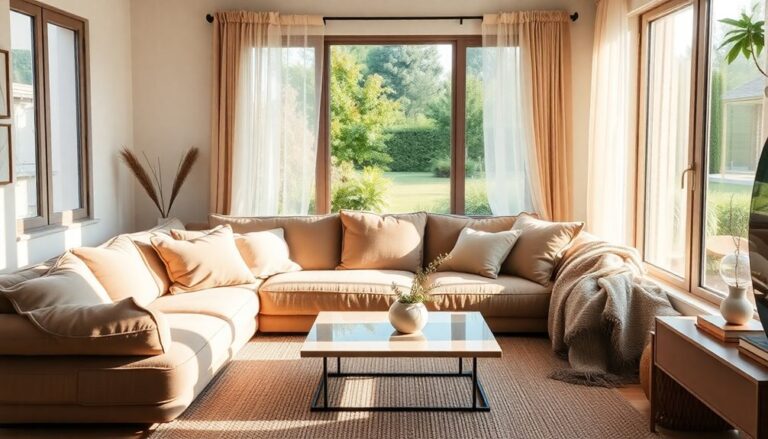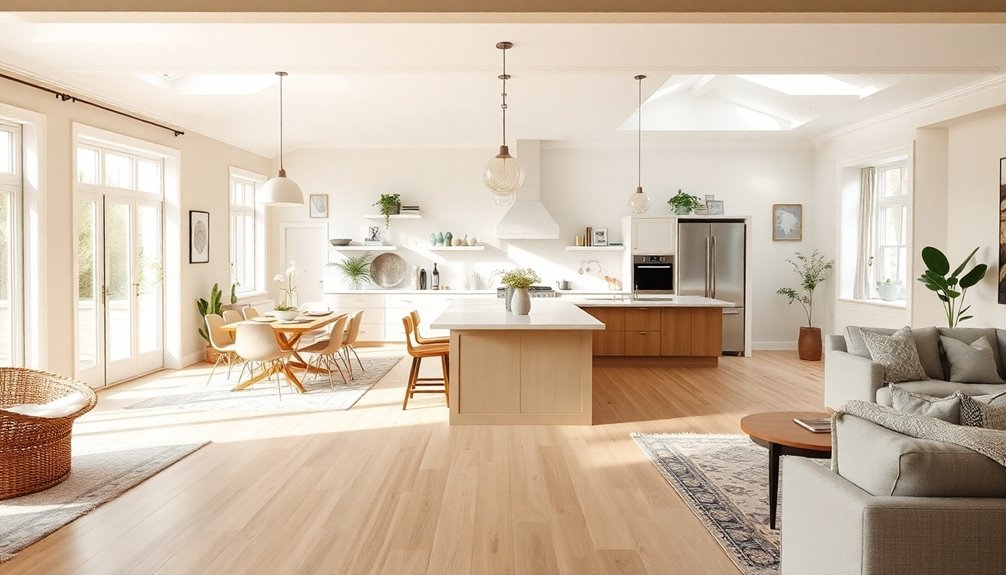

To design open-concept living areas with flow and function, start by clearly defining your zones using furniture placement and area rugs. Choose a cohesive color palette to unify the look and evoke the right mood. Opt for multi-use furniture that adapts to your needs, like convertible sofas and expandable tables. Incorporate adjustable lighting to create ambiance and highlight key features. Finally, add personal touches, like artwork and plants, to make the space feel inviting. By following these steps, you’ll create an area that’s both practical and stylish, setting the stage for further design insights. Additionally, consider integrating playful elements that stimulate conversation and creativity, such as bold accent pieces or unique sculptures. When designing a playful living space, don’t hesitate to mix patterns and textures, allowing for a dynamic aesthetic that reflects your personality. Lastly, remember to maintain a balance between fun and functionality, ensuring that even the most whimsical choices still contribute to the overall harmony of your design.
Define Your Zones
When designing an open-concept living area, it is essential to define your zones to create a functional and inviting space. Your goal should be to establish clear zone differentiation that improves both flow and usability. Start by visualizing how you want each area to serve its purpose—whether it's a cozy reading nook, a lively dining space, or a serene workspace.
Incorporating visual boundaries can help you achieve this. You might use furniture placement, such as sofas or bookshelves, to delineate areas without physical walls. Consider a strategically positioned area rug to anchor a seating arrangement, giving the impression of a defined space. You can additionally play with different ceiling heights or lighting fixtures to create distinct atmospheres within your open layout.
Don't underestimate the strength of color and texture; these elements can serve as subtle visual cues that guide the eye and help separate zones. For instance, a bold accent wall in one area can signal a shift in function while maintaining overall harmony.
Adding plants or decorative screens can likewise introduce both greenery and a sense of separation, improving the innovative feel of your space.
Choose a Cohesive Color Palette
A cohesive color palette can transform your open-concept living area into a harmonious retreat. When you thoughtfully select colors, you not solely improve the aesthetic but additionally tap into the influence of color psychology to evoke emotions and create a welcoming atmosphere. Here are three fundamental steps to help you choose a palette that promotes color harmony:
- Identify a Base Color: Start with a neutral or soft base color for walls and larger furniture pieces. This foundation provides a calming backdrop that allows other colors to pop without overwhelming the space.
- Choose Accent Colors: Once you have your base, select two to three accent colors that complement it. These should reflect your personality and the mood you want to achieve—think warm, energizing shades for a lively feel or cool, muted tones for a serene vibe.
- Incorporate Textures and Patterns: Don't forget about incorporating various textures and patterns within your chosen colors. This adds depth and interest while maintaining a cohesive look. For example, you can mix fabric patterns in cushions or rugs that include your accent colors for a lively touch.
Select Functional Furniture
When you're selecting furniture for an open-concept living area, think about multi-use options that maximize space and functionality. It's additionally essential to take into account the scale and proportion of each piece to guarantee everything feels balanced. By focusing on these aspects, you can create a harmonious and practical environment.
Multi-Use Furniture Options
Choosing the right multi-use furniture can transform your open-concept living space into a versatile haven. By incorporating innovative, space-saving solutions, you can maximize functionality without sacrificing style. Here are three options to ponder:
- Convertible Sofas: Look for sofas that easily transform into beds. This versatile design is perfect for hosting guests as well as maintaining a cozy living area during the day.
- Ottomans with Storage: Opt for ottomans that double as storage units. They provide a stylish seating option and conceal blankets, magazines, or toys, helping you keep your space organized.
- Expandable Dining Tables: Choose a dining table that can extend when needed. This allows you to enjoy intimate meals with family or host larger gatherings, adapting to your lifestyle effortlessly.
Scale and Proportion Matters
Comprehending scale and proportion is fundamental for selecting functional furniture that enhances your open-concept living space. When you choose pieces, consider the scale considerations of each item in relation to your overall space. Oversized furniture can overwhelm a room, whereas tiny pieces may feel lost. Aim for a harmonious blend that complements your design vision.
Proportion balance is equally imperative. Each element should relate to one another, creating a cohesive environment. For instance, balance a low-profile sofa with taller accent chairs, or juxtapose a streamlined coffee table against a more robust sectional. This contrast adds visual interest whilst maintaining functionality.
Think about multi-functional furniture as well. Ottomans that double as storage or extendable dining tables can maximize your area without compromising on style. The key is ensuring that every piece fits well within the scale and proportion of your space.
Finally, don't shy away from experimenting. Use design tools or apps to visualize different arrangements and sizes. This innovative approach will help you achieve a fluid, inviting atmosphere that feels both spacious and intimate. Embrace the art of scale and proportion to boost your living area to new heights.
Incorporate Multi-Use Spaces
Incorporating multi-use spaces into your open-concept living area can transform how you interact with your home. By embracing flexible layouts and versatile designs, you'll create an environment that adapts to your lifestyle. Here are three key strategies to contemplate:
- Dual-Purpose Furniture: Invest in furniture that serves more than one function. For instance, choose ottomans that can double as storage or a coffee table that transforms into a dining space. This not merely saves space but additionally provides you with options as your needs change.
- Defined Zones: Use furniture arrangements to demarcate different areas without closing off the space. Position a sofa to create a cozy conversation nook during maintaining sightlines to the kitchen. This encourages interaction and keeps the area feeling open and welcoming.
- Flexible Workspaces: With remote work on the rise, contemplate incorporating a small desk or foldable work surface into your living area. This allows you to shift from relaxation to productivity seamlessly. When you're done, simply tuck it away to reclaim your space.
Use Area Rugs for Division
Area rugs play a significant role in defining spaces within an open-concept living area. They not only add comfort but also create visual boundaries, helping to delineate different functional zones. When choosing rug materials, consider durability and style—wool, jute, and synthetics each offer unique benefits.
Color choices can dramatically affect the mood of your space. Opt for bold hues to energize a living area or soft tones for a calming effect. Don't shy away from texture variations; mixing textures can improve depth and interest. For instance, a plush shag rug paired with a flat-weave can create a cozy yet dynamic environment.
Placement strategies are essential. Center your rug beneath key furniture pieces, like a coffee table, to anchor the space. Size considerations matter too; make sure your rug is large enough to accommodate your furniture, creating a cohesive look. You can additionally experiment with pattern mixing—layering a graphic rug over a solid one can add a playful touch, but balance is key to avoid overwhelming the space.
Layering techniques allow for versatility. Use smaller rugs to define intimate areas, like reading nooks, during larger area rugs can unify open spaces. Finally, don't overlook maintenance tips; regular vacuuming and occasional professional cleaning will keep your rugs looking fresh and lively. By thoughtfully incorporating area rugs, you'll improve both the flow and function of your open-concept living area, making it a stylish and inviting space.
Optimize Lighting for Ambiance
To create the perfect ambiance in your open-concept living area, start by maximizing natural light sources. Layered lighting techniques, such as combining overhead fixtures with floor and table lamps, can improve the mood throughout the day. Don't forget adjustable lighting solutions that let you tailor the brightness to suit any occasion.
Natural Light Sources
Natural light can transform an open-concept living area, creating a warm and inviting atmosphere. By maximizing sunlight, you can release numerous natural light benefits, enhancing both aesthetics and functionality. Here are three innovative strategies to optimize natural light in your space:
- Window Placement: Position large windows strategically to capture sunlight throughout the day. Consider floor-to-ceiling windows or sliding glass doors to create seamless shifts between indoor and outdoor areas.
- Reflective Surfaces: Utilize mirrors and glossy finishes to bounce light around the room. This technique amplifies the natural light, making your space feel larger and brighter.
- Open Spaces: Keep furnishings low-profile and avoid heavy drapes. Opt for sheer window treatments that allow sunlight to filter in during maintaining privacy. This openness invites sunlight to flow freely, enhancing the overall ambiance.
Layered Lighting Techniques
Maximizing natural light sets the perfect foundation for creating an inviting atmosphere, but it doesn't stop there. To truly raise your open-concept living area, you need to embrace layered lighting techniques. This approach combines various light sources to achieve both ambient brightness and functional illumination.
Start with ambient lighting, which serves as the base layer. Consider sleek ceiling fixtures or strategically placed recessed lights that provide overall illumination. Next, think about task lighting. This is crucial for specific activities, such as reading or cooking. Incorporate stylish table lamps, pendant lights, or under-cabinet lighting that not just serve a purpose but also improve the aesthetic of your space.
Don't forget accent lighting. Use it to highlight art or architectural features, adding depth and character to your design. Dimmer switches can as well help you control the mood, allowing you to shift from a bright, lively space to a cozy, intimate setting with ease. By thoughtfully layering these lighting elements, you'll create a dynamic atmosphere that feels both functional and inviting, making your open-concept living area a true reflection of your innovative style.
Adjustable Lighting Solutions
One of the best ways to improve your open-concept living area is by incorporating adjustable lighting solutions. These innovative options allow you to create the perfect ambiance for any occasion as well as improving the overall functionality of your space. Here's how to get started:
- Dimming Options: Invest in fixtures that offer dimming capabilities. This allows you to easily adjust the brightness according to the time of day or mood. Whether you want bright light for cooking or a softer glow for relaxation, dimming options give you full control.
- Smart Controls: Embrace technology with smart lighting systems. These systems let you adjust your lights from your smartphone or voice-controlled devices. You can create schedules or even change settings remotely, making your living area truly adaptable.
- Layered Solutions: Combine different types of lighting, such as pendant lights, recessed lighting, and floor lamps. This layered approach not only improves aesthetics but also maximizes functionality, ensuring you have the right light for every activity.
Add Personal Touches
Creating a warm and inviting atmosphere in your open-concept living area often hinges on adding personal touches that reflect your unique style. This space should tell your story, and incorporating personal mementos can make it feel truly yours. Think about those cherished items that evoke fond memories, whether it's a vintage clock from your grandparents or a travel souvenir that sparks joy. These pieces not only add character but likewise serve as conversation starters, inviting guests to engage with your personal history.
In addition to personal mementos, consider displaying unique artwork that resonates with you. This could range from lively paintings to eclectic sculptures, showcasing your creative interests. Artwork doesn't just beautify; it furthermore sets the tone for the entire area. Opt for pieces that inspire you and create a focal point, drawing eyes and admiration.
Don't forget about textiles, too. Throw pillows, blankets, and area rugs can infuse color and texture, enhancing the overall atmosphere. Choose fabrics and patterns that reflect your personality, whether they're bold and modern or soft and cozy.
Lastly, don't shy away from plants. They bring life into your open-concept space, contributing not just a pop of color but also a sense of tranquility. By thoughtfully curating these elements, you'll create a cohesive environment that flows seamlessly during showcasing your individuality. Embrace innovation in your design choices and let your personal style shine through!
Frequently Asked Questions
How Do I Measure My Space for Open-Concept Design?
To measure your space for open-concept design, start by jotting down the space dimensions. Use a tape measure to get accurate measurements of your walls, windows, and doorways. Next, consider how you'll arrange furniture placement. Visualize different layouts that improve flow and functionality. You might even sketch your ideas to see what works best. This way, you'll create an innovative, harmonious environment that feels spacious and inviting.
What Are the Best Materials for Open-Concept Flooring?
When choosing the best materials for open-concept flooring, you've got some exciting options. Hardwood options, like oak or maple, add warmth and elegance as well as ensuring durability. If you're seeking a more contemporary vibe, tile choices in large formats or bold patterns can create a stunning visual flow. Don't forget to reflect on how each material complements your overall design and improves the space's functionality. Combining styles can lead to innovative, cohesive living areas!
How Can I Create Privacy in an Open-Concept Layout?
You've probably noticed how open-concept layouts can feel vast yet exposed. To carve out privacy in your space, consider using creative dividers like open shelving, hanging curtains, or decorative screens. These privacy solutions not just define areas but furthermore add visual interest. Plants can additionally serve as natural barriers, enhancing your room's ambiance. With a little innovation, you can create cozy nooks as you maintain that airy feel you love.
What Style of Decor Works Best for Open Living Areas?
When decorating open living areas, modern minimalism often shines with its clean lines and uncluttered spaces, creating a serene environment. Nevertheless, if you crave a unique touch, consider eclectic blends that mix bold colors and diverse textures. This fusion can add character during maintaining a cohesive look. By combining these styles, you'll achieve a fresh, innovative vibe that reflects your personality, making your space both functional and visually enthralling.
How Do I Maintain Flow When Adding New Furniture?
Did you know that 70% of homeowners prioritize flow in their living spaces? To maintain flow when adding new furniture, focus on furniture arrangement that complements existing pieces. Keep traffic patterns clear by positioning items to encourage movement, avoiding blockages. Consider multifunctional furniture to maximize space and maintain a spacious feel. Experiment with layouts until you find one that flows seamlessly, enhancing both style and functionality in your living area.