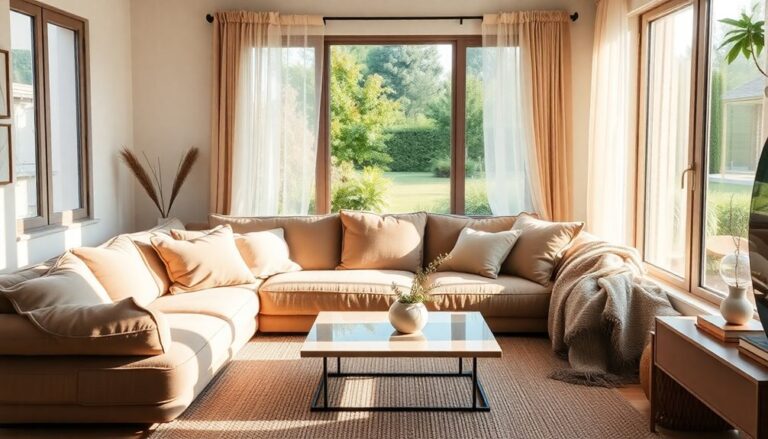
You're about to transform your home into a harmonious oasis where every element works in perfect sync, and it all starts with a clear vision and a willingness to intentionally curate every detail. Establish a cohesive look by defining your personal style, choosing a unifying color scheme, and selecting a core furniture style. Mix textures and patterns, balance old and new pieces, and implement the 60-30-10 rule to create visual harmony. As you explore these elements, you'll discover the secrets to a seamlessly designed space that reflects your unique taste and style, and the best is yet to come.
Starting With a Blank Slate
To create a cohesive look throughout your home, begin by clearing out the clutter and stripping each room back to its bare essentials, giving you a true blank slate to work with. This fresh start allows you to envision a new, harmonious atmosphere that reflects your personal taste and style. Think of it as an empty canvas, waiting for your creative touch.
As you clear out the clutter, you'll begin to see each room in a new light. You'll notice the natural light pouring in, the architectural details, and the flow of the space. This blank slate gives you the freedom to reimagine each room's purpose and layout. You might decide to repurpose a room, swap furniture between rooms, or create a new focal point.
With a clean slate, you can focus on what you truly need and love, rather than being overwhelmed by unnecessary items. This process can be therapeutic, allowing you to let go of the past and start anew. As you work through each room, you'll begin to see a cohesive look emerge, tying together the entire home. You'll feel a sense of accomplishment and belonging, knowing that every piece in your home serves a purpose and reflects your personal style.
Identifying Your Personal Style
As you start to create a cohesive look throughout your home, it's essential to identify your personal style. You'll want to define your aesthetic taste, exploring what speaks to you and what doesn't. By doing so, you'll develop a consistent theme that reflects your unique preferences.
Define Your Aesthetic Taste
Identify the styles, eras, and design elements that speak to you by gathering inspiring images and objects that evoke a sense of excitement and comfort. This is where your personal growth journey begins, as you uncover what resonates with you. Take note of the colors, textures, and shapes that catch your eye, and how they make you feel. Are you drawn to modern minimalism or vintage charm? Do you prefer bold statements or understated elegance?
As you collect these visual cues, consider how your lifestyle influences your aesthetic taste. Do you live in a bustling city or a quiet rural area? Do you have a family or live solo? Your personal style is shaped by your everyday experiences, so don't be afraid to let your lifestyle inform your design choices. By acknowledging these factors, you'll develop a sense of authenticity in your space that truly reflects who you are. As you refine your aesthetic taste, you'll start to notice common threads that weave together to create a cohesive look throughout your home.
Explore Personal Preferences
Your personal style is a dynamic fusion of your lifestyle, preferences, and experiences, so explore what makes you tick. As you dive into your personal preferences, consider the cultural influences that have shaped your tastes and values. Did you grow up surrounded by vibrant colors and bold patterns, or was your upbringing more minimalist and subtle? These early influences can greatly impact your aesthetic today.
Reflect on your personal quirks, too. Do you have a fondness for vintage items or a love for modern technology? Perhaps you're a bookworm with a passion for literature or a thrill-seeker who loves adventure. Whatever it is, own it! Your personal style should be a reflection of who you are, and embracing these quirks will help you create a space that truly feels like home.
Take time to think about what sparks joy and comfort in your daily life. Do you crave coziness and warmth, or do you prefer sleek and modern lines? By tuning into your unique preferences, you'll be able to create a cohesive look that not only reflects your personality but also makes you feel truly at home.
Develop Consistent Theme
Now that you've reflected on your personal preferences, it's time to distill them into a consistent visual theme that echoes your personality throughout your home. This theme will serve as the foundation of your design, guiding every decorating decision you make. Think of it as your personal brand identity – the visual representation of who you are and what you value.
To develop this theme, consider the design principles that resonate with you. Do you lean towards simplicity and minimalism, or do you crave opulence and drama? Are there specific colors, textures, or patterns that evoke a sense of comfort and belonging in you? Identify the common threads that run through your preferences, and use them to create a cohesive look.
Choosing a Unifying Color
As you begin selecting a unifying color, consider the mood and atmosphere you want to evoke in each room, and think about the colors that already exist in your furniture, rugs, and decor. This will help you choose a color that not only ties together different spaces but also resonates with your personal style.
When it comes to creating a cohesive look, color plays an important role. Color Psychology teaches us that different hues can evoke distinct emotions and moods. For instance, blue is often associated with calmness and trust, while yellow is linked to energy and happiness. By choosing a unifying color, you're essentially establishing a visual brand identity for your home. This color will become synonymous with your personal style and will help create a sense of belonging as you move from room to room.
Consider the 60-30-10 rule: 60% of the room should be a dominant color, 30% a secondary color, and 10% an accent color. This ratio will help you achieve a balanced and harmonious look. Don't be afraid to experiment and test different colors on your walls, furniture, and decor. Remember, your unifying color should reflect your personality and style, making your home feel truly yours.
Selecting a Core Furniture Style
Consistency in furniture style is key to creating a cohesive look, so pinpoint a core style that resonates with your personal taste and complements your unifying color. This core style will serve as the foundation for your home's aesthetic, tying together the different rooms and spaces.
You may find yourself drawn to the sleek, retro vibe of Mid Century modern, or the edgy, urban feel of Industrial Chic. Perhaps the calming, beachy essence of Coastal Vibes speaks to you, or the warm, natural charm of Rustic Charm resonates with your style. Alternatively, you might be captivated by the eclectic, free-spirited essence of Boho Elegance. Whatever your preference, selecting a core furniture style will help you create a sense of continuity throughout your home.
As you explore different styles, consider what speaks to you and what reflects your personality. Look for common threads that tie your favorite pieces together, whether it's a shared material, texture, or era. By doing so, you'll start to identify a clear direction for your furniture choices, ensuring that each new addition complements the overall aesthetic. Remember, consistency is key, so take your time and have fun exploring the world of furniture styles until you find the one that feels like home.
Adding Texture and Pattern
As you work to create a cohesive look throughout your home, you're likely thinking about how to add depth and visual interest to each room. One effective way to do this is by incorporating a mix of texture types, from plush rugs to sleek metal accents. By combining different textures and patterns, you'll create a visually appealing space that engages the senses and adds personality to your home.
Mixing Texture Types
You can add depth and visual interest to a room by combining different texture types, from the smoothness of glass to the roughness of natural fibers. By mixing and matching various textures, you'll create a visually appealing space that invites exploration. Consider combining smooth velvet with rough linen to create a sophisticated contrast.
Here are some ideas to get you started:
| Texture | Example |
|---|---|
| Smooth | Glass vases, polished wood, or smooth velvet upholstery |
| Rough | Rough linen fabrics, woven baskets, or natural stone accents |
| Soft | Plush throw blankets, faux fur rugs, or down-filled pillows |
| Coarse | Woven jute rugs, rattan furniture, or rough-hewn wood decor |
| Metallic | Brass fixtures, copper accents, or chrome finishes |
Visual Pattern Play
By incorporating patterns that complement and contrast with one another, you can create a visually dynamic space that draws the eye and sparks curiosity. Visual pattern play is all about mixing and matching different patterns to create a cohesive look that reflects your personal style. One way to do this is by incorporating a Geometric Mix of shapes, such as chevrons, hexagons, and triangles, to add visual interest to your space. You can also draw inspiration from Nature, incorporating patterns that mimic the natural world, like leaf-inspired motifs or wave-like designs.
To create a cohesive look, choose a few core patterns and repeat them throughout your space. This will help tie together different elements, like furniture, rugs, and wallpaper. Don't be afraid to experiment and have fun with it – mixing patterns can be a great way to add personality to your space. Remember, the key is to create a visual flow that guides the eye through the room. By incorporating visual pattern play into your design, you can create a space that feels unique, yet harmonious, and truly reflects your personal style.
Bringing in Consistent Accents
Consistent accents can tie together the overall aesthetic of your home by creating a sense of cohesion and visual flow. By incorporating harmonious metals, such as brass, gold, or silver, you can create a sense of continuity throughout your space. These metals can be used in lighting fixtures, hardware, and decorative accessories to create a cohesive look.
Another way to bring in consistent accents is through accent pillows. These pillows can add a pop of color and texture to your furniture, and when chosen thoughtfully, can tie together different rooms in your home. Consider choosing pillows with a consistent fabric pattern or color palette to create a sense of flow from room to room.
When selecting accent pillows, don't be afraid to mix and match patterns and textures. For example, pair a geometric-patterned pillow with a solid-colored one to create visual interest. You can also use accent pillows to introduce a new color or pattern to your space, as long as it complements your overall aesthetic.
Considering the 60-30-10 Rule
When crafting a cohesive look, you'll want to take into account the 60-30-10 rule, which suggests allocating 60% of your design to a dominant color, 30% to balancing neutral shades, and 10% to an accent color that adds a pop of personality. By following this ratio, you'll achieve a harmonious blend of colors that ties your space together. Now, let's break down each component to understand how to effectively apply this rule in your home.
Dominant Color Choice
You'll find it easier to create a cohesive look throughout your home by selecting a dominant color that sets the tone for the entire space. This dominant color will influence the mood and atmosphere of your home, much like a brand's identity is shaped by its primary color. In fact, Color Psychology plays a significant role in this process, as different colors evoke distinct emotions and reactions. For instance, blue is often associated with calmness, while red is linked to energy and excitement.
| Color | Emotion/Evoked Feeling | Brand Identity Example |
|---|---|---|
| Blue | Calmness, Trust | |
| Red | Energy, Excitement | Coca-Cola |
| Green | Nature, Growth | Starbucks |
When choosing your dominant color, consider the emotions and atmosphere you want to create in your home. Do you want a calming and soothing environment, or an energetic and lively space? By selecting a dominant color that aligns with your desired mood, you'll be well on your way to creating a cohesive look throughout your home.
Balancing Neutral Shades
By adding neutral shades to your dominant color, you're creating a visually appealing palette that's balanced and harmonious, much like a perfectly mixed recipe. This 60-30-10 rule helps you strike the perfect balance. The dominant color takes up 60% of the space, while the secondary neutral shade occupies 30%, and the accent color pops up in the remaining 10%.
When choosing your neutral shades, consider Monochromatic Neutrals, which are different shades of the same hue. This creates a cohesive look and provides a sense of continuity. You can also experiment with Shade Gradation, where you use different shades of the same neutral color to add depth and visual interest. For instance, you could use a light beige on walls, a medium beige on furniture, and a dark beige on accents. This gradual shift creates a sense of harmony and balance, making your space feel welcoming and inviting. By balancing your neutral shades, you'll create a cohesive look that makes you feel right at home.
Accent Color Pop
Now that you've struck a balance with your neutral shades, it's time to add an accent color that pops, and the 60-30-10 rule can guide you in selecting a bold, contrasting hue that elevates your space. This rule suggests allocating 60% of the room to neutral shades, 30% to secondary shades, and 10% to accent colors. By following this guideline, you can create a harmonious color scheme that adds visual interest to your space.
| Accent Color | Color Blocking | Bold Accents |
|---|---|---|
| Vibrant Coral | Adds a pop of color to a neutral backdrop | Creates a statement piece in a room |
| Deep Teal | Creates a striking contrast with neutral shades | Adds a touch of sophistication to a space |
| Bright Yellow | Adds energy and warmth to a room | Can be used to draw attention to a specific area |
When incorporating an accent color, remember to balance it with your neutral shades to avoid overwhelming the space. By doing so, you'll create a cohesive look that ties the entire room together. With the 60-30-10 rule as your guide, you'll be able to add a bold, contrasting hue that elevates your space and makes it truly unique.
Balancing Old and New Pieces
Combine vintage finds with modern staples to forge a unique visual identity that showcases your personal style. By mixing eras, you'll create a space that's both nostalgic and fresh. This blending of old and new is often referred to as vintage fusion, and it's a great way to add depth and character to your home.
When incorporating vintage pieces, start by selecting items that resonate with your personal style. It might be a mid-century modern armchair or an antique rug. Once you have your vintage finds, balance them with modern staples like a sleek sofa or a minimalist coffee table. This juxtaposition of old and new will create visual interest and tell a story about who you are.
To maintain a cohesive look, consider the overall aesthetic you're aiming for. Do you prefer a rustic, eclectic vibe or a more streamlined, modern feel? This will help guide your decision-making when selecting both vintage and modern pieces. Remember, it's all about balance. You don't want the vintage pieces to overwhelm the space, nor do you want the modern elements to make the vintage pieces feel out of place.
Creating a Visual Flow
You can create a sense of continuity throughout your home by establishing a visual flow, where each room seamlessly connects to the next through a harmonious balance of colors, textures, and styles. This visual flow is essential in creating a cohesive look throughout your home, making it feel more welcoming and inviting.
To achieve this, you'll want to think about the Visual Hierarchy of your space. This refers to the way your eye moves through a room, focusing on the most prominent elements first. By creating a clear visual hierarchy, you can guide the viewer's attention through the space, creating a sense of Spatial Continuity.
Here are some tips to help you create a visual flow in your home:
| Element | Tips | Examples |
|---|---|---|
| Color | Use a consistent color palette | Soft blues and whites in the living room, continued in the dining room |
| Texture | Mix and match textures to add depth | Velvet sofa, wooden coffee table, and plush rug |
| Style | Choose a consistent style or era | Mid-century modern furniture in the living room and bedroom |
Tying It All Together
By incorporating the visual flow elements, you've set the stage for a cohesive look, and it's time to tie everything together with a few finishing touches. Now, it's all about creating a sense of Design Harmony throughout your home. Think of it as weaving a Visual Thread that connects each room, creating a sense of belonging and flow.
To achieve this, focus on the following elements:
- Unifying colors: Choose a few core colors and use them consistently throughout your home to create a sense of continuity.
- Repeating textures: Incorporate similar textures, such as wood or stone, to add depth and visual interest.
- Consistent lighting: Use similar lighting fixtures and styles to create a cohesive ambiance.
- Coordinating accessories: Use similar decorative accents, like vases or throw pillows, to add a touch of harmony to each room.
- Flowing furniture: Choose furniture pieces that share similar lines, shapes, or styles to create a sense of flow between rooms.
Frequently Asked Questions
How Do I Ensure Consistency Across Multiple Levels or Floors?
As you navigate multiple levels or floors, you contemplate how to guarantee consistency throughout. Start by considering vertical coherence, where design elements flow seamlessly from floor to floor. Next, focus on room flow, creating a sense of harmony as you move from space to space. By doing so, you'll establish a sense of belonging, making your home feel cohesive and inviting.
Can I Mix Modern and Antique Pieces Without Looking Eclectic?
You're wondering if you can mix modern and antique pieces without looking eclectic. Absolutely, you can! It's all about creating harmonious contrasts. Era blending is an art, and when done right, it adds depth to your space. Start by choosing a unifying element, like a neutral color palette or similar textures. Then, balance modern sleekness with antique charm. Trust your instincts, and don't be afraid to experiment – the result will be a unique, curated look that reflects your personal style.
What if I Have a Small, Irregularly Shaped Room to Decorate?
You’re facing a decorating dilemma – a small, irregularly shaped room that’s got you stumped! Don’t worry, you can create a sense of calm and flow. Use optical illusions to your advantage by placing mirrors strategically to reflect light and make the space feel larger. Corner solutions, like floating shelves or carousels, will maximize storage without cluttering the room. With a few clever tricks, you’ll turn this awkward space into a cozy retreat that feels like you. Incorporate a light color palette to enhance the room’s brightness and make it appear more open. Additionally, consider using multi-functional furniture that can serve as both seating and storage, helping to maintain an uncluttered aesthetic. Remember, how mirrors can transform a room, so don’t shy away from experimenting with different shapes and sizes to add depth and character to your cozy retreat.
How Do I Balance Bold, Statement Pieces With Neutral Elements?
"Like a maestro conducts an orchestra, you'll harmonize bold, statement pieces with neutral elements. Start by creating a visual hierarchy, where statement pieces take center stage. Then, balance them with neutral elements, applying harmony principles like contrast, alignment, and repetition. This symphony of styles will create a sense of belonging, making your space feel cohesive and inviting. By striking the right chord, you'll craft a look that's both bold and beautiful."
Can I Still Have a Cohesive Look With an Open Floor Plan?
You're wondering if an open floor plan can still have a cohesive look. Absolutely! To achieve this, focus on creating a visual flow by using similar materials, textures, and colors throughout the space. Shared accents, like matching lighting fixtures or rugs, will also help tie everything together. By doing so, you'll create a sense of harmony, making the open space feel more connected and inviting.