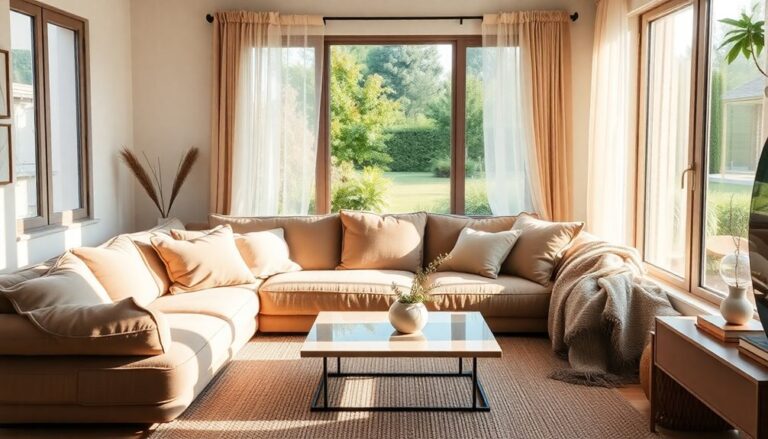
Exploring Feng Shui in your modern interiors brings a rejuvenating balance and positive energy. Start by decluttering to improve Chi flow, creating a calm atmosphere. Use thoughtful furniture placement to encourage conversation and accessibility as you maximize natural light. Choose colors that resonate with your emotions—soft blues can inspire relaxation, whereas lively reds energize the space. Integrating natural elements like plants cultivates tranquility and air purification. Embrace a mix of modern design and traditional principles to create dynamic spaces. As you experiment, you'll discover more techniques to improve your home's energy and aesthetics.
Understanding Feng Shui Principles
Regarding designing your space, grasping Feng Shui principles can make a significant difference in how you feel in your home. Rooted in ancient Chinese philosophy, Feng Shui history spans thousands of years, emphasizing harmony between individuals and their environment. By comprehending these principles, you can create a balanced atmosphere that promotes well-being and innovation.
Feng Shui's cultural significance lies in its ability to guide the flow of energy, or "Chi," within your space. You'll find that every element in your home—colors, shapes, and materials—can influence this energy. For example, a clutter-free environment allows Chi to circulate freely, encouraging creativity and productivity. You might notice that when you declutter, your mind feels more open and inspired.
Moreover, the orientation of your furniture can impact your emotional state. By positioning your bed or desk to face the door, you create a sense of security and control, which can improve focus and motivation. You can experiment with different layouts to see what resonates with you, pushing the boundaries of traditional design.
Ultimately, embracing Feng Shui principles isn't just about aesthetics; it's about nurturing a space that supports your spirit and encourages growth. As you explore these ideas, consider how they can transform your home into a sanctuary of innovation and inspiration. Engaging with this ancient practice can lead to modern solutions that harmonize with your lifestyle, making your living space not just a reflection of who you are, but also a facilitator of who you aspire to be.
Key Elements of Feng Shui
To create a harmonious space, you need to focus on balance and energy flow. By comprehending these key elements of Feng Shui, you can improve the positivity in your home. Let's explore how you can implement these techniques for a more inviting environment.
Balance and Harmony
How can you create a sense of balance and harmony in your living space? Start by incorporating balance techniques that align with your personal style. Use symmetry in furniture arrangement to cultivate an inviting atmosphere. For example, place two identical chairs opposite a sofa, nurturing a sense of equilibrium.
Next, explore harmony strategies by harmonizing colors and textures. Choose a color palette that resonates with you, blending warm and cool tones to evoke tranquility. Pair soft fabrics with sleek surfaces—for instance, a plush rug under a minimalist coffee table—to create visual interest without chaos.
Don't forget about natural elements! Introducing plants can improve both balance and harmony. They not only purify the air but additionally provide a invigorating contrast to your décor. Position them strategically to draw the eye without overwhelming the space.
Lastly, declutter and organize your area. A tidy environment promotes a calm mind, allowing you to fully appreciate your innovative design choices. By applying these balance techniques and harmony strategies, you'll transform your living space into a sanctuary that reflects your unique vision while embracing the essence of Feng Shui.
Energy Flow Techniques
Creating a positive energy flow in your home is essential for improving your well-being and overall comfort. To achieve this, you need to focus on energy circulation and how your space interacts with the elements around it. Start by evaluating your spatial awareness—how you move through your home and how each area feels.
Decluttering is your first step; remove any items that block pathways or feel stagnant. This not only clears physical space but likewise promotes a dynamic energy flow. Next, incorporate mirrors strategically to reflect light and energy, broadening your space and inviting positivity.
Consider the arrangement of your furniture. Aim for a layout that encourages conversation and connection, allowing energy to circulate freely. Use plants to boost vitality; they not only purify the air but also symbolize growth and renewal.
Finally, pay attention to lighting—natural light is a significant energizer. Use soft, warm lighting to create a cozy atmosphere, ensuring each room feels inviting. By employing these energy flow techniques, you'll transform your living space into a sanctuary that nurtures your spirit and fuels creativity.
The Importance of Space Arrangement
When you arrange your space thoughtfully, you create a balanced flow of energy that improves your overall well-being. By maximizing natural light and functional areas, you'll not merely improve the aesthetics of your home but additionally boost its livability. Let's explore how effective space arrangement can transform your environment.
Balancing Energy Flow
A well-thought-out space arrangement can greatly improve the energy flow in your home. By utilizing spatial awareness, you can create an environment that minimizes energy blockages and encourages a lively atmosphere. It's crucial to contemplate how furniture, décor, and layout interact within your space.
Here are a few innovative tips to boost energy flow:
- Keep pathways clear: Guarantee that movement throughout your home feels effortless.
- Group furniture intentionally: Create conversation areas that feel inviting and connected.
- Incorporate curves: Use round furniture or soft edges to promote a harmonious vibe.
- Reflect on colors: Choose hues that evoke positivity and energy, aligning with your personal style.
Each decision you make regarding space arrangement contributes to the overall energy of your home. By focusing on balancing energy flow, you not just improve aesthetics but additionally cultivate mental clarity and emotional well-being. Don't underestimate the influence of a thoughtfully arranged space; it's more than just visual—it's about feeling energized and at peace in your surroundings. Embrace these practices, and watch your environment transform into a sanctuary of flow and dynamism.
Enhancing Natural Light
Natural light plays a crucial role in transforming a space, making it feel more open and inviting. To maximize the beauty of your interiors, focus on the arrangement of furniture and decor around natural light sources. Positioning your seating and work areas near windows not just improves your space's aesthetic but likewise boosts your mood and productivity.
Consider incorporating light amplifying decor, such as mirrors and lighter color palettes, to further intensify the effects of natural light. Here's a simple guide to help you improve natural light in your home:
| Strategy | Description | Benefits |
|---|---|---|
| Optimize Layout | Arrange furniture to face windows | Improves views and light access |
| Use Mirrors | Place mirrors across from windows | Reflects and doubles light effect |
| Choose Light Colors | Opt for soft, light hues in decor | Brightens the overall atmosphere |
Maximizing Functional Areas
Creating a well-organized space is essential for maximizing functionality in your home. By carefully arranging your environment, you can establish distinct functional zones that improve your daily activities. Space optimization isn't just about aesthetics; it's about creating an efficient flow that supports your lifestyle.
To achieve this, consider the following strategies:
- Define each zone: Clearly outline areas for work, relaxation, and socializing to avoid chaos.
- Choose versatile furniture: Opt for pieces that serve multiple purposes, like a sofa bed or storage ottoman.
- Utilize vertical space: Install shelves or wall-mounted storage to keep surfaces clear and organized.
- Incorporate movement: Allow enough room for easy navigation between zones, promoting a dynamic and inviting atmosphere.
Choosing Colors for Harmony
In relation to choosing colors for harmony in your space, grasping the principles of Feng Shui can transform the atmosphere of your home. By comprehending color psychology, you can create harmonious palettes that resonate well with the energy of your environment. Each color carries its own vibration and meaning, influencing your emotions and overall well-being.
To help you select the right colors, consider the following table showcasing color associations and their effects:
| Color | Effect |
|---|---|
| Red | Energizing, passionate |
| Blue | Calming, serene |
| Green | rejuvenating, balancing |
When you're designing your space, think about how these colors interact with one another. A combination of soothing blues and greens can create a tranquil retreat, perfect for relaxation. Conversely, lively reds can add energy and excitement to social areas.
For a truly innovative approach, experiment with layering colors. You might use a neutral base and add accents in bold colors to create depth without overwhelming the senses. Remember, the goal is to cultivate an environment that feels balanced and inviting.
Ultimately, choosing colors for harmony isn't just about aesthetics; it's about nurturing your emotional and spiritual well-being. So, take your time in selecting those hues that resonate with your vision and enhance your living space. Your home should be a sanctuary that reflects your inner peace and energy.
Incorporating Natural Elements
Bringing the outdoors inside can considerably improve the energy in your home. When you incorporate natural elements, you create a sense of tranquility and connection to nature, which is crucial in Feng Shui. You'll want to focus on using natural materials and indoor plants to achieve this balance. Here are some innovative ideas to get you started:
- Wood: Use wooden furniture or accents to add warmth and grounding energy.
- Stone: Incorporate stone features, like a pebble pathway or a rock garden, for a touch of the earth.
- Textiles: Choose organic fabrics, like cotton or linen, to improve comfort and breathability in your living space.
- Indoor Plants: Add a variety of indoor plants to purify the air and introduce lively life.
Each of these elements brings its unique benefits and energy to your space. For instance, wooden pieces not just provide a natural aesthetic but also evoke a sense of stability. Incorporating indoor plants can transform your environment, as they thrive on care and attention, reflecting your nurturing spirit.
Opt for plants like snake plants or pothos, which are low-maintenance yet striking. When you thoughtfully select natural materials and greenery, you'll create a harmonious atmosphere that resonates with your personal style as well as adhering to Feng Shui principles. By embracing these elements, you're not merely decorating; you're improving your home's energy and cultivating a deeper connection with the world around you.
Enhancing Energy Flow
Often, the flow of energy in your home can feel stagnant or blocked, impacting your overall well-being. To improve energy circulation, you can adopt a few innovative strategies that prioritize spatial awareness. Start by observing how energy moves throughout your space. Are there areas where you notice clutter or obstructions? These elements can disrupt the natural rhythm of your environment.
Consider incorporating open spaces and pathways that invite movement. By creating clear lines of sight and removing barriers, you enable energy to flow freely, making your home feel more lively. Think about using mirrors to reflect light and energy around the room; they can amplify the sense of openness and improve the overall mood of your interiors.
Natural light plays a significant role in energy circulation too. Maximize exposure to sunlight by using sheer curtains or placing mirrors strategically to bounce light into darker corners. This simple adjustment can invigorate your space and uplift your spirit.
Plants are another fantastic way to improve energy flow. They not only purify the air but bring life and dynamism into your home. Choose plants that resonate with you, and place them thoughtfully in your space to promote a sense of harmony.
Lastly, pay attention to your color palette. Colors can influence mood and energy; opt for tones that inspire positivity and creativity. By focusing on these elements, you can transform your home into a sanctuary that nurtures both your spirit and your innovative pursuits.
Furniture Placement Strategies
Strategically placing furniture can greatly improve the energy flow in your home, creating a harmonious and inviting atmosphere. By considering the principles of Feng Shui, you can amplify spatial dynamics and promote a sense of tranquility. Here are some innovative furniture arrangement strategies to boost your interior design:
- Create Clear Pathways: Confirm that there's a smooth flow between furniture pieces, allowing energy to circulate freely. Avoid overcrowding and maintain open spaces to invite movement.
- Balance the Elements: Distribute furniture evenly throughout the room. This not just creates visual balance but additionally promotes a sense of stability and comfort.
- Anchor with a Focal Point: Choose a central feature, such as a fireplace or a piece of art, and orient your furniture around it. This draws the eye and creates a cohesive atmosphere.
- Use Multi-Functional Pieces: Invest in furniture that serves multiple purposes, like a storage ottoman or a convertible sofa. This improves spatial dynamics and keeps your space uncluttered.
Incorporating these strategies into your home can transform the way you experience your surroundings. Remember, furniture placement isn't just about aesthetics; it's about crafting an environment that supports your well-being. By being mindful of how you arrange your furnishings, you'll create a space that resonates with positive energy and invites connection. Embrace these techniques, and watch your living space flourish into a sanctuary of peace and creativity.
Feng Shui for Small Spaces
Creating a harmonious environment in small spaces can be a rewarding challenge. You'll find that incorporating Feng Shui principles can transform your compact living area into a serene sanctuary. Start by embracing minimalistic design. By reducing clutter, you not only free up space but also allow for better energy flow. When every item has a purpose, you enhance the overall ambiance.
Consider space-saving solutions that are both functional and aesthetically pleasing. Multi-purpose furniture, like a sofa bed or an ottoman with storage, can maximize your space while adhering to Feng Shui guidelines. Position these pieces thoughtfully to create clear pathways, ensuring that energy can move freely throughout the room.
Pay attention to color choices. Light, soft hues can make a small space feel larger and more inviting, while lively accents can stimulate energy. Incorporating mirrors strategically can further amplify light and create a sense of depth, enhancing the flow of chi.
Don't overlook the importance of natural elements. Integrate plants or artwork that resonates with nature to bring energy into your space. This connection nurtures a sense of balance and tranquility.
Finally, maintain a clean and organized environment. Regularly assess what you truly need in your space; let go of items that no longer serve you. By doing so, you'll cultivate a sanctuary that feels expansive, lively, and harmonious, even in the tightest of confines. Embrace these Feng Shui practices, and watch your small space flourish.
Modern Interpretations of Feng Shui
As you embrace Feng Shui in small spaces, it's likewise important to explore how modern interpretations of these ancient principles can improve your living environment. Today, Feng Shui blends seamlessly with modern aesthetics, allowing you to create a dynamic, balanced space that reflects both tradition and innovation. By incorporating contemporary design elements, you can harmonize energy flow as you celebrate cultural influences that resonate with you.
Here are a few ways to interpret Feng Shui in a modern context:
- Minimalism: Adopt a less-is-more approach. By decluttering your space, you create room for positive energy to circulate freely.
- Sustainable Materials: Use eco-friendly furnishings that promote health and well-being as they align with Feng Shui's emphasis on natural elements.
- Smart Technology: Integrate smart home devices that improve comfort and convenience, ensuring your space feels both functional and inviting.
- Color Psychology: Choose colors based on their energetic properties. For instance, soft blues and greens can evoke calmness, while lively reds can energize the atmosphere.
Frequently Asked Questions
How Can I Incorporate Feng Shui in a Rental Space?
You might think feng shui's tough in a rental, but it's all about clever rental decor and space optimization. Start by decluttering to create an open flow. Use mirrors to expand your space visually and select calming colors for walls and accents. Arrange your furniture to promote positive energy, focusing on a balanced layout. Incorporating plants can add life and freshness, making your rental feel like a true sanctuary without permanent changes.
Are There Specific Feng Shui Guidelines for Home Offices?
Absolutely, there are specific feng shui guidelines for home offices that can improve your productivity. Start by positioning your desk in a commanding position, ideally facing the door but not directly in line with it. For color choices, opt for calming shades like blues or greens to promote focus and creativity. Incorporating plants can further boost the energy in your space. By following these guidelines, you'll create an innovative and harmonious work environment.
Can Feng Shui Principles Be Applied to Outdoor Spaces?
Did you know that well-designed outdoor spaces can boost your mood by up to 40%? You can absolutely apply feng shui principles to your outdoor areas. By focusing on outdoor harmony, you'll create a balanced environment that improves garden energy. Consider incorporating natural elements, like water features or plants, to invite positive vibes. With a little creativity, you'll transform your outdoor space into a sanctuary that promotes tranquility and innovation.
What Are Common Feng Shui Mistakes to Avoid?
When you're exploring feng shui, it's essential to avoid common misconceptions. Many people think it's just about aesthetics, but it's really about energy flow. You've gotta prioritize clutter management; clutter blocks energy and creates chaos. Another mistake is ignoring the bagua map, which helps you identify areas in your space that need attention. By steering clear of these errors, you'll create a more harmonious and innovative environment that truly resonates with you.
How Often Should I Refresh My Feng Shui Arrangements?
Revitalizing your Feng Shui arrangements is like tending a garden; it needs regular care to flourish. You should aim for seasonal adjustments to keep the energy flowing and lively. Every few months, assess your space and make changes that resonate with the current season. This Feng Shui frequency not just revitalizes your environment but additionally improves your well-being. Trust your intuition, and don't hesitate to experiment with new ideas that inspire you!