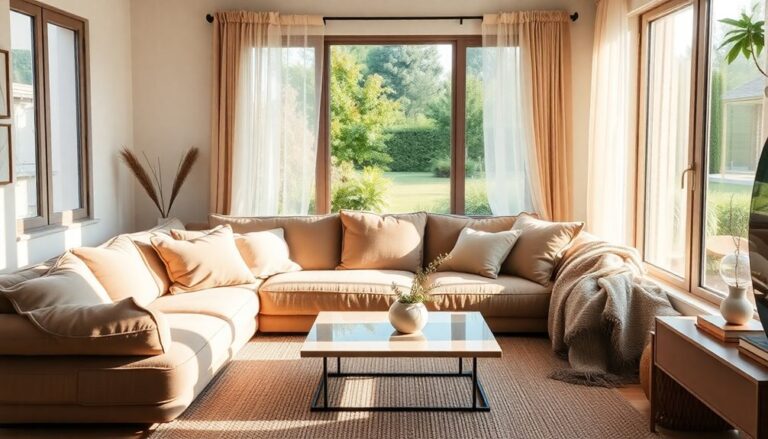
The materials you choose directly shape the atmosphere of your interior spaces, influencing everything from comfort to aesthetics. Textures add depth and unique experiences, whereas color choices can evoke specific emotions—warm tones energize, and cool shades promote calm. You might additionally consider balancing natural and synthetic materials to achieve both stunning design and improved air quality. Acoustic properties of materials play a key role too, as they can improve sound absorption and overall comfort. Comprehending these elements helps you create inviting spaces. Explore deeper to uncover more about how material selections transform your interiors.
The Role of Texture
Comprehending the role of texture in interior design can considerably improve the atmosphere of a space. When you think about how textures interact, you open up a world of possibilities for creating an innovative environment. The fabric interplay in your design choices plays a pivotal role in evoking emotions and enhancing the overall aesthetic.
Consider how different materials can work together to form a cohesive narrative. A mix of soft, plush fabrics alongside sleek, metallic finishes can create dynamic contrasts that energize a room. By layering textures, you not only add depth but additionally stimulate a tactile experience that invites people to engage more fully with their surroundings.
Choosing the right textures can transform a mundane setting into a sensory delight. For instance, incorporating a variety of textiles—such as velvet cushions, woven throws, and smooth leather accents—can make a space feel warm and inviting. This combination encourages a sense of comfort during the same time sparking curiosity.
Don't shy away from experimenting with unexpected textures. Introducing natural elements like reclaimed wood or stone can ground your design while providing a revitalizing counterbalance to more modern materials. The key lies in your willingness to play with contrasts and harmonies, in the end crafting an environment that feels both sophisticated and uniquely yours.
Color Psychology in Materials
Color plays a crucial role in shaping the atmosphere of an interior space, influencing emotions and perceptions in subtle yet impactful ways. When you choose materials for your design, you're not just picking colors; you're tapping into color symbolism that resonates deeply with the human psyche. Different hues can evoke specific emotional responses, transforming a sterile room into a sanctuary or a workspace into a hub of creativity.
For instance, reflect on how warm colors like red and orange can energize a space, making it feel lively and dynamic. These colors are often associated with passion and warmth, ideal for social areas where interaction is key. Conversely, cool colors such as blue and green tend to promote calmness and tranquility, making them perfect for bedrooms or relaxation zones.
You should additionally contemplate the context in which these colors exist. Is the space meant for focus or relaxation? The emotional response you aim to elicit will guide your material and color choices.
Innovative designers often play with color combinations to create unique atmospheres. A bold accent wall can become a statement piece, whereas softer tones can complement natural light and improve a room's spaciousness. The interplay of color within materials can spark inspiration and creativity, making it crucial to reflect on how your choices impact the overall ambiance.
Natural vs. Synthetic Materials
When selecting materials for your interior space, the choice between natural and synthetic options can greatly influence the atmosphere. Natural materials often bring warmth and authenticity, creating a soothing environment that resonates with many. Picture walking into a room adorned with wood, stone, or wool; these elements not merely offer aesthetic appeal but likewise provide tangible natural benefits, such as improved air quality and durability.
On the flip side, synthetic materials might catch your eye with their sleek designs and innovative textures. Yet, they come with synthetic drawbacks that can impact your space's overall ambiance. Many synthetic products emit volatile organic compounds (VOCs), which can compromise air quality and lead to health issues.
As you weigh your options, consider these key points:
- Aesthetic appeal: Natural materials often evoke a timeless charm.
- Sustainability: Choosing natural can support eco-friendly practices.
- Maintenance: Synthetic materials may require less upkeep than their natural counterparts.
- Cost: Synthetic options can sometimes be more budget-friendly upfront.
Ultimately, the balance between natural and synthetic materials can shape the feelings and experiences within your interior space. By thoughtfully considering the benefits and drawbacks, you can create an atmosphere that aligns with your innovative vision during the promotion of well-being.
Sustainable Material Choices
Selecting materials for your interior space isn't merely about aesthetics or cost; it's furthermore about sustainability. By choosing sustainable materials, you contribute to a healthier planet as you improve the atmosphere in your home or office. Recycled materials, for instance, can transform your space into a statement of innovation and responsibility. Incorporating elements of biophilic design further connects you with nature, promoting well-being and creativity.
Here's a quick reference table for some sustainable material choices:
| Material Type | Benefits | Design Ideas |
|---|---|---|
| Recycled Wood | Eco-friendly and unique grains | Furniture, flooring, accents |
| Bamboo | Fast-growing and durable | Shelving, wall panels |
| Recycled Metal | Durable and modern aesthetic | Fixtures, art pieces |
| Natural Fabrics | Biodegradable and breathable | Upholstery, curtains |
When you opt for materials like these, you create a space that not only looks good but likewise feels good. Recycled wood adds character, while bamboo offers flexibility and strength. Recycled metal introduces an industrial vibe, and natural fabrics improve comfort.
Embracing sustainable choices isn't a compromise; it's a pathway to innovation. By harmonizing aesthetics with environmental responsibility, you can create interiors that inspire and rejuvenate. So why not take the step toward sustainable design? Your choices can lead to a beautiful, sustainable future.
Acoustic Properties of Materials
Sound quality greatly influences the atmosphere of any interior space. You might not realize it, but the materials you choose for your design can greatly affect sound absorption and noise reduction. By selecting the right materials, you can create an environment that improves communication, encourages creativity, and promotes relaxation.
Consider the following aspects when evaluating acoustic properties:
- Material Density: Denser materials typically absorb sound better, minimizing echoes and reverberation.
- Surface Texture: Textured surfaces scatter sound waves, reducing noise levels and creating a more pleasant auditory experience.
- Porosity: Materials with high porosity, like acoustic panels and fabrics, excel in sound absorption and can help in controlling ambient noise.
- Installation Location: Strategic placement of acoustic materials can optimize their effectiveness in controlling sound within a space.
You'll find that incorporating these elements allows you to tailor the acoustic experience in your interior design. For instance, using soft furnishings and wall coverings can lead to considerable noise reduction, making open-concept spaces feel more intimate. Conversely, hard surfaces like glass and concrete may amplify sound, creating a more dynamic atmosphere but potentially leading to discomfort.
In a world where we crave innovation, comprehending the acoustic properties of materials is essential. By thoughtfully considering sound absorption and noise reduction, you can craft an interior atmosphere that not just looks stunning but also sounds harmonious.
Case Studies in Interior Design
In exploring the domain of interior design, case studies reveal how different materials and design choices come together to create unique atmospheres. For instance, consider the transformation of a traditional office space into a collaborative hub. Here, innovative material selection—such as incorporating reclaimed wood and acoustic panels—enhances not only aesthetics but also functionality. The warm textures of wood promote comfort, whereas the panels absorb sound, nurturing a focused work environment.
Another case study highlights a boutique hotel that employs a mix of glass and metal to achieve a modern, minimalist vibe. The use of reflective surfaces expands the space visually, making it feel more open and inviting. By adhering to design principles like balance and harmony, the designers successfully create a sophisticated atmosphere that attracts a diverse clientele.
In a residential setting, a family home showcases how lively colors paired with natural fibers can evoke a sense of warmth and playfulness. The material selection here—soft cottons blended with durable jute—reflects the homeowner's desire for both style and longevity, demonstrating that aesthetic appeal doesn't have to compromise practicality.
These case studies illustrate the profound impact that thoughtful material selection and adherence to design principles can have on interior atmospheres. By analyzing these real-world examples, you can draw inspiration for your own projects and understand how innovative materials can enhance spaces, improving both form and function.
Frequently Asked Questions
How Do Different Materials Affect Indoor Air Quality?
Different materials can greatly affect indoor air quality by influencing factors like natural ventilation and moisture control. When you choose breathable materials, you improve airflow, reducing pollutants. Incorporating moisture-resistant materials helps prevent mold growth, creating a healthier environment. By focusing on innovative solutions, you can optimize these attributes, ensuring that your space remains fresh and inviting. So, consider how your choices impact air quality—it's vital for a sustainable and comfortable indoor atmosphere.
Can Materials Influence Mood and Productivity in Workspaces?
Picture stepping into a workspace where colors breathe life into your creativity. Materials don't just build walls; they create environments that influence mood and productivity. By utilizing color psychology, you can evoke energy or calmness, shaping your team's focus. Acoustic comfort is equally essential—soft surfaces absorb noise, encouraging collaboration and reducing stress. When you choose materials wisely, you're not just designing a space; you're crafting an innovative atmosphere that inspires greatness.
What Are the Best Materials for Small Spaces?
When you're tackling small spaces, think about using materials that offer space-saving solutions and flexibility. Opt for versatile furnishings like modular sofas or foldable tables, which can adapt to your needs. Lightweight materials such as metal or engineered wood not merely keep the space feeling airy but additionally add a modern touch. Don't forget to incorporate mirrors to improve light and create a sense of depth, making your small area feel larger and more inviting.
How Do Seasonal Changes Affect Material Performance Indoors?
Did you know that around 40% of energy used in homes is affected by material performance? Seasonal adjustments can greatly impact how materials behave indoors, from temperature regulation to humidity control. You'll want to reflect on material adaptability; for instance, certain woods expand in humidity whereas others don't. By choosing innovative materials designed for these fluctuations, you can improve comfort and efficiency, making your space more inviting year-round.
Are There Any Materials to Avoid for Allergy Sufferers?
If you're looking to create an allergy-friendly space, you'll want to avoid synthetic materials like polyester and certain foams, which can trap allergens. Instead, consider natural alternatives such as organic cotton, wool, or bamboo. These options not just reduce allergen build-up but additionally contribute to a healthier indoor environment. By choosing wisely, you can innovate your living space as well as prioritizing your health and comfort.