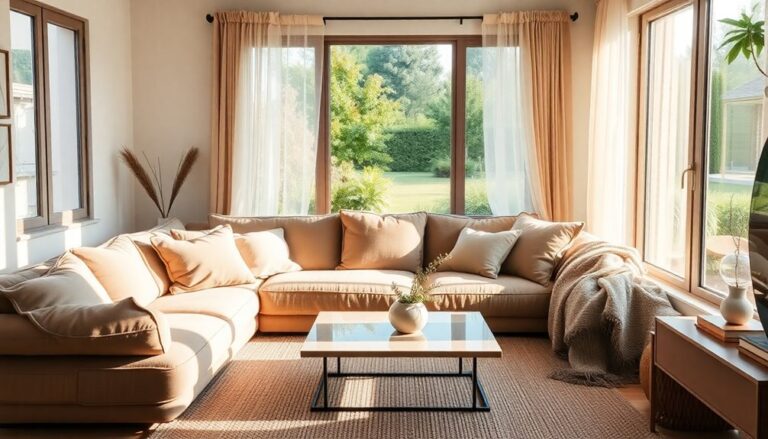
To create zones in your open-plan living space, start by identifying your needs, such as a workspace or cozy reading nook. Arrange furniture to suit each zone's function, using area rugs to visually separate spaces. Consider adding vertical dividers like bookcases for more privacy. Use lighting strategically to improve each area—task lighting for workspaces and ambient lighting for relaxation. Incorporate colors that evoke the right mood for each zone. Personalizing your décor can add character and warmth. Follow these steps, and you'll be on your way to a harmonious layout that suits your lifestyle perfectly. More tips await!
Understand Your Needs
In relation to creating zones in your open-plan living space, you'll want to start by identifying your specific needs. This initial step is vital, as it sets the foundation for an innovative design customized to your lifestyle. Begin by evaluating priorities: think about what activities are most significant to you. Do you need a dedicated workspace, a cozy reading nook, or perhaps a lively area for entertaining? Jotting down these priorities helps clarify your vision.
Next, assess your preferences. Consider how you and your family interact with the space. Do you prefer an open, airy feel, or are you drawn to more intimate settings? Comprehending these nuances will guide your decision-making process. Is natural light fundamental for your creativity, or do you value areas where you can unwind and recharge?
As you explore these questions, visualize how each zone can serve its purpose whilst still contributing to the overall flow of your home. Innovation often stems from a clear comprehension of your needs, allowing you to create a harmonious environment that resonates with your lifestyle.
Use Furniture Arrangement
Arranging your furniture effectively can make all the difference in creating distinct zones within your open-plan living space. By leveraging innovative furniture styles and smart arrangement techniques, you can transform a single area into multiple functional spaces that improve your lifestyle.
Start by identifying the primary functions of each zone you want to create—whether it's a cozy reading nook, a lively dining area, or a stylish entertainment corner. Once you've determined your needs, choose complementary furniture styles that reflect your personality as you serve the intended purpose. For instance, a sleek, modern sofa can define a relaxation zone, whereas a rustic dining table establishes a gathering area.
Next, experiment with arrangement techniques. Consider angling your furniture instead of pushing everything against the walls. This not just creates a more inviting atmosphere but furthermore encourages conversation. You can use larger pieces, like a sectional sofa, to delineate spaces visually. Placing a bookcase or a console table strategically can serve as a subtle divider without blocking light or sightlines.
Don't shy away from mixing styles—industrial with bohemian or minimalist with eclectic—to create a dynamic environment that feels cohesive yet diverse. Finally, remember to leave enough space for easy movement between zones. Effective furniture arrangement isn't just about aesthetics; it's about improving function and flow in your living space. Embrace creativity, and let your arrangement tell a story that reflects who you are.
Incorporate Area Rugs
Area rugs are a fantastic way to define different zones in your open-plan living space. By incorporating the right area rugs, you can create a sense of separation while still maintaining that airy feel. Start with your rug size selection; choose a size that complements your furniture arrangement. Ideally, the rug should extend beyond the furniture's edges, anchoring your space and making it feel cohesive.
Next, consider the area rug textures. Mixing textures can add depth and interest to your design. For instance, you might pair a plush shag rug in your lounging area with a flatweave rug in the dining space. This contrast not only delineates the zones but additionally invites guests to engage with each area differently.
When selecting area rugs, don't be afraid to experiment with patterns and colors that reflect your personal style. A bold geometric print can energize a seating area, whereas a soft, muted tone can create a calming atmosphere in a reading nook.
Furthermore, think about the practical aspects too—durability and maintenance are key, especially in high-traffic areas. Natural fibers like jute or wool can offer both style and longevity, making them perfect for busy homes.
Ultimately, the right area rugs will not only improve your open-plan living space but additionally showcase your innovative approach to design, creating distinct zones that feel both functional and inviting.
Add Vertical Dividers
Vertical dividers can transform your open-plan living space into distinct zones as well as adding a stylish touch. By strategically placing these dividers, you can define areas for relaxation, work, or dining without sacrificing the openness that makes your space feel inviting. Consider using folding screens as an innovative solution. They're not only versatile but also allow you to easily adjust your layout depending on your needs or mood.
Another exciting option is incorporating a vertical garden as a divider. Envision a lush, green wall that not only separates your living space but also improves the air quality and aesthetic appeal. This living element brings a sense of tranquility and can serve as a stunning focal point. You can choose from various plants that thrive indoors, creating a lively and serene environment while maintaining the open feel of your home.
When selecting your vertical dividers, think about materials and textures that resonate with your overall design theme. Wood, metal, and fabric each provide unique vibes, from rustic to modern. You can go for a sleek, minimalist folding screen or an ornate, bohemian-inspired design.
Furthermore, you can personalize your dividers with artwork, photos, or hanging decor to make your zones feel cohesive and uniquely yours. Embrace this creative approach, and watch how adding vertical dividers raises your open-plan living experience, seamlessly merging functionality and style into one harmonious space.
Utilize Lighting Effectively
Lighting can dramatically influence the way you perceive and utilize your open-plan living space. By strategically using different types of lighting, you can create distinct zones that improve both functionality and aesthetics. Start with ambient lighting to establish a warm, inviting atmosphere. Consider installing dimmable fixtures or using smart bulbs that let you adjust brightness according to your mood or the time of day.
Next, introduce task lighting in areas where you need focused illumination, like your reading nook or kitchen workspace. Think about sleek desk lamps or pendant lights that provide ample light without overwhelming the space. This way, you not only improve visibility but also define specific areas within your open-plan layout.
Incorporating mood lighting can add an innovative touch, transforming your space for various occasions. Use LED strips or colored bulbs to highlight architectural features or create a cozy vibe during intimate gatherings. Remember, the right mood lighting can make your living area feel dynamic and versatile.
Lastly, never underestimate the influence of natural light. Maximize your windows and consider sheer curtains to invite sunlight in while maintaining privacy. Natural light not only brightens your space but also helps you feel more connected to the outdoors.
Create Color Zones
To create inviting color zones in your open-plan space, start by choosing complementary color palettes that flow together. You can additionally use accent walls strategically to define different areas and add depth. Finally, incorporating colorful accessories will tie everything together and improve the overall aesthetic.
Choose Complementary Color Palettes
Creating a cohesive look in your open-plan living space often hinges on your choice of color palettes. By grasping color theory, you can effectively select complementary hues that not only improve the aesthetic but also uplift the mood of each zone. Think about how colors interact; warm tones can energize a social area, whereas cool shades might create a calm retreat.
When choosing your palette, aim for a balance that resonates with your personal style and the function of each space. For instance, if you want to encourage creativity in a home office, opt for lively greens or yellows. Conversely, soft blues or grays can promote relaxation in a reading nook.
Experiment with combinations that evoke the right emotions. You might pair a bold accent color with neutral backgrounds to draw attention without overwhelming the senses. This strategic approach nurtures seamless shifts between zones, making your open-plan living space feel intentional and well-organized. Remember, the right colors can greatly influence mood improvement, transforming your environment into a harmonious blend of style and function.
Use Accent Walls Strategically
Accent walls can transform your open-plan living space by defining specific zones and adding depth to your design. By incorporating bold accent color choices, you can create a striking contrast that visually separates different areas, making your home feel more organized and intentional.
Consider these innovative strategies for using accent walls:
- Choose bold colors to energize your space or soft hues for a calming effect.
- Experiment with wall texture options like wood paneling or textured paint to improve visual interest.
- Create a focal point by painting one wall in a lively color, drawing attention to a particular area, like your dining or reading nook.
- Use wallpaper with patterns or designs that reflect your personality, adding character to your zones.
Utilizing accent walls not only raises your design but also helps you establish functional areas within your home. Use these techniques to blend aesthetics with practicality, ensuring each zone feels unique yet cohesive. Remember, the right accent wall can be the key to revealing the full potential of your open-plan living space!
Incorporate Colorful Accessories
Incorporating colorful accessories is a fantastic way to establish distinct color zones within your open-plan living space. By thoughtfully choosing items like colorful cushions and lively artwork, you can create dynamic areas that cater to different moods and functions.
Here's a quick guide to help you organize your approach:
| Accessory Type | Purpose |
|---|---|
| Colorful Cushions | Add comfort and visual interest |
| Lively Artwork | Create focal points |
| Area Rugs | Define separate zones |
| Decorative Throws | Introduce texture and warmth |
| Statement Lamps | improve ambiance |
When you strategically place these accessories, you enrich your decor and draw attention to specific areas, making the space feel intentional. For instance, a cluster of colorful cushions can transform a simple seating area into a lively nook, whereas a piece of lively artwork can anchor a dining space. Experiment with different colors and patterns to find the right balance that resonates with your style. In the end, these elements will boost your open-plan living space into a cohesive yet versatile environment that feels uniquely yours.
Define Purpose for Each Area
To create a functional open-plan living space, start by identifying the specific areas you'll need, like a cozy reading nook or a lively dining zone. Think about your lifestyle and how each space will serve your daily activities. Finally, establish visual boundaries to clearly define these areas and improve the overall flow of your home.
Identify Functional Areas
Creating distinct functional areas in an open-plan living space is essential for maximizing both usability and comfort. By identifying different activity zones, you can create a cohesive and inviting environment that serves multiple purposes. Start by considering the roles each area will play in your daily life.
- Living Area: A cozy spot for relaxation and socializing.
- Dining Zone: An inviting space for meals and gatherings.
- Workstation: A functional area that encourages productivity and focus.
- Play Zone: A creative corner for hobbies or children's activities.
Once you've defined these areas, you can design a functional layout that promotes flow and balance. Think about furniture placement, color schemes, and lighting to improve each zone's purpose. This clarity not just encourages a sense of order but also improves the overall aesthetic of your space. Remember, the goal is to create distinct zones that cater to your needs during ensuring they work harmoniously together. Embrace innovation in your design choices, and watch your open-plan living space transform into a well-organized haven.
Consider Lifestyle Needs
Comprehending your lifestyle needs is crucial when defining the purpose of each area in an open-plan living space. Start by evaluating your lifestyle preferences and how they influence your daily activities. Are you a social butterfly who loves entertaining, or do you prefer a serene corner for reading? Identifying these factors helps you create zones that cater to your unique habits.
For instance, if you often host gatherings, consider a spacious dining area that seamlessly connects to the kitchen. On the other hand, if you value tranquility, carve out a cozy nook for relaxation or work. Think about how each zone can improve your experiences. A multi-functional space might combine a home office with a creative studio, allowing you to switch between tasks effortlessly.
Don't shy away from innovative solutions like modular furniture or movable partitions. These can transform your space based on your current needs. Remember, the key is to guarantee that each area serves a distinct purpose as it flows harmoniously with the others. By aligning your environment with your lifestyle, you'll create an open-plan living space that feels intuitive and personalized.
Establish Visual Boundaries
Establishing visual boundaries in an open-plan living space not just defines the purpose of each area but furthermore improves the overall flow of the environment. By creating distinct zones, you improve spatial awareness and guide your guests with clear visual cues. Here are some innovative strategies to contemplate:
- Use rugs to anchor seating areas and delineate spaces.
- Incorporate furniture arrangements that face each other, nurturing conversation as you mark boundaries.
- Add plants or screens for natural barriers that provide privacy without closing off the space.
- Utilize color or wallpaper in different zones to signal purpose and energize the atmosphere.
These approaches don't just separate areas; they invite creativity and functionality. By thoughtfully implementing visual boundaries, you stimulate movement and interaction within your open-plan design. Remember, the key is to define each zone's purpose as you maintain an inviting flow throughout the entire space. Embrace these elements to uplift your home's aesthetic and usability, transforming your living area into a harmonious blend of innovation and style.
Consider Traffic Flow
When designing zones in open-plan living spaces, it's crucial to keep traffic flow in mind. You want to guarantee that movement flow feels natural and unobstructed, allowing people to navigate comfortably between different areas. Begin by observing your space and identifying existing traffic patterns. Are there frequently traveled paths that intersect with your planned zones? If so, reflect on how to arrange furniture and partitions to improve these pathways rather than hinder them.
Use furniture strategically to guide movement without creating barriers. For instance, a well-placed sofa can delineate a living area while still allowing easy passage to the dining space. Think about the scale and orientation of your furnishings. A lower profile couch or open shelving can maintain sightlines and contribute to an airy feel, promoting seamless traffic flow.
Also, pay attention to the layout of your zones. You might want to position more active spaces, like a kitchen or play area, closer to high-traffic areas. By placing quieter zones, such as reading nooks or workstations, in less busy sections, you can create a harmonious balance.
Don't forget to reflect on how different activities might overlap. If you host gatherings often, guarantee that your zones allow for movement during social interactions, facilitating a dynamic environment without feeling cramped. By thoughtfully reflecting on traffic flow, you'll create an inviting open-plan space that feels cohesive and functional.
Personalize Your Space
After considering traffic flow, it's time to make your space truly yours. Personalizing your open-plan living area not just boosts its aesthetic appeal but also reflects your unique personality. By infusing your style into the design, you create a warm, inviting atmosphere that feels like home.
Here are some ideas to help you personalize your space:
- Incorporate personalized decor: Use items that tell your story, like family photos, travel souvenirs, or heirlooms that resonate with you.
- Showcase unique art: Invest in local artwork or pieces that inspire you. Unique art can serve as conversation starters and focal points in your living zones.
- Add texture with textiles: Layering different fabrics, like cushions, throws, and rugs, creates depth and comfort. Choose colors and patterns that reflect your style.
- Create a signature scent: Use candles, diffusers, or potpourri to establish a signature scent that makes your space feel inviting and personal.
Don't shy away from mixing styles or experimenting with bold colors. Whether you lean in the direction of minimalism, bohemian vibes, or modern elegance, let your preferences shine through. Remember, the goal is to create a harmonious blend of function and personality. By curating a space filled with personalized decor and unique art, you'll cultivate an environment that feels genuinely you, making every square foot a reflection of your identity.
Frequently Asked Questions
How Do I Maintain Privacy in an Open-Plan Space?
To maintain privacy in an open-plan space, you can use sound barriers and visual dividers. Consider adding bookshelves or tall plants to create visual separation during dampening noise. You might additionally install curtains or screens that you can pull out when needed. Innovative furniture, like modular pieces, can help define areas without closing off the space entirely. By thoughtfully arranging your layout, you'll improve both privacy and functionality in your living environment.
What Styles of Furniture Work Best for Zoning?
Envision your space transforming into a stylish haven, where every corner whispers comfort and style! To achieve this, you'll want modular furniture that adapts like a chameleon, sectional sofas that hug the room, and rugs layering to define areas. Embrace multi-functional pieces that serve double duty, as room dividers create visual interest. Don't forget accent chairs that add flair and personality, making your open space feel uniquely yours!
Can I Use Plants to Create Zones?
Absolutely, you can use plants to create distinct zones! By incorporating indoor gardens and strategic plant arrangements, you'll not just define spaces but likewise add a revitalizing touch to your environment. Think about grouping various plants to form natural barriers or using taller greenery for privacy. This innovative approach not only improves the aesthetic but also elevates air quality, making your living area feel more lively and inviting. Embrace the green revolution!
How Do I Balance Aesthetics With Functionality?
Balancing aesthetics with functionality is key to innovative design. You'll want to create aesthetic harmony during ensuring your space serves its purpose. Choose furniture that complements your style but likewise meets practical needs. Incorporate multifunctional pieces, like a stylish ottoman that doubles as storage. Pay attention to color schemes and textures that improve the visual appeal without overwhelming the functionality. By blending these elements, you'll achieve a beautiful and efficient environment.
What Are Some Budget-Friendly Zoning Solutions?
You might think zoning has to be expensive, but it doesn't! For budget-friendly solutions, try DIY dividers like curtains or open shelving. These not just create distinct areas but additionally add a personal touch. Consider multi-functional furniture, like a sofa bed or an ottoman with storage, which maximizes utility without cluttering your space. With a little creativity, you can redefine your environment stylishly without breaking the bank!