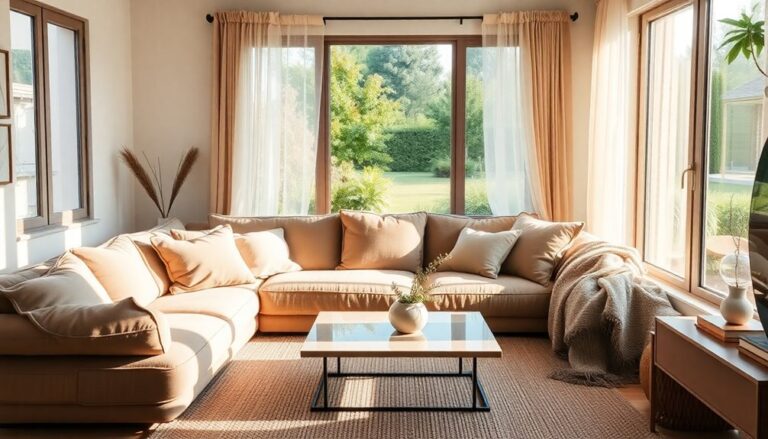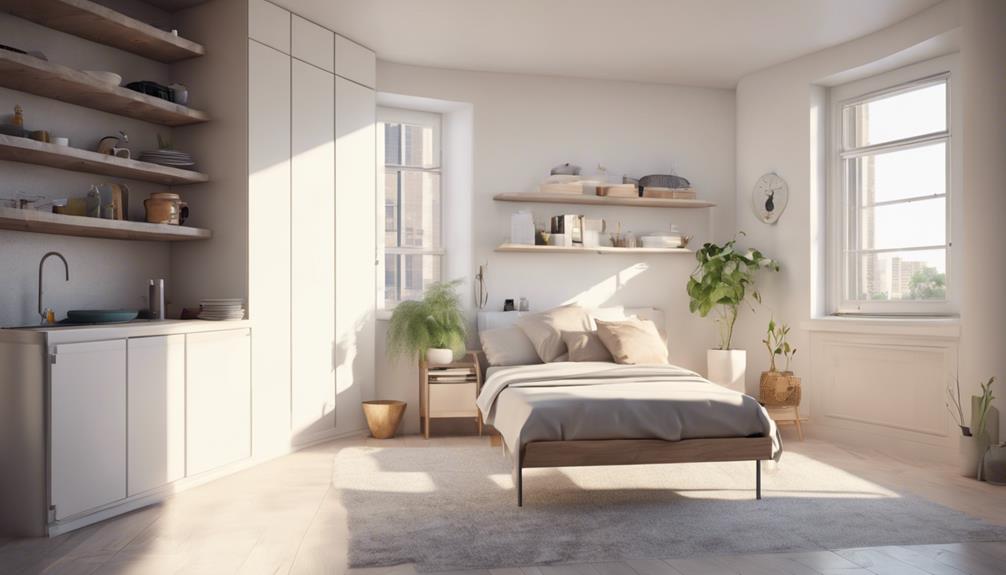

You’re tired of feeling cramped in your tiny apartment, but don’t know where to start maximizing space. First, measure your room and plan your furniture layout. Declutter and simplify by embracing minimalism and categorizing your belongings. Next, choose multifunctional furniture and utilize vertical storage solutions like wall-mounted shelves. Analyze your traffic flow and allocate space efficiently. By implementing these strategies, you’ll be amazed at how much more spacious your apartment can feel. And that’s just the beginning – you’ll uncover even more clever tricks to transform your tiny space into a haven of efficiency and style. Consider incorporating mirrors to create the illusion of depth and light, which can significantly enhance the perception of space in any room. Additionally, don’t underestimate the impact of color; choose lighter shades for your walls and furnishings to help maximize your small space further. With some creativity and thoughtful planning, you’ll not only find room for everything you need but also infuse your home with a sense of style that reflects your personality.
Measuring and Mapping Your Space
As you begin the journey to maximize your tiny apartment's space, start by measuring every nook and cranny to create a vital map of your domain. This important step will help you understand the room dimensions and identify areas that can be optimized. Take out your tape measure and notebook, and get ready to create a spatial awareness of your space.
Measure the length, width, and height of each room, including any obstructions like pillars or alcoves. Don't forget to measure doorways, windows, and any built-in shelving or cabinets. Record every measurement carefully, as this will be your guide for arranging furniture and decor.
Next, create a sketch or digital floor plan of your apartment, using your measurements to scale. This will give you a visual representation of your space, allowing you to identify areas that can be optimized for functionality and flow. Consider using graph paper or online tools to make the process easier.
With your map in hand, you'll be able to visualize how furniture and decor will fit within each room. You'll be able to identify areas where you can create multi-functional zones, and where you can optimize storage and flow. By taking the time to measure and map your space, you'll be well on your way to creating a cozy and functional tiny apartment that truly feels like home.
Purge and Edit Your Belongings
Clutter, the silent saboteur of tiny apartments, starts to dissipate as you start on the liberating journey of purging and editing your belongings. It's time to confront the emotional attachment you've formed with your stuff. You've likely accumulated items over the years, each holding a memory or significance. However, holding onto everything can lead to a cramped and overwhelming living space.
As you begin to sort through your belongings, adopt a minimalist mindset. Ask yourself, "Do I truly need this item, or can I let it go?" Be honest with yourself – if you haven't used it in the past year, it's likely taking up valuable space without providing any real benefit. Consider the 80/20 rule: 80% of the time, you likely use only 20% of your belongings. Identify the essentials and let go of the rest.
As you purge, categorize items into three piles: keep, donate/sell, and discard. Be ruthless – if you haven't used it, it's likely someone else can benefit from it. Remember, the goal is to create a peaceful, functional living space that reflects your true needs. By letting go of unnecessary items, you'll not only free up physical space but also mental energy. Embrace the freedom that comes with living simply, and watch your tiny apartment transform into a serene oasis.
Choosing Multifunctional Furniture
When you're decorating a tiny apartment, every piece of furniture counts. You'll want to choose items that serve multiple purposes, like a storage ottoman that doubles as a coffee table or a Murphy bed with built-in shelving. By selecting multifunctional pieces, you'll create a space that's both functional and efficient, freeing up valuable floor space for other essentials.
Space-Saving Designs
You can create a more spacious feel in your tiny apartment by investing in multifunctional furniture that serves more than one purpose. This space-saving design approach is perfect for micro living, where every square foot counts. By choosing modular systems that combine functions, you can free up valuable space for other essentials.
Here are some space-saving design ideas to explore:
- Ottomans with storage compartments for linens, out-of-season clothes, or office supplies
- Desks with built-in shelving for books, decorative items, or kitchen utensils
- Sofa beds that convert into comfortable sleeping quarters
- Coffee tables with lift-tops for meal prep or laptop work
- Wall-mounted fold-down tables for dining or homework stations
Flexible Layout Options
In a tiny apartment, a flexible layout that incorporates multifunctional furniture is essential, allowing you to effortlessly switch between different activities and moods. By choosing furniture that serves multiple purposes, you can create a space that adapts to your needs and preferences. For instance, a modular sofa can be rearranged to suit different social settings, from cozy movie nights to lively gatherings. Sliding panels can also be used to separate or combine living areas, providing flexibility and functionality.
When selecting multifunctional furniture, consider your lifestyle and habits. Do you work from home? Look for a desk that doubles as a dining table or a storage unit. Are you an avid reader? Opt for an ottoman with built-in storage for your books. By incorporating flexible layout options, you'll be able to create a space that feels tailored to your unique needs, making you feel more at home in your tiny apartment.
Utilizing Vertical Storage Options
By installing shelves, hooks, and storage units that stretch from floor to ceiling, you can capitalize on the often-wasted vertical space in your tiny apartment. This will not only maximize your storage capacity but also create a sense of openness and airiness, making your space feel more spacious.
Here are some ways to utilize vertical storage options:
- Opt for wall-mounted shelves: Use wall anchors to secure your shelves and guarantee they can hold the weight of your belongings. This will keep your floors and surfaces clutter-free.
- Invest in stackable storage units: Choose units with shelf dividers to separate and organize your items. This will help maintain a sense of order and make the most of your vertical space.
- Install hooks for hanging items: Hang bikes, bags, or accessories from the ceiling to free up floor space and keep your apartment tidy.
- Use ceiling-mounted storage racks: Store items like luggage, camping gear, or seasonal decorations out of the way but still within reach.
- Consider a loft bed with built-in storage: If possible, incorporate a loft bed with built-in storage compartments to maximize your vertical space and keep your belongings organized.
Creating a Functional Floor Plan
Your apartment's floor plan is a puzzle, and every piece of furniture is an essential part that must fit together seamlessly to create a functional and comfortable living space. To achieve this, you'll need to conduct a flow analysis, which involves mapping out the traffic flow in your apartment. Identify the high-traffic areas and plan your furniture layout accordingly.
Room zoning is another vital aspect of creating a functional floor plan. Divide your apartment into different zones, each serving a specific purpose. For instance, you can have a sleeping zone, a working zone, and a relaxation zone. This will help you allocate space efficiently and create a sense of harmony in your apartment.
Here's a simple guide to help you create a functional floor plan:
| Zone | Furniture |
|---|---|
| Sleeping | Bed, Nightstand |
| Working | Desk, Chair |
| Relaxation | Sofa, Coffee Table |
| Socializing | Dining Table, Chairs |
Hiding Clutter With Decor
Decorative elements can cleverly conceal clutter, allowing you to maintain a sense of serenity in your tiny apartment. By incorporating clever design elements, you can hide unsightly items and maintain a sense of calm in your living space.
Here are some ways to hide clutter with decor:
- Decorative Screens: Use decorative screens to section off areas of your apartment and conceal cluttered areas, such as a home office or storage area.
- Ottomans with Storage: Invest in an ottoman with hidden storage to stash away items like throw blankets, pillows, or even out-of-season clothing.
- Hidden Compartments: Look for furniture with hidden compartments, such as a coffee table with a lift-top storage compartment or a dresser with secret drawers.
- Baskets and Bins: Use decorative baskets and bins to store items like toys, linens, or cleaning supplies, keeping them out of sight.
- Room Dividers: Utilize room dividers with built-in shelves or storage units to conceal cluttered areas while adding functionality to your space.
DIY Storage Solutions on Budget
You can create your own storage solutions on a budget by repurposing items you already own or finding inexpensive materials to create functional storage units that fit your tiny apartment's needs. One great way to do this is by using repurposed crates. You can find crates at thrift stores or online, and then decorate them to match your apartment's aesthetic. Add some casters to the bottom, and you've got a mobile storage unit that can hold everything from books to kitchen utensils.
Another option is to upcycle pallets. You can often find pallets for free or cheap at local businesses, and then disassemble them to create shelving units, coffee tables, or even a headboard. Just be sure to clean and disinfect the pallets before bringing them into your apartment. With a little creativity, you can turn these discarded items into functional and stylish storage solutions.
The best part about DIY storage solutions is that they can be tailored to your specific needs. Whether you need more closet space, a place to store kitchen gadgets, or a spot to stash your favorite books, you can create a storage unit that fits your unique situation. And by repurposing items you already own or finding inexpensive materials, you can create these solutions on a budget. So get creative, get crafty, and start maximizing your tiny apartment's storage potential!
Making the Most of Corners
As you're designing your tiny apartment, don't overlook the potential of corners – they can be a treasure trove of hidden space. By incorporating clever corner solutions, you'll be surprised at how much more functional and organized your space can become. From clever shelving units to innovative storage ideas, you'll soon discover that every nook and cranny counts.
Corner Shelving Units
By strategically installing corner shelving units, you can reclaim up to 25 square feet of dead space in your tiny apartment. This is especially important in small spaces where every inch counts. Corner shelving units are a game-changer, providing a functional and stylish way to maximize your space.
Here are some benefits of incorporating corner shelving units into your tiny apartment:
- Customized Corners: Design your corner shelves to fit your unique space and style, ensuring a seamless blend with your existing decor.
- Decorative Shelves: Add a touch of elegance with decorative shelves that double as functional storage solutions.
- Space-Saving: Corner shelves make the most of often-wasted space, keeping your belongings organized and within reach.
- Easy Installation: Most corner shelving units are easy to install, with minimal disruption to your daily routine.
- Versatility: Use corner shelves to store books, decorative items, kitchen utensils, or any other items that need a home in your tiny apartment.
Hidden Storage Ideas
Five clever hidden storage ideas can transform the often-overlooked corners of your tiny apartment into functional and stylish spaces that maximize storage while maintaining a clutter-free aesthetic. You can create secret compartments behind mirrors or artwork, perfect for stashing valuable items or sensitive documents. Install hidden cubbies in your walls or floors to store items like linens, cleaning supplies, or out-of-season clothing. Consider adding a sliding panel or bookshelf that conceals a hidden storage space, ideal for storing laptops, jewelry, or other personal items. You can also repurpose an old window seat into a hidden storage bench, complete with a hinged top and interior shelves. By incorporating these hidden storage ideas, you'll be able to keep your belongings organized and out of sight, creating a sense of calm and serenity in your tiny apartment. With a little creativity, you can turn even the most obscure corners into functional and stylish spaces that make you feel right at home.
Curved Furniture Designs
You can further optimize your tiny apartment's layout by incorporating curved furniture designs that make the most of corners, often the most underutilized spaces in small homes. By choosing curved pieces, you'll create a more open and airy feel, making your space feel larger than it actually is.
Here are some ways to make curved furniture work for you:
- Curved sofas: Instead of a traditional L-shaped sofa, opt for a curved one that follows the contours of your wall. This will create a sense of flow and make the room feel more spacious.
- Round tables: Ditch the traditional rectangular coffee table for a round one. This will soften the overall look of your living room and create a cozy atmosphere.
- Circular shelves: Add curved shelves to your walls to create a unique and space-saving storage solution.
- Semi-circular desks: If you work from home, consider a curved desk that fits snugly into a corner, maximizing your workspace.
- Oval-shaped rugs: Top off your curved furniture with an oval-shaped rug to tie the whole look together.
Frequently Asked Questions
Can I Use a Murphy Bed With a Low Ceiling?
Did you know that 70% of Americans prioritize comfort when choosing a bed? When considering a Murphy bed with a low ceiling, you're right to think it might be a challenge. Ceiling considerations are important here. You'll need to choose bed options that accommodate your space constraints. Look for wall beds with a lower profile or customized designs that cater to your ceiling height. You deserve a comfortable retreat, and it's possible to find a Murphy bed that fits your needs!
How Do I Deal With Limited Natural Light in My Apartment?
You're craving a brighter space, but limited natural light is getting you down. Don't worry, you've got this! Start by investing in light therapy lamps that mimic natural sunlight. Then, revamp your window treatments to allow more natural light in. Opt for sheer curtains, mirrors, and a clutter-free windowsill to reflect and amplify the little natural light you do have. With these tricks, you'll be basking in a brighter, cozier space in no time!
Are There Any Space-Saving Options for a Home Office?
You're setting up a home office and need space-saving solutions! Consider investing in desk organizers with built-in storage, like tray compartments and cable management systems. File cabinets with a compact design will also help keep your workspace clutter-free. By optimizing your desk space, you'll create a productive and peaceful environment that feels like your own personal sanctuary.
Can I Use a Sectional Sofa in a Small Living Room?
As you step into your cozy living room, envision a sectional sofa as the anchor, dividing the space into intimate nooks. You can cleverly configure the sofa to create a sense of separation, using it as a room divider. This savvy strategy allows you to carve out distinct areas for relaxation and entertainment, making your small space feel more expansive.
How Do I Organize a Small Closet With No Shelves?
You're struggling to tame the chaos in your small closet! Start by installing double rods to instantly double your hanging space. Next, grab some closet containers in various sizes to corral shoes, accessories, and clothes. Label each one so you can easily find what you need. As you organize, consider a "one in, one out" policy to maintain your newfound sense of calm and control.