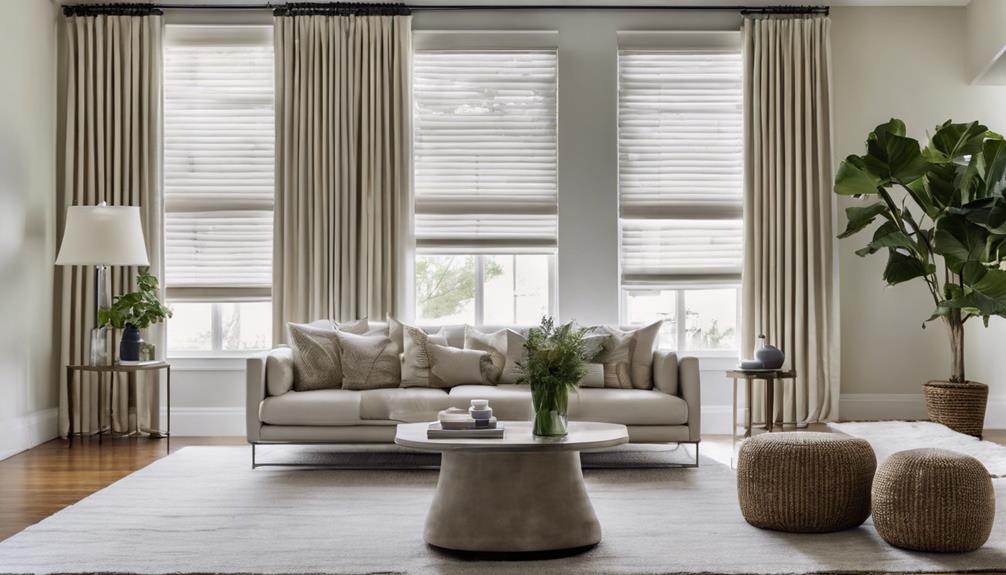

You're about to choose the perfect window treatments that can make or break your room's ambiance. Consider the room's purpose – is it a bedroom or living room? Think about natural light – do you want to filter it or block it out? Choose a fabric that suits your needs, and don't forget to measure your windows accurately to guarantee a seamless fit. To conclude, remember style matters – pick a treatment that complements your room's décor. Once you've got these basics covered, you'll be well on your way to finding the perfect treatment – and by continuing, you'll discover even more secrets to making the perfect choice.
Consider the Room's Purpose
What kind of activities will you be doing in the room, and how will that impact your window treatment needs? This is an important question to ask yourself when selecting the right window treatments. The room's purpose directly influences the type of window treatments you'll need. For instance, if you're using the room as a home office, you'll want treatments that allow for plenty of natural light while minimizing glare on your computer screen.
Consider the room's functional layout and how you'll be moving around in it. Will you need to access the window frequently, or will it be more of a background feature? If you'll be frequently opening and closing the window, you'll want treatments that are easy to operate, such as cordless or motorized options.
Think about the type of furniture you'll be placing in the room and how it will interact with the window treatments. For example, if you have a reading nook with a comfortable chair, you may want treatments that filter the light to create a cozy atmosphere. By considering the room's purpose and functional layout, you'll be able to choose window treatments that not only look great but also enhance your overall experience in the room. By doing so, you'll create a space that truly feels like your own, where you can relax, work, or socialize with ease.
Think About Natural Light
When selecting window treatments, you'll want to take into account how natural light affects your space. Think about the time of day you'll be in the room most often – will it be during peak daylight hours or in the morning and evening when the sun is lower in the sky? By understanding how the sun's angle impacts your room, you can choose window treatments that optimize natural light to your advantage.
Daylight Hours Matter
You'll want to take into account the daylight hours in your area, as they greatly influence the type of window treatments you'll need. The amount of natural light your windows receive affects not only the ambiance of your space but also your overall well-being. Exposure to natural light, especially in the morning, helps regulate your Circadian Rhythms, which can improve your mood, energy levels, and sleep quality. Imagine waking up to a beautiful Morning Sunrise, feeling refreshed and ready to take on the day. When selecting window treatments, consider the orientation of your windows and the time of day they receive direct sunlight. If your windows receive harsh morning sun, you may want to opt for light-filtering treatments to soften the light. On the other hand, if your windows receive limited natural light, you may prefer treatments that maximize the light that does enter the room. By considering the daylight hours, you can create a space that not only looks great but also supports your overall health and well-being.
Sun's Angle Importance
The sun's angle changes significantly throughout the year, and its impact on your window treatments cannot be overstated. As you consider the right window treatments for your space, it's essential to think about the sun's path across the sky. You'll want to take into account the solar orientation of your windows, which will affect the amount of natural light that enters your home. During summer months, the sun is higher in the sky, and its rays enter your windows at a more direct angle. In contrast, during winter months, the sun is lower in the sky, and its rays enter at a more oblique angle.
To make the most of natural light, you'll want to make seasonal adjustments to your window treatments. For example, you might use lighter, more transparent treatments during winter to allow more sunlight in, and switch to thicker, more opaque treatments during summer to filter out harsh rays. By considering the sun's angle and making adjustments accordingly, you can create a more comfortable, inviting space that's perfectly suited to your needs.
Choose the Right Fabric
Choose the Right Fabric
When choosing the ideal fabric for your window treatments, take into account factors like durability, texture, and UV resistance to guarantee that your chosen material complements your interior design and fulfills your functional needs. The right fabric can elevate the overall aesthetic of your space, providing a sense of belonging and coziness.
Fabric texture plays an essential role in determining the overall look and feel of your window treatments. Do you prefer a soft, flowing fabric or a more structured, textured material? The choice ultimately depends on your personal style and the atmosphere you want to create.
| Fabric Type | Texture | Pattern Mixing |
|---|---|---|
| Cotton | Soft, smooth | Yes, pairs well with subtle patterns |
| Linen | Crisp, textured | Yes, pairs well with bold patterns |
| Velvet | Soft, luxurious | Yes, pairs well with subtle patterns |
When it comes to pattern mixing, consider the overall style you're aiming for. Mixing patterns can add depth and visual interest to your window treatments, but be cautious not to overwhelm the space. Start with a neutral base fabric and add a secondary fabric with a complementary pattern.
Measure Your Windows Accurately
Accurate measurements are essential to guarantee a seamless fit, so grab your tape measure and get ready to take precise readings of your windows. This step is vital in ensuring your window treatments fit perfectly, and you don't end up with a product that's too small or too large for your window frames.
When measuring, make sure to record the width and length of each window, taking into account any obstructions like molding or handles. Use a sturdy measuring tool, like a 25-foot tape measure, to get accurate readings. Measure the width at three points: the top, middle, and bottom of the window frame. Record the smallest measurement to ensure a snug fit.
For inside mounts, measure the inside of the window frame, while for outside mounts, measure the outer edges of the window frame. Don't forget to note the depth of the window sill, as this will affect the length of your window treatment.
Don't Forget About Style
Select a style that reflects your personal taste and complements the room's décor, since window treatments are an essential element in tying together your interior design. You want your window treatments to enhance the aesthetic trends of your space, rather than clash with them. Consider the design elements that make up your room's style, such as modern, traditional, or eclectic, and choose window treatments that fit seamlessly into that theme.
Think about the fashion influences that inspire your interior themes. Do you lean towards minimalist chic or luxurious opulence? Your window treatments should reflect this style, creating a cohesive look that ties the room together. Don’t underestimate the power of decor inspiration – browse through magazines, Pinterest, or home décor blogs to find the styles that resonate with you. When selecting window treatments, consider how different fabrics, colors, and patterns contribute to the overall ambiance of your space. Keeping proportion and scale in design in mind ensures that your window coverings complement the size of the room and furnishings rather than overwhelming them. By carefully balancing these elements, you can achieve a polished and well-curated interior that reflects your personal style.
Set a Budget and Stick
When it comes to selecting the right window treatments, it's essential to set a budget and stick to it. You'll need to assess your finances to determine how much you can afford to spend, prioritize your needs, and allocate your budget wisely. By doing so, you'll be able to make informed decisions and avoid overspending on window treatments that may not meet your needs.
Assess Your Finances
You'll need to determine how much you're willing to spend on window treatments before you start shopping. This will help you narrow down your options and make sure you don't overspend. Evaluating your finances is important in setting a realistic budget.
When it comes to budget constraints, it's essential to conduct a cost analysis. This will help you identify areas where you can cut back and allocate funds accordingly. To achieve your financial goals, create a savings plan and track your expenses. This will give you a clear picture of where your money is going and help you stay on track.
Here are three essential steps to take when evaluating your finances:
- Track your expenses: Keep a record of every penny you spend for a month to get a clear picture of your spending habits.
- Set financial goals: Determine what you want to achieve, whether it's saving for a specific window treatment or building an emergency fund.
- Create a budget: Based on your income and expenses, allocate funds for your window treatment project and stick to it.
Prioritize Your Needs
Now that you've assessed your finances, it's time to prioritize your needs and allocate your budget accordingly, ensuring you get the right window treatments that meet your functional and aesthetic requirements. Consider your personal preferences and lifestyle habits to determine what matters most to you. Do you need blackout shades for better sleep, or perhaps energy-efficient treatments to reduce your energy bills? Are you looking for stylish curtains to elevate your home's décor or functional blinds for easy maintenance? Make a list of your must-haves and nice-to-haves to help you allocate your budget effectively. Be honest about your priorities, and don't be swayed by trends or peer pressure. Remember, your window treatments should reflect your unique needs and style. By prioritizing your needs, you'll be able to make informed decisions that align with your budget and preferences, ensuring you get the perfect window treatments for your home.
Allocate Wisely
With your priorities established, it's time to assign a budget to each must-have and nice-to-have on your list, making sure every dollar is allocated wisely. This is where financial planning and resource management come into play. You want to make sure you're not overspending on one aspect of your window treatments, leaving you with limited resources for others.
To allocate wisely, consider the following:
- Set a realistic budget: Determine how much you're willing to spend on your window treatments, and stick to it.
- Prioritize your spending: Allocate your budget to the must-haves first, and then move on to the nice-to-haves.
- Track your expenses: Keep a record of your spending to confirm you're staying within your budget.
Frequently Asked Questions
Can I Install Window Treatments Myself or Hire a Professional?
So, you're wondering if you can tackle window treatment installation on your own or bring in a pro? It's a great question! If you're handy and comfortable with DIY projects, you can definitely take on the challenge. However, be aware that DIY challenges like measuring and installation can lead to frustration. On the other hand, hiring a professional offers benefits like expert advice and a flawless finish, giving you peace of mind and a sense of belonging in your beautifully styled space.
How Often Should I Clean My Window Treatments to Maintain Them?
Remember the last time you opened your dusty blinds, only to be hit with a cloud of dust? Yeah, it's a real mood-killer. To avoid that, you should clean your window treatments regularly. Aim to dust your Fresh Slats every 2-3 weeks, and deep clean them every 6-12 months. Trust us, your windows (and allergies) will thank you!
Are There Any Eco-Friendly Window Treatment Options Available?
You're thinking green, and that's awesome! Yes, you can find eco-friendly window treatment options that align with your values. Look for sustainable materials like bamboo, recycled materials, or organic fabrics. Many brands now offer green alternatives, such as solar shades or energy-efficient cellular shades. You'll be doing the planet a favor while still getting the style and functionality you need.
Can I Use the Same Window Treatment for Different Rooms?
You're envisioning a harmonious haven, where every room flows seamlessly into the next. But, can you really use the same window treatment for different rooms? The answer lies in coordinating styles that respect each room's unique personality. While a modern roller shade might suit your sleek living room, a soft, flowing curtain could be perfect for your cozy bedroom. By embracing these differences, you'll create a sense of belonging that welcomes you home.
Do Window Treatments Come With a Warranty or Guarantee?
When you invest in window treatments, you want to know you're covered in case something goes wrong. Luckily, most manufacturers promise a warranty or guarantee, giving you peace of mind. This quality assurance means you can trust the product will last, and if it doesn't, you're protected. You're not alone in wanting a hassle-free experience, and reputable brands understand that. They stand behind their products, so you can feel confident in your purchase.