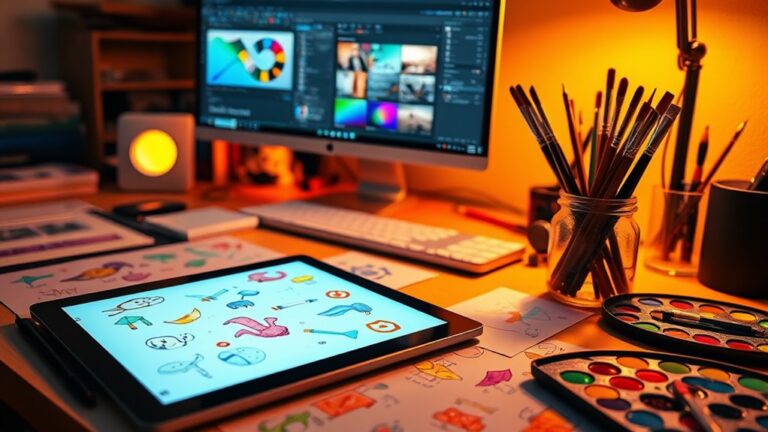
Experimental animation plays an essential role in broadening creative boundaries by challenging traditional storytelling. You'll find it embraces non-linear narratives and abstract visuals, encouraging personal interpretation and emotional engagement. Techniques like stop motion and mixed media invite you to interact with art in fresh ways. This genre, rooted in artistic movements, has influenced mainstream animation, pushing the envelope of how stories are told. As technology evolves, new innovations like virtual reality improve viewer experiences, making them more immersive. There's so much more to explore about how this art form continues to shift paradigms.
Defining Experimental Animation
When you think about animation, you might picture lively characters in a story-driven film. Yet, experimental animation pushes those boundaries, inviting you to explore new dimensions of creativity and expression. It's not just about telling a story; it's about breaking the mold. This form of animation often embraces non-linear narratives, allowing you to engage with the content in a way that feels personal and unique. You're not just a passive observer; you're an active participant in a dynamic experience.
In experimental animation, the visuals often defy traditional methods, using innovative techniques that challenge your perception. You might see abstract shapes, textures, and forms that provoke thought and evoke emotion, all during encouraging viewer interaction. This interaction can transform your comprehension of animation, as it prompts you to question what you see and how you interpret it.
The beauty of experimental animation lies in its refusal to conform. It invites artists to explore unconventional themes and styles, creating an open canvas for experimentation. You'll find yourself contemplating complex ideas and exploring the interplay between sound and image, motion and stillness.
Historical Context and Evolution
Experimental animation has roots that stretch back over a century, evolving through various artistic movements and technological advancements. As you investigate its historical context, you'll discover how this fascinating art form has been shaped by influential artists and key movements.
From the early days of animation, pioneers like Winsor McCay pushed boundaries with works such as "Gertie the Dinosaur." Later, artists of the avant-garde movement, including Oskar Fischinger and Viking Eggeling, introduced abstract visuals and innovative techniques, laying the groundwork for what would become experimental animation.
Here's a glimpse into some of the critical historical movements and the artists who shaped them:
| Historical Movements | Influential Artists |
|---|---|
| Early Animation | Winsor McCay |
| Avant-Garde | Oskar Fischinger |
| Surrealism | Salvador Dalí |
| Fluxus | Nam June Paik |
| Postmodernism | Bill Viola |
As you investigate these movements, you'll notice how they reflect the cultural and technological shifts of their times. Each innovation—whether it's the introduction of new materials or the embrace of non-linear storytelling—invites you to rethink the boundaries of animation. Today, experimental animation continues to evolve, challenging conventions and inspiring new generations of artists to explore uncharted territory. Embrace this dynamic history, and let it fuel your own creative exploration in the field of experimental animation.
Techniques and Mediums Explored
In the domain of experimental animation, artists experiment with a diverse array of techniques and mediums to push creative boundaries. You'll find that stop motion techniques are at the forefront, allowing creators to bring inanimate objects to life through careful frame-by-frame manipulation. Whether it's clay, puppets, or everyday items, the tactile nature of stop motion invites viewers into a world where imagination reigns. This hands-on approach not merely challenges traditional animation methods but also provides a unique texture that digital methods often lack.
At the same time, digital manipulation has transformed how animators express their ideas. By blending traditional techniques with state-of-the-art software, you can create stunning visuals that defy gravity and logic. Artists often layer images, play with color schemes, and apply various filters to improve their narratives. This hybrid approach opens up a plethora of possibilities, making it easier to experiment with form and style.
Moreover, the use of mixed media has gained traction, combining physical materials with digital effects for a rich visual experience. You'll see artists integrating photography, painting, and even live action into their animations, creating a mosaic of techniques that challenges the viewer's perception of reality.
Ultimately, exploring these techniques and mediums allows you to step outside conventional boundaries, forging new paths in the continuously changing realm of animation. Embrace the innovation, and let your creativity soar!
Emotional and Conceptual Depth
When you explore emotional and conceptual depth in experimental animation, you'll discover how visual storytelling techniques can shape a narrative. The influence of abstract expressionism often pushes boundaries, allowing for unique interpretations and feelings. By examining these elements, you can uncover the emotional resonance that makes each piece memorable.
Visual Storytelling Techniques
Visual storytelling techniques in experimental animation explore deep into emotional and conceptual domains, inviting viewers to engage with narratives on multiple levels. You'll discover how innovative visual metaphors can convey complex ideas, often in ways that traditional storytelling cannot. By breaking away from conventional narrative structures, these animations create a unique space for interpretation, allowing you to find personal meaning in each frame.
As you immerse yourself in this medium, you'll notice how layers of symbolism can evoke feelings of nostalgia, joy, or even melancholy. The juxtaposition of imagery and sound can intensify these emotions, pushing the boundaries of what animation can achieve. You'll see how the manipulation of color, shape, and movement can translate abstract concepts into visual experiences, each twist and turn offering new insights.
Furthermore, experimental animation often challenges linear storytelling, compelling you to piece together fragmented narratives. This approach not merely encourages engagement but also motivates you to question and reflect on the underlying themes presented. In this dynamic environment, the fusion of visual metaphors and innovative narrative structures transforms animation into a profound medium for emotional exploration and conceptual depth.
Abstract Expressionism Influence
Drawing inspiration from Abstract Expressionism, experimental animation plunges into emotional and conceptual depths that resonate with viewers on a visceral level. This art form employs abstraction techniques to break free from traditional narratives, allowing you to explore expressive forms that evoke profound feelings and thoughts. By utilizing color, movement, and texture, experimental animators create experiences that go beyond mere visuals.
| Aspect | Description |
|---|---|
| Abstraction | Strips away realism to focus on essence. |
| Color Dynamics | Uses bold colors to convey emotion. |
| Movement | Fluid shifts evoke feelings. |
| Texture | Adds depth, creating tactile experiences. |
| Non-linear Narratives | Encourages personal interpretation. |
In this domain, you'll find that the lack of conventional structure invites you to engage with the work on a more personal level. As you immerse yourself in these innovative pieces, you'll discover that the emotional and conceptual richness of experimental animation mirrors the core principles of Abstract Expressionism, challenging you to reflect on your own emotional terrain.
Emotional Resonance Exploration
Experimental animation plunges deep into emotional resonance, inviting you to connect with feelings that transcend words. This unique art form explores emotional environments that are often left uncharted by traditional media. You're not just watching; you're experiencing a sensory expedition that evokes profound reactions and insights.
Through innovative techniques, animators craft visuals that resonate on multiple levels, allowing you to engage with complex themes like loss, joy, and transformation. You might find yourself immersed in:
- Vivid imagery that captures the essence of raw emotions.
- Dynamic soundscapes that improve your sensory experiences and amplify feelings.
- Abstract narratives that challenge your perceptions and provoke thought.
Impact on Mainstream Animation
Since the rise of experimental animation, mainstream animation has been profoundly influenced by its innovative techniques and storytelling approaches. You'll notice how these fresh perspectives challenge traditional narratives and aesthetics, driving the industry toward greater cultural impact and audience engagement. The fusion of experimental elements into mainstream projects not just captivates viewers but also expands the possibilities of animated storytelling.
Here's a glimpse of this impact:
| Experimental Techniques | Mainstream Adaptations |
|---|---|
| Non-linear narratives | Complex story arcs |
| Unique visual styles | Diverse animation techniques |
| Symbolism and abstraction | Deeper thematic exploration |
| Unconventional sound design | Improved auditory experience |
| Interactive elements | Audience participation |
As you can see, these experimental techniques encourage filmmakers to push the boundaries of what animation can achieve. From the lively colors and surreal visuals to intricate soundscapes, they inspire mainstream creators to explore new dimensions in their work. This dynamic interplay nurtures a richer cultural dialogue and encourages you, the audience, to engage with animation on a more profound level.
Future Directions and Innovations
The future of animation is poised for remarkable transformations as creators embrace state-of-the-art technologies and innovative storytelling methods. You'll witness a surge in emerging technologies that not only improve visual aesthetics but likewise redefine how narratives unfold. With interactive experiences at the forefront, animators are crafting immersive worlds where audience engagement becomes a two-way street.
Consider these exciting innovations:
- Virtual Reality (VR): Experience animation like never before, stepping into a narrative where you're not just a viewer but an active participant.
- Algorithmic Art: Explore the intersection of creativity and technology, using algorithms to generate unique, evolving visual experiences.
- Sustainability Practices: Join the movement toward eco-friendly animation, employing materials and methods that minimize environmental impact.
The future lies in cross-disciplinary collaboration, bringing together artists, technologists, and environmentalists to push the boundaries of what's possible. Community involvement will likewise play a vital role, as local voices and stories enrich the animation environment. This collaborative spirit promotes not just innovation, but equally inclusivity, ensuring diverse perspectives shape the industry's evolution.
As you navigate this dynamic field, keep an eye on how experimental animation will utilize these advancements, paving the way for richer storytelling, deeper audience connections, and a more sustainable future. Embrace this exciting expedition, and be part of the transformative wave that's set to redefine animation!
Frequently Asked Questions
How Can I Start Creating My Own Experimental Animations?
Did you know that 80% of animators say experimenting with techniques sparks their creativity? To start creating your own experimental animations, immerse yourself in techniques exploration. Try different styles, like stop-motion or digital manipulation. Look for inspiration sources in everyday life—nature, art, or even dreams. Don't hesitate to mix mediums; the more you explore, the more unique your work will be. Remember, innovation thrives on experimentation, so let your imagination run wild!
Are There Any Famous Experimental Animators to Follow?
If you're looking for inspiration, check out renowned experimental animators like Bill Plympton and Maya Deren. Plympton's unique hand-drawn style and imaginative storytelling will ignite your creativity, as Deren's innovative blend of film and animation challenges traditional forms. Following their work can spark new ideas and techniques in your own projects. Immerse yourself in their films, observe their approaches, and let their artistry influence your experimental animation expedition.
What Is the Typical Audience for Experimental Animation?
The typical audience for experimental animation varies widely, often attracting those with diverse artistic preferences. You'll find students, artists, and creative professionals enthusiastic for innovation and fresh ideas. Audience demographics can include younger viewers seeking unique storytelling methods, along with seasoned animation enthusiasts who appreciate the unconventional. Engaging with experimental works can challenge your perceptions, igniting a passion for exploring new visual languages and artistic expressions that traditional animation might not offer.
How Does Experimental Animation Influence Other Art Forms?
Experimental animation sparks stunning synergy, shaping surrounding art forms. You'll see how it nurtures cross-disciplinary collaboration, blending techniques from visual arts, performance, and digital media. This innovative storytelling approach challenges conventions, pushing boundaries and inspiring artists to explore new dimensions in their work. As you engage with these unique creations, you'll discover fresh perspectives that invigorate your own artistic expression and encourage a dynamic dialogue across diverse creative environments.
Can Experimental Animation Be Used for Commercial Projects?
Absolutely, you can use experimental animation for commercial projects. It offers a unique approach that can captivate audiences and improve brand identity. By blending artistic integrity with commercial viability, you create visually striking content that stands out in a crowded market. Companies increasingly seek innovative ways to engage consumers, and experimental animation can help you push boundaries during maintaining a strong message. Don't shy away from exploring this exciting creative avenue!