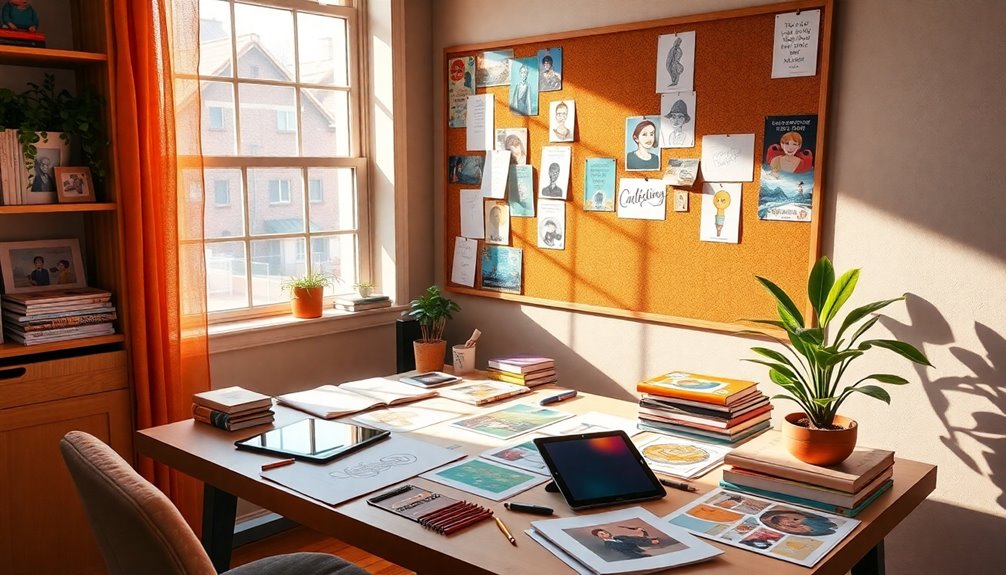

To break into animation, start by building a strong portfolio that showcases your best work and unique style. Master animation software that fits your goals, like Blender or Adobe Animate, and practice regularly to hone your skills. Don't underestimate networking; attend industry events and engage on social media to connect with professionals. Seek feedback from peers and mentors to improve your craft, and stay updated on the latest trends and techniques through online courses. These strategies can greatly boost your chances of success. To uncover even more vital tips, keep exploring the resources available to you.
Build a Strong Portfolio
A solid portfolio is essential for any aspiring animator looking to make an impact in the industry. Your portfolio presentation is often the first impression potential employers or clients will have of your work, so you need to guarantee it's both visually engaging and professionally structured. Start by curating a selection of your best pieces that showcase your unique style and creativity.
Diversity is key; include a variety of projects that illustrate your versatility. Whether you're into 2D animation, 3D modeling, or stop-motion, displaying a range of skills can set you apart. You might consider featuring personal projects alongside any collaborative work to demonstrate your ability to contribute to a team, along with your initiative in pursuing your passions.
As you compile your portfolio, think critically about the narrative you want to convey. Each piece should tell a story about your artistic path and what sets you apart as an animator. Don't forget to include brief descriptions of your projects, highlighting the techniques you employed and the challenges you overcame.
Lastly, presentation matters. Invest time in creating a sleek, user-friendly layout that allows your work to shine. Whether you choose a digital format or a physical booklet, make sure it's polished and professional. By building a strong portfolio filled with diverse projects, you'll not only showcase your skills but also your potential to innovate in the constantly changing world of animation.
Master Animation Software
Often, perfecting animation software is crucial for any aspiring animator aiming to stand out in the competitive industry. Mastering the right animation software tools can enhance your work and spark your creativity. Here are four key steps to help you on this path:
- Choose Your Software Wisely: Research and select the animation software that aligns with your style and goals—whether it's Adobe Animate, Blender, or Toon Boom Harmony. Each tool offers unique features customized to different animation techniques.
- Utilize Software Tutorial Resources: Don't underestimate the wealth of knowledge available online. Websites like YouTube, Skillshare, and Udemy provide extensive video tutorials and courses that can guide you through complex software functionalities.
- Practice Regularly: Consistent practice will sharpen your skills. Challenge yourself by creating short animations, experimenting with different styles, or mimicking your favorite animators. The more you create, the more proficient you'll become.
- Join Online Communities: Engage with fellow animators on forums and social media platforms. Sharing your work and receiving feedback will improve your skills and broaden your network within the animation community.
Network With Industry Professionals
Acquiring proficiency in animation software is just one piece of the puzzle; connecting with industry professionals can open doors to new opportunities and insights. Networking isn't just about making contacts; it's about nurturing relationships that can lead to collaborations, job openings, and mentorship. So, how do you effectively network in the animation field?
Here's a quick guide to get you started:
| Action | Purpose |
|---|---|
| Attend conferences | Meet industry leaders and peers |
| Join forums | Engage in discussions and share ideas |
| Utilize social media | Showcase your work and connect globally |
| Volunteer for projects | Gain experience and expand your network |
| Follow up on connections | Build lasting relationships |
When you attend conferences, immerse yourself in the experience. Participate in workshops, ask questions, and don't hesitate to introduce yourself to speakers. They often appreciate passionate individuals enthusiastic to learn. Joining forums allows you to share your work, receive feedback, and learn from others. These platforms can provide invaluable insights into industry trends and techniques.
Additionally, leverage social media platforms like LinkedIn and Twitter to follow industry leaders and engage in conversations. Sharing your projects and thoughts can showcase your skills and attract attention. Remember, networking is a two-way street; don't just take—contribute! By being proactive and open, you'll build a solid network that can support your innovative aspirations in animation.
Stay Updated on Trends
Staying updated on trends in animation is crucial for your growth as an animator. The animation realm is constantly evolving, with new styles and techniques emerging regularly. By keeping your finger on the pulse of industry innovations, you can improve your skills and stay relevant. Here are four ways to stay informed:
- Follow Industry Leaders: Subscribe to social media channels and blogs of renowned animators and studios. They often share insights into their creative processes and the latest trends.
- Attend Conferences and Workshops: Participate in animation festivals and workshops. These events not merely showcase advanced animation styles but likewise offer networking opportunities with fellow creatives and industry experts.
- Engage with Online Communities: Join forums and social media groups focused on animation. Platforms like Reddit and Discord can provide valuable feedback and keep you abreast of new tools and techniques.
- Explore Educational Platforms: Websites like Skillshare, Coursera, or YouTube offer courses and tutorials on the latest animation software and styles. Investing time in these resources can expand your toolkit and inspire your creativity.
Seek Feedback and Critique
Feedback is an animator's best friend, serving as a crucial tool for growth and improvement. When you're creating animations, it's easy to get lost in your own vision. That's why seeking constructive criticism from others can be invaluable. It allows you to see your work through a fresh lens, uncovering areas that might need refinement or innovation.
Don't shy away from sharing your projects with peers and mentors. Engaging in peer reviews can spark new ideas and help you identify potential pitfalls you might've overlooked. Approach feedback with an open mind; remember, it's not a personal attack but rather a chance to enhance your craft. When you receive critiques, focus on the actionable insights. What specific elements did others find confusing? Were there parts that didn't resonate as intended? Use this information to tweak your work and push your creative boundaries.
Moreover, consider creating a feedback loop. Share your work regularly, seek input, and then iterate based on what you've learned. This practice not only improves your current projects but additionally helps you develop a thicker skin for future endeavors.
Lastly, cultivate a community where feedback flows both ways. Offering your own constructive criticism to others will sharpen your analytical skills and deepen your comprehension of animation principles. Embrace this collaborative spirit; it can lead to unexpected breakthroughs and a richer creative experience. So, plunge in, share your work, and let the feedback fuel your passion for animation!
Explore Educational Opportunities
Education is a potent tool for aspiring animators looking to hone their skills and broaden their knowledge. As you initiate your quest, consider various educational opportunities that can improve your craft. Whether you're just starting or looking to refine your abilities, the right education can make all the difference.
- Animation Degrees: Pursuing a degree in animation provides a solid foundation. You'll learn crucial techniques, software proficiency, and storytelling skills that are significant in the industry.
- Online Courses: Take advantage of the flexibility offered by online courses. Platforms like Coursera or Udemy offer specialized courses in 2D and 3D animation, character design, and more, allowing you to learn at your own pace.
- Workshops and Seminars: Engage in hands-on workshops and seminars led by industry professionals. These events not only improve your skills but additionally provide networking opportunities that can lead to internships or jobs.
- Internships and Mentorships: Seek internships at animation studios or find a mentor in the field. Real-world experience is invaluable and can offer insights that you won't find in textbooks.
Frequently Asked Questions
What Are the Best Entry-Level Jobs for Aspiring Animators?
Did you know that over 60% of animators start their careers through internships? If you're aspiring to break into animation, consider seeking out internship opportunities at studios or production companies. These positions often lead to full-time roles. Furthermore, freelance projects can help you build your portfolio and gain valuable experience. By embracing both paths, you'll not just improve your skills but also broaden your network in this innovative industry.
How Important Is a Formal Animation Degree for Success?
A formal animation degree isn't strictly necessary for success, but it can open doors. You'll gain valuable skills and access to networking opportunities that can help you connect with industry professionals. Plus, being in a structured environment keeps you updated on industry trends. Nevertheless, many successful animators thrive without degrees, relying on portfolios and connections. In the end, it's your creativity and drive that'll set you apart in this innovative field.
Can I Animate Without Owning Expensive Software?
You can definitely animate without owning expensive software. With free animation tools like Blender and Pencil2D, you've got strong options at your fingertips. You can additionally explore animation mobile apps, such as FlipaClip and Toontastic, which allow you to create on the go. Embrace innovation, experiment with these accessible resources, and release your creativity. It's not about the price tag; it's about the passion and ideas you bring to life!
Is It Essential to Specialize in a Particular Animation Style?
It isn't crucial to specialize in a particular animation style, but it can definitely give you an edge. Focusing on one style helps you master character design and specific animation techniques, allowing your work to stand out. Nonetheless, experimenting with various styles can spark innovation and creativity in your projects. Embrace your unique vision as you explore different approaches; you might just create something groundbreaking that blends multiple techniques into a new aesthetic.
How Do I Handle Creative Burnout in Animation?
Envision a well-loved garden that's lost its color; it needs a creative refresh. When you hit that wall of burnout in animation, take a step back. Schedule regular breaks and explore different art forms—like painting or writing—to prevent burnout. Remember, innovation thrives on fresh perspectives. Engage with other creatives to reignite your passion. Embrace these moments; they're not failures but opportunities to cultivate your creativity and return stronger than ever.