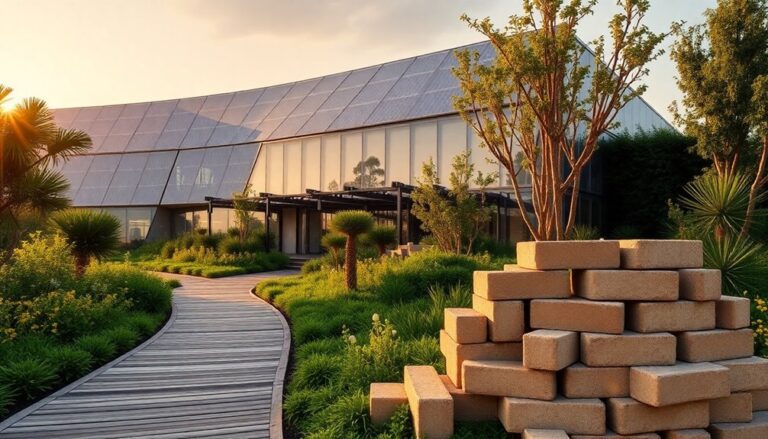
Eco-friendly urban planning and architecture focus on sustainable design and resource use to improve city living. They prioritize passive design, integrating natural elements for energy efficiency, while utilizing recycled and renewable materials for construction. Green spaces play an essential role in enhancing air quality and promoting biodiversity. Smart technologies help monitor resources and optimize urban mobility, reducing emissions and traffic congestion. Community engagement guarantees the design reflects local needs, cultivating resilience through cooperative efforts. As cities evolve, these strategies adapt, paving the way for greener urban futures. There's much more to explore about their impactful approaches and successful implementations.
Principles of Eco-Friendly Design
In regard to eco-friendly design, several key principles guide the approach to creating sustainable urban spaces. One of the most vital concepts is passive design. This strategy utilizes natural elements like sunlight, wind, and thermal mass to regulate indoor climates without relying heavily on mechanical systems. By optimizing building orientation and utilizing natural ventilation, urban planners can greatly improve energy efficiency, reducing reliance on artificial heating and cooling.
Moreover, integrating green roofs and walls not only provides insulation but additionally contributes to biodiversity within urban settings. These features promote a healthier environment, improving air quality while offering aesthetic value that attracts residents and businesses alike. Such improvements don't merely serve ecological purposes; they also elevate property values, empowering stakeholders in the urban environment.
Another principle involves maximizing the use of renewable energy sources. Solar panels and wind turbines can seamlessly integrate into urban designs, generating clean energy that further boosts energy efficiency. This approach not only mitigates the urban heat island effect but also positions cities as leaders in sustainable innovation.
Strategically planned green spaces play a vital role as well, offering residents recreational areas that encourage community engagement. The resulting cohesion improves social dynamics while promoting a healthier lifestyle.
Ultimately, by embracing these principles of eco-friendly design, urban developers not only create sustainable environments but also cultivate influence through innovation and leadership in the global movement towards a more sustainable future. This proactive stance is fundamental for ensuring long-term viability and prosperity in urban planning.
Sustainable Materials and Resources
Often overlooked, sustainable materials and resources play a crucial role in eco-friendly urban planning. By integrating recycled materials and renewable resources into building practices, developers can markedly reduce the environmental impact of urban development. These materials offer a compelling alternative to traditional options, showcasing not just sustainability but likewise durability and cost-effectiveness.
Recycled materials, such as reclaimed wood, recycled metals, and repurposed concrete, not merely minimize waste but also lower the demand for new raw materials. This approach conserves natural resources and reduces energy consumption associated with material production. In addition, urban planners who prioritize the use of recycled materials cultivate a circular economy, where materials are continuously reused and reimagined, leading to innovation and growth.
On the other hand, renewable resources like bamboo and hemp provide eco-friendly choices that regenerate naturally over time. These materials, known for their strength and versatility, can replace less sustainable options in construction and design. By utilizing renewable resources, urban planners can create structures that not only stand the test of time but also harmonize with the environment.
Green Spaces and Urban Biodiversity
Urban greenery offers numerous benefits, from improving air quality to enhancing residents' mental well-being. By incorporating thoughtful design elements, cities can encourage biodiversity, creating habitats for various species. These green spaces not just beautify urban environments but additionally play an essential role in supporting ecological health.
Benefits of Urban Greenery
Green spaces play a crucial role in improving urban environments, offering numerous benefits that go beyond aesthetics. They notably mitigate urban heat, creating cooler microclimates that improve overall livability. In densely populated areas, the presence of parks and green roofs helps lower temperatures, reducing the reliance on energy-intensive cooling systems. This not merely conserves resources but also cuts down on greenhouse gas emissions, aligning with sustainable urban goals.
Moreover, urban greenery has a significant impact on mental health. Research shows that access to nature reduces stress and anxiety, encouraging well-being in city dwellers. Green spaces serve as critical refuges, promoting outdoor activities and social interactions that strengthen community ties. They promote physical health by providing venues for exercise and recreation, contributing to a more active lifestyle.
Incorporating greenery into urban design isn't just about beautification; it's a strategic move to improve quality of life. Cities that prioritize green spaces position themselves as progressive, forward-thinking environments that not only attract residents but also investment. By embracing urban greenery, cities can utilize its influence to create thriving, resilient communities that stand the test of time.
Enhancing Biodiversity Through Design
In cities teeming with life, enhancing biodiversity through thoughtful design is fundamental for creating healthy ecosystems. Urban planners and architects wield significant influence over the natural environment, and their strategic choices can nurture lively habitats. By incorporating wildlife corridors, they can facilitate safe passage for animals, allowing species to thrive even within densely populated areas. These corridors serve as lifelines, bridging fragmented habitats and enabling genetic diversity.
Moreover, the integration of native plantings into urban environments is vital. Native species are adapted to the local climate and soil, requiring less maintenance and water. They attract pollinators and provide vital food sources for local wildlife, enhancing the ecological balance. Influencers in urban development should prioritize green roofs, vertical gardens, and park systems that incorporate these native plants, creating interconnected green spaces.
Ultimately, enhancing biodiversity through design isn't just an ecological necessity; it's a significant statement about a city's commitment to sustainability and resilience. By championing these initiatives, urban leaders can create dynamic environments that enrich human life while honoring and preserving the intricate web of life that sustains us all.
Smart Technologies in Urban Planning
Smart technologies are revolutionizing the way cities are designed and managed, making urban environments more efficient and sustainable. By integrating smart sensors into urban infrastructure, cities can gather real-time data on everything from traffic patterns to energy consumption. This data-driven approach enables city planners to make informed decisions that improve urban mobility and resource management.
With smart sensors deployed throughout the urban setting, officials can monitor vehicle flow, pedestrian movement, and even air quality. This allows for adaptive traffic signals that respond to real-time conditions, reducing congestion and improving travel times. By optimizing urban mobility, cities not only improve the commuter experience but additionally cut down on emissions, creating a cleaner, healthier environment.
Furthermore, smart technologies facilitate more effective public transportation systems. Real-time tracking and communication tools enable transit authorities to adjust routes and schedules based on demand, ensuring that resources are allocated efficiently. This responsiveness translates to increased ridership and reduced reliance on personal vehicles, further promoting sustainability.
The implementation of smart technologies extends beyond transportation. Energy-efficient buildings equipped with smart systems can monitor energy usage, leading to significant reductions in waste. These advancements contribute to a holistic approach to urban planning, where sustainability and efficiency go hand in hand.
Embracing smart technologies positions cities to not only meet the challenges of today but additionally to thrive in a swiftly changing future, establishing a dynamic precedent for urban development that prioritizes both people and the planet.
Community Engagement and Resilience
Community engagement plays an essential role in eco-friendly urban planning, as it promotes participatory design processes that reflect local needs. By building strong local partnerships, communities can improve their resilience against environmental challenges. This collaborative approach not just empowers residents but also creates sustainable solutions for future growth.
Participatory Design Processes
Participatory design processes play a vital role in promoting community engagement and improving resilience in urban planning. By utilizing design thinking principles, urban planners can encourage collaboration and guarantee that community voices are heard. Collaborative workshops serve as a platform for stakeholders to share their visions and concerns, leading to innovative solutions that reflect the community's needs.
| Element | Description | Impact |
|---|---|---|
| Design Thinking | An iterative process focusing on user needs | Empowers community participation |
| Collaborative Workshops | Engaging sessions for stakeholders to co-create | Builds trust and ownership |
| Feedback Mechanisms | Channels for continuous community input | Improves adaptability |
| Resilience Strategies | Plans integrating local knowledge and resources | Strengthens community fabric |
These participatory methods not just improve public trust but also nurture a sense of ownership among residents. When communities actively engage in the design process, they become more adaptable to change, eventually leading to more sustainable urban environments. Empowering local voices guarantees that urban planning is not just a top-down approach, but a shared expedition towards a thriving future.
Building Local Partnerships
Building strong local partnerships is key to nurturing community engagement and resilience in urban planning. By aligning with diverse stakeholders, from residents to local businesses, planners can tap into invaluable insights and resources. These partnerships create a robust framework for encouraging local initiatives that address community needs during promoting sustainable practices.
Effective partnership models emphasize collaboration and shared goals. When urban planners involve community members early in the design and decision-making processes, they not only increase transparency but likewise cultivate a sense of ownership among residents. This engagement drives collective action, empowering communities to advocate for their interests and ensuring that development reflects their values.
Moreover, partnerships can leverage the strengths of various organizations, creating networks that improve resource availability and knowledge sharing. These alliances can be instrumental in mobilizing funding for eco-friendly projects, promoting green infrastructure, and addressing socio-economic disparities. By building a solid foundation of local partnerships, urban planners can encourage adaptive, resilient communities ready to face the challenges of an continuously changing urban environment. In the end, these collaborations lead to a more sustainable and equitable future, where all voices contribute to the collective vision.
Enhancing Community Resilience
Nurturing resilience in urban environments hinges on effective community engagement strategies that empower residents to actively participate in shaping their surroundings. By cultivating strong community networks, urban planners can develop a sense of ownership and responsibility among residents, enabling them to address challenges collectively. When individuals feel connected, they're more likely to collaborate on solutions that improve their neighborhood's resilience.
Disaster preparedness is crucial in today's unpredictable climate. Communities that engage in regular training and simulations build confidence and readiness among residents. By involving local organizations and stakeholders, planners can create customized programs that address specific vulnerabilities within the community. This proactive approach not merely strengthens bonds but also guarantees that everyone is equipped to respond effectively in times of crisis.
Moreover, integrating technology into community engagement initiatives can amplify outreach efforts. Digital platforms can facilitate communication and resource-sharing, allowing residents to stay informed and involved. By prioritizing community engagement in urban planning, cities can become more resilient, adaptable, and prepared for the uncertainties of the future. In the end, empowered communities are the bedrock of sustainable urban environments, capable of thriving even in adversity.
Case Studies of Successful Projects
Many cities around the world have embraced eco-friendly urban planning, showcasing innovative projects that prioritize sustainability. One standout example is Copenhagen, Denmark, where the city has transformed its environment to promote sustainable transportation. By implementing an extensive network of bike lanes and pedestrian-friendly streets, Copenhagen has greatly reduced vehicular emissions, positioning itself as a global leader in urban mobility.
In Singapore, urban water management takes center stage. The city-state's Integrated Drainage Management system effectively addresses flooding while enhancing water quality. Featuring green roofs and rain gardens, Singapore captures and treats stormwater, turning potential hazards into valuable resources. This approach not just mitigates flood risks but likewise contributes to the city's lush greenery.
Another inspiring case is Curitiba, Brazil, which has transformed public transport with its Bus Rapid Transit system. This model emphasizes efficiency and accessibility, allowing residents to travel quickly and sustainably. By prioritizing public transport over personal vehicles, Curitiba has greatly reduced traffic congestion and greenhouse gas emissions, setting a benchmark for urban centers worldwide.
These case studies exemplify how cities can utilize innovative strategies to promote sustainability. By investing in sustainable transportation and effective urban water management, they're not merely enhancing quality of life but also demonstrating impactful leadership in the fight against climate change. As urban areas continue to grow, these successful projects serve as a blueprint for future developments, proving that eco-friendly planning is not merely viable but crucial for resilient cities.
Frequently Asked Questions
How Do Eco-Friendly Designs Impact Property Values?
The question of how eco-friendly designs impact property values is increasingly relevant in today's market. Homebuyers often seek properties that feature sustainable materials and utilize green technologies, recognizing their long-term benefits. As demand rises, properties with eco-friendly designs tend to appreciate more quickly than traditional homes. Investors and homeowners alike find that these improvements not merely reduce energy costs but additionally raise market appeal, in the end leading to significant value increases.
What Are the Costs Associated With Sustainable Urban Planning?
Studies show that sustainable urban planning can require an initial investment that's 10-20% higher than traditional methods. Nevertheless, those costs often pale in comparison to the long-term savings achieved through reduced energy consumption and maintenance. By prioritizing efficiency and innovative design, cities can promote economic growth as they minimize environmental impact. In the end, this strategic approach not only improves livability but additionally secures a prosperous future for both communities and investors alike.
How Can I Advocate for Eco-Friendly Practices in My Community?
To advocate for eco-friendly practices, she can organize community workshops that empower residents to learn about sustainability. By showcasing local initiatives, she'll inspire others to actively participate. Collaborating with local leaders and businesses can amplify her efforts, creating a united front for change. Engaging social media platforms to spread awareness will further galvanize support. With determination and strategic planning, she'll cultivate a community that values and implements eco-friendly practices effectively.
Are There Certifications for Eco-Friendly Buildings?
When Sarah decided to build her dream home, she sought the gold standard in eco-friendly design. LEED certification represents that standard, ensuring buildings meet rigorous green building criteria. It's like earning a badge of honor for sustainability. Many architects and developers pursue this certification to showcase their commitment to the environment. By obtaining LEED certification, they not just enhance their projects but additionally inspire communities to embrace energy-efficient, eco-conscious living.
What Role Does Government Play in Sustainable Urban Planning?
The government plays an essential role in sustainable urban planning by establishing policy frameworks that guide development. It implements regulations that encourage responsible land use and infrastructure growth. Through government incentives, such as tax breaks and grants, they motivate businesses and developers to adopt sustainable practices. These actions not just improve community resilience but additionally cultivate economic growth, positioning the government as an influential leader in shaping a sustainable future for urban environments.