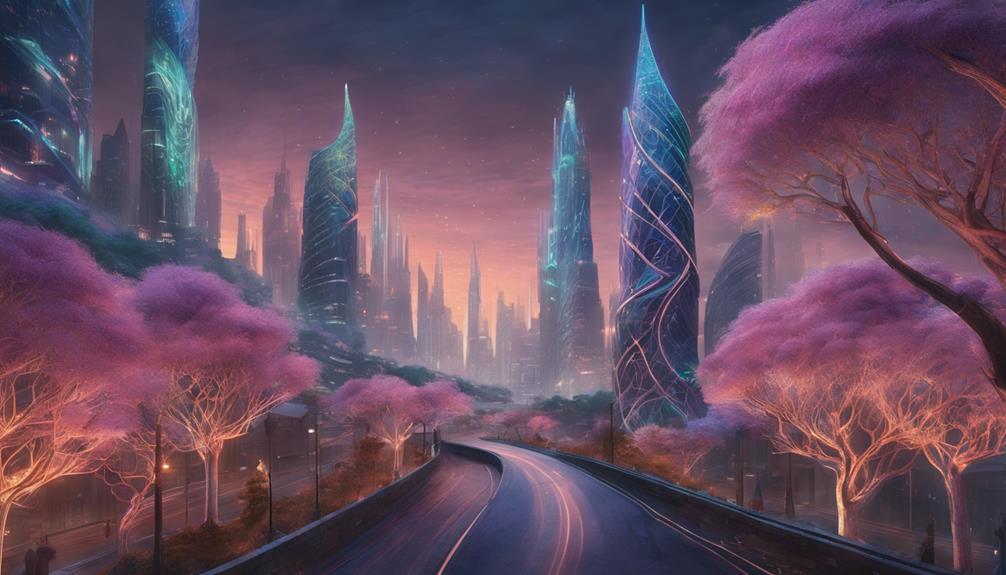

Urban landscape designers are incorporating enchanting design elements to create mesmerizing and unforgettable experiences. Whimsical lighting, like moonlit canopies and starry projections, sets the tone for magical public spaces. Nature-inspired patterns, symbolic statuary, and winding paths add to the allure. Immersive soundscapes, interactive fountains, and enchanted forest landscapes further transport citizens. Urban mythology in public art brings fantasy to life. These design elements redefine urban experiences, fostering emotional connections and community engagement. As they combine in innovative ways, the boundaries between reality and fantasy blur, inviting citizens to explore and discover the magic in their urban landscapes, and there's even more to uncover.
Whimsical Lighting Design Elements
Urban landscape designers are incorporating enchanting lighting design elements to transform public spaces into vibrant and enchanting destinations that attract visitors and foster a sense of community. By doing so, they're redefining the urban experience, making it more captivating and memorable. One of the most striking examples of this trend is the use of Moonlit Canopies, which involve suspending LED lights or fiber optics above pedestrian walkways to create an ethereal ambiance. This design element not only adds a touch of magic to the urban landscape but also provides a sense of safety and security, making people more likely to linger and socialize.
Another innovative approach is the use of Starry Projections, which involve projecting starry patterns onto building facades or pavements. This technique creates an immersive experience, transporting visitors to a world beyond the concrete jungle. By incorporating these enchanting lighting design elements, urban landscape designers are able to create a sense of wonder and enchantment, making public spaces more inviting and engaging. As a result, cities are becoming more attractive, vibrant, and livable, attracting tourists, and boosting local economies. By leveraging the power of light, designers are reimagining the urban landscape, creating destinations that inspire and delight.
Nature-Inspired Pattern Language
When designing urban landscapes, incorporating nature-inspired pattern language can create a sense of harmony between built and natural environments. This approach involves applying Organic Form Language, which mimics natural shapes and forms, and Biophilic Pattern Systems, which incorporate elements of nature into architectural design. By doing so, urban spaces can become more inviting, sustainable, and connected to the natural world.
Organic Form Language
Designers are turning to organic form language, a nature-inspired pattern language that mimics the intricate patterns and shapes found in the natural world, to create visually striking and sustainable urban landscapes. This approach combines Biomorphic Architecture, which draws inspiration from natural forms, with Geometric Abstraction, which simplifies complex patterns into essential shapes.
| Organic Form Language Element | Description |
|---|---|
| Branching Systems | Inspired by tree branches, these patterns create dynamic, interconnected spaces. |
| Cellular Patterns | Drawing from natural cell structures, these patterns create visually striking, repeating motifs. |
| Waveforms | Mimicking the flow of water, these patterns bring movement and energy to urban landscapes. |
| Fractals | Using self-replicating patterns found in nature, these designs create intricate, harmonious spaces. |
| Biomimetic Materials | Inspired by natural materials, these innovative materials offer sustainable, high-performance solutions. |
Biophilic Pattern Systems
Biophilic pattern systems, which incorporate nature-inspired patterns and motifs, are being integrated into urban landscapes to foster a deeper connection between humans and the natural environment. These systems are designed to enhance the aesthetic and emotional appeal of urban spaces, creating a sense of harmony and balance. By incorporating visual hierarchies, designers can create a sense of order and organization, guiding the viewer's attention through the space. Pattern evolution, a key concept in biophilic design, involves the gradual introduction of complexity and variation, mimicking the natural world's intricate patterns.
Symbolic Statuary and Iconography
Here's the paragraph:
In urban landscapes, symbolic statuary and iconography can add depth and meaning to public spaces. Designers often turn to mythological creatures, such as dragons or phoenixes, to create unique landmarks that reflect a city's identity. By incorporating ancient symbols, they can also pay homage to a city's cultural heritage and create a sense of continuity with the past.
Urban Mythological Creatures
In urban landscapes, mythical creatures like dragons, phoenixes, and griffins are being reimagined as symbolic statuary and iconography, adding a touch of whimsy and wonder to public spaces. These urban mythological creatures are more than just decorative elements; they hold deep symbolic meaning and cultural significance.
When it comes to incorporating these creatures into urban design, it's crucial to understand their Creature Classification and Mythic Origins. This involves delving into the rich history and cultural context of each creature, uncovering their unique characteristics and symbolism.
Here are 4 key considerations for urban designers:
- Symbolic Significance: What message do you want to convey through the use of a particular creature?
- Cultural Sensitivity: How can you guarantee that the creature's cultural origins are respected and honored?
- Contextual Integration: How will the creature be integrated into the surrounding urban landscape?
- Storytelling Potential: What narrative can be woven around the creature to engage and inspire the public?
Ancient Symbol Revival
Beyond mythological creatures, urban landscapes are also experiencing an Ancient Symbol Revival, where timeless icons like the ouroboros, ankh, and Celtic knots are being reimagined as symbolic statuary and iconography to infuse public spaces with deeper meaning and historical significance. This resurgence of ancient symbols is not just a nostalgic nod to the past; it's a deliberate attempt to tap into their profound cultural significance and spiritual potency. By incorporating these symbols into urban design, cities can harness their transformative power to reshape the urban experience.
This Cultural Revival is rooted in the recognition that these symbols hold the secrets of Sacred Geometry, the mystical intersection of art, mathematics, and spirituality. By incorporating these symbols into public spaces, urban planners can create environments that resonate with the human psyche, fostering a deeper sense of connection and community. As cities continue to evolve, the Ancient Symbol Revival is poised to play a pivotal role in shaping their spiritual and cultural identity, empowering citizens to tap into the timeless wisdom of the past.
Winding Paths and Maze Design
Winding paths and maze designs cleverly manipulate urban landscapes by creating an immersive experience that guides pedestrians' route and encourages exploration. By incorporating these design elements, urban planners can craft an atmosphere that fosters curiosity and discovery. The art of path traversal is essential in maze design, as it influences the way individuals interact with their surroundings. By carefully curating the twists and turns, designers can evoke emotions and create a sense of mystery.
Here are 4 ways winding paths and maze design can elevate urban landscapes:
- Psychological Impact: Maze psychology suggests that traversing through winding paths can stimulate the brain's problem-solving centers, releasing endorphins and creating a sense of accomplishment.
- Increased Engagement: By slowing pedestrians' pace, winding paths encourage users to appreciate their surroundings, interact with public art, and engage with fellow pedestrians.
- Urban Oasis Creation: Maze design can transform urban spaces into tranquil oases, providing a respite from the hustle and bustle of city life.
- Economic Benefits: Winding paths and maze design can increase foot traffic, boost local businesses, and create a unique selling point for urban developments.
Immersive Soundscapes and Music
As urban planners cleverly manipulate the visual landscape with winding paths and maze design, they can also harness the power of sound to craft immersive experiences that transport pedestrians to new emotional heights. By incorporating carefully curated soundscapes, urban planners can create environments that evoke emotions, spark imagination, and even influence mood. Sonic waves can be strategically placed to create an immersive atmosphere, drawing pedestrians into the space and encouraging them to linger.
Audio dreams can become a reality by incorporating music and sound effects that resonate with the urban landscape's aesthetic. For instance, a futuristic cityscape could feature an otherworldly soundscape, complete with eerie ambiance and pulsing electronic beats. Conversely, a serene park could be accompanied by calming nature sounds or soft, acoustic melodies. By thoughtfully designing soundscapes, urban planners can tap into the psychological impact of sound, influencing how pedestrians interact with and perceive their surroundings.
To take it a step further, urban planners can incorporate interactive sound elements, allowing pedestrians to become an integral part of the sonic experience. This could include sound-activated installations, musical performances, or even community-driven sound art projects. By empowering pedestrians to engage with the soundscape, urban planners can create a sense of ownership and community, fostering a deeper connection between people and place.
Interactive Fountain Displays
Urban planners can transform public spaces into vibrant hubs of activity by incorporating interactive fountain displays that respond to pedestrians' movements, voice commands, or even emotional states. These cutting-edge installations harness the power of water to captivate and engage the public, creating an immersive experience that's both mesmerizing and memorable.
Here are 4 ways interactive fountain displays can elevate urban landscapes:
- Water Choreography: Programmable jets and pumps create intricate patterns and shapes, transforming water into a dynamic, three-dimensional art form.
- Fountain Acoustics: Strategically placed speakers and subwoofers amplify the soothing sounds of water, creating an immersive audio experience that harmonizes with the visual display.
- Emotional Resonance: Advanced sensors and AI technology allow fountains to respond to pedestrians' emotions, creating a symphony of water and sound that resonates with their mood and energy.
- Community Engagement: Interactive fountains become social hubs, encouraging people to gather, interact, and share in the experience, fostering a sense of community and connection.
Enchanted Forest Landscaping Tips
Lush canopies of native trees, carefully selected for their unique textures and colors, transport visitors into an enchanted world, evoking feelings of wonder and serenity in the heart of the city. To create an immersive experience, urban landscape designers can incorporate mystical elements, such as Fairy Circles, into their designs. These circular formations of mushrooms or flowers add a touch of whimsy and magic to the urban jungle.
To take it to the next level, designers can incorporate vertical elements, like Moss Walls, to create a sense of enclosure and mystery. These living walls not only purify the air but also provide a habitat for local wildlife.
Here are some Enchanted Forest Landscaping Tips to keep in mind:
| Design Element | Description |
|---|---|
| Fairy Circles | Circular formations of mushrooms or flowers that add whimsy and magic |
| Moss Walls | Living walls that provide a habitat for local wildlife and purify the air |
| Twinkling Lighting | String lights or lanterns that mimic the sparkle of fireflies or stars |
Urban Mythology in Public Art
Mythological creatures and legends come alive in public art installations, weaving a narrative that bridges the gap between fantasy and reality in urban landscapes. Urban mythology in public art is a powerful tool that can transform ordinary spaces into extraordinary experiences. By incorporating mythic narratives into public art, cities can tap into the collective imagination of their citizens, fostering a sense of community and shared identity.
Here are 4 ways urban mythology in public art can shape the urban experience:
- Cultural Storytelling: Public art installations that draw from local mythology and folklore can become a platform for cultural storytelling, preserving the history and heritage of a city's diverse communities.
- Immersive Experiences: Interactive public art installations that bring mythological creatures to life can create immersive experiences that transport citizens and visitors alike to new and fantastical worlds.
- Urban Identity: By embracing urban mythology, cities can craft a unique identity that sets them apart from other urban centers, making them more attractive to tourists, businesses, and talent.
- Community Engagement: Public art installations that incorporate urban mythology can serve as a catalyst for community engagement, sparking conversations and collaborations that can lead to positive social change.
Frequently Asked Questions
How Do I Balance Mystical Design With Functional Urban Space Requirements?
As a master urban architect, she navigates the tightrope of form and function, where creativity meets concrete. Balancing mystical design with functional urban space requirements is a delicate dance, like weaving a tapestry of dreams. To achieve harmony, she employs Cultural Fusion, merging the essence of mysticism with modern urban needs. Whimsical Boundaries are set, blurring the lines between fantasy and reality, as she crafts spaces that inspire and empower.
Can Mystical Design Elements Be Adapted for Small, Urban Plots?
She adapts mystical design elements to small, urban plots by prioritizing Compact Spirituality. Urban Aesthetics is redefined as intimate, verdant oases amidst concrete jungles. By incorporating mindful layouts and symbolic features, she creates pockets of serenity that harmonize with functional space requirements. In these condensed sanctuaries, citizens can reconnect with nature and themselves, fostering a deeper sense of community and empowerment. Each oasis serves not only as a retreat but also as a testament to sustainable building innovations that minimize environmental impact while maximizing beauty. By integrating native plants and eco-friendly materials, these spaces become more than just relief points; they promote biodiversity and resilience within urban settings. Ultimately, her work invites individuals to embrace a lifestyle that honors both personal well-being and ecological stewardship.
Are Mystical Design Elements Suitable for Public or Private Spaces Only?
Like Shakespeare's Midsummer Night's Dream, where the forest whispers secrets to its dwellers, public spaces can be woven with mystique, fostering community engagement and social dynamics. However, mystical design elements can also thrive in private sanctuaries, where individuals seek solace and introspection. Ultimately, the suitability of these elements depends on the desired atmosphere and intention, rather than the space itself. By harnessing their transformative power, designers can craft immersive experiences that captivate and inspire, regardless of the setting.
How Do I Ensure Mystical Design Elements Are Accessible to All Users?
She guarantees accessibility by designing with universal appeal in mind. Inclusive iconography is key, avoiding symbols that might alienate or confuse. By doing so, she creates spaces that welcome diverse users, fostering a sense of community and shared experience. This thoughtful approach empowers everyone to engage, regardless of background or ability, and amplifies the impact of her designs.
Can I Incorporate Personal Symbolism Into Mystical Design Elements?
Some might argue that personal symbolism is too subjective for public spaces, but she counters that it's precisely this uniqueness that fosters a sense of community. She can incorporate personal icons and symbolic colors into her design, making it more relatable and impactful. By doing so, she creates an immersive experience that resonates with users on a deeper level, ultimately amplifying the mystical essence of the urban landscape.