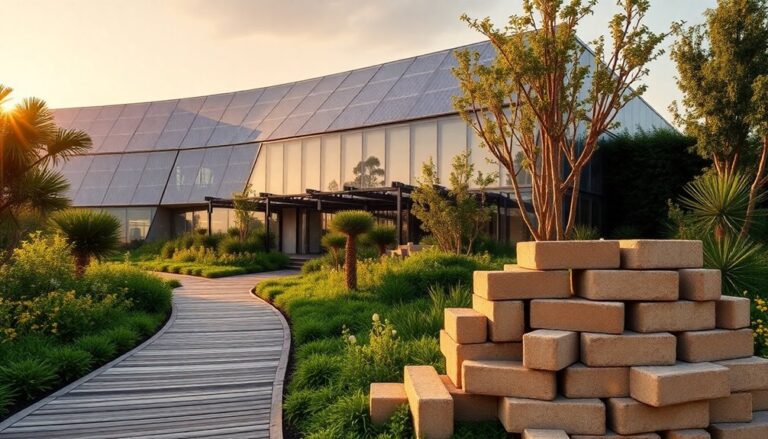
The construction industry is witnessing a transformative era of sustainable innovation, with researchers and manufacturers alike developing 'mystical materials' that not only reduce environmental impact but also rival traditional materials in strength, durability, and aesthetic appeal. From self-healing concrete to transparent aluminum, modern engineered wood products, and bamboo structures, the options are vast and impressive. Super-green building materials like hempcrete and advanced facade designs are also gaining traction. As the industry continues to push boundaries, one thing is clear: the future of sustainable building is brighter – and more innovative – than ever, with new possibilities waiting to be explored.
Self-Healing Concrete Revolution
Researchers have engineered a breakthrough in self-healing concrete, which can repair cracks and damage autonomously, promising a revolution in sustainable infrastructure development. This innovative material is infused with bacteria that produce calcite, a natural cement, when they come into contact with oxygen and water. As cracks form, the bacteria are activated, filling in the gaps and restoring the concrete's structural integrity. This self-healing process is made possible through microbial interactions, where the bacteria work in harmony to repair damage.
The bacterial durability is exceptional, with some species capable of surviving in harsh environments for extended periods. This feature ensures that the self-repair process can occur even in the most challenging conditions. The implications of this technology are far-reaching, with the potential to reduce maintenance costs and extend the lifespan of infrastructure projects to a considerable extent. With the ability to repair itself, self-healing concrete can also decrease the environmental impact of construction, as fewer materials will be required for repairs and replacements.
As the construction industry continues to grapple with sustainability challenges, this breakthrough offers a beacon of hope. With its autonomous repair capabilities, self-healing concrete is poised to transform the way we build, creating stronger, more resilient structures that can withstand the test of time. As researchers continue to refine this technology, it's clear that the future of sustainable infrastructure development has never looked brighter.
Wood You Believe It's Stronger
As the construction industry sets its sights on sustainability, engineers are now turning to an unlikely hero: wood, which has been engineered to be stronger and more resilient than ever before. This isn't your grandfather's wood, though – modern engineered wood products boast unprecedented strength, durability, and versatility. By leveraging advanced manufacturing techniques, wood can now be precision-cut, layered, and treated to create materials that rival steel in terms of strength-to-weight ratio.
The secret to this wood's superpowers lies in its unique properties. Engineered wood products can be designed to minimize defects, maximize strength, and even resist natural enemies like pests and rot. This means that wood durability is no longer a concern, and builders can confidently specify wood for projects that would have previously required steel or concrete.
But what about the environmental impact? Forest sourcing is a critical aspect of sustainable wood production. Responsible forestry practices guarantee that wood is harvested in a way that maintains ecosystem health, biodiversity, and carbon sequestration. In fact, wood is one of the only building materials that can be carbon-neutral or even carbon-negative, thanks to the ability of trees to absorb CO2 during their growth cycle. With engineered wood products, builders can tap into the power of this ancient material while staying true to their commitment to sustainability. The result is a building material that's not only stronger, but also more environmentally friendly.
Transparent Aluminum's Rise
Six decades after its conceptual debut, transparent aluminum is finally emerging as a game-changing material in sustainable building, boasting an unbeatable combination of strength, durability, and transparency. This revolutionary material is poised to disrupt the construction industry, offering unparalleled benefits for architects, builders, and the environment.
Transparent aluminum's remarkable properties make it an ideal choice for various applications. In aerospace, it's being explored for its potential to reduce weight while maintaining structural integrity, leading to enhanced fuel efficiency and reduced emissions. Meanwhile, its marine potential is vast, with possibilities ranging from sustainable shipbuilding to innovative offshore infrastructure.
Its strength-to-weight ratio is unmatched, making it perfect for building complex structures that require minimal support. Additionally, transparent aluminum is resistant to corrosion, ensuring it can withstand harsh environments without compromising its integrity. Its transparency also allows for unique design possibilities, such as energy-harvesting facades and self-sustaining buildings.
As the construction industry continues to evolve, transparent aluminum is set to play a starring role. With its unmatched combination of strength, durability, and transparency, it's no wonder this material is generating so much excitement. As innovators continue to push the boundaries of what's possible, one thing is clear: transparent aluminum is the future of sustainable building.
The Future of Facades
As architects and engineers reimagine urban landscapes, they’re turning to innovative facade designs that not only reduce environmental impact but also enhance the aesthetic appeal of buildings. The future of facades lies in integrating green spaces, energy-harvesting technologies, and smart materials that can adapt to changing environmental conditions. By exploring these cutting-edge concepts, builders can create structures that are not only sustainable but also visually stunning and high-performing. These advancements open the door to incorporating mystical elements in exterior design, where natural motifs and organic shapes can create a sense of harmony with the surroundings. By blending these whimsical features with sustainable practices, architects are not only responding to the practical demands of urban living but also inspiring a deeper connection between individuals and their environment. Ultimately, this fusion of technology and artistry promises to transform our cities into vibrant, engaging spaces that resonate with the essence of nature.
Greening Urban Landscapes
Nearly 30% of urban spaces are dedicated to buildings, and architects are now reimagining these structures as opportunities to integrate nature into the urban fabric. By incorporating greenery into building design, cities can combat the urban heat island effect, improve air quality, and provide habitats for wildlife. This innovative approach is giving rise to urban oases – pockets of tranquility amidst the hustle and bustle of city life. Green corridors, which connect these oases, are also emerging as a key feature of sustainable urban planning. These corridors not only provide ecological benefits but also enhance the aesthetic appeal of urban landscapes. As cities continue to grow, the need for green spaces will only intensify. By integrating nature into building design, architects can create healthier, more sustainable cities that support both human and environmental well-being. The future of urban planning lies in harmonizing the built environment with the natural world, and greening urban landscapes is a critical step in this direction.
Energy-Harvesting Walls
What if buildings could harness the energy they need to function, simply by being there? This is the promise of energy-harvesting walls, a revolutionary technology that's transforming the way we think about building design. By integrating photovoltaic cells into building facades, architects can generate electricity on-site, reducing reliance on the grid and slashing energy costs. But that's not all – these walls can also store energy for later use, thanks to advanced energy storage systems.
The implications are enormous. Imagine skyscrapers that power themselves, or entire city blocks that are energy-independent. With energy-harvesting walls, buildings can become net-positive generators of energy, rather than mere consumers. This technology has the potential to reshape urban landscapes, creating sustainable, self-sufficient cities that thrive without draining the planet's resources. As architects and engineers continue to push the boundaries of what's possible, one thing is clear: the future of building design is bright – and electric.
Smart Material Integration
Building facades are on the cusp of a radical transformation, with smart materials poised to revolutionize the way architects design and construct the exterior shells of buildings. This revolution is driven by innovations in smart material integration, which enables the creation of adaptive, responsive, and high-performance facades. One key aspect of this integration is material interoperability, where different materials work seamlessly together to achieve peak performance. This allows architects to design facades that can adjust to changing environmental conditions, optimizing energy efficiency and occupant comfort.
Adaptive shading is a prime example of this integration in action. By combining advanced materials like electrochromic glass and thermoelectric materials, facades can dynamically adjust their shading patterns to minimize heat gain and maximize natural light. This not only reduces energy consumption but also enhances the overall visual appeal of the building. As smart material integration continues to advance, we can expect to see even more innovative facade designs that push the boundaries of sustainability, aesthetics, and functionality. The future of building facades has never looked brighter – or more intelligent.
Building With Bamboo Power
By harnessing bamboo's remarkable strength-to-weight ratio, architects and engineers are now constructing sustainable, eco-friendly structures that rival traditional building materials in durability and performance. This ancient material, with a history dating back over 7,000 years, is finally getting the recognition it deserves. Bamboo's unique combination of strength, lightness, and flexibility makes it an ideal choice for building innovative, high-performance structures that minimize environmental impact.
In terms of aesthetics, bamboo offers a unique, natural beauty that can't be replicated by synthetic materials. Its distinctive grain patterns and warm, earthy tones create a sense of organic sophistication, perfect for modern, eco-conscious designs. From sleek, contemporary homes to historic renovations, bamboo's versatility allows it to seamlessly integrate into a wide range of architectural styles. Additionally, its rapid growth rate – up to 3 feet per day – ensures a sustainable, renewable resource that can meet the demands of modern construction.
With bamboo's rich history and growing popularity, it's no wonder architects and engineers are turning to this mystical material to build the structures of the future. As the world shifts towards more sustainable, eco-friendly practices, bamboo is poised to play a starring role in revolutionizing the building industry. Its unparalleled strength, unique aesthetics, and eco-credentials make it the ultimate power material for those seeking to make a real impact on the environment.
Super-Strong, Super-Green Materials
As architects and builders seek to reduce their environmental footprint, they're turning to innovative materials that combine strength with sustainability. Two game-changing options have recently emerged: hempcrete, a hemp-based building material that's incredibly strong and resistant to pests and mold, and carbon-negative concrete, which absorbs more CO2 than it emits. These super-strong, super-green materials are poised to revolutionize the construction industry.
Hempcrete Revolutionizes Building
Hempcrete, a game-changing insulator, is redefining the construction industry with its unparalleled strength and eco-friendly properties. This revolutionary material has been gaining traction globally, and for good reason. Hempcrete is created by mixing hemp fibers with lime and water, resulting in a durable, lightweight, and highly insulating material.
Here are just a few of the benefits of hempcrete:
- Hemp history: Hemp has been used for centuries in construction, dating back to ancient China and Rome.
- Carbon sequestration: Hemp absorbs more CO2 from the atmosphere than it emits during production, making it a carbon-negative material.
- Superior insulation: Hempcrete provides exceptional thermal and acoustic insulation, reducing energy costs and noise pollution.
- Fire resistance: Hempcrete is highly fire-resistant, reducing the risk of damage and injury.
- Sustainable production: Hemp is a fast-growing, low-maintenance crop that requires minimal water and pesticides.
With its impressive strength, eco-friendly properties, and rich history, hempcrete is poised to revolutionize the construction industry, providing a powerful solution for sustainable building.
Carbon-Negative Concrete Emerges
Researchers have successfully developed a pivotal type of carbon-negative concrete that not only reduces greenhouse gas emissions but also boasts exceptional strength and durability, making it an attractive alternative to traditional building materials. This innovative concrete is a game-changer in the construction industry, offering a significant reduction in carbon footprint while maintaining high performance standards. By utilizing industrial by-products and waste materials, the production process captures more CO2 than it emits, effectively becoming carbon-negative.
Material science has played an essential role in the development of this super-strong, super-green concrete. Scientists have carefully engineered the mixture to optimize its compressive strength, making it suitable for a wide range of applications, from building foundations to infrastructure projects. With its superior durability, this concrete requires less maintenance and repairs, further reducing its environmental impact. As the demand for sustainable building materials continues to grow, this carbon-negative concrete is poised to revolutionize the industry, providing a powerful solution for architects, builders, and policymakers seeking to minimize their carbon footprint.
Carbon-Negative Construction Methods
Builders are now incorporating carbon-negative construction methods into their projects, pioneering a new era of sustainable development. This shift towards climate resilience is essential, as the built environment is responsible for nearly 40% of global carbon emissions. By adopting innovative materials and techniques, builders can not only reduce their carbon footprint but also create structures that absorb more CO2 than they emit.
Some of the key strategies being employed include:
- Optimizing building orientation and layout to maximize natural light and heat, reducing the need for artificial lighting and heating systems.
- Implementing modular construction to minimize waste and maximize material efficiency.
- Using locally sourced and recycled materials to reduce transportation emissions and support the circular economy.
- Integrating carbon-absorbing materials, such as carbon-negative concrete, into building designs.
- Incorporating green roofs and walls to provide natural insulation and habitats for urban wildlife.
Frequently Asked Questions
Can Sustainable Building Materials Be Used in Extreme Weather Conditions?
She considers whether sustainable building materials can withstand the fury of extreme weather conditions. The answer lies in innovative designs that prioritize resilience. Hurricane-resilient structures, for instance, can be built using reinforced materials that flex in high winds. Similarly, earthquake-resistant buildings can be constructed with sustainable materials that absorb seismic shocks. By harnessing these cutting-edge technologies, architects can create structures that not only withstand the elements but also minimize their environmental footprint.
How Do the Costs of Mystical Materials Compare to Traditional Materials?
She notes that 70% of construction projects exceed their budgets, making cost an important consideration. When it comes to mystical materials, she asks, do the economic trade-offs justify the premiums? While these innovative materials boast impressive sustainability credentials, their prices can be steep. On average, mystical materials carry a 20-30% premium over traditional alternatives. However, she argues that the long-term benefits, such as reduced maintenance and energy savings, can offset these upfront costs, making them a savvy investment for forward-thinking builders.
Are Mystical Materials Compatible With Existing Building Codes and Regulations?
She navigates the complex landscape of code compliance, where mystical materials often face regulatory hurdles. Ensuring these innovative materials meet existing building codes and regulations is essential. While some jurisdictions are adapting to incorporate mystical materials, others lag behind. She must carefully research and comply with local regulations to avoid costly setbacks, ultimately paving the way for widespread adoption of these sustainable solutions.
Can Mystical Materials Be Recycled or Reused at the End of Their Life?
As the curtain falls on a building's lifespan, a critical question emerges: what happens next? Can these cutting-edge materials be reborn, or are they destined for the landfill? The industry holds its breath, awaiting answers. A material's legacy is shaped by its design intention – will it be recycled, reused, or forever lost? The fate of these innovative wonders hangs in the balance, as the world waits with bated breath for a solution that aligns with their sustainable promise.
Are There Any Potential Health Risks Associated With Mystical Materials?
As builders turn to innovative materials, they must consider the potential health risks. Some materials release toxic emissions, posing a threat to indoor air quality and respiratory health. Others can cause skin irritation, from mild rashes to severe allergic reactions. It's essential to assess the safety of these materials, ensuring they don't harm occupants or construction workers. By doing so, builders can create healthy, sustainable spaces that prioritize both people and the planet.