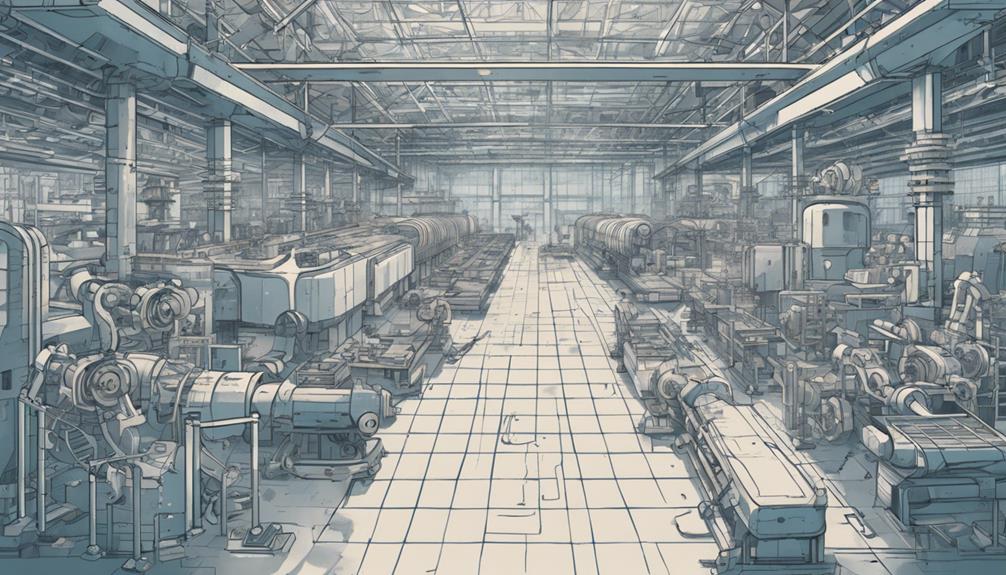

Designing for mass production requires careful consideration of multiple interconnected factors. Material selection and sourcing play a critical role, with sustainable materials and global sourcing being key. Design simplicity, tooling and mold development, and production line layout optimization are also essential for efficiency and productivity. Component standardization and modularity can reduce production costs and increase efficiency, while supply chain logistics and management guarantee timely delivery of products. Finally, quality control and testing protocols are crucial for detecting defects and implementing corrective actions. By optimizing these factors, manufacturers can streamline their processes and achieve greater efficiency, and exploring each of these factors in depth can reveal even more opportunities for improvement.
Material Selection and Sourcing
When designing for mass production, the selection and sourcing of materials play an important role in determining the feasibility, quality, and cost-effectiveness of the final product. The choice of materials can have a substantial impact on production costs, product performance, and environmental sustainability. Therefore, it is essential to carefully consider the material selection and sourcing strategy to guarantee the successful production of high-quality products.
In today's environmentally conscious era, sustainable materials have become a critical aspect of mass production. Designers and manufacturers must prioritize eco-friendly materials that minimize environmental impact while meeting performance requirements. This may involve exploring alternative materials, such as recycled plastics, bioplastics, or sustainably sourced wood products. By incorporating sustainable materials, companies can reduce their carbon footprint, enhance their brand reputation, and appeal to environmentally aware consumers.
Global sourcing also plays an important role in material selection and sourcing. With the increasing globalization of supply chains, designers and manufacturers can tap into a vast network of suppliers offering diverse materials and services. Effective global sourcing strategies enable companies to access high-quality materials at competitive prices, while also ensuring compliance with international regulations and standards. By adopting a strategic approach to material selection and sourcing, companies can optimize their mass production processes, reduce costs, and create innovative products that meet evolving customer demands.
Designing for Manufacturing Efficiency
In the pursuit of efficient mass production, designing for manufacturing efficiency is vital, as it enables companies to streamline their production processes, reduce costs, and improve product quality. By optimizing product design for manufacturing efficiency, companies can reduce production time, minimize waste, and increase overall productivity.
| Design Principles | Benefits |
|---|---|
| Design Simplicity | Reduces production time and cost |
| Production Flexibility | Enables quick adaptation to changing market demands |
| Modular Design | Facilitates easy maintenance and repair |
| Standardized Components | Simplifies inventory management and reduces waste |
To achieve manufacturing efficiency, designers should focus on design simplicity, which reduces the complexity of production processes and minimizes the risk of errors. Production flexibility is also essential, as it enables companies to quickly adapt to changing market demands and respond to customer needs. By incorporating modular design and standardized components, companies can further simplify their production processes and reduce waste. By designing with manufacturing efficiency in mind, companies can gain a competitive edge in the market and improve their bottom line.
Tooling and Mold Development
Once production designs are optimized for manufacturing efficiency, the focus shifts to creating the necessary tooling and molds that will bring these designs to life. This critical phase of tooling and mold development is where innovative design concepts take shape, and production-ready products begin to emerge.
To guarantee seamless production, it is vital to invest in high-quality tooling and molds that can withstand the demands of mass production. This includes selecting materials and manufacturing processes that ensure durability, precision, and consistency. Moreover, incorporating advanced technologies, such as 3D printing and CNC machining, can greatly reduce lead times and improve overall efficiency.
Regular mold maintenance is also essential to prevent defects, reduce downtime, and extend the lifespan of molds. Implementing a proactive maintenance schedule helps identify potential issues before they become major problems. Additionally, tooling upgrades can be implemented to enhance production capacity, reduce waste, and improve product quality. By prioritizing tooling and mold development, manufacturers can guarantee a smooth progression from design to production, paving the way for efficient and cost-effective mass production.
Production Line Layout Optimization
How do manufacturers guarantee that production lines operate at maximum efficiency, minimizing downtime and maximizing output? The answer lies in production line layout optimization, an essential aspect of mass production. By strategically designing the production line layout, manufacturers can streamline processes, reduce waste, and increase productivity.
Effective production line layout optimization involves considering several key factors, including workstation ergonomics, facility flexibility, and material flow. A well-designed layout can improve worker efficiency, reduce fatigue, and minimize the risk of injury. Additionally, a flexible facility design enables manufacturers to adapt quickly to changing production demands and new product introductions. By incorporating ergonomics in usercentric design, manufacturers can create workstations that enhance comfort and reduce strain, leading to improved productivity. Efficient material flow further ensures that resources are delivered to the right place at the right time, minimizing delays and bottlenecks. Ultimately, a well-optimized production line layout contributes to higher output quality and overall operational efficiency.
| Factor | Description | Benefits |
|---|---|---|
| Workstation Ergonomics | Designing workstations to minimize worker fatigue and discomfort | Improved worker productivity and reduced injury risk |
| Facility Flexibility | Designing facilities to accommodate changing production demands and new product introductions | Increased adaptability and reduced production downtime |
| Material Flow | Optimizing material flow to minimize transportation and storage costs | Reduced production costs and increased efficiency |
| Production Line Segmentation | Dividing the production line into manageable segments to improve quality control and reduce defects | Improved product quality and reduced waste |
| Equipment Maintenance | Scheduling regular equipment maintenance to minimize downtime and reduce repair costs | Reduced production downtime and increased equipment lifespan |
Component Standardization and Modularity
When designing for mass production, adopting a modular approach to component design can have a profound impact on efficiency and cost savings. By standardizing component sets, manufacturers can reduce the complexity and variability of their production lines, leading to improved quality and reduced production times. This modular approach can also facilitate the interchangeability of parts, further streamlining the production process.
Modular Design Benefits
By standardizing components and adopting a modular design approach, manufacturers can greatly reduce production costs and increase efficiency, ultimately leading to faster time-to-market and improved product quality. This modular design approach offers numerous benefits, including enhanced aesthetics flexibility, allowing for a wide range of design possibilities without compromising functionality. Additionally, modular design enables the creation of multiple product variants from a common set of components, reducing the need for redundant design efforts and minimizing production complexity.
One of the most significant advantages of modular design is cost reduction. By using standardized components across multiple products, manufacturers can reduce inventory costs, simplify supply chain management, and minimize waste. Furthermore, modular design enables the reuse of existing components, reducing research and development expenses and accelerating product development timelines. By adopting a modular design approach, manufacturers can create innovative, high-quality products while reducing costs and improving efficiency, ultimately leading to increased competitiveness in the market.
Standardized Component Sets
Standardized component sets, a cornerstone of modular design, enable manufacturers to reap the benefits of component standardization and modularity, further amplifying the cost savings and efficiency gains achieved through modular design. By adopting standardized component sets, manufacturers can create a component library that facilitates parts harmonization across different product lines and production runs. This approach allows for the reduction of variant complexity, minimizing the number of unique components required, and subsequently, reducing inventory costs and production lead times.
Component standardization also enables the creation of a modular architecture, where interchangeable components can be easily assembled and reconfigured to meet specific product requirements. This modular approach enables manufacturers to respond quickly to changing market demands, reduce production downtime, and increase overall manufacturing flexibility. By leveraging standardized component sets, manufacturers can streamline their production processes, reduce costs, and improve overall product quality, ultimately leading to increased customer satisfaction and loyalty.
Supply Chain Logistics and Management
Effective supply chain logistics and management are critical components of mass production, as they enable companies to efficiently coordinate and optimize the flow of goods, services, and related information from raw materials to end customers. A well-designed supply chain logistics system guarantees that products are delivered to customers on time, in the right quantities, and at the right cost. This, in turn, enhances customer satisfaction, reduces costs, and increases competitiveness.
To achieve this, companies must implement robust risk management strategies to mitigate potential disruptions, such as natural disasters, supplier insolvency, or changes in demand. This includes identifying and evaluating potential risks, developing contingency plans, and implementing mitigation strategies. Additionally, inventory optimization techniques, such as just-in-time (JIT) and vendor-managed inventory (VMI), can be employed to minimize inventory levels, reduce costs, and improve supply chain agility.
Quality Control and Testing Protocols
In mass production, guaranteeing the quality of products is paramount, and implementing rigorous quality control and testing protocols is essential to detect defects, prevent failures, and guarantee customer satisfaction. A thorough quality control strategy involves establishing audit checkpoints throughout the production process to identify and rectify any deviations from specifications. These checkpoints enable manufacturers to detect defects early on, reducing the likelihood of defective products reaching customers.
To further strengthen quality control, manufacturers should conduct regular failure analysis to identify the root causes of defects. This involves analyzing failed components or products to determine the underlying reasons for their failure. By understanding the causes of failure, manufacturers can implement corrective actions to prevent similar defects from occurring in the future.
Effective quality control and testing protocols also involve the implementation of statistical process control methods to monitor and control production processes. This includes monitoring key performance indicators, such as defect rates and yield rates, to ensure that production processes are operating within specified parameters. By combining these strategies, manufacturers can ensure that their products meet the required quality standards, reducing the risk of product recalls, and enhancing customer satisfaction.
Frequently Asked Questions
How Do I Balance Product Customization With Mass Production Efficiency?
Balancing product customization with mass production efficiency is a delicate trade-off. To achieve this balance, focus on product flexibility by incorporating modular design principles. This approach allows for the creation of interchangeable components, enabling efficient production while catering to diverse customer needs. By doing so, manufacturers can strike a balance between customization and efficiency, ultimately driving business growth and customer satisfaction. Modular design fosters innovation, enabling companies to stay competitive in today's fast-paced market.
Can I Reuse Existing Tooling for Similar Product Designs?
The age-old conundrum: sacrificing uniqueness for the sake of efficiency. But what if we told you that reusing existing tooling for similar product designs isn't a zero-sum game? With strategic tooling modifications, you can breathe new life into old molds, striking a balance between design flexibility and production efficiency. By cleverly adapting existing tooling, you can create variations of your product without breaking the bank or compromising on innovation.
What Is the Ideal Production Volume for Justifying Automation?
When determining the ideal production volume for justifying automation, it's crucial to take into account the Automation Costs and the Production Threshold. A general rule of thumb is to automate when production exceeds 10,000 units per month, as this threshold often justifies the initial investment. However, this varies depending on the complexity of the product and the desired return on investment. By analyzing these factors, manufacturers can optimize their production processes and maximize efficiency.
How Do I Ensure Supplier Quality in a Global Supply Chain?
As we navigate the complex landscape of global supply chains, the specter of supplier quality looms large, threatening to disrupt even the most meticulously crafted production plans. To mitigate this risk, a rigorous Risk Assessment is essential, identifying potential vulnerabilities and prioritizing quality-centric partnerships. By establishing clear Quality Metrics and regularly auditing suppliers, manufacturers can safeguard their brand reputation and guarantee a seamless customer experience.
Are There Any Industry-Specific Regulations for Production Quality Control?
When it comes to production quality control, various industries have specific regulations to guarantee compliance. For instance, the aerospace industry adheres to AS9100, while the automotive industry follows IATF 16949. These compliance frameworks are overseen by regulatory bodies, such as the Federal Aviation Administration (FAA) and the National Highway Traffic Safety Administration (NHTSA). Adhering to these standards is essential to guarantee the quality and safety of products, thereby mitigating risks and ensuring customer satisfaction.