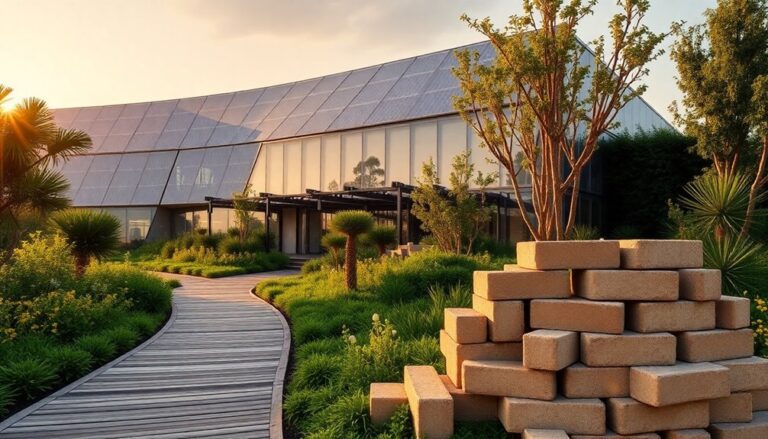
Parametric design has transformed the world of architecture and design by unleashing a myriad of mesmerizing patterns, where complex geometry and algorithmic precision merge to create intricate structures that defy conventional norms. With the power of computational tools, designers can unlock infinite design possibilities, explore pattern harmony, and create data aesthetics. Geometric precision is achieved through algorithmic art, fractals, and mathematical rigor, allowing for creative and functional designs. As designers continue to push boundaries, they'll discover even more innovative solutions that transform urban landscapes into sustainable cities, where art and science blend in perfect harmony, inviting them to explore further.
Origins of Parametric Design
The roots of parametric design can be traced back to the 1960s, when architects and designers began experimenting with computational methods to generate and manipulate shapes. This marked the beginning of a revolution in design, where creativity and technology converged to create innovative patterns and forms. During this period, design pioneers like Ivan Sutherland and Nicholas Negroponte pioneered the use of computers in design, laying the historical roots of parametric design.
Sutherland's Sketchpad, a pioneering computer-aided design (CAD) system, allowed designers to create and manipulate shapes using algorithms and mathematical equations. This breakthrough enabled the creation of complex geometric patterns and shapes that were previously impossible to achieve by hand. Negroponte, on the other hand, founded the Architecture Machine Group at MIT, which focused on exploring the intersection of architecture, computers, and artificial intelligence.
These design pioneers pushed the boundaries of what was possible in design, creating a new generation of architects and designers who were equipped with the tools and knowledge to create innovative and complex patterns. Their work laid the foundation for the development of parametric design, which has since become a cornerstone of modern architecture and design. Today, parametric design continues to evolve, driven by advances in technology and the creative vision of designers who are pushing the boundaries of what is possible.
Algorithmic Pattern Generation
One of the most significant advantages of parametric design is its ability to generate complex patterns and shapes through algorithmic means, allowing designers to create intricate and unique designs that would be impossible to achieve by hand. This algorithmic pattern generation enables designers to push the boundaries of creativity and innovation, ushering in a new era of design possibilities. By leveraging computational power, designers can explore an infinite range of possibilities, iterating and refining their designs with unprecedented speed and accuracy.
Algorithmic pattern generation also allows for the creation of Pattern Harmony, where disparate elements come together in perfect synchrony, resulting in visually stunning designs that captivate and inspire. The use of algorithms enables designers to tap into the underlying structure of data, revealing new levels of Data Aesthetics. This fusion of art and science gives rise to designs that are not only beautiful but also informed by the underlying data, making them more effective and impactful.
The precision and speed of algorithmic pattern generation enable designers to focus on the creative aspects of design, rather than getting bogged down in tedious manual calculations. This freedom to explore and experiment has led to a proliferation of innovative designs that challenge conventional norms and push the boundaries of what is possible. As parametric design continues to evolve, the potential of algorithmic pattern generation is likely to play an increasingly important role in shaping the future of design.
Mathematical Beauty Unveiled
As designers explore the world of parametric design patterns, they're discovering the Mathematical Beauty Revealed. Here, geometric precision takes center stage, allowing for the emergence of algorithmic art that's both aesthetically stunning and mathematically rigorous. By leveraging fractals in design, creatives can tap into the intricate beauty of mathematical concepts, yielding truly innovative and mesmerizing visual patterns.
Geometric Precision Matters
During the design process, architects and engineers rely on geometric precision to bring mathematical beauty to life. This precision is the foundation upon which parametric design stands, allowing for the creation of intricate patterns and complex structures. By leveraging design intuition, architects can tap into their creative potential, while mathematical rigor guarantees that their visions are translated into tangible, functional designs.
Geometric precision is what sets parametric design apart from other design approaches. It's the difference between an approximation and an exact solution. By using algorithms and mathematical equations, designers can create structures that are not only aesthetically pleasing but also structurally sound. This fusion of art and science is what makes parametric design so powerful. It allows architects to push the boundaries of what's possible, creating buildings and structures that are both functional and visually stunning. With geometric precision, the possibilities are endless, and the results are nothing short of mesmerizing.
Algorithmic Art Emerges
They tap into the infinite possibilities of mathematical beauty, as algorithmic art emerges from the fusion of code and creativity. This convergence sparks an Artistic Rebellion, where traditional boundaries are shattered, and new forms of digital expression are born. The Digital Renaissance is upon us, and it's characterized by intricate patterns, shapes, and structures that were previously unimaginable.
| Algorithmic Art Characteristics | Description |
|---|---|
| Generative | Uses algorithms to create unique, iterative patterns |
| Interactive | Responds to user input, creating dynamic experiences |
| Parametric | Based on mathematical parameters, allowing for infinite variations |
As artists and designers harness the power of algorithms, they’re able to craft immersive experiences that blur the lines between art, science, and technology. The results are mesmerizing patterns that dance across screens, walls, and even physical structures. This fusion of code and creativity has given birth to a new wave of innovators, who are redefining the boundaries of art, design, and architecture. These innovators are not only utilizing visuals but also incorporating sound, light, and tactile sensations to create comprehensive experiences that engage multiple senses. By integrating multisensory design principles in architecture, they invite audiences to interact with their creations in meaningful ways, transforming passive observation into active participation. This holistic approach fosters a deeper emotional connection between the viewer and the environment, ultimately enriching the artistic experience.
Fractals in Design
Fractals, the mesmerizing manifestations of mathematical beauty, reveal their intricate patterns in design, revolutionizing the way artists and designers approach visual composition. By harnessing the power of fractal aesthetics, creatives can craft visually stunning and thought-provoking pieces that captivate audiences. Fractals embody the essence of fractal philosophy, which emphasizes the beauty of self-similarity and infinite complexity.
- Fractals evoke a sense of awe, transporting viewers to a domain of intricate beauty and complexity.
- They inspire a deeper understanding of the interconnectedness of art, science, and mathematics.
- Fractals challenge traditional notions of design, encouraging creatives to push boundaries and explore new frontiers.
- They possess an otherworldly quality, as if tapping into the fundamental fabric of the universe.
Complex Geometry Made Simple
By leveraging parametric design patterns, architects and designers can tame complex geometry, breaking down intricate shapes into manageable, algorithm-driven components. This approach enables them to focus on the creative aspects of design, rather than getting bogged down in the technicalities of shape manipulation.
| Design Aspect | Parametric Design Benefit |
|---|---|
| Design Intuition | Enhances creativity by automating tedious calculations |
| Geometric Clarity | Simplifies complex shapes into understandable components |
| Algorithmic Control | Allows for precision and accuracy in design execution |
| Iterative Refining | Enables rapid prototyping and testing of design options |
With parametric design, designers can tap into the power of algorithms to generate complex geometries, freeing themselves from the limitations of traditional design methods. This fusion of design intuition and geometric clarity enables the creation of innovative, visually stunning structures that would be impossible to achieve by hand.
Fractal Inspirations in Design
Designers are turning to fractal geometry, a mathematical concept that echoes nature's intricate patterns, to inspire innovative and visually striking architectural designs. By embracing fractal aesthetics, architects can create structures that not only reflect the beauty of nature but also evoke a sense of awe and wonder. Fractal patterns, characterized by self-similar shapes and infinite detail, offer a unique design philosophy that challenges traditional notions of form and function.
The application of fractal geometry in design has led to the creation of truly breathtaking structures that push the boundaries of what is possible. Some of the most striking examples include:
- Organic forms: Fractal patterns can be used to create buildings that blend seamlessly into their surroundings, mimicking the natural environment.
- Infinite detail: Fractal geometry allows for the creation of intricate patterns that repeat infinitely, adding depth and visual interest to a design.
- Dynamic complexity: Fractal patterns can be used to create structures that appear to shift and change as the viewer moves around them.
- Ethereal beauty: Fractal designs can evoke a sense of the sublime, transporting viewers to a world of wonder and enchantment.
Dynamic Shapes in Architecture
Seven dynamic buildings around the world are redefining the urban landscape with their ability to change shape in response to environmental stimuli. These architectural marvels are rethinking traditional notions of structural rigidity, instead embracing adaptability and responsiveness. By leveraging advanced materials and cutting-edge engineering, they're able to adjust their form to suit changing conditions, such as light, temperature, and even natural disasters.
At the heart of these dynamic structures lies a revolution in building envelopes. Gone are the days of static, inflexible facades; instead, architects are designing adaptive skins that can modify their transparency, reflectivity, and even color to optimize energy efficiency and occupant comfort. These intelligent building envelopes are made possible by innovative materials like shape-memory alloys, electrochromic glass, and advanced polymers.
The implications of dynamic shapes in architecture are far-reaching. For one, they enable buildings to respond to environmental changes in real-time, reducing energy consumption and carbon emissions. They also open up new possibilities for spatial flexibility, allowing interior spaces to adapt to shifting needs and occupant behaviors. As architects continue to push the boundaries of structural innovations, we can expect to see even more breathtaking examples of dynamic architecture that redefine the urban landscape.
The Role of Computational Tools
As architects increasingly rely on dynamic shapes to redefine urban landscapes, computational tools have become the linchpin in bringing these innovative designs to life. These tools have revolutionized the design process, enabling architects to push the boundaries of what's possible and create complex structures that were previously unimaginable.
Computational tools have streamlined the design process, automating tedious tasks and freeing up architects to focus on the creative aspects of their work. Design automation has become an essential component of parametric design, allowing architects to generate multiple design options and explore different scenarios quickly and efficiently.
The use of computational tools has also enabled architects to tap into the power of data visualization. By leveraging large datasets, architects can create intricate patterns and shapes that are not only aesthetically pleasing but also functional and efficient.
Some of the key benefits of computational tools in parametric design include:
- Unparalleled precision: Computational tools enable architects to achieve a level of precision that would be impossible to achieve by hand.
- Increased efficiency: Automation of repetitive tasks frees up architects to focus on high-level creative decisions.
- Endless possibilities: Computational tools allow architects to explore an infinite range of design options, leading to truly innovative solutions.
- Data-driven design: Data visualization enables architects to create designs that are informed by data, leading to more functional and efficient buildings.
Exploring Parametric Possibilities
As they explore parametric possibilities, designers can harness algorithmic design freedom to generate innovative solutions that were previously inconceivable. This freedom, in turn, allows them to unlock geometric complexity, creating intricate and dynamic forms that push the boundaries of traditional design. By leveraging these capabilities, designers can produce infinite variations, each one a unique response to the parameters that govern the design process.
Algorithmic Design Freedom
Most parametric design systems offer a high degree of algorithmic design freedom, allowing architects and designers to explore a vast range of possibilities. This freedom empowers their creative potential, enabling them to push the boundaries of design innovation. With parametric design, the constraints of traditional design methods are eliminated, and designers can focus on creative expression.
Algorithmic design freedom empowers designers to:
- Break free from conventional design norms and explore uncharted territories
- Create complex geometries and shapes that were previously impossible to achieve
- Experiment with various materials and textures, giving their designs a unique character
- Collaborate with others in a more efficient and effective manner, promoting design democracy
Geometric Complexity Unleashed
By harnessing the power of algorithmic design freedom, architects and designers can now access geometric complexity, exploring parametric possibilities that were previously unimaginable. This newfound access has given rise to a digital renaissance, where the boundaries of structural integrity are pushed to the limits. The result is a domain of structural chaos, where intricate patterns and shapes emerge from the digital world. Digital anarchy reigns supreme, as designers revel in the unbridled creative potential of parametric design.
With geometric complexity accessed, architects can now craft buildings that defy gravity, with twisting curves and impossible angles. The once-static discipline of architecture is now a dynamic, ever-changing landscape of possibilities. The rules of traditional design are broken, and a new language of form and function is written. As designers continue to push the envelope, the possibilities seem endless, and the boundaries between art and architecture blur. The age of geometric complexity has dawned, and it's an era of unbridled creativity and innovation.
Infinite Variations Possible
Parametric design's algorithmic backbone empowers designers to generate an infinite array of variations, each one a unique solution born from the intersection of creativity and computational power. This limitless potential unleashes Design Freedom, allowing creatives to explore uncharted territories and push the boundaries of what's possible.
By leveraging parametric tools, designers can:
- Liberate from constraints, breaking free from traditional design limitations and embracing the infinite possibilities of computational design.
- Experiment fearlessly, iterating and refining their designs with unprecedented speed and precision.
- Tap into boundless creativity, revealing novel solutions that blur the lines between art, architecture, and engineering.
- Craft bespoke solutions, tailoring their designs to meet the specific needs of each project, client, and context.
With parametric design, the possibilities are endless, and the creative horizon stretches out before us like an unfurled canvas, waiting to be explored, experimented with, and brought to life.
Nature-Inspired Design Patterns
Through biomimicry, architects and designers are tapping into nature's vast repository of efficient structures, adapting them to develop innovative, sustainable solutions that redefine the built environment. By emulating nature's Organic Forms, they're creating buildings that not only reduce environmental impact but also elevate human experience. The swooping curves of a seashell inspire aerodynamic skyscrapers, while the branching patterns of trees inform the design of efficient ventilation systems.
Biophilic Aesthetics plays a significant role in nature-inspired design patterns, as it bridges the gap between the built environment and the natural world. By incorporating elements of nature, such as green walls, living roofs, and natural materials, designers create spaces that promote well-being and productivity. This symbiosis of nature and architecture also fosters a deeper connection between occupants and the environment, encouraging a sense of responsibility and stewardship.
Nature's efficiency and adaptability serve as a blueprint for parametric design, allowing architects to optimize building performance and minimize waste. By emulating the intricate patterns found in nature, designers can create complex structures that are both aesthetically pleasing and environmentally sustainable. As the built environment continues to evolve, nature-inspired design patterns will play an increasingly important role in shaping the future of architecture and design.
Innovative Materials and Textures
Architects are pushing the boundaries of material innovation, experimenting with novel textures and surfaces that not only redefine aesthetic appeal but also enhance building performance and sustainability. This pursuit of innovation has led to the development of cutting-edge materials that not only look stunning but also provide functional benefits.
Some of the most exciting advancements in materials science include:
- Smart Fabrics: These high-tech textiles can adjust to changing environmental conditions, providing ideal thermal comfort and energy efficiency.
- Nano Coatings: These ultra-thin layers can be applied to various surfaces, offering enhanced durability, self-cleaning properties, and even air-purifying capabilities.
- Metamaterials: Artificial materials engineered to have unique properties not found in nature, such as negative refractive index or perfect absorption of electromagnetic radiation.
- Bioluminescent Materials: Living organisms or biological substances that emit light, offering a sustainable and mesmerizing alternative to traditional lighting solutions.
These innovative materials and textures are revolutionizing the built environment, enabling architects to create structures that are not only visually striking but also high-performance, sustainable, and responsive to their occupants' needs. As the boundaries of material science continue to expand, we can expect to see even more breathtaking applications of parametric design in the future.
The Future of Parametric Design
As parametric design continues to advance, it's evident that the future holds immense promise. The evolution of design tools will reveal new possibilities, and the complexity of algorithms will be harnessed to tackle previously unimaginable projects. Looking ahead, it's exciting to contemplate how these developments will shape the architecture of tomorrow.
Evolution of Design Tools
Design tools are rapidly advancing, fueled by the growing demand for complex, customized, and sustainable designs that can only be achieved through parametric design. This evolution is sparking a Design Revolution, where architects, engineers, and designers are pushing the boundaries of what's possible. As they aim for Tool Mastery, they're driving innovation in software development.
The results are breathtaking:
- Unprecedented precision: Parametric design tools are enabling creators to craft intricate patterns and shapes with remarkable accuracy.
- Pursuing creativity without limits: With the ability to iterate and experiment rapidly, designers are discovering new levels of innovation and artistry.
- Unmatched efficiency: Automation and simulation capabilities are streamlining the design-to-production process, saving time and resources.
- Unlimited scalability: Parametric design is empowering designers to tackle complex, large-scale projects that were previously unimaginable.
As design tools continue to evolve, the possibilities will only continue to expand. The future of parametric design is bright, and those who master these tools will be the ones shaping it.
Algorithmic Complexity Unleashed
Their expertise in parametric design tools has revealed unprecedented levels of algorithmic complexity, allowing the development of intricate structures and systems that were previously unimaginable. This mastery has ignited a new era of design possibilities, where the boundaries of complexity are constantly being pushed. As a result, designers can now tackle Data Chaos head-on, harnessing the power of algorithms to navigate and make sense of overwhelming amounts of information. However, this increased complexity also brings the risk of System Overload, where the sheer volume of data and processing power required threatens to overwhelm even the most advanced systems. To mitigate this, designers must develop innovative strategies to manage and optimize their algorithms, ensuring that they remain in control of the design process. By doing so, they can tap into the full potential of parametric design, creating structures and systems that are not only aesthetically stunning but also incredibly complex and sophisticated.
Architecture of Tomorrow
By 2050, parametric design will have revolutionized the built environment, with towering skyscrapers, self-healing infrastructure, and sustainable cities that defy conventional architectural norms. The future of parametric design is not just about aesthetics; it's about creating a better world for generations to come. As the world's population urbanizes, parametric design will play a vital role in shaping the cities of tomorrow.
Here are just a few ways parametric design will transform urban landscapes:
- Cities that breathe: Buildings that absorb carbon dioxide and produce oxygen, creating a healthier environment for citizens.
- Smart infrastructure: Roads that repair themselves, reducing congestion and increasing safety.
- Efficient skyscrapers: Towering structures that harness wind and solar energy, reducing reliance on fossil fuels.
- Revitalized neighborhoods: Abandoned lots transformed into vibrant public spaces, sparking an Urban Renaissance.
As parametric design continues to evolve, it will open up new possibilities for sustainable cities, where technology and nature coexist in harmony. The future is bright, and parametric design is leading the way.
Frequently Asked Questions
Can Parametric Design Be Used for Interior Design and Decoration?
She can revolutionize interior design and decoration with parametric design. By harnessing its capabilities, she can optimize space planning, creating tailored layouts that maximize functionality and aesthetics. Additionally, parametric design enables furniture customization, allowing her to craft unique pieces that perfectly complement the space. With this technology, she can unleash unparalleled creativity and precision, transforming any room into a masterpiece of elegance and sophistication.
Are Fractals Only Used in Visual Patterns or Also in Structural Design?
As the labyrinthine threads of a spider's web symbolize the intricate harmony of nature, fractals transcend mere visual patterns, weaving their way into the very fabric of structural design. In fractal architecture, the beauty of self-similarity converges with functionality, yielding structures of unparalleled complexity. It's not just about aesthetics; fractals optimize load distribution, stability, and sustainability, redefining the boundaries of structural complexity.
Can Architects Use Parametric Design Without Advanced Math Knowledge?
Can architects successfully harness parametric design without being math whizzes? Fortunately, they don't need to be. While advanced math knowledge is beneficial, design literacy is the key to accessing parametric design's potential. The skill gap between math expertise and design acumen can be bridged with the right tools and training. Architects can focus on developing their design skills, leveraging software that simplifies complex calculations, and collaborating with specialists to fill knowledge gaps.
Are Parametric Designs Limited to Digital Fabrication Methods Only?
When it rains, it pours – architects often assume parametric designs are tied to digital fabrication methods. However, that's not entirely the case. While digital fabrication is a natural fit, parametric designs can be adapted to traditional manufacturing processes. Material constraints and industrial applications can influence the design, but they don't dictate the fabrication method. Architects can harness the power of parametric design to create innovative structures, even without relying on digital fabrication.
Can Parametric Design Be Used to Create Sustainable and Eco-Friendly Buildings?
She explores whether parametric design can spearhead sustainable architecture. The answer is a resounding yes. By harnessing the power of algorithms, architects can create energy-efficient buildings that minimize environmental impact. Material optimization is key, as it reduces waste and promotes eco-friendly construction. Parametric design's precision enables the perfect blend of form and function, resulting in structures that not only impress but also contribute to a greener future.