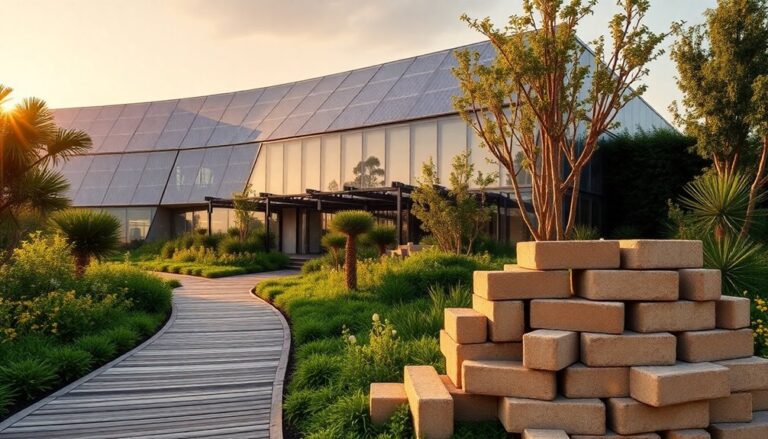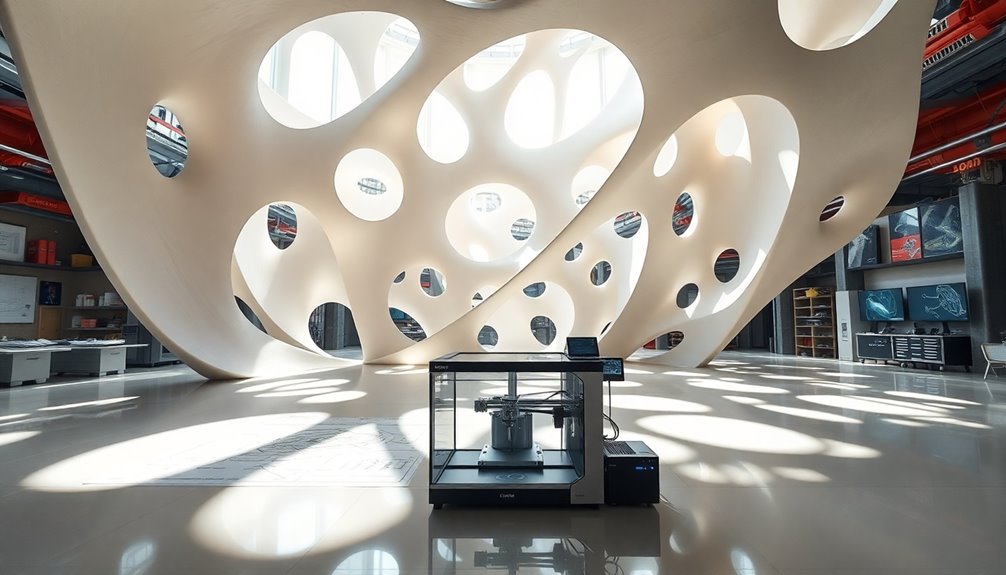

The wizardry of 3D printing in architecture transforms how structures are designed and constructed. It allows architects to craft complex, unique forms that previous methods couldn't achieve, enhancing customization. This technology promotes sustainability by reducing material waste and supports efficient workflows through rapid prototyping. With diverse materials available, 3D printing encourages innovations in durability and environmental responsiveness. As challenges like regulatory hurdles exist, the potential for cost-effective, user-centered designs is immense. As the architectural terrain evolves, it's clear that there's much more to discover about the ongoing impact of this groundbreaking technology.
Overview of 3D Printing Technology
In recent years, 3D printing technology has transformed various industries, including architecture. This innovative process allows architects to create complex structures with unprecedented precision and efficiency. The rise of 3D printing applications in architecture has driven technology advancements that improve design integration, enabling professionals to visualize and execute intricate concepts that were once deemed impossible.
Material innovations have played a vital role in this transformation. Architects now utilize a diverse range of materials, from polymers to concrete, each offering unique properties that contribute to architectural efficiency. These innovations not only streamline the construction process but likewise reduce waste, addressing the industry's growing concern about environmental impact. By minimizing resource consumption, 3D printing aligns with sustainable practices, setting new industry standards that prioritize ecological responsibility.
As the technology continues to evolve, the future possibilities appear limitless. Architects can leverage 3D printing to fabricate customized elements on-site, greatly reducing construction time and labor costs. This capability empowers architects to push the boundaries of design while maintaining control over quality and precision.
Ultimately, the integration of 3D printing in architecture represents a paradigm shift, where creativity meets state-of-the-art technology. As industry leaders embrace these advancements, they position themselves at the forefront of architectural innovation, ready to redefine the skyline of the future. The ongoing evolution of 3D printing technology promises to reshape not only how structures are built but also the very essence of architectural design itself.
Historical Context of 3D Printing
The historical context of 3D printing reveals an expedition marked by pioneering technologies and innovative applications in architecture. Early adopters explored how this technique could transform design and construction, laying the groundwork for future developments. Over time, the evolution of materials used has expanded the possibilities of what architects can create, pushing the boundaries of traditional building methods.
Pioneering Technologies Emergence
Emerging from a confluence of technological advancements, 3D printing has notably transformed architectural practices since its inception in the late 20th century. This revolutionary method has utilized the strength of emerging technologies and digital fabrication to redefine what's possible in design and construction.
Architects and builders now wield unprecedented tools, enabling them to:
- Create complex geometries that traditional methods struggle to achieve.
- Reduce material waste considerably, promoting sustainable practices.
- Accelerate project timelines, enhancing efficiency and productivity.
These advancements have not just streamlined workflows but additionally empowered architects to explore innovative design solutions. The synergy between 3D printing and digital fabrication cultivates an environment where creativity knows no bounds. As these pioneering technologies emerge, they challenge conventional paradigms, pushing architectural boundaries further than ever before.
With each layer printed, professionals in the field realize the potential of these advanced tools. The impact of 3D printing on architecture is profound, signaling a paradigm shift that promises to reshape the industry for years to come. As they adapt to this evolving environment, architects must embrace the possibilities that lie ahead, seizing the opportunity to redefine the future of construction.
Early Architectural Applications
Throughout the early 21st century, architects began to experiment with 3D printing, integrating the technology into their workflows to improve design and construction processes. This innovative approach allowed them to create early prototypes that transcended traditional constraints. Designers saw the potential to produce complex geometries and customized components, enabling architectural experiments that pushed the boundaries of creativity and functionality.
Pioneering firms embraced this technology, recognizing its ability to streamline workflows and reduce costs. They utilized 3D printing to fabricate intricate models, refining their designs through rapid iteration. These early prototypes showcased the influence of digital fabrication, demonstrating how architects could visualize their concepts more effectively than ever before.
As architects probed deeper into the domain of 3D printing, they began to explore the implications for sustainable construction practices. The ability to minimize waste and optimize material usage proved to be a breakthrough. In the end, this period marked a significant turning point in architecture, as the industry started to embrace a future where digital fabrication and innovative design intertwined seamlessly, laying the groundwork for the transformative evolution that was to follow.
Evolution of Materials Used
As architects explored 3D printing, they quickly recognized the importance of material selection in shaping their projects. The evolution of materials has transformed architectural design, pushing boundaries and promoting innovation. Now, architects utilize a range of advanced materials that enable them to create structures that are not just aesthetically pleasing but also highly functional.
- Biodegradable materials offer sustainable alternatives, reducing environmental impact.
- Composite innovations improve strength and durability, perfect for demanding structures.
- Smart materials respond dynamically to environmental changes, optimizing performance.
The introduction of high strength polymers and recycled aggregates has enabled the creation of lightweight structures with superior thermal insulation properties. Additionally, bio-inspired designs are leading to more efficient and resilient buildings. Nanomaterials applications are pushing the limits of what's possible, whereas self-healing concrete presents a bold solution to longevity and maintenance challenges.
This evolution in materials reflects a broader trend in sustainability and efficiency, allowing architects to wield unparalleled influence over their creations. By embracing these advancements, they are not merely constructing buildings; they're crafting the future of architecture itself.
Benefits for Architectural Design
3D printing transforms architectural design by offering improved design flexibility that allows architects to experiment with complex forms and structures. Its rapid prototyping capabilities enable quick iterations, facilitating the shift from concept to tangible model in record time. Furthermore, 3D printing presents cost-effective construction solutions, greatly reducing material waste and labor costs.
Enhanced Design Flexibility
The integration of 3D printing technology into architectural design brings unparalleled design flexibility, allowing architects to explore innovative shapes and complex structures that traditional methods can't easily achieve. This capability is reshaping the way architects approach projects, facilitating a shift toward more dynamic and adaptable designs.
With 3D printing, architects can focus on:
- Adaptive reuse of materials, maximizing sustainability.
- Modular designs that allow for quick adjustments and expansions.
- Organic forms that mimic nature, creating harmonious environments.
The use of parametric modeling enables a level of precision and customization that promotes collaborative design. Architects can integrate user-centered design principles, ensuring that spaces are not just functional but also customized to the needs of their inhabitants. This technology supports the creation of multifunctional spaces that can easily adapt to various uses over time.
Rapid Prototyping Capabilities
Leveraging rapid prototyping capabilities transforms the architectural design process, enabling architects to swiftly create and evaluate physical models of their concepts. By utilizing additive manufacturing, architects can engage in design iteration with unprecedented speed advantages. This capability allows teams to conduct prototype testing and gather iterative feedback, guaranteeing that concepts are effectively visualized and optimized.
The integration of rapid feedback into the design workflow markedly improves production efficiency. Architects can refine their designs quickly, aligning them with project timelines that demand agility and precision. With each iteration, the potential for design optimization increases, eventually leading to superior outcomes.
| Benefit | Description | Impact on Design |
|---|---|---|
| Speed Advantages | Rapid creation of physical models | Accelerates decision-making |
| Prototype Testing | Immediate testing of ideas | Validates concepts effectively |
| Iterative Feedback | Continuous improvement through collaboration | Guarantees designs meet project goals |
| Concept Visualization | Tangible models for better comprehension | Improves communication with stakeholders |
| Design Optimization | Refined designs based on real-world feedback | Maximizes performance and aesthetics |
Cost-Effective Construction Solutions
Although traditional construction methods often strain budgets and timelines, 3D printing offers architects a more cost-effective solution that redefines project feasibility. This innovative technology not merely minimizes waste but additionally accelerates the building process, making it an invaluable tool for creating affordable housing. Architects utilize 3D printing to achieve:
- Streamlined production: Designs come to life faster, reducing labor costs and project delays.
- Material efficiency: Resource management becomes remarkably efficient, with precise usage of materials that cuts down on excess waste.
- Customization at scale: Customized designs can be produced without significant cost increases, allowing for unique architectural expressions.
These advantages enable architects to push boundaries while keeping projects within budget. As the demand for affordable housing rises, 3D printing stands as a beacon of hope, providing solutions that blend innovation with practicality. By adopting this technology, architects not only improve their design capabilities but additionally contribute to a more sustainable future. In the end, 3D printing isn't just a tool; it's a catalyst for change in the architectural environment, offering impactful solutions that meet today's challenges head-on.
Sustainable Construction Practices
Sustainable construction practices are at the forefront of modern architecture, integrating innovative technologies like 3D printing to minimize waste and reduce environmental impact. By employing green materials and focusing on energy efficiency, architects leverage 3D printing to create structures that align with the principles of regenerative design. This approach not merely supports waste reduction but likewise improves resource optimization throughout the construction lifecycle.
The integration of modular construction techniques allows for streamlined assembly, further decreasing the carbon footprint of building projects. Lifecycle assessment plays a critical role in evaluating the environmental impact of materials and processes, ensuring that every choice contributes positively to ecosystem integration. Community engagement further becomes essential, as architects and builders involve local populations in decision-making, nurturing a sense of ownership and responsibility.
| Key Focus Area | Benefits | Impact on Sustainability |
|---|---|---|
| Green Materials | Reduced toxic exposure | Improves air quality |
| Energy Efficiency | Lower operational costs | Reduces overall emissions |
| Waste Reduction | Minimizes landfill impact | Supports circular economy |
| Ecosystem Integration | Promotes biodiversity | Restores natural habitats |
Incorporating these elements into 3D printing technologies transforms the construction industry. By prioritizing sustainable practices, architects not only design efficient buildings but additionally contribute to a healthier planet, paving the way for future generations. The wizardry of 3D printing is not just about creating structures; it's about redefining how humanity interacts with its environment.
Customization in Building Projects
As architects embrace 3D printing technology, they reveal unprecedented opportunities for customization in building projects. This innovative approach allows for the creation of personalized designs that cater to individual client needs, paving the way for unique structures that stand out in any environment. With 3D printing's capabilities, architects can integrate client involvement at every stage, ensuring that the final product aligns with their vision.
The technology supports several key aspects of customization:
- Adaptive architecture that evolves with client requirements
- Modular components that enable quick adjustments and reconfigurations
- Bespoke elements that improve the building's character and identity
By utilizing the strength of 3D printing, architects can design flexible layouts that accommodate various functions as they maintain a focus on user-centric spaces. This reinforces the importance of functional customization, allowing structures to adapt to the lifestyles and preferences of their inhabitants. Customized aesthetics become a reality, enabling architects to create environments that resonate with their clients on a personal level. Moreover, the ability to swiftly prototype and iterate designs through 3D printing empowers architects to explore innovative concepts that may have previously been too complex or costly to realize. This iterative process mirrors the use of grid systems in web design, where a structured yet flexible framework supports creative expression and user engagement. As a result, architects can seamlessly integrate functionality and visual appeal, crafting spaces that not only meet practical needs but also inspire and uplift the human experience.
Ultimately, the integration of 3D printing into architectural practices enables architects to push boundaries and redefine standards. The ability to produce unique structures with increased client involvement inspires a new era of architecture that values individuality and innovation. As the industry continues to evolve, the potential for customization will only grow, transforming the way people experience their built environments.
Case Studies of Innovative Structures
The rise of 3D printing in architecture has led to remarkable innovations, with several case studies showcasing its transformative impact on building design. One notable example is the "Vulcan" project in Italy, which demonstrates innovative designs through the use of advanced concrete mixes, achieving extraordinary structural efficiency as well as reducing material waste. This project not only pushes the boundaries of aesthetic possibilities but also champions environmental integration, harmonizing with its natural surroundings.
Another compelling case study is the "TECLA" project, a prototype home built entirely from local clay using 3D printing technology. TECLA stands as a beacon of community engagement and urban revitalization, addressing housing shortages while preserving cultural heritage. Its design reflects local traditions, ensuring the community's identity remains intact amidst modernization.
In regions prone to natural disasters, 3D printing has proven its worth in enhancing disaster resilience. The "ICON" project in the United States has developed rapid housing solutions that can be deployed in emergency situations, ensuring timely shelter for displaced individuals. This approach not only provides immediate relief but additionally aligns with sustainable practices by utilizing locally sourced materials.
These case studies exemplify how 3D printing in architecture is reshaping the built environment. By encouraging innovative designs, promoting structural efficiency, and prioritizing community needs, the industry is not just constructing buildings but also creating resilient, aesthetically striking spaces that honor both nature and culture.
Challenges in 3D Printing
As architects explore 3D printing, they encounter several challenges that can hinder progress. Material limitations often restrict the types of structures that can be created, whereas design complexity introduces difficulties in production. Furthermore, regulatory hurdles can complicate the adoption of this innovative technology in building projects.
Material Limitations
Steering through the nuances of material limitations reveals significant challenges in 3D printing for architecture. These challenges stem from the diverse range of material properties that dictate the feasibility of various designs. The strength limitations of current materials can hinder structural integrity, especially under demanding conditions.
Key challenges include:
- Material availability: Not all materials are readily accessible, impacting project timelines and costs.
- Printing techniques: Different techniques yield varying results, affecting durability and performance.
- Environmental impact: The sustainability of materials used can pose ethical dilemmas for architects.
The push for application diversity in architecture necessitates continuous material innovation. Although composite materials offer exciting possibilities, their integration often comes with design constraints that can limit creativity. Architects must navigate these intricacies, balancing desired aesthetics with practical considerations. The future of 3D printing in architecture hinges on overcoming these material limitations, ensuring that structures not only meet functional demands but also resonate with visionary designs. As the industry evolves, addressing these challenges will empower architects to reimagine the built environment, pushing the boundaries of what's possible.
Design Complexity
Steering through design complexity in 3D printing presents unique challenges that can greatly impact architectural outcomes. Architects must utilize the strength of parametric design to navigate intricate geometries and organic forms, pushing the boundaries of what's achievable. The integration of adaptive structures allows for a dynamic response to environmental conditions, enhancing both functionality and aesthetic appeal.
Digital fabrication techniques enable designers to explore structural innovation, yet they must remain vigilant about the interplay between design optimization and real-world constraints. Computational creativity becomes crucial, facilitating the realization of ambitious visions as it addresses the limitations inherent in 3D printing processes. Architects often grapple with the delicate balance between architectural aesthetics and the practicalities of material performance and structural integrity.
Moreover, the manipulation of spatial dynamics through 3D printing enables the creation of unique spaces that engage users on multiple levels. Nevertheless, the complexity involved in translating these sophisticated designs into tangible structures can pose significant hurdles. To succeed, architects must embrace these challenges, leveraging state-of-the-art technology and innovative thinking to redefine the architectural environment and reveal the full potential of 3D printing.
Regulatory Hurdles
How can architects navigate the maze of regulatory hurdles associated with 3D printing in architecture? The challenges are significant, but mastering them is critical for leveraging the full potential of this innovative technology. Architects must guarantee strict regulatory compliance as they address various concerns, including:
- Zoning restrictions that dictate where and how structures can be built.
- Safety standards and building codes that safeguard public welfare.
- Permit processes that can delay projects if not carefully followed.
Each jurisdiction has specific environmental regulations and public policy that influence design and construction. The intricacies of these frameworks can create liability issues if not properly managed. Architects need to cultivate relationships with local authorities to understand the nuances of these regulations. Engaging in proactive dialogue can streamline the permit process and enable compliance with evolving standards.
Future Trends in Architecture
Architects are embracing innovative technologies and sustainable practices to shape the future of design. This evolution is driven by the integration of digital fabrication and smart materials, redefining the boundaries of architectural possibilities. By leveraging advanced software and fabrication techniques, architects can create intricate designs with unprecedented efficiency and precision. The shift toward digital fabrication allows for swift prototyping and customization, empowering architects to respond quickly to client needs and market demands.
Smart materials, capable of adapting to their environment, further improve architectural potential. These materials can change properties in response to temperature, light, or moisture, allowing for dynamic designs that enhance energy efficiency and elevate user experience. Envision buildings that self-regulate temperature or adjust their structure for ideal sunlight—these innovations are no longer mere concepts but emerging realities.
As sustainability takes center stage, architects are exploring the use of biomimicry and eco-friendly materials. This approach aligns with the growing demand for environmentally responsible practices. By mimicking nature's designs, architects can create structures that harmonize with their surroundings while minimizing ecological footprints.
In this fast-evolving environment, architects are not just designers; they're visionaries who wield the influence of technology to reshape the urban setting. As they embrace digital fabrication and smart materials, they're poised to lead the charge toward a future where architecture is functional and transformative, setting new standards in design and sustainability.
Impact on Construction Industry
The integration of 3D printing technology is revolutionizing the construction industry, transforming traditional building methods and enhancing efficiency. This innovation introduces a substantial paradigm shift, where construction projects can be executed faster, with reduced waste and increased precision. As firms adopt automation integration, the environment of building design and construction is forever altered.
The impact of 3D printing is felt across various dimensions of the construction industry:
- Speed of Construction: Projects that once took months can now be completed in weeks, greatly accelerating timelines.
- Cost Efficiency: By minimizing material waste and labor costs, 3D printing allows firms to allocate resources more effectively.
- Design Freedom: Architects can explore complex geometries and customized solutions that traditional methods simply can't achieve.
However, the rise of this technology in addition brings with it a profound workforce impact. As automation integration takes hold, the demand for skilled labor in certain areas may diminish, prompting a reevaluation of workforce training and development. Professionals will need to adapt, focusing on the interplay between human expertise and machine capabilities. This evolution challenges construction workers to embrace new skill sets and rethink their roles within a tech-driven environment.
Ultimately, the impact of 3D printing on the construction industry is undeniable. It heralds a new era where efficiency, sustainability, and innovation reign supreme, positioning organizations to thrive in a fiercely competitive environment. The future of construction is being built, layer by layer, with remarkable precision and strength.
Collaboration With Software Tools
As 3D printing continues to reshape architecture, collaboration with advanced software tools becomes fundamental for maximizing its potential. Integrating sophisticated software into the design and printing process improves accuracy, efficiency, and creativity. Architects and designers utilize these tools to visualize complex structures, manipulate materials, and streamline workflows. By leveraging software integration, they can create intricate designs that were previously unimaginable, pushing the boundaries of what architecture can achieve.
Collaborative design is another significant aspect of this evolution. Cross-disciplinary teams, composed of architects, engineers, and technologists, collaborate seamlessly through shared software platforms. This synergy encourages innovation, as each discipline contributes unique insights and expertise. Real-time feedback and iterative design processes enable teams to refine their concepts swiftly, ensuring that projects remain agile and responsive to changing requirements.
Moreover, these software tools facilitate data management, allowing for the seamless transfer of information between various stakeholders. This level of transparency is fundamental for minimizing errors and ensuring that everyone involved has access to the latest project developments. As a result, the architecture industry is witnessing a shift towards more integrated and cohesive project delivery methods.
The embrace of advanced software tools signifies a new era in architectural practice. By prioritizing collaboration and software integration, architects can unlock the full potential of 3D printing, transforming visions into tangible realities with unparalleled precision and efficiency. This potent combination not only improves productivity but also empowers architects to redefine the realm of modern architecture.
The Role of Education and Training
Education and training play a significant role in equipping future architects and designers with the skills necessary to utilize the power of 3D printing in architecture. As the industry evolves, educational programs must adapt, ensuring students not just grasp theoretical concepts but likewise develop hands-on experience with state-of-the-art technologies. This empowers them to leverage 3D printing's potential effectively.
To achieve this, institutions must focus on:
- Integrating 3D printing technology into curricula: This promotes familiarity and ease of use among upcoming professionals.
- Offering specialized training workshops: Such workshops provide intensive, practical experience, allowing participants to experiment with various materials and printing techniques.
- Encouraging interdisciplinary collaboration: By nurturing partnerships between architecture, engineering, and design programs, students can develop a comprehensive insight into 3D printing applications.
Through these initiatives, educational programs can cultivate a new generation of architects who embrace innovation with confidence. They'll be equipped to tackle complex design challenges and lead the charge toward sustainable, efficient construction practices.
Moreover, as 3D printing continues to redefine architectural boundaries, ongoing professional development will become vital. Architects and designers will need to engage in lifelong learning to stay ahead of technological advancements. In the end, the synergy between education and training will empower professionals to not only adapt but likewise thrive in this dynamic environment, shaping the future of architecture with unmatched creativity and precision.
Frequently Asked Questions
How Does 3D Printing Affect Traditional Construction Jobs?
3D printing greatly impacts traditional construction jobs, leading to job displacement in some sectors. As machines automate tasks, workers face the necessity of skill evolution to remain relevant. Those who adapt and learn to operate and maintain advanced technology will thrive, whereas others may struggle to find their footing. Emphasizing training and upskilling can empower the workforce, enabling them to utilize new opportunities in this swiftly changing environment. The future demands adaptability and innovation.
What Materials Are Commonly Used in 3D Printing for Buildings?
What materials can transform building design? In 3D printing, architects often rely on biodegradable materials, ensuring sustainability during structural demands. Composite materials, known for their strength and versatility, additionally play an essential role in creating robust designs. These innovative choices not merely improve the aesthetic appeal of buildings but likewise align with modern environmental goals, offering a significant way to redefine construction practices and embrace a more responsible future.
Can 3d-Printed Structures Withstand Extreme Weather Conditions?
Can 3D-printed structures withstand extreme weather conditions? Absolutely. Many experts believe these structures, crafted with advanced materials, showcase impressive weather resistance and material durability. Engineers are constantly innovating, ensuring that designs can endure harsh climates. They've tested various composites that offer improved strength and flexibility, allowing buildings to withstand hurricanes, heavy rains, and extreme temperatures. As technology evolves, 3D-printed architecture is set to redefine resilience in construction, empowering communities to thrive in any environment.
What Are the Costs Associated With 3D Printing in Architecture?
In terms of the costs associated with 3D printing in architecture, one mustn't throw good money after bad. A thorough cost breakdown reveals several factors: materials, equipment, labor, and maintenance. An investment analysis shows that although initial expenses may be high, long-term savings on labor and time can yield significant returns. Forward-thinking architects recognize this as a strategic investment, positioning themselves at the forefront of innovation as they maximize their financial potential.
Are There Any Regulatory Issues With 3d-Printed Buildings?
When considering 3D-printed buildings, regulatory issues often arise. Authorities frequently grapple with enforcing safety standards, as novel materials and construction methods challenge existing codes. Furthermore, zoning laws can complicate the approval process, as they may not account for innovative designs. Developers must navigate these hurdles, ensuring their projects align with local regulations. Ignoring these factors could lead to costly delays or even project cancellations, undermining the potential benefits of 3D printing technology.