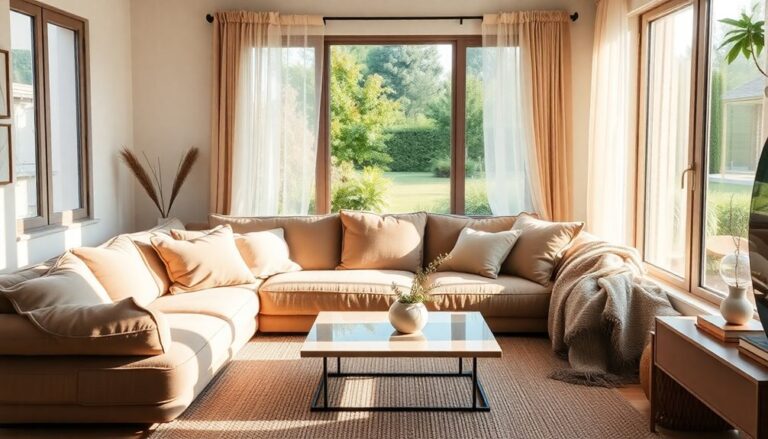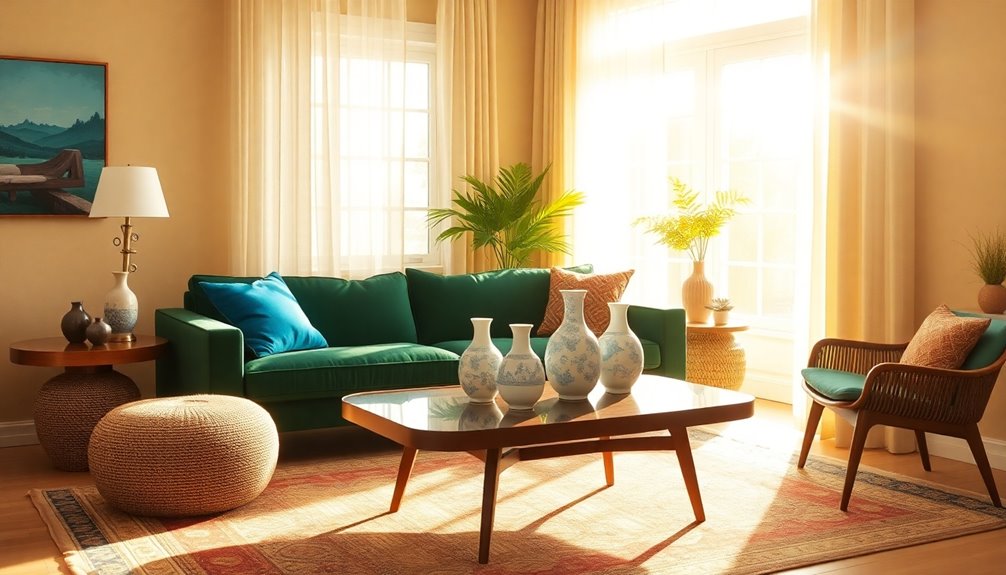

Accents play an essential role in your interior aesthetics by adding vibrancy and creating focal points. You can use color psychology to influence moods, like using blue for calm or yellow for cheer. Incorporating various textures, such as soft rugs or glossy finishes, improves the atmosphere and invites comfort. Lighting as well dramatically affects how accents appear and can transform your space by layering different sources. Personal items, like travel souvenirs, bring a unique touch that reflects your style. If you want to explore these aspects further, you'll discover how to raise your space even more effectively.
Understanding Interior Accents
In the domain of creating a stunning space, grasping interior accents is vital for pulling together your design vision. Accents act as the finishing touches that breathe life into your environment, elevating it from ordinary to extraordinary. Comprehending how to achieve effective accent placement is indispensable. Think about where your eye naturally goes when you enter a room. You want to guide that gaze with intentional accents—whether it's a striking piece of artwork, a lively throw pillow, or a unique lamp. Position these elements strategically to create focal points that draw attention and spark conversation.
But it's not just about placement; it's about achieving accent harmony. You want all your accents to work together, creating a cohesive look. To do this, consider the materials, textures, and colors of your accents. When they complement each other, they can transform a space into a harmonious oasis. For example, if you have a rustic wooden table, pair it with modern metallic accents to create a juxtaposition that intrigues the eye without feeling disjointed.
Experimentation is key! Don't hesitate to rearrange and redefine your accents until you find the perfect balance. Trust your instincts; if something feels off, it probably is. Aim for a blend of innovation and comfort, ensuring that your accents reflect your unique style. So engage with the field of interior accents, and watch your space come alive with personality and flair.
Color Theory in Accents
Grasping color theory can really enhance your use of accents in interior design. By comprehending color psychology, you can create an environment that resonates with your desired mood and ambiance. Accents are more than just decorative touches; they're influential tools that can affect how a space feels. Achieving accent harmony through color coordination is key to an innovative and cohesive design.
Here's a quick reference table to ponder:
| Color | Psychological Effect |
|---|---|
| Red | Energizing, passionate |
| Blue | Calming, serene |
| Yellow | Cheerful, invigorating |
| Green | revitalizing, balanced |
When you choose accent colors, think about the emotions you want to evoke. For instance, incorporating lively reds can stimulate energy and excitement, making it a perfect choice for an entertainment area. Conversely, soft blues can create a peaceful retreat in a bedroom.
Balancing these colors with neutrals creates accent harmony, allowing the lively shades to pop without overwhelming the space. You can use art, pillows, or decorative objects in these accent colors to tie everything together.
Textures and Materials
Accents don't merely come alive through color; textures and materials play a pivotal role in defining the atmosphere of your space. When you're aiming for innovative design, consider how various surfaces interact with light and touch. Natural materials like wood, stone, and textiles can create a harmonious balance that invites tactile experiences, enriching the ambiance of any room.
Imagine walking into a living area where reclaimed wood beams add warmth and character. The rough texture contrasts beautifully with smooth, sleek furniture, creating visual intrigue. Incorporating elements like woven fabrics or plush rugs can soften the space, inviting guests to sink in and feel at home. This juxtaposition of textures not only captivates the eye but likewise invites people to engage physically with the environment.
Think about how you can layer these materials. A combination of matte and glossy finishes, soft and hard surfaces, or even varying grain patterns can enhance your design game. For instance, pairing a polished marble table with a chunky knitted throw can evoke both elegance and comfort, making your space feel curated yet inviting.
Don't shy away from experimentation. Mixing metals, ceramics, and glass can as well add depth to your design. Each material tells a story and contributes to the overall mood. By thoughtfully integrating natural materials and unique textures, you can create a space that resonates with authenticity and innovation, ensuring that every corner offers a new tactile experience waiting to be discovered.
The Power of Lighting
Transform your space with the right lighting, as it can dramatically alter the mood and functionality of any room. You might not realize it, but lighting techniques play a pivotal role in interior aesthetics. By mastering ambient effects, you can create an inviting atmosphere that reflects your style and improves your living experience. Here are four innovative approaches to contemplate:
- Layered Lighting: Combine ambient, task, and accent lighting to achieve a balanced atmosphere. This method allows flexibility in adjusting the ambiance based on the occasion.
- Smart Lighting Solutions: Incorporate technology with smart bulbs or fixtures that can be controlled via smartphone. This gives you the ability to change colors, brightness, and even schedules to match your mood.
- Dimmers and Controls: Installing dimmer switches enables you to modify the intensity of your lights, improving the ambient effects. Lowering the brightness can transform a lively space into a cozy retreat in an instant.
- Natural Light Maximization: Don't forget about the influence of natural light! Strategically placing mirrors and using sheer curtains can amplify sunlight, creating a warm and airy feel.
Statement Furniture Pieces
A well-designed space goes beyond just lighting; it's additionally about the furniture that fills it. Statement furniture pieces can transform an ordinary room into a stunning visual narrative. When you choose statement furniture styles, you're not just adding functionality; you're injecting personality and flair. These pieces often become the focal point, drawing attention and sparking conversation.
Think about iconic design elements like a sculptural coffee table or a bold, oversized armchair. These pieces do more than serve their purpose; they embody a unique aesthetic that resonates with your personal style. By incorporating such standout items, you create a layered environment that feels curated and intentional.
When selecting statement furniture, consider the color, texture, and shape. A striking velvet sofa can introduce richness and warmth, whereas a sleek metal dining table might add a modern edge. Each choice you make should reflect your vision and invite exploration. Don't shy away from mixing styles; combining vintage finds with contemporary designs can yield exciting results.
Artwork as Accents
Incorporating artwork into your interior design can improve a space dramatically. The right artwork can serve as a enchanting accent that brings character and personality to your home. Whether you prefer bold abstract pieces or serene vistas, the styles you choose can transform the ambiance. Here are four innovative ways to use artwork as accents:
- Gallery Walls: Create a dynamic gallery wall by mixing different artwork styles. Use frames of varying sizes and colors to add depth and interest. This approach not only showcases your collection but also creates a focal point that draws the eye.
- Strategic Placements: Don't just hang art on walls; consider other placements. Leaning a large canvas against a wall or positioning smaller pieces on shelves can add a casual elegance that feels inviting.
- Color Coordination: Select artwork that either complements or contrasts with your existing color palette. This creates visual harmony or striking tension, both of which can raise your design aesthetic.
- Thematic Cohesion: Choose artwork that reflects a common theme or message throughout your space. Whether it's travel, nature, or abstract forms, thematic consistency can unify your decor and spark conversation.
Plants and Greenery
In terms of enhancing your space, choosing the right plants can make all the difference. Think about how color and texture combinations can bring life to your interiors, at the same time considering the maintenance and care each plant requires. Let's explore how to create a lively atmosphere with greenery that suits your lifestyle.
Choosing the Right Plants
Choosing the right plants can transform your space into a lively oasis. With the right plant selection, you not only improve your aesthetic but additionally promote well-being through indoor gardening. Here are four innovative ideas to contemplate when choosing your greenery:
- Air Purifying Plants: Look for species like spider plants or snake plants that filter toxins and improve air quality.
- Low Light Plants: If your space lacks natural light, opt for resilient options like pothos or ZZ plants that thrive in shade.
- Pet Friendly Plants: Guarantee safety for your furry friends by selecting non-toxic plants, such as bamboo palm or spider plant.
- Seasonal Plants: Switch out your plant arrangements with seasonal favorites, giving your home a fresh, lively look throughout the year.
Color and Texture Combinations
Plants not just improve the aesthetic appeal of your space but also offer a fantastic opportunity to play with color and texture. By thoughtfully combining various plant types, you can create stunning visual contrasts that elevate your interior design. For instance, pairing a lively green fern with the deep burgundy hues of a calathea can spark interest and excitement.
Consider color psychology when selecting your plants. Each shade evokes different emotions; greens often promote tranquility, whereas bold reds can energize a room. Use this knowledge to curate a palette that aligns with the mood you want to create.
Texture harmony is equally essential. Mixing smooth-leaved plants with those featuring rough, jagged edges can add depth and intrigue to your space. Envision the interplay between the soft, feathery leaves of a rabbit's foot fern and the structured form of a snake plant.
Experiment with pots, too! Clay, ceramic, or metallic finishes can amplify your plants' color and texture, further enriching your interior. So, embrace the versatility of greenery and create a lively, harmonious atmosphere that reflects your unique style!
Maintenance and Care Tips
Caring for your plants can seem intimidating at first, but it's easier than you might think. By implementing a few innovative maintenance and care tips, you can transform your greenery into a stunning focal point in your interior design. Here's how to keep your plants thriving:
- Regular Cleaning Techniques: Dust leaves weekly to make certain they can absorb sunlight effectively. A damp cloth or soft brush works wonders.
- Optimal Watering Schedule: Monitor the soil moisture—overwatering is a common pitfall. Use your finger to check; if it's dry an inch down, it's time to water.
- Proper Light Placement: Assess your plant's light needs and adjust its location accordingly. Some thrive in bright light, whereas others prefer indirect sunlight.
- Protective Measures Against Pests: Regularly inspect your plants for pests. If you spot any, isolate the affected plant and treat it with natural insecticidal soap.
Layering Accessories
Layering accessories in your interior space adds depth and personality, transforming a room from ordinary to extraordinary. By utilizing layering techniques, you can create an engaging visual narrative that not just reflects your style but additionally improves the overall aesthetic. Start by establishing an accessory hierarchy—this involves choosing a few statement pieces that draw the eye, followed by complementary items that support and improve your main selections.
Consider the interplay of textures, colors, and shapes as you layer your accessories. Begin with a bold piece, like a unique vase or a striking piece of art. Place it at eye level to establish it as the focal point. Next, introduce smaller items such as candles, books, or figurines around it. These should vary in height and texture to add interest and avoid monotony. Don't shy away from mixing materials; wooden items paired with glass or metal elements can create a dynamic contrast.
Remember, balance is key. Confirm that your layers aren't overcrowded, allowing each accessory to breathe while still working cohesively. Utilize trays to group smaller items together, creating an organized yet stylish look. Finally, don't hesitate to experiment with seasonal changes, swapping out accessories to refresh your space and keep it feeling innovative.
With these layering techniques and a well-thought-out accessory hierarchy, you'll raise your interior design, making it a true reflection of your personality and creativity.
Cultural Influences on Accents
Accents in interior design often reflect the rich fabric of cultural influences that shape our personal tastes and aesthetics. When you incorporate accents that speak to your cultural heritage, you not only improve your space but additionally tell a story that resonates with who you are. By embracing regional styles, you can create a unique environment that honors the traditions of diverse cultures and maintaining a modern twist.
Consider these four innovative ways to infuse cultural influences into your accents:
- Textiles: Use fabrics that showcase traditional patterns, whether it's Moroccan rugs or Indian block prints. They add depth and warmth to your space.
- Artisan Craftsmanship: Invest in handmade items like pottery or woven baskets that reflect local craftsmanship. These pieces often carry the spirit of their origins.
- Color Palettes: Draw inspiration from the scenery or architecture of a region. For example, earthy tones from desert regions or lively hues from coastal locales can influence your color choices.
- Cultural Symbols: Integrate culturally significant symbols or motifs into your decor, whether through wall art or decorative objects. These elements can serve as conversation starters and deepen your personal connection to the space.
Seasonal Accent Changes
As the seasons change, so can your interior accents, reflecting the latest color trends and textural variations. You might find that warm tones and cozy fabrics feel right in winter, whereas bright colors and light textures suit the summer months. Embracing these seasonal shifts can refresh your space and keep it feeling current.
Seasonal Color Trends
How can you breathe new life into your home's interior with the changing seasons? Embracing seasonal color trends not just revitalizes your space but also taps into the principles of color psychology. By adjusting your accents according to seasonal palettes, you can create an atmosphere that reflects the world outside as well as enhancing your mood indoors. Here are some innovative ways to incorporate seasonal color changes:
- Spring Awakening: Bright pastels like mint green and soft lavender can invigorate your home, symbolizing renewal and growth.
- Summer Vibes: Bold, lively hues such as coral and turquoise evoke warmth and energy, perfect for creating a spirited environment.
- Autumn Warmth: Earthy tones like burnt orange and deep red encourage coziness, inviting comfort as the days grow shorter.
- Winter Serenity: Cool shades like icy blue and crisp white can instill tranquility, mirroring the serene beauty of a snowy setting.
Textural Accent Variations
Transforming your home's interior with seasonal textural variations can add depth and character to your space. By introducing textural contrasts, you can create a dynamic environment that evolves with the seasons. For instance, in the warmer months, think lightweight linens and airy cottons that invite an invigorating vibe. As temperatures drop, consider swapping in cozy wool throws and rich velvet cushions for a warm, inviting atmosphere.
To improve your tactile experiences, layer different materials. Combine sleek leather with soft knits or rustic wood with polished ceramics. These contrasts not only engage your senses but additionally serve as conversation starters. You might even experiment with natural elements like stone or bamboo, bringing a touch of the outdoors inside.
Don't forget about accessories; they're key players in this seasonal dance. A textured rug or a statement wall hanging can dramatically shift your space's feel. By thoughtfully curating these textural elements, you're not merely updating your decor—you're crafting an immersive experience that reflects the changing seasons. Embrace the innovation of seasonal textural variations and watch your interior come alive in new ways.
Balancing Bold and Subtle
A careful balance of bold and subtle elements can improve your interior space, creating a dynamic yet harmonious atmosphere. By strategically incorporating these contrasting features, you can craft an environment that speaks to innovation and creativity. Here's how to achieve that balance:
- Choose a Focal Point: Select a bold statement piece—like a lively artwork or an oversized sculpture—that captures attention. This becomes the heart of your space, drawing the eye and setting the tone.
- Layer with Subtle Elegance: Surround your bold statement with subtle elegance. Think neutral colors, understated furniture, and delicate textiles that complement rather than compete with the focal piece. This creates a calming backdrop for your bold accents.
- Play with Scale: Mix large and small elements to create visual interest. A massive, colorful rug can ground the room as smaller, refined accessories—like minimalist vases or sleek candles—add depth without overwhelming the space.
- Experiment with Texture: Contrast bold colors with various textures. A plush velvet pillow against a sleek leather sofa adds richness, as a rough-hewn wood table can provide a rustic touch amidst modern decor.
Personalizing Your Space
What makes a space truly yours? It's all about infusing your personal style into every corner, transforming a mere room into a sanctuary that tells your story. Start by selecting unique elements that resonate with you. Incorporate reflective surfaces like mirrors and polished metals to create depth and light, enhancing both aesthetics and space functionality.
Don't shy away from vintage finds; they add character and a sense of history to your decor. Consider displaying personal collections—whether it's art, books, or quirky memorabilia. Each piece should evoke an emotional connection, reminding you of cherished moments or adventures. Meaningful souvenirs from your travels can serve as conversation starters as they reflect your experiences through different cultures.
And let's forget your favorite colors. Use them strategically to create a cohesive palette that speaks to your personality. Bold hues can energize a space, whereas soft tones can evoke calmness. Layer these colors through textiles, wall art, and decorative accents to create an inviting atmosphere.
Finally, infuse your space with travel memories. Create a gallery wall showcasing photographs or maps that highlight your adventures. This not merely personalizes your environment but keeps your cherished memories alive. By blending these elements, you'll craft a space that's not just beautiful but a true reflection of who you are. It's your canvas—paint it boldly!
Frequently Asked Questions
How Do Accents Impact the Overall Mood of a Room?
Accents are like the brushstrokes of an artist, shaping the mood of a room with every touch. You've got mood lighting that dances off the walls, casting a warm glow that invites comfort. Combine that with texture contrast—smooth fabrics against rugged surfaces—and you create a dynamic space that intrigues the senses. When you play with these elements, you're not just decorating; you're crafting an atmosphere that resonates with innovation and creativity.
What Are Some Common Accent Colors for Small Spaces?
When choosing accent colors for small spaces, consider lively hues like teal, mustard yellow, or coral. These colors can energize the room and promote creativity through color psychology. Pair them with neutral tones for balance, ensuring space cohesion. A bold accent wall or colorful accessories can create a striking focal point, making the area feel larger and more inviting. Don't shy away from experimenting; innovative choices can transform your small space dramatically!
Can Accents Affect the Perceived Size of a Room?
Oh sure, just paint your room neon green and call it a day! But really, accents can totally influence how you perceive space. Color psychology plays a huge role here; lighter hues can make a room feel larger, whereas darker shades might close it in. By strategically using accent colors, you can improve spatial perception, creating an illusion of openness. So, don't underestimate the influence of a well-placed pop of color!
What Accent Styles Are Trending This Year?
This year, you'll see a mix of minimalist accents and bold patterns dominating the design scene. Minimalist accents, like sleek furniture and subtle textures, create a clean and spacious feel. Meanwhile, bold patterns in textiles and wall art offer a striking contrast, making spaces feel lively and alive. By blending these styles, you can achieve a modern look that's both innovative and inviting, perfect for any trendsetter enthusiastic to enhance their living space.
How Can I Choose Accents That Are Timeless yet Stylish?
To choose accents that are timeless yet stylish, focus on bold patterns paired with neutral tones. This combination creates a striking yet balanced look that never goes out of style. Prioritize quality materials and designs that reflect your personality during remaining versatile. Don't shy away from mixing textures to add depth. By blending these elements thoughtfully, you'll achieve a modern aesthetic that feels fresh and enduring, ensuring your space remains inviting and innovative.