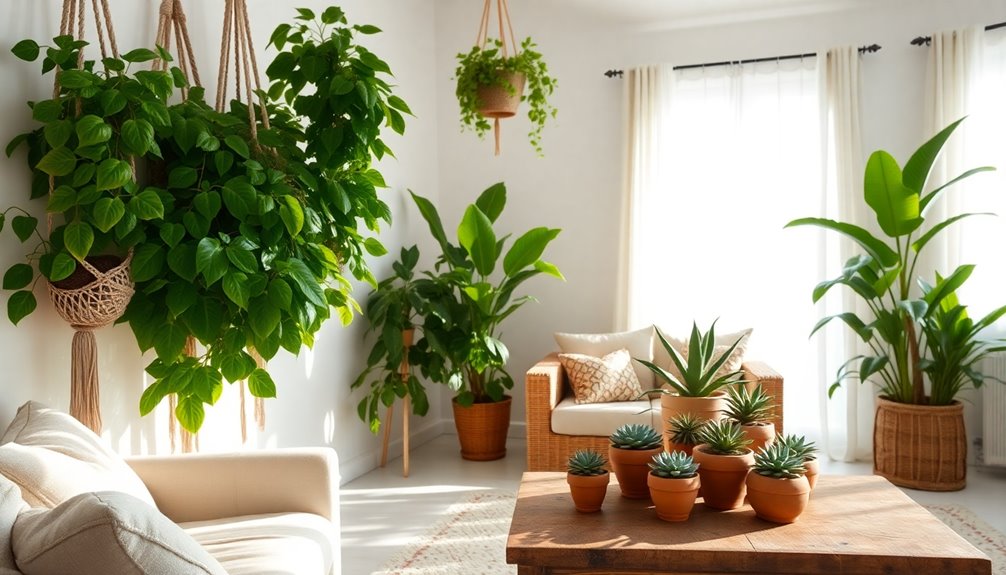

To create a fresh and lively look with plants, start by choosing varieties suited to your space and light conditions. Group your plants in odd numbers for a natural feel and mix different textures and heights to add visual interest. Don't shy away from using plant stands to raise certain plants and maximize space. Incorporate vertical gardening techniques for smaller areas and select colorful planters to improve the decor. Finally, maintain your plants properly to keep them thriving. There's so much more you can do to achieve the perfect plant decor, so let's explore further!
Choose the Right Plants
Selecting the right plants for your space can transform it into a lively oasis. You want plants that not merely improve your decor but also thrive in your environment. If you're dealing with low light, consider options like snake plants or pothos. These resilient beauties flourish even in dim spaces, allowing you to create a lush atmosphere without requiring constant sunlight. Their striking foliage can add depth and texture, making your area feel more inviting and lively.
If you're a pet owner, it's essential to select pet-friendly choices that won't harm your furry friends. Look for non-toxic plants like spider plants or Boston ferns. These options offer a great way to incorporate greenery while ensuring your pets stay safe. They're not just safe; they also bring a rejuvenating aesthetic that complements modern decor trends.
Innovative plant arrangements can further improve your space. Think about vertical gardens or hanging planters that make use of wall space, maximizing your area's potential. You can mix and match low light options with pet-friendly choices to create a diverse and engaging plant display.
Don't hesitate to experiment with different textures and heights. Your plant selections should reflect your personal style during embodying a harmonious balance between beauty and practicality. By carefully choosing the right plants, you'll cultivate an inviting sanctuary customized to your living space, filled with life and personality. Embrace the green revolution and watch your environment flourish!
Assess Your Space
Once you've picked the right plants, it's time to evaluate your space to determine where they'll thrive best. Start by measuring your space dimensions. Knowing how much room you have is essential; it helps you avoid overcrowding and guarantees each plant has enough air circulation. Consider the layout of your room—are there areas that could use a pop of color or a touch of nature?
Next, pay attention to the natural light in your space. Some plants crave bright, indirect light, whereas others thrive in low-light conditions. Observe how sunlight moves through your room throughout the day. This will allow you to position your plants where they'll get the most benefit. If you notice spots that get a lot of light during certain hours, those could be ideal spots for sun-loving plants.
Don't forget about the temperature and humidity levels in your space. Some plants prefer warmer, humid environments, while others do better in cooler, drier conditions. Make certain you factor these elements into your assessment.
Lastly, think about the overall aesthetic you want to achieve. Do you prefer a minimalist look with a few statement plants, or do you want a lush, jungle vibe? Your space dimensions and natural light availability will guide your choices, enabling you to create a harmonious and inviting atmosphere. With these considerations in mind, you're ready to bring your vision to life in a fresh and innovative way.
Use Plant Stands
Using plant stands can really boost your decorating game by adding height variation to your space. You can choose from a variety of styles and materials that complement your existing decor. Let's explore how these stands can improve both the aesthetics and functionality of your indoor plants.
Height Variation Benefits
Incorporating height variation in your plant displays often improves the overall aesthetic of a room. By using plant stands, you can create a dynamic arrangement that captivates attention and enhances the space. This height impact adds depth, drawing the eye upward and making your plants a focal point rather than merely background decor.
When you mix different heights, you introduce visual interest that can transform even the most mundane corners of your home. Visualize a tall fiddle leaf fig on a stand alongside cascading pothos draping from a shelf. This contrast not solely celebrates the unique characteristics of each plant but also creates a harmonious flow throughout the room.
Plant stands come in various styles and materials, allowing you to choose options that complement your existing decor while maximizing space. They encourage creativity, enabling you to experiment with arrangements that reflect your personality.
Ultimately, varying the heights of your plants boosts the overall design, making your space feel lively and vibrant. So go ahead, play with height and watch your indoor garden flourish in a way that's visually stunning and invigoratingly innovative.
Style and Material Choices
Plant stands come in a variety of styles and materials, allowing you to tailor your display to fit your personal aesthetic. If you're drawn to minimalist aesthetics, consider sleek metal or wood finishes that keep the focus on your plants. These stands can create a clean, airy feel, enhancing the beauty of your greenery without overwhelming the space.
On the other hand, if you're passionate about incorporating rustic elements, look for stands made from reclaimed wood or wrought iron. These materials not only add character but also create a cozy ambiance that invites warmth into your home. Mixing and matching different styles can create a dynamic visual interest, so don't hesitate to experiment.
When choosing plant stands, think about height and proportion. A tall stand can showcase a statement plant, whereas shorter options can complement a gallery of smaller pots. Each choice you make can transform your space into a lively oasis. By thoughtfully selecting your plant stands, you'll boost your greenery and create an innovative, fresh look that reflects your unique style. Remember, it's all about making your plants the stars of the show!
Group Plants Strategically
When grouping plants, think about height variations to create visual interest. Balancing colors and textures can likewise improve your arrangement, making it more dynamic. By strategically placing your plants, you'll create a stunning focal point that draws the eye.
Consider Height Variations
Height variations can considerably improve the visual appeal of your plant arrangements. By incorporating varying heights, you create dynamic, layered arrangements that draw the eye and add depth to your space. Instead of placing all your plants at the same level, think creatively about how to mix tall, medium, and short plants to create an engaging focal point.
Start with taller plants, like a striking fiddle leaf fig or a tall snake plant, as your backdrop. This not only adds height but also frames the shorter plants in front. Consider using plant stands or shelves to raise your smaller plants, allowing them to be seen and appreciated. By positioning them at different levels, you improve the overall aesthetic and make the arrangement feel more intentional.
Don't shy away from experimenting! Group plants in clusters of varying heights to encourage visual interest. You can even use wall-mounted planters for an unexpected twist. The goal is to create a layered arrangement that feels lively and colorful, making your space feel fresh and inviting. Embrace the strength of height variations, and watch your plant displays transform into stunning works of art.
Balance Colors and Textures
Creating a harmonious display involves balancing colors and textures in your plant arrangements. To achieve this, think about color harmony first. Choose plants with complementary hues that improve each other. For instance, pairing deep green foliage with lively flowering plants can create a striking visual impact. Don't shy away from experimenting; mixing warm and cool tones can add depth and interest.
Next, consider texture contrast. Combine plants with varied leaf shapes and sizes to create visual intrigue. For instance, the soft, feathery leaves of a fern can beautifully contrast with the bold, waxy leaves of a succulent. This interplay not only captivates the eye but invites touch, enriching the sensory experience of your space.
Group plants in odd numbers for a more organic feel, and vary their heights to create layers. This approach not only improves balance but draws the eye around your arrangement. By thoughtfully considering both color and texture, you'll craft a lively display that feels fresh and innovative, transforming any corner of your home into a lush oasis. Remember, it's all about creating a cohesive look that resonates with your personal style.
Incorporate Vertical Gardening
Vertical gardening offers a fantastic way to maximize your space as well as adding lush greenery to your home. With innovative vertical garden ideas, you can transform bare walls into colorful displays of nature, making your living area feel fresh and alive. Whether you live in a small apartment or a spacious house, utilizing vertical space can dramatically improve your decor.
One of the most exciting wall planter options is the modular system, where you can mix and match different planter sizes and shapes. This flexibility allows you to create a personalized design that suits your style. You might consider using pocket planters, which are perfect for herbs and small plants. These can easily be mounted on walls, adding both functionality and beauty to your kitchen or balcony.
If you're looking for a more structured approach, try installing a trellis with climbing plants. This not only adds height but also creates an intriguing focal point in any room. For a modern twist, consider hanging planters or shelves that showcase trailing plants, adding depth and dimension to your walls.
Don't forget about the lighting! Properly illuminating your vertical garden can improve its beauty and encourage healthy plant growth. With a little creativity and planning, you can easily incorporate vertical gardening into your home, making it a lush oasis that reflects your innovative spirit. Embrace these vertical garden ideas, and watch your space come alive with greenery!
Add Colorful Planters
Adding colorful planters can instantly brighten up your space and improve the overall aesthetic of your home. When you choose planters that boast lively hues and playful patterns, you're not just adding a touch of greenery; you're creating a dynamic visual experience that energizes your environment. Reflect on how colorful ceramics can serve as a focal point, drawing the eye and enhancing the beauty of your plants.
To innovate your decor, opt for planters in unexpected shapes or styles. For instance, a bright yellow planter paired with a lush fern can create a stunning contrast that uplifts any room. You might even mix and match different colors and patterns to create a unique arrangement that reflects your personality. Ponder using geometric designs in bold colors for a modern twist, or go for whimsical florals that add a touch of charm.
Don't forget to contemplate the size of your planters as well. Larger, statement pieces can anchor a corner, whereas smaller ones can be grouped together on a shelf or table for an eclectic look. The key is to maintain a balance that feels cohesive yet playful. By incorporating colorful ceramics and imaginative designs, you can transform ordinary spaces into lively havens that breathe life and creativity into your home. So go ahead, explore the realm of planters, and let your imagination run wild!
Mix Different Textures
Incorporating a variety of textures can improve your plant decor to new heights. Mixing plants with different textured leaves and contrasting shapes creates a dynamic visual impact that captivates the eye. Envision the lush, velvety leaves of a peace lily juxtaposed against the spiky, architectural form of an aloe vera. This interplay not just adds depth but also invites curiosity into your space.
Here's a quick guide to help you visualize the textures you can combine:
| Texture | Example Plant |
|---|---|
| Soft and Velvety | Peace Lily |
| Waxy and Smooth | Snake Plant |
| Spiky and Bold | Aloe Vera |
By deliberately selecting plants with these distinct textures, you create a sensory experience that's both revitalizing and invigorating. A soft fern can soften the sharp lines of a cactus, whereas a rubber plant's glossy leaves can improve the natural beauty of a textured terracotta pot.
Don't hesitate to experiment! Layering these different textures can turn a simple plant arrangement into a stunning conversation piece. Consider how the interplay of light and shadow will change throughout the day, as the varied shapes and textures come to life. Embrace innovation in your decor by mixing different plant textures to transform your space into a lively sanctuary.
Create a Focal Point
Creating a focal point with your plants can instantly improve the visual appeal of your space. By strategically placing a standout plant or arrangement, you can draw the eye and create a mesmerizing focal point design that transforms any room. Consider selecting a bold statement plant, like a tall fiddle leaf fig or a lively monstera, and position it where it can shine—perhaps near a window or at the end of a hallway.
To add layers of visual interest, surround your focal plant with smaller, complementary greenery. Think of using varying heights and shapes, which will not just accentuate your centerpiece but also create a dynamic atmosphere. For example, pair your tall plant with cascading vines or compact succulents to establish a harmonious balance.
Don't shy away from unconventional containers either. A unique pot can serve as an extension of your focal point design, infusing personality into your arrangement. Experiment with colors, textures, and materials to find what resonates with your overall aesthetic.
Remember, lighting plays a vital role too. Position your plants in well-lit areas or use spotlights to highlight your focal point. This not only improves the visual interest but also emphasizes the beauty of your plant selection.
Ultimately, creating a focal point with your plants is about expressing your creativity and adding a rejuvenating touch to your environment. Embrace the opportunity to innovate, and watch as your space transforms into a lively oasis.
Maintain Your Plants
Once you've established a stunning focal point with your plants, maintaining their health and vibrancy is vital to keeping your space lively. You'll want to develop a consistent watering schedule customized to each plant's needs. For instance, some plants thrive on weekly watering, whereas others prefer a more sporadic approach. To stay organized, consider using a calendar or a plant care app to remind you when to hydrate your green friends.
Monitoring your plants' soil moisture is equally important. A simple finger test can help you determine if it's time to water. Stick your finger about an inch into the soil; if it's dry, it's time to give your plant a drink.
Pest control can make or break your plant display. Regularly inspect your plants for any signs of pests like aphids or spider mites. If you spot unwanted guests, act quickly. You can use natural remedies like neem oil or insecticidal soap, which are effective and safe for your indoor environment.
Don't forget about humidity and light levels, either! Many tropical plants thrive in higher humidity, so consider misting them or using a pebble tray filled with water. Rotate your plants occasionally to guarantee even light exposure, promoting balanced growth.
Frequently Asked Questions
What Are the Best Low-Light Plants for Beginners?
Envision a cozy corner in your home, filled with life and color. For beginners, low-light plants like snake plants and pothos vines are perfect. Snake plants stand tall with their striking green and yellow edges, whereas pothos vines cascade beautifully, trailing like nature's own art. They thrive in dim spaces, letting you embrace greenery without the stress of high maintenance. You'll bring freshness into your space effortlessly, creating a lively atmosphere.
How Often Should I Water My Indoor Plants?
You should establish a consistent watering schedule based on each plant's needs. Check the plant moisture by sticking your finger an inch into the soil; if it feels dry, it's time to water. Most indoor plants thrive with a weekly routine, but some might prefer more or less frequent watering. Keep an eye on the leaves; if they droop or turn yellow, adjust your schedule accordingly to keep your plants healthy and lively!
Can I Use Artificial Plants With Real Ones?
Absolutely, you can mix artificial plants with real ones! It's a great way to innovate your space as you balance artificial plant care with natural beauty. Just make sure the styles complement each other; think about textures and colors. Positioning them thoughtfully can create a dynamic look. For instance, place a lively real plant next to a sleek faux one to improve the overall aesthetic. Mixing styles like this adds depth and interest to your decor!
What Are the Benefits of Using Plants in Home Decor?
Envision your home as a colorful canvas, with plants as the lively brushstrokes that bring it to life. By incorporating greenery, you're not just enhancing the aesthetic benefits; you're additionally inviting fresh air into your space. Plants purify the air, creating a healthier environment as they add depth and color to your decor. It's an innovative way to merge beauty with well-being, transforming your home into a sanctuary that uplifts both mood and spirit.
How Do I Avoid Pests in My Indoor Plants?
To avoid pests in your indoor plants, focus on effective pest management strategies. You can use natural remedies like neem oil or insecticidal soap, which are safe and eco-friendly. Regularly inspect your plants for signs of infestation and remove any affected leaves without delay. Keeping your plants clean by dusting their leaves helps maintain their health and prevents pests. Remember, a proactive approach is key to enjoying a thriving indoor garden!