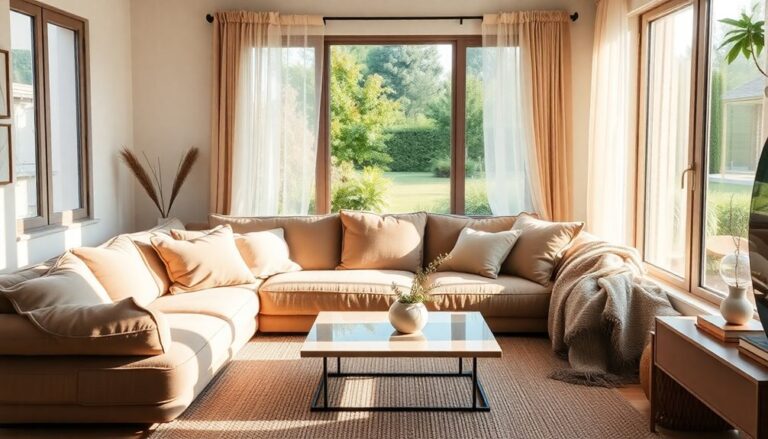
To maximize natural light in your home design, start by evaluating your space. Position larger windows in high-traffic areas like living rooms and kitchens. Consider using skylights or solar tubes for dim spots. Reflective surfaces, like mirrors and glossy materials, can amplify light beautifully. Opt for light-colored walls and furnishings to improve brightness. Choose window treatments that filter light rather than block it, balancing privacy and illumination. Moreover, open floor plans can create a sense of spaciousness and encourage light flow. By implementing these strategies, you'll transform your home into a bright, inviting haven filled with natural light.
Assess Your Space
To maximize natural light in your home, start by reviewing your space. This means exploring a sunlight analysis to understand how light flows into each room throughout the day. Grab a notepad and jot down your observations. Pay attention to which areas receive the most sunlight and when. Take precise space measurements, noting the dimensions of windows, walls, and any obstructions like trees or buildings that might be casting shadows.
Once you've gathered your data, evaluate how the sun's path interacts with your home. Are there rooms that feel dark and dreary? Consider their orientation—south-facing spaces typically capture the most light. If you have north-facing rooms, they might need some creative solutions to improve brightness.
You might want to explore the potential of mirrors and reflective surfaces to amplify natural light. By strategically placing these elements in darker areas, you'll create a more inviting atmosphere. Furthermore, consider the colors of your walls and furnishings; lighter shades can help bounce light around the space, making it feel more open and airy.
Lastly, think about your lifestyle and how you use each room. If certain areas are underutilized because of lack of light, consider reimagining their purpose or layout. In this way, you're not just reviewing your space but innovating how it serves you. Embrace this process, and soon enough, your home will feel brighter and more welcoming.
Optimize Window Placement
When planning your home design, don't overlook how you can optimize window placement to maximize natural light. Strategic window orientations can dramatically improve the flow of natural light throughout your space, making it feel more inviting and energized. Start by evaluating the path of the sun throughout the day. East-facing windows catch the gentle morning light, whereas south-facing ones soak up sunlight all day long. West-facing windows can create stunning sunset views but may equally lead to excessive heat in the evening—consider this balance in your design.
Think about how light angles impact various rooms. For example, placing larger windows in living areas or kitchens will not just brighten these high-traffic zones but will create a welcoming atmosphere for both family and guests. You might even explore skylights or clerestory windows to bring light into areas that don't have exterior walls.
Don't forget about the size and shape of your windows, either. Floor-to-ceiling windows can offer breathtaking views and maximize light exposure, whereas narrower windows can be strategically placed to allow for privacy without sacrificing brightness.
Finally, consider the layout of your home. Open floor plans facilitate light diffusion from one room to another, improving the overall illumination. By thoughtfully optimizing window placement, you'll create an innovative living environment filled with natural light that can invigorate your daily life.
Choose Appropriate Window Treatments
Choosing the right window treatments can dramatically influence how much natural light enters your home. You want to strike a balance between aesthetics and functionality, ensuring your space feels bright and airy as well as offering the privacy you need. Layered treatments are an innovative way to achieve this balance. By combining sheer curtains with heavier drapes, you can easily adjust the amount of light filtering into your rooms.
Light filtering options, such as sheer roller shades or light-filtering blinds, are perfect for maximizing daylight without compromising your comfort. These treatments allow soft, diffused light to permeate your space, creating a welcoming atmosphere throughout the day. When you layer these treatments, you can control light levels even further—allowing you to enjoy privacy while still benefiting from sunlight.
Consider the material and color of your window treatments as well. Lighter fabrics and hues will reflect natural light, enhancing its presence in your home. Conversely, darker colors absorb light, which can create a cozier feel but may limit brightness.
Don't shy away from experimenting with different textures and patterns, either. This not only adds visual interest but can equally affect how light interacts with your space. In the end, the right combination of layered treatments and light filtering options can transform your home into a sanctuary filled with warmth and illumination, allowing you to enjoy the beauty of natural light to its fullest potential.
Incorporate Reflective Surfaces
Reflective surfaces can greatly improve the flow of natural light in your home, creating a sense of spaciousness and brightness. By strategically incorporating these surfaces, you can transform your living space into a radiant sanctuary. Here are three innovative ways to utilize reflective elements effectively:
- Mirror Finishes: Consider using mirror finishes on walls, cabinetry, or even backsplashes. These surfaces bounce light around the room, making it feel larger and more inviting. A well-placed mirror can serve as a focal point, drawing the eye and boosting the effect of natural light.
- Reflective Furniture: Embrace reflective furniture pieces, such as glass-topped tables or metallic accent chairs. These elements contribute a modern touch to your décor and assist in dispersing light throughout the room. Look for furniture that features polished finishes or materials that can reflect light effectively.
- Decorative Accents: Incorporate decorative accents like metallic picture frames, vases, or sculptures. These small touches can greatly improve the light in your space, creating a dynamic interplay between light and shadow.
Utilize Skylights and Solar Tubes
Skylights and solar tubes can transform your home by flooding spaces with natural light. They not merely improve your interiors but additionally boost energy efficiency. Let's explore the benefits of skylights and how easy it is to install solar tubes.
Benefits of Skylights
Natural light can transform a space, creating an inviting atmosphere that boosts your home's overall appeal. One of the most innovative ways to utilize this light is through skylights. Here are three key benefits of adding skylights to your design:
- Improved Aesthetics: Skylights provide an unobstructed view of the sky, adding a unique visual element that brings the outdoors in. This creates a brighter, more open feel in your rooms.
- Energy Efficiency: By using high-quality skylight materials, you can greatly reduce your reliance on artificial lighting. Natural sunlight helps cut down on electricity costs, making your home more energy-efficient and environmentally friendly.
- Better Air Quality: Skylights can be designed to open, allowing fresh air to circulate throughout your home. This not only boosts comfort but also improves indoor air quality.
Incorporating skylights into your home design isn't merely about aesthetics; it's a smart choice for energy efficiency and overall well-being. Embrace this innovative feature to create a space that feels alive, inviting, and sustainably bright.
Installing Solar Tubes
If you're looking to maximize natural light in your home without the need for extensive renovations, consider installing solar tubes. These innovative devices capture sunlight from your roof and channel it down through reflective tubes into your living spaces. The solar tube benefits are numerous: they brighten dark areas, improve your home's ambiance, and reduce your reliance on artificial lighting.
The installation process is straightforward, often requiring just a small hole in your roof and ceiling. You'll need to verify your roof has sufficient sunlight exposure, but once that's established, a professional can typically complete the job in a few hours. Unlike traditional skylights, solar tubes don't need a large opening, making them ideal for spaces where you want light without compromising insulation or aesthetics.
With options available for various sizes and styles, you can easily integrate solar tubes into your home design. Whether you aim to lighten a bathroom, hallway, or even a closet, these fixtures can transform any dim area into a radiant space. Embrace the potential of natural light with solar tubes and enjoy the fresh, inviting atmosphere they create.
Consider Open Floor Plans
When you consider open floor plans, you're opening up your home to a world of natural light. These layouts not just create a sense of spaciousness but additionally allow for strategic room placement that improves visual connectivity. Embracing this design can transform how light flows through your space, making it feel brighter and more inviting.
Benefits of Open Spaces
Open spaces often improve the flow of light throughout your home, creating a bright and inviting atmosphere. By embracing open floor plans, you reveal a range of open space benefits that can transform your living environment. Here are three key advantages:
- Improved Natural Light: With fewer walls, light can travel freely, illuminating every corner of your home. This not only brightens your space but additionally boosts your mood.
- Versatile Layouts: Open spaces allow you to reconfigure your furniture and design as your needs change. You can create distinct areas for different activities without feeling confined.
- Social Connectivity: An open layout encourages interaction among family members and guests, making gatherings more enjoyable and inclusive. You won't miss out on conversations during cooking or entertaining.
Ultimately, choosing an open floor plan not only maximizes natural light but further improves the overall functionality of your home. By considering these open space benefits, you create a more dynamic and inviting living space that adapts to your lifestyle. So, why not explore the possibilities of open spaces and design your dream home today?
Strategic Room Placement
Strategically placing rooms within an open floor plan can greatly improve the flow of natural light and create a more functional living environment. When you think about room orientation, consider how sunlight enters your space throughout the day. Positioning living areas, like your kitchen and living room, on the sunniest side of your home allows for bright, inviting spaces that energize your day-to-day activities.
Incorporating large windows or sliding doors in these areas can amplify that effect, maximizing light penetration. Simultaneously, bedrooms or utility spaces can be oriented away from direct sunlight, creating cozy retreats that maintain comfort without sacrificing style.
When designing your space layout, keep in mind how rooms connect. An open floor plan encourages seamless shifts, so think about how light can travel through the space. Use half-walls or glass partitions to maintain openness while still delineating areas. This approach not just improves natural illumination but additionally cultivates a sense of spaciousness. By embracing innovative room placement, you'll create a home that feels bright, airy, and inviting all year round.
Enhanced Visual Connectivity
Creating improved visual connectivity in your home design can transform how you experience your space. By embracing open floor plans, you nurture an environment that promotes visual harmony and boosts spatial flow. Here are three innovative ways to achieve this:
- Remove Walls: Ditching unnecessary walls creates a seamless shift between rooms, allowing light to cascade through your home effortlessly.
- Use Glass Elements: Incorporate sliding glass doors or large windows to blur the boundaries between indoor and outdoor spaces, enriching your connection to nature.
- Strategic Furniture Arrangement: Position furniture to encourage movement and interaction, drawing the eye across the room and maintaining an open, inviting atmosphere.
With these strategies, you'll not just maximize natural light but as well create a cohesive aesthetic that feels expansive and welcoming. By emphasizing visual connectivity, you'll experience a home that feels more interconnected, both regarding design and daily living. This approach transforms your space into a harmonious environment, where each area flows seamlessly into the next, making your home a sanctuary of light and innovation. Embrace these ideas to uplift your design and improve your quality of life.
Use Light-Colored Materials
When you select light-colored materials for your home, you're not merely improving aesthetics; you're furthermore maximizing natural light. Light palettes reflect sunlight more effectively than darker shades, creating a brighter atmosphere. By incorporating innovative material textures, you can further boost this effect, allowing your space to feel airy and expansive.
Here's a quick comparison of different light materials and their impact on natural light:
| Material Type | Reflectivity Level |
|---|---|
| Glossy Paint | High |
| Light Wood | Moderate |
| White Tile | Very High |
| Linen Fabric | Moderate |
| Light Stone | High |
Choosing materials with high reflectivity can greatly improve light distribution throughout your home. For instance, glossy paint brightens walls but also adds a modern touch. Light wood flooring can create warmth while still keeping the ambiance light.
Moreover, mixing various material textures—like smooth tiles with soft fabrics—can create depth and interest, making your space feel more dynamic. This blend encourages natural light to bounce around, rather than being absorbed.
Ultimately, using light-colored materials is a smart and stylish approach to design. It not only improves your home's visual appeal but also guarantees you make the most of available sunlight, creating a welcoming and lively environment. So, consider these elements as you plan your space; you'll be amazed at the transformative influence of light!
Frequently Asked Questions
How Can I Maintain Privacy While Maximizing Natural Light?
You can maintain privacy and maximize natural light by using frosted glass for windows. This innovative solution allows light to flow in as it obscures the view from outside. Furthermore, consider layering window treatments like sheer curtains or blinds. They let in light when you want it, all the while providing the privacy you need. By combining these elements, you'll create a bright, airy space that feels open yet secure, enhancing your home's overall design.
What Are the Best Plants for Bright Indoor Spaces?
When you're selecting plants for bright indoor spaces, think about lively succulents like jade plants or echeveria. These succulent choices thrive in sunlight, adding a pop of color to your home. Don't forget about the foliage benefits of snake plants or pothos; they purify the air as they look stunning. By mixing these plants, you'll create an innovative, lively atmosphere that improves your space and keeps it fresh and inviting.
How Can I Reduce Glare From Natural Light?
Did you know that over 80% of homeowners report experiencing glare from natural light? To tackle glare reduction, consider innovative window treatments like sheer roller shades or adjustable blinds that let you control light levels as you maintain aesthetics. You'll create a comfortable ambiance without sacrificing brightness. Furthermore, using strategically placed mirrors can help diffuse light, softening harsh rays and enhancing your space's visual appeal. Embrace these solutions for a stylish, glare-free environment!
What Energy-Efficient Windows Are Best for Maximizing Light?
When you're choosing energy-efficient windows, consider options like low-E glass or triple-pane models that improve insulation as well as letting in plenty of light. Pay attention to window placement; south-facing windows capture more sunlight throughout the day. Frames made from energy-efficient materials, like fiberglass or vinyl, not just increase energy savings but likewise create sleek aesthetics. By combining innovative window designs and strategic placements, you can greatly brighten your space while staying eco-friendly.
How Do Seasonal Changes Affect Natural Light in My Home?
Seasonal changes greatly affect natural light in your home. As the sun's angle shifts throughout the year, you'll notice daylight variations that can brighten or dim your space. In winter, lower sun angles may limit light, whereas summer brings longer days and more direct sunlight. By making seasonal adjustments, like rearranging furniture or adding reflective surfaces, you can improve the light in your home, maximizing its potential for warmth and innovation.