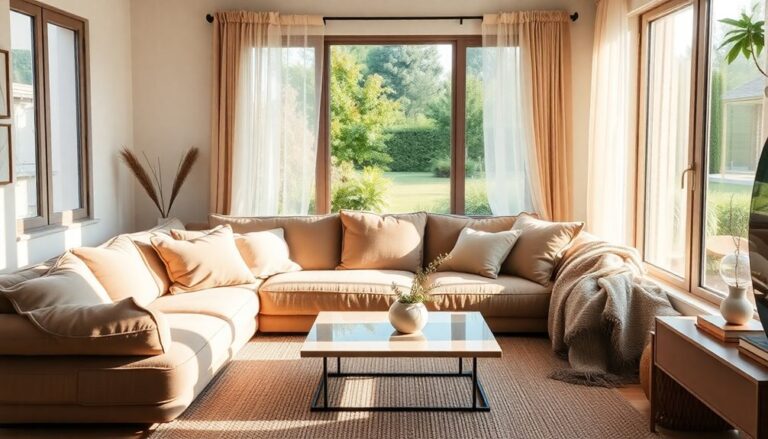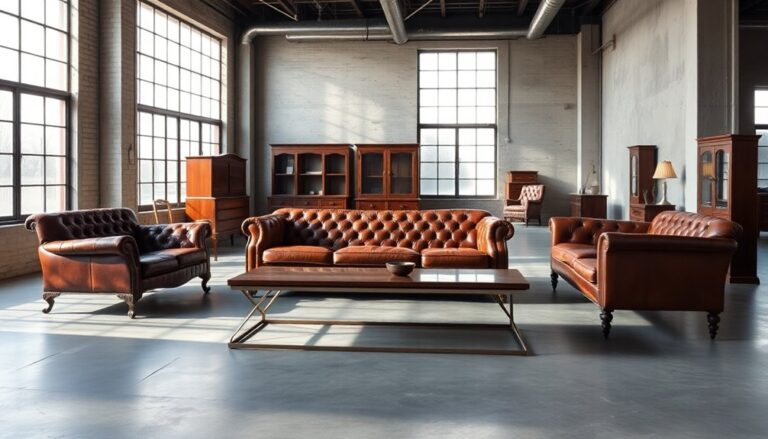

Texture's strength lies in its ability to transform your interiors into inviting spaces that's both appealing and warm. By mixing natural elements like wood and stone with tactile materials such as velvet, you create a rich sensory experience. Layering different textures—like plush cushions on a sleek leather sofa—can define areas and improve comfort. The right balance between color and texture adds depth, helping evoke specific moods. Your choice of textures can even amplify emotional responses, making your space feel more engaging. There's so much more to discover about utilizing texture's influence on your interiors.
Understanding Texture in Design
Texture plays a crucial role in interior design, influencing how a space feels and looks. It's not just about aesthetics; it's about creating an experience. By grasping texture, you're revealing the potential to transform your interiors into inviting environments that engage the senses. You want your space to offer more than visual appeal; you want it to evoke a tactile sensation that invites people to touch, feel, and interact.
When you think about texture, consider how different materials can create varying moods. Smooth surfaces like glass or polished wood can impart a sense of modern elegance, whereas rough-hewn elements such as reclaimed wood or stone add warmth and authenticity. Combining these textures can lead to innovative designs that tell a story. You want to balance softness with rigidity, warmth with coolness, and shine with matte finishes to create an intriguing narrative throughout your space.
Also, don't underestimate the influence of textiles. Fabrics can transform a room, adding depth and comfort. Think plush cushions, woven rugs, or textured wallpapers that invite a closer look. Layering different textures can create a dynamic environment, making the space feel more alive and engaging.
Ultimately, grasping texture means recognizing its potential to influence emotions and perceptions. By skillfully mixing and matching textures, you'll enhance your design, creating spaces that aren't just seen but felt. So, take the plunge and explore the textures that resonate with you, pushing the boundaries of your interior design vision.
Types of Textures to Explore
Often, you'll encounter a variety of textures that can improve your interior design. Exploring different textures not just adds depth to your space but likewise creates a sensory experience that invites interaction. Here are some innovative types of textures to reflect upon:
| Texture Type | Description | Usage Ideas |
|---|---|---|
| Natural Textures | Materials like wood, stone, and plants that bring the outdoors in. | Use reclaimed wood for furniture or stone accents in a fireplace. |
| Tactile Materials | Fabrics and surfaces that offer a distinct feel, such as velvet or linen. | Incorporate velvet cushions or linen curtains for a cozy vibe. |
| Metallic Textures | Shiny surfaces that reflect light, like brass or chrome. | Add metallic fixtures or artwork for a modern touch. |
| Glass Textures | Clear, frosted, or textured glass elements that improve transparency and light. | Use glass partitions or decorative glass vases to open up a space. |
Layering Textures Effectively
When you layer textures effectively, you create a dynamic and inviting space that captivates the senses. The right texture combinations can transform a room from ordinary to extraordinary, making it feel alive and engaging. Here are three crucial tips to guide you in your layering expedition:
- Mix and Match: Combine various tactile materials like soft fabrics, hard surfaces, and natural elements. Think plush velvet throws paired with sleek leather accents or rustic wooden furniture alongside smooth glass decor. The contrast creates interest and depth.
- Vary Scale and Weight: Use textures of different scales and weights to achieve balance. A large, chunky knit blanket can serve as a bold statement, whereas delicate lace curtains add an airy feel. This interplay not only improves visual appeal but also invites touch, encouraging a sensory experience.
- Create Zones: In open spaces, layer textures to define different areas. Use a plush area rug to anchor a seating arrangement, whereas a sleek metal coffee table adds a modern touch. This approach not only organizes space but also improves its functionality and aesthetic.
Color and Texture Harmony
Achieving harmony between color and texture can improve your interior design to new heights. It's not merely about picking shades that look good together; it's about comprehending how color psychology interacts with texture to create an inviting atmosphere. Each hue evokes emotions, and when combined with the right textures, you can set the perfect mood for any space.
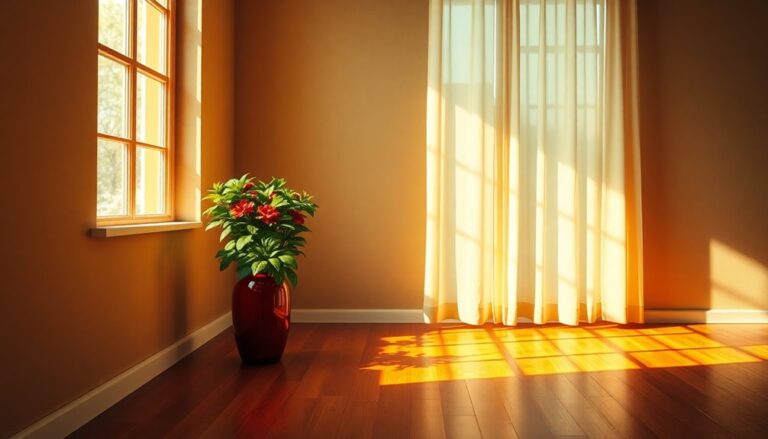
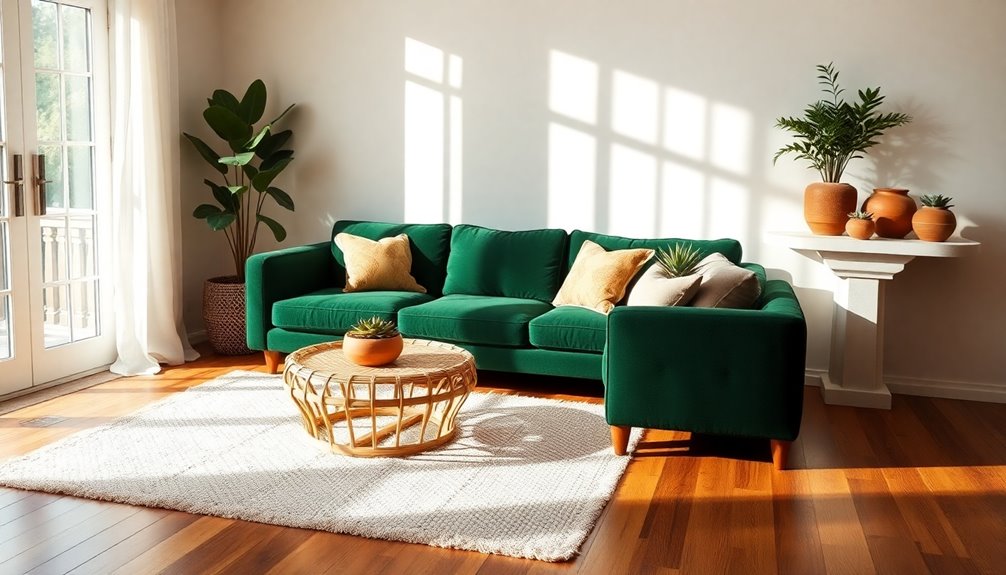
Start by considering the dominant color palette. If you choose warm tones like terracotta or mustard, pair them with tactile materials such as plush fabrics or rustic wood. This juxtaposition creates a cozy, welcoming environment. Conversely, cool colors like blues and greens can be beautifully complemented with sleek metallics or smooth glass textures, giving your space a modern, fresh feel.
Texture balance is essential in this equation. A room overloaded with one type of texture can feel chaotic, whereas an underwhelming mix can come off as dull. Aim for a blend that invites touch and stimulates the senses. For instance, a soft velvet sofa against a rough-hewn stone wall can create a dynamic interplay that captures attention.
Don't hesitate to experiment with contrasts. A lively accent wall can be beautifully offset by muted textiles, ensuring each element shines without overpowering the other. By carefully considering color psychology alongside texture, you'll cultivate spaces that both look stunning and resonate with the emotions you wish to evoke. Embrace this synergy and watch your interiors transform into harmonious sanctuaries.
Texture in Different Spaces
In various spaces, texture plays a fundamental role in defining the atmosphere and functionality of your interiors. It's not merely about filling a room; it's about creating a sensory experience that captivates and invites. By thoughtfully choosing soft textures and bold textures, you can innovate the way a space feels and works. Consider these three key areas where texture can transform your interiors:
- Living Room: Incorporate soft textures like plush rugs and velvety cushions to create a cozy, inviting atmosphere. They encourage relaxation and conversation, making your living room a gathering place.
- Bedroom: Choose a mix of soft and bold textures to improve comfort and style. Soft linens paired with a bold, textured throw can raise your bedding. This combination not only adds visual interest but also promotes a restful night's sleep.
- Kitchen: Experiment with bold textures, such as a rough stone backsplash or sleek metal accents. These elements can add character and modernity, making your kitchen both functional and aesthetically engaging.
Frequently Asked Questions
How Can I Incorporate Texture on a Budget?
Envision your home as a blank canvas, waiting for your creative brushstrokes. To incorporate texture on a budget, explore DIY textured accessories like painted vases or fabric wall art. You can likewise seek affordable textile options, such as woven throws or unique cushions, to elevate your space. Mixing materials like wood, metal, and fabric can create depth without breaking the bank. Get innovative, and let your personality shine through these textured elements!
Are There Any Textures to Avoid in Small Spaces?
In small spaces, you'll want to avoid busy patterns and oversized furniture. These elements can overwhelm a room, making it feel cluttered instead of inviting. Instead, opt for subtle textures like smooth fabrics or light wood finishes that create a sense of openness. By choosing textures that improve the space without overpowering it, you can achieve a stylish and innovative look that maximizes your small area's potential.
What Role Does Lighting Play in Showcasing Texture?
Envision flipping a switch and watching your space transform, like a scene from a futuristic movie. Lighting techniques are crucial in showcasing texture, as they create depth and dimension. By strategically placing lights, you can improve shadow play, revealing the unique patterns and surfaces of materials. Whether you're using soft, ambient light or focused beams, the right lighting brings textures to life, making your space feel innovative and inviting.
Can Texture Influence the Mood of a Room?
Absolutely, texture can greatly influence the mood of a room. As you combine different textures with color psychology, you create an emotional response that resonates with the inhabitants. For instance, soft fabrics can evoke comfort, whereas sleek surfaces might inspire a sense of modernity. By thoughtfully layering textures, you can innovate the atmosphere, making it feel more inviting or energizing, depending on your goals. It's all about how you mix and match!
How Do I Maintain Textured Surfaces Over Time?
Maintaining textured surfaces is like nurturing a garden; it requires care and attention. To guarantee texture durability, use gentle cleaning techniques that preserve the surface's integrity. Avoid harsh chemicals that can strip away your design's vibrancy. Instead, opt for soft cloths and mild solutions, treating each texture as a unique expression. Regular maintenance not merely improves the beauty but additionally deepens your connection to the space, creating an inviting atmosphere that resonates with warmth.