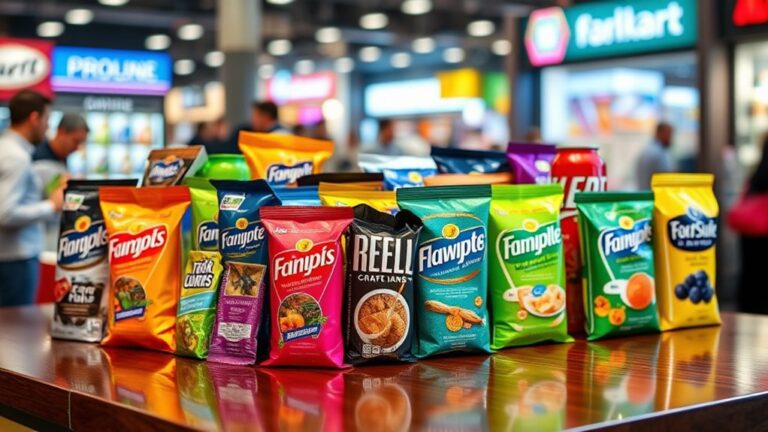
To create packaging that resonates across cultures, you need to understand the cultural nuances that impact product success. Colors, symbols, and imagery can evoke different reactions in various cultures, so research is key. You'll want to conduct market research to identify your target audience, their values, and preferences. Then, choose colors, imagery, fonts, and typography that resonate with them. Be sensitive to cultural symbolism, adapt to regional packaging regulations, and balance global branding with local flavor. By considering these factors, you'll be well on your way to creating packaging that speaks to customers worldwide – and there's even more to discover that can help you fine-tune your approach.
Understand Cultural Nuances and Differences
Many cultural nuances and differences can make or break the success of your product in a foreign market. You might have a brilliant product, but if it doesn't resonate with local cultural perceptions, it'll likely gather dust on store shelves. That's why it's essential to grasp the subtleties of cultural differences before entering a new market.
Cultural nuances can be incredibly subtle, yet have a significant impact on consumer behavior. For instance, in some cultures, certain colors are associated with good luck, whereas in others, they're associated with mourning. Similarly, social norms around food, beauty, or personal care can vary greatly from one culture to another. You need to be aware of these differences to create packaging that resonates with your target audience.
When designing packaging for a foreign market, you must consider the local cultural context. What are the cultural values and beliefs that influence consumer purchasing decisions? How do social norms shape consumer behavior? By comprehending these nuances, you can create packaging that speaks to the local culture, increasing the chances of your product's success.
Conduct Market Research and Analysis
Now that you've grasped the importance of cultural nuances, it's time to roll up your sleeves and gather concrete data about your target market. Conducting market research and analysis is vital to creating packaging that resonates across cultures. You need to understand what drives consumer behavior and what market trends are shaping your industry.
Start by gathering data on your target market's demographics, preferences, and shopping habits. This can be done through surveys, focus groups, or online analytics. Analyze the data to identify patterns and trends that can inform your packaging design. For instance, you might discover that your target audience is increasingly eco-conscious, which could influence your choice of sustainable packaging materials.
Delve deeper into consumer behavior by examining purchase decisions, brand loyalty, and product usage. This will help you understand what resonates with your target audience and what doesn't. Furthermore, stay on top of market trends by monitoring industry reports, competitor activity, and social media conversations. This will guarantee your packaging stays relevant and fresh in an ever-changing market.
Define Your Target Audience Segments
With your market research and analysis in hand, you're ready to drill down into the specifics of your target audience. It's time to identify the distinct segments that will resonate with your packaging. Demographic segmentation is a great place to start, as it involves dividing your audience into groups based on characteristics like age, gender, income, and occupation. This helps you comprehend their needs, preferences, and behaviors.
However, demographic segmentation only provides a surface-level comprehension of your audience. To truly connect with them, you need to create audience personas. These are fictional representations of your ideal customers, complete with names, backgrounds, and motivations. Personas help you empathize with your audience and design packaging that speaks directly to them.
For instance, let's say you're launching a new energy drink targeting young adults. Your demographic segmentation might identify 18- to 24-year-olds who engage in outdoor activities. But, your audience persona, "Alex," is a 22-year-old college student who loves hiking and values sustainability. Alex is more likely to resonate with eco-friendly packaging that aligns with their values. By grasping Alex's motivations and preferences, you can design packaging that resonates with them on a deeper level.
Choose Relevant Colors and Imagery
About 70% of consumer purchasing decisions are driven by emotions, and color plays a significant role in evoking those emotions. As you design your packaging, it's vital to choose colors that resonate with your target audience. Color psychology teaches us that different hues can evoke distinct emotional responses. For instance, blue is often associated with trust and reliability, whereas red can evoke excitement and energy. You must take into account the cultural connotations of each color to guarantee your packaging doesn't offend or confuse your audience.
Imagery symbolism is another important element to take into account. Images can transcend language barriers, but they can likewise be culturally specific. You should select images that are universally appealing and relevant to your product. For example, if you're selling a food product, using images of fresh, high-quality ingredients can evoke feelings of warmth and comfort. Nevertheless, be cautious of cultural taboos and preferences. In some cultures, certain animals or colors may be considered taboo or hold negative connotations.
When selecting colors and imagery, reflect on your target audience's values, preferences, and cultural background. Conduct research to understand the symbolism and emotional connections associated with different colors and images. By doing so, you can create packaging that resonates with your audience on an emotional level, increasing the chances of driving sales and brand loyalty.
Select Fonts and Typography Wisely
You've carefully chosen colors and imagery that resonate with your target audience, but your packaging's overall aesthetic isn't complete without considering the fonts and typography. The right font pairing can enhance your design, whereas the wrong one can confuse or alienate your audience. When selecting fonts, consider the tone and personality you want to convey. For instance, a bold, sans-serif font can convey modernity and energy, whereas a serif font can evoke classic sophistication.
Create a typography hierarchy to guide the viewer's attention through your packaging. Use headings, subheadings, and body text to create visual flow and balance. This hierarchy will help you prioritize information and create a clear message. Consider using a maximum of two to three font families to maintain visual coherence. Confirm that your font choices are legible in various sizes and formats, from small labels to large billboards.
When crafting your typography, don't underestimate the influence of whitespace. Balance text and empty space to create a harmonious design that's easy on the eyes. Remember, your typography should support your brand's message, not overwhelm it. By selecting fonts and typography wisely, you'll create packaging that not just resonates with your target audience but additionally sets your brand apart from the competition.
Consider Local Language and Script
When you're designing packaging for a global market, you'll encounter languages that don't use the Latin alphabet, and scripts that read from right to left. You'll need to break down language barriers to guarantee your message is conveyed accurately, and adapt your script to accommodate these differences. By considering local language and script, you'll avoid cultural faux pas and guarantee your packaging resonates with your target audience.
Language Barrier Breakdown
Across cultural boundaries, language emerges as a significant hurdle in packaging design, where a single misstep can render a product unintelligible to its target audience. When broadening into new markets, it's essential to prioritize language localization to guarantee your product resonates with local consumers. This involves more than just translating your packaging content; it requires adapting your language to fit the cultural nuances of each region.
You must ascertain translation accuracy to avoid misunderstandings that could harm your brand's reputation. Partner with local experts or use state-of-the-art translation tools to confirm that your message is conveyed correctly. Remember, language localization is not a one-size-fits-all approach. What works in one market may not work in another. Be prepared to adapt your language strategy to cater to diverse regional preferences. By doing so, you'll be able to break down language barriers and create packaging that resonates with your target audience, eventually driving sales and brand loyalty.
Script Adaptation Strategies
Now that you've cracked the code on language localization, it's time to tackle script adaptation strategies. You've mastered the art of communicating your brand's message in the local language, but that's merely half the battle. Script adaptation is essential to guarantee your packaging resonates with the target audience.
When adapting your script, consider the local script and its nuances. For instance, languages like Arabic and Hebrew are written from right to left, which can affect packaging design. Script localization techniques, such as font style and size, can greatly impact the overall aesthetic. Cultural context adaptation is also important, as certain scripts can evoke emotions or convey meanings that may not be intended.
To avoid cultural missteps, research the local script and its cultural significance. Adapt your script to fit the local context, guaranteeing your brand's message is conveyed accurately and respectfully. By doing so, you'll create packaging that not only communicates effectively but furthermore resonates with the local culture.
Cultural Nuance Considerations
In the domain of cultural nuance considerations, local language and script play an significant role in crafting packaging that resonates with the target audience. As you design your packaging, it's vital to take into account the cultural context in which your product will be consumed. This means adapting your language and script to resonate with local preferences. For instance, in some cultures, languages are read from right to left, whereas in others, they're read from left to right. Failing to take this into account can lead to confusion and alienation.
You can leverage cultural storytelling and visual metaphors to create packaging that speaks to your target audience on a deeper level. By incorporating local idioms, proverbs, or cultural references, you can create a sense of familiarity and connection. Visual metaphors can likewise help convey complex ideas and emotions in a way that transcends language barriers. By taking into account local language and script, you can create packaging that not only communicates your product's benefits but also resonates with the cultural nuances of your target audience.
Be Sensitive to Cultural Symbolism
With cultural nuances varying greatly from one region to another, it's vital to grasp that certain symbols, colors, and imagery can evoke vastly different reactions. What resonates with one culture might offend another, and it's important to be mindful of these differences when designing packaging that will be marketed globally.
When creating packaging that resonates across cultures, you'll need to explore cultural iconography and symbolism interpretation. This involves comprehending the meanings behind various symbols, colors, and imagery in different cultures. For instance, during the time the color white is often associated with purity and innocence in Western cultures, it's associated with mourning in many Asian cultures. Similarly, the lotus flower is a revered symbol in Hinduism and Buddhism, but it might hold little significance in other cultures.
To avoid cultural missteps, research the cultural context of your target market and verify that your packaging design is sensitive to local customs and traditions. Consider consulting with cultural experts or conducting focus groups to gain a deeper insight into cultural nuances. By doing so, you can create packaging that resonates with your target audience and avoids unintended offense. Remember, cultural sensitivity is key to building a strong brand reputation in a global market.
Adapt to Regional Packaging Regulations
You've guaranteed your packaging is culturally sensitive, but that's only half the battle. Now, it's time to confirm regulatory compliance across different regions. Failure to do so can result in costly fines, product recalls, and damage to your brand reputation.
When broadening globally, it's vital to research and adapt to regional packaging regulations. This includes comprehending restrictions on packaging materials, labeling requirements, and environmental regulations. For instance, the European Union has strict guidelines on packaging waste reduction, whereas countries like Japan and South Korea have specific regulations on food packaging.
You'll need to take into account the type of packaging materials used, as some regions have banned certain materials or have specific recycling requirements. Moreover, labeling requirements, such as language and nutrition facts, vary greatly across regions. Confirm your packaging meets the necessary standards to avoid any issues during distribution.
To achieve regulatory compliance, collaborate with local partners, industry associations, and government agencies to stay up-to-date on changing regulations. Invest in a robust compliance program that can help you navigate complex regulatory environments. By doing so, you'll avoid costly mistakes and confirm your packaging resonates with local consumers as it meets regional regulations.
Balance Global Branding With Local Flavor
As your brand expands globally, it's vital to strike a delicate balance between maintaining a consistent visual identity and catering to local tastes. You want to guarantee that your brand is recognizable across cultures, while additionally resonating with local consumers. This balance is significant, as it allows you to maintain global consistency while still embracing local authenticity.
To achieve this balance, consider the cultural nuances of each region you're entering. For instance, whereas a bold color scheme might work well in the US, it may be perceived as too loud in Japan. Similarly, the imagery and messaging that resonates with European consumers might not have the same impact in Latin America. By grasping these differences, you can adapt your packaging to appeal to local tastes without compromising your global brand identity.
One approach is to develop a modular design system that allows for localization while maintaining a consistent visual language. This might involve using region-specific graphics, colors, or messaging, while still incorporating your brand's core design elements. By doing so, you can create packaging that feels both globally consistent and locally authentic. Remember, the key is to find a balance that honors your brand's heritage while additionally speaking to the unique needs and preferences of local consumers.
Test and Refine Your Packaging Approach
Refining your packaging approach through rigorous testing is vital to ensuring it resonates with your target audience. You can't assume that what works in one market will work in another. Testing prototypes with diverse groups of consumers helps you identify what resonates and what falls flat. It's imperative to collect feedback from various sources, including online surveys, focus groups, and in-person interviews. This feedback will help you refine your design, messaging, and overall packaging strategy.
When testing prototypes, consider the following: do the colors, imagery, and typography resonate with your target audience? Are the messaging and branding consistent across all touchpoints? Does the packaging effectively communicate the product's benefits and value proposition? Be open to constructive criticism and willing to make changes based on the feedback you receive.
Testing and refining your packaging approach is an iterative process. It may take several rounds of testing and refinement to get it right. But the payoff is worth it – packaging that resonates with your target audience can lead to increased brand loyalty, customer engagement, and in the end, sales. By investing time and resources into testing and refining your packaging approach, you'll be well on your way to creating a culturally resonant brand that stands out in a crowded market.
Frequently Asked Questions
How Do I Ensure Consistency Across Packaging for Different Product Lines?
You're on the verge of launching multiple product lines, but you're stuck on how to maintain consistency across packaging. Don't worry, it's an essential step in building a strong brand. To guarantee consistency, you need to establish a unified brand identity. Start by creating a core color palette that resonates with your target audience. Then, apply it across all product lines, tweaking it slightly to reflect each line's unique personality. By doing so, you'll create a cohesive visual language that screams your brand's name.
Can I Use the Same Packaging Design for Both Online and Offline Sales?
You're wondering if you can use the same packaging design for both online and offline sales. The answer is yes, but it requires a thoughtful cross-channel strategy. Design adaptability is key – consider how your packaging will look on a shelf versus on a screen. By creating a flexible design that works across both platforms, you'll guarantee a cohesive brand experience for your customers, no matter where they shop.
How Do I Handle Packaging for Products With Varying Regional Ingredients?
You're faced with products that feature varying regional ingredients, and you're wondering how to handle packaging. You'll need to take into account ingredient sourcing and regional preferences when designing your packaging. For instance, if your product contains locally-sourced ingredients, highlight that on the packaging to appeal to customers who prioritize sustainability. On the other hand, if your product caters to specific regional tastes, make certain the packaging reflects that. By doing so, you'll create a connection with your target audience, regardless of their location.
What Is the Ideal Balance Between Global and Local Packaging Elements?
Did you know that 85% of consumers form an opinion about a product within 90 seconds of seeing its packaging? In regard to striking the ideal balance between global and local packaging elements, you should aim for a harmonious blend of cultural symbolism and design flexibility. By doing so, you'll be able to maintain a consistent brand image during still catering to regional preferences.
Can I Use Machine Translation for Packaging Text in Different Languages?
When you're considering using machine translation for packaging text in different languages, think twice. Although it may seem like a convenient solution, machine translation accuracy can be spotty, and cultural nuances can get lost in translation. You don't want to risk offending your global customers with awkward phrasing or unintended meanings. Instead, invest in professional translation services that understand the local context and can help you tailor your messaging for maximum impact.