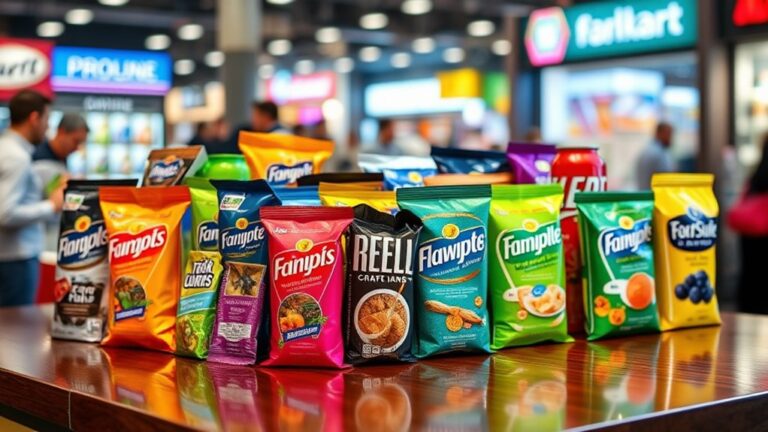

When designing packaging for a global market, it’s essential to take into account cultural nuances, regulatory differences, and logistical complexities. A careless mistake can damage a brand’s reputation, so thorough research is essential. Regulations vary greatly across countries, and compliance strategies are necessary for each market. To resonate with diverse consumer needs, packaging must be accessible, personalized, and tailored to specific demographics. International shipping requires durable packaging that minimizes costs and waste. Finally, balancing global consistency with local flexibility is key to achieving brand recognition worldwide. By tackling these challenges, brands can create packaging that truly goes the distance. Furthermore, as e-commerce continues to thrive, designing packaging for online sales becomes increasingly important. This type of packaging should not only protect products during transit but also captivate consumers upon delivery, enhancing their unboxing experience. Additionally, incorporating eco-friendly materials and practices in designing packaging for online sales can further appeal to the environmentally conscious consumer, making sustainability a vital aspect of modern branding strategies.
Understanding Cultural Nuances
Designers must consider the subtleties of cultural nuances when creating packaging that will resonate with diverse consumer bases worldwide. A careless mistake can lead to unintended offense, damaging a brand's reputation and bottom line. Color significance, for instance, varies greatly across cultures. While white is often associated with purity and innocence in Western cultures, it's a symbol of mourning in many Asian countries. Similarly, red is a symbol of good fortune in China, but represents death in South Africa. Designers must be mindful of these differences to avoid cultural faux pas.
Symbolic meanings also hold significant weight in packaging design. Icons, imagery, and typography can convey different messages depending on cultural context. For example, the thumbs-up gesture is a common sign of approval in the West, but is considered offensive in some Middle Eastern countries. Designers must conduct thorough research to make certain that their packaging doesn't inadvertently offend or confuse consumers. By doing so, they can create packaging that resonates with their target audience and builds brand loyalty. Effective packaging design requires a deep understanding of cultural nuances, and designers who take the time to get it right will reap the rewards of a successful global brand. By being culturally sensitive, designers can create packaging that speaks to consumers on a deeper level, driving sales and growth in the global market.
Navigating Regulatory Differences
As companies expand their product reach across international borders, they must navigate a complex web of regulations that vary greatly from country to country. This navigation can be challenging, especially when it comes to labeling requirements, which can differ greatly from one region to another. For instance, the European Union has strict guidelines for food labeling, while the United States has its own set of regulations under the Food and Drug Administration (FDA).
To guarantee compliance, companies must develop effective compliance strategies that take into account the unique regulatory requirements of each target market. This may involve creating customized packaging labels, adapting product formulations, or even reformulating products altogether.
Here are a few examples of regulatory differences in labeling requirements:
| Region | Labeling Requirement | Regulatory Body |
|---|---|---|
| EU | Nutrition facts and ingredient listing | European Food Safety Authority (EFSA) |
| US | Country of origin labeling | US Department of Agriculture (USDA) |
| Japan | Japanese language labeling | Ministry of Health, Labour and Welfare (MHLW) |
| Canada | Bilingual labeling (English and French) | Health Canada |
Designing for Diverse Consumer Needs
How can packaging designers create labels that resonate with diverse consumer needs across different cultures and age groups when developing products for a global market? This is a critical question that designers must address to guarantee their products stand out in a crowded international market. To achieve this, designers must prioritize accessibility standards, guaranteeing that their packaging is usable by everyone, regardless of physical or cognitive abilities. This includes using clear and simple language, high-contrast colors, and intuitive design elements.
Personalization strategies are also essential in catering to diverse consumer needs. Designers can use data and analytics to understand individual preferences, such as language, cultural background, and lifestyle. This information can be used to create tailored packaging that resonates with specific demographics. For instance, a product marketed towards a younger demographic may feature bold colors and trendy designs, while a product marketed towards an older demographic may feature larger print and simpler navigation.
Optimizing for International Shipping
When shipping products to a global market, packaging must be optimized to withstand varying environmental conditions, handling practices, and transportation modes. This requires a deep understanding of the complexities involved in international shipping. To guarantee that products arrive at their destination in pristine condition, packaging designers must consider factors such as temperature fluctuations, humidity, and physical shock.
Optimizing packaging for international shipping also involves minimizing costs and reducing waste. This can be achieved by designing packaging that is compact, yet protective. For instance, using the right materials and structural design can help reduce dimensional weight, which can markedly lower shipping costs.
To further streamline the supply chain, packaging designers can implement the following strategies:
- Right-sizing packaging: Ensure that packaging is tailored to the specific product and shipping route to minimize waste and reduce costs.
- Using multi-functional packaging: Design packaging that serves multiple purposes, such as providing protection during shipping and displaying product information at point-of-sale.
- Implementing sustainable materials: Use eco-friendly materials that are recyclable, reusable, or biodegradable to reduce waste and minimize environmental impact.
Balancing Global and Local Brands
Companies seeking to expand their brand globally must balance the need for a consistent brand image with the importance of adapting to local preferences and regulations. This delicate balance is essential, as it directly impacts brand recognition, customer loyalty, and ultimately, revenue. Achieving brand consistency across markets is crucial, as it reinforces the brand's identity and values. However, it's equally important to incorporate local flexibility to accommodate regional differences.
Brand consistency is key to building a strong global brand. It guarantees that the brand's message, visual identity, and tone remain uniform across all markets. This consistency breeds trust and recognition, allowing customers to form a connection with the brand. On the other hand, local flexibility is necessary to cater to regional preferences, languages, and regulations. It enables brands to tailor their packaging to meet local needs, increasing its appeal and relevance.
To strike a balance between brand consistency and local flexibility, companies must adopt a hybrid approach. They should establish a global brand framework that outlines the brand's core identity, while allowing for localized adaptations. This framework should provide guidelines for packaging design, messaging, and visual elements, ensuring consistency across markets. At the same time, it should allow for regional flexibility to accommodate local nuances. By achieving this balance, companies can create a strong global brand that resonates with customers worldwide, while still catering to local preferences.
Frequently Asked Questions
How Do I Ensure Packaging Is Easily Recyclable Across Different Countries?
She guarantees packaging is easily recyclable across different countries by making informed material selection decisions. She chooses materials with high recyclability rates and minimal contamination risks. Additionally, she stays up-to-date on regulatory compliance, familiarizing herself with varying country-specific recycling regulations and standards. By doing so, she guarantees seamless recyclability, reducing waste and environmental impact, while also avoiding costly regulatory missteps.
What Is the Ideal Packaging Size for International E-Commerce Sales?
As she ventures into the uncharted territory of international e-commerce sales, one question looms large: what's the ideal packaging size? It's a puzzle with no one-size-fits-all solution, but rather a delicate dance between best dimensions and cultural preferences. Should she cater to the compact expectations of Japanese consumers or the supersized demands of American shoppers? The answer lies in understanding the nuances of each market, and adapting her packaging strategy to resonate with diverse customer needs.
Can I Use the Same Packaging Material for Both Hot and Cold Climates?
She wonders if a single packaging material can withstand extreme temperatures. It's essential to take into account climate resistance when selecting materials. In hot climates, materials must resist melting or warping, while in cold climates, they must remain flexible and prevent cracking. Material durability is key. She needs a material that can adapt to various environments, ensuring her products arrive in perfect condition.
How Do I Protect My Product From Damage During Long-Distance Shipping?
She needs to think outside the box to guarantee her product arrives in one piece. When shipping fragile goods over long distances, it's a minefield out there. To avoid disaster, she should invest in shock absorbers to cushion the blow. Additionally, extra protection for fragile corners can make all the difference. By taking these precautions, she'll be able to breathe a sigh of relief when her product reaches its destination intact.
Is It Necessary to Have Different Packaging for Different Languages?
She knows that language barriers and cultural nuances can make or break a product's success. Does she really need different packaging for different languages? The answer is yes, if she wants to resonate with her target audience. One-size-fits-all packaging can't account for linguistic and cultural differences. Tailoring packaging to specific markets guarantees her message is conveyed accurately, building trust and credibility with customers. It's a small investment for a global brand's reputation.