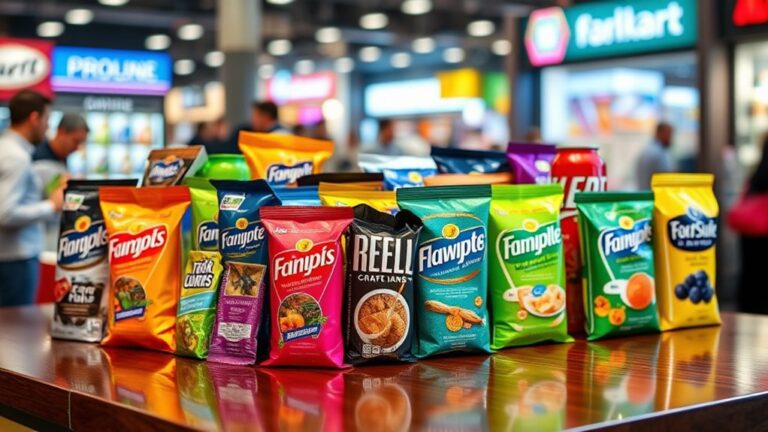
As you explore the role of customization in modern packaging, you'll discover how personalization can boost emotional connections with consumers, drive brand loyalty, and give you a competitive edge. By analyzing consumer behavior and preferences, you can create unique packaging experiences that cater to individual tastes, nurturing a sense of ownership and exclusivity. With data-driven insights, you can refine your customization strategies, measuring their effectiveness and informing future decisions. Now, get ready to unveil the full potential of customized packaging and enhance your brand's story in a way that truly resonates with your audience.
The Rise of Personalization in Packaging
As you consider the latest trends in modern packaging, you're likely to find that personalization is taking center stage. This shift in customization is driven by consumers' desire for unique experiences that cater to their individual needs and preferences. Packaging is no longer just about protecting products during transportation; it's about creating an emotional connection with customers.
You see, consumers today crave personalized experiences, and packaging plays a significant role in delivering that. By tailoring packaging to individual consumer preferences, brands can create a sense of ownership and exclusivity. This can be achieved through customized designs, messaging, or even packaging shapes and sizes that resonate with specific demographics or personalities.
As you explore deeper into the realm of personalized packaging, you'll discover that it's not just about aesthetics. It's about comprehending consumer preferences and behaviors to create packaging that's both functional and appealing. By leveraging data and analytics, brands can identify patterns and trends that inform their packaging decisions, resulting in a more intimate and engaging experience for customers. By doing so, brands can build loyalty, drive sales, and stay ahead of the competition in an increasingly crowded market.
Tailoring Packaging to Target Audiences
You're likely to find that customizing packaging to target audiences is a crucial aspect of personalization, one that requires a deep insight into your ideal customer. To effectively customize your packaging, you need to conduct thorough target audience analysis, grasping their preferences, values, and behaviors. This analysis will help you identify what resonates with your target audience and what doesn't.
By customizing your packaging to your target audience, you can create an emotional connection with them, increasing brand loyalty and advocacy. Here are some ways to evoke emotion through customized packaging:
- Surprise and Delight: Create unexpected moments of joy through unique packaging designs or special offers.
- Sense of Belonging: Use packaging that resonates with your target audience's values and interests, making them feel part of a community.
- Nostalgia: Incorporate vintage or retro elements that evoke feelings of nostalgia and familiarity.
- Exclusivity: Create limited-edition packaging that makes customers feel special and exclusive.
- Sustainability: Use eco-friendly packaging that aligns with your target audience's values and concerns for the environment.
Conveying Brand Identity Through Design
As you explore the realm of packaging, you'll realize that effective design conveys your brand's identity through visual cues that resonate with your target audience. These visual brand cues, such as logos, colors, and typography, help establish an emotional connection with customers, making them more likely to engage with your brand. By incorporating these emotional connection points into your packaging design, you'll create a lasting impression that sets your brand apart from the competition.
Visual Brand Cues
When you pick up a product, the first thing that catches your eye is the packaging design. It's the visual brand cues that instantly communicate the brand's identity, values, and personality. Effective packaging design is more than just aesthetics; it's a strategic tool that evokes emotions, builds connections, and drives purchasing decisions.
Here are some ways visual brand cues can make an impact:
- Color psychology: The strategic use of colors can evoke emotions, convey brand values, and even influence purchasing decisions. For example, blue is often associated with trust and reliability, whereas red is linked to energy and excitement.
- Sensory appeal: The tactile experience of packaging can be just as important as the visual design. Think about the feel of a matte finish versus glossy, or the sound of a satisfying "pop" when opening a package.
- Typography: The font, size, and style of text can convey a brand's personality, from playful to professional.
- Imagery: The use of high-quality, relevant images can create an emotional connection with the consumer and communicate the brand's values.
- Uniqueness: Custom packaging that stands out from the crowd can create a memorable brand experience and differentiate your product from competitors.
Emotional Connection Points
Think about it: when you pick up a product, you're not just holding a container; you're holding a promise. The design, colors, and typography all convey a message that either resonates with you or falls flat. By leveraging emotional connection points, you can create an experience that transcends mere functionality, speaking directly to your customers' hearts. This is where customization comes in – by tailoring your packaging to your brand's unique personality, you can forge an unbreakable bond with your customers, driving loyalty and advocacy.
Unboxing Experiences That Leave Impressions
You've likely had an unboxing experience that's left a lasting impression on you – one that's made you feel like you've stumbled upon a treasure trove or, on the flip side, one that's left you underwhelmed. The thrill of opening a package can evoke a range of emotions, from excitement to disappointment. But what makes an unboxing experience truly memorable?
It's all about creating sensory engagement and memorable moments. Here are a few ways to do just that:
- The tactile touch: Incorporate unique textures, such as embossed logos or debossed patterns, to create a tangible connection with your brand.
- The scent of success: Infuse your packaging with a distinct scent that resonates with your brand's personality and leaves a lasting impression.
- The visual feast: Use bold colors, striking patterns, and high-quality graphics to create an Instagram-worthy unboxing experience.
- The sound of surprise: Incorporate unexpected sounds, such as a rustling wrapper or a satisfying "pop" when opening, to heighten the senses.
- The personal touch: Add a handwritten note or a personalized message to make the unboxing experience feel customized to the individual.
Cost-Effective Customization Strategies
Customizing packaging can be a costly endeavor, but it doesn't have to break the bank. You can achieve unique and effective packaging solutions without sacrificing your budget. One strategy is to focus on bulk production. By ordering larger quantities of packaging materials, you can negotiate lower prices with suppliers. This approach is especially effective for businesses with steady demand or those that can accurately forecast their packaging needs.
Another cost-effective approach is to incorporate sustainable materials into your packaging design. Not just do eco-friendly materials appeal to environmentally conscious consumers, but they can also be more affordable in the long run. For instance, biodegradable packaging options can reduce waste disposal costs and minimize the environmental impact of your products. Furthermore, using recycled materials can lower production costs and support a circular economy.
When it comes to customization, it is crucial to prioritize the elements that matter most to your brand and target audience. Focus on the design elements that drive the most value, such as custom printing or unique shapes, and balance them with cost-effective materials and production methods. By striking the right balance between creativity and cost, you can create packaging that stands out without breaking the bank.
Measuring the Impact of Customization
As you implement customized packaging solutions, it's vital to assess their effectiveness in driving business results. You need to measure the impact of customization to understand what's working and what areas require improvement. This is where data analysis comes into play. By analyzing sales data, customer feedback, and other key performance indicators, you can determine the ROI of your customization efforts.
Here are some key metrics to focus on:
- Increased brand loyalty: Have customers become more loyal to your brand since introducing customized packaging?
- Improved customer satisfaction: Has customer feedback improved, indicating a positive response to customized packaging?
- Boost in sales: Have sales increased as a result of customized packaging solutions?
- Reduced waste and environmental impact: Has customized packaging led to a reduction in waste and environmental impact?
- Competitive advantage: Has customized packaging helped you stand out from the competition and establish a unique brand identity?
Frequently Asked Questions
What Are the Most Popular Customization Techniques in Modern Packaging?
You're likely curious about the most popular customization techniques in modern packaging. Well, you're in luck! Digital printing has transformed the industry, allowing for lively, high-quality designs that pop. A further trend you'll notice is the use of sustainable materials, which appeal to eco-conscious consumers as well as reduce waste. By combining these techniques, you can create truly unique and enchanting packaging that stands out on crowded shelves and resonates with customers.
How Do I Ensure Customization Doesn't Compromise Product Safety?
You're worried that customization might compromise product safety – a valid concern! To put your mind at ease, make certain that your custom packaging meets stringent safety standards. Conduct rigorous testing to guarantee material integrity, and work with suppliers who adhere to industry regulations. By doing so, you'll create unique, safe, and effective packaging that protects your product and your brand's reputation.
Can Customization Be Applied to Existing Packaging Infrastructure?
You're wondering if you can apply customization to your existing packaging infrastructure. The good news is, yes, you can! By embracing packaging flexibility, you can adapt your current infrastructure to accommodate custom designs without breaking the bank. With a few tweaks, your production lines can seamlessly switch between different packaging formats, sizes, and materials. It's all about infrastructure adaptation, and it's key to revealing the full potential of customization.
What Is the Minimum Order Quantity for Customized Packaging?
You're wondering about the minimum order quantity for customized packaging. The answer depends on the manufacturer and their packaging standards. Typically, it ranges from 1,000 to 5,000 units, but some innovative suppliers can accommodate smaller batches. You'll need to research and find a partner that aligns with your production needs. Be prepared to provide detailed specs and designs to get an accurate quote. Don't be afraid to negotiate – it's worth it for unique, high-quality packaging that sets your brand apart.
How Do I Measure the ROI of Customization Efforts?
Picture you're a master gardener, nurturing a delicate bloom – your customization efforts. To measure its ROI, you need to prune the irrelevant and focus on the metrics that matter. Track the petals of customer satisfaction through feedback, and the stalk of revenue growth. Calculate the ROI by comparing the costs of customization to the increased sales and customer loyalty it yields. As you tend to your garden, you'll find that customized packaging is the secret to making your brand blossom.