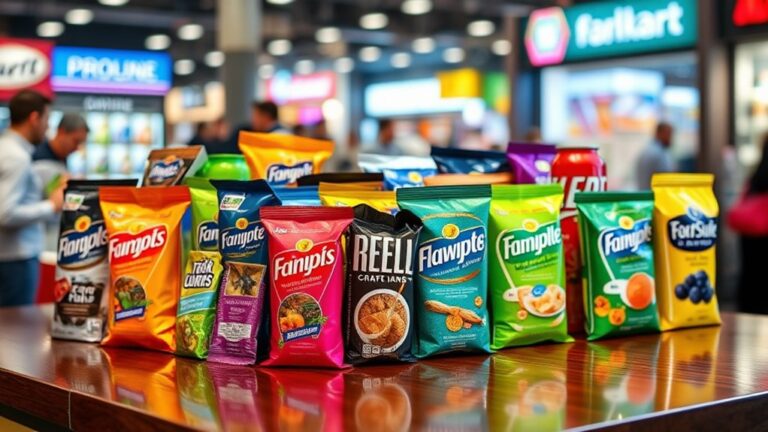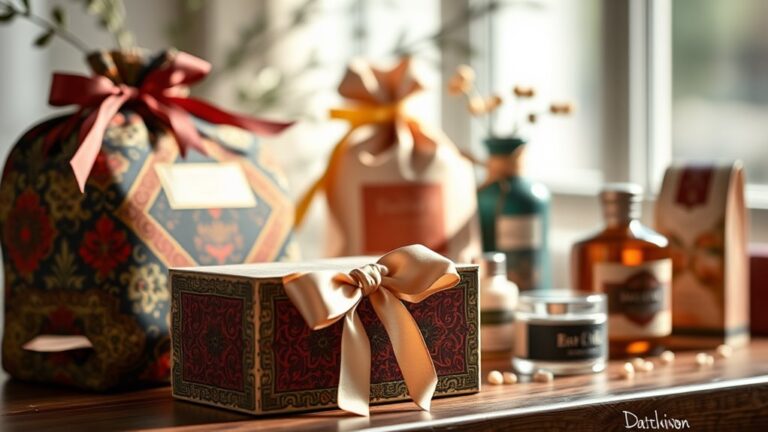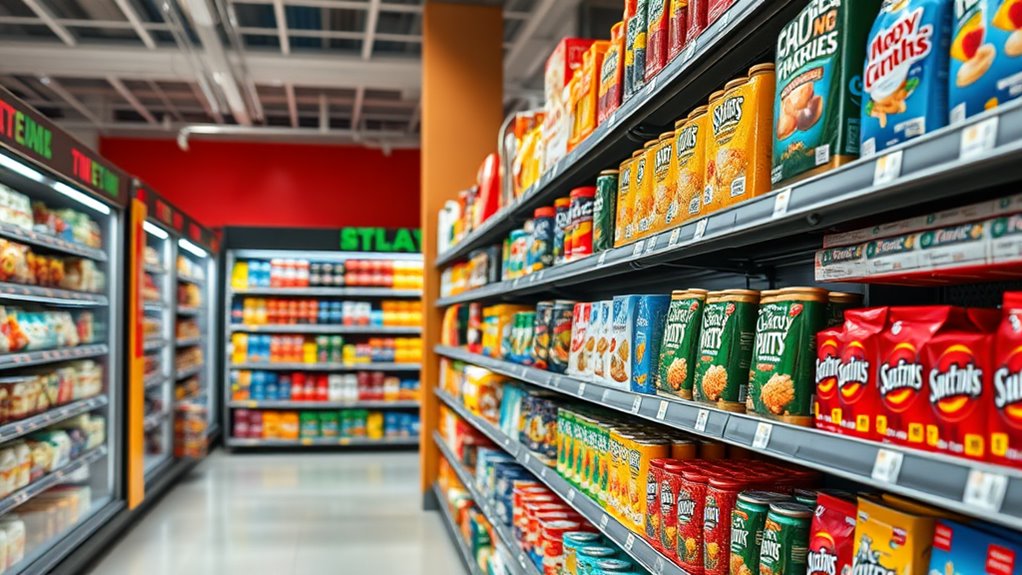

You make a subconscious decision about a product within seconds of seeing it on a shelf, and that's where effective packaging design steps in to sway your purchasing choices. A well-designed package can create an emotional bond, influencing your behavior and encouraging brand loyalty. Colors, typography, and shapes can evoke emotions, grab attention, and convey a brand's personality. Consistency in design builds recognition and trust, as unique structures and tactile elements create lasting impressions. As you're drawn in by a package's design, you're more likely to make a purchase – and that's just the beginning of how packaging design influences your decisions, with more surprises waiting in store.
The Power of First Impressions
You're only a few seconds away from making an vital decision: whether to pick up a product or leave it on the shelf. In this fleeting moment, the packaging design plays an important role in influencing your choice. The visual hierarchy of the design is significant, as it guides your eyes through the product's features and benefits. A well-crafted visual hierarchy can create an instant connection, drawing your attention to the most significant information.
Consumer psychology comes into play as you're instinctively drawn to products that stand out from the crowd. A unique shape, bold color, or creative typography can trigger an emotional response, making you more likely to engage with the product. The packaging design should communicate the brand's personality and values, resonating with your own preferences and needs.
As you scan the shelf, your brain is processing a multitude of visual cues, from the product name to the nutritional information. A clear and concise design helps you quickly grasp the product's benefits, making it more likely to end up in your shopping cart. In this initial encounter, the packaging design has the ability to make or break the sale. By comprehending the psychology behind consumer decisions, designers can create packaging that grabs attention and drives sales.
Emotional Connection Through Design
As packaging design captures your attention, it likewise taps into your emotions, evoking feelings that influence your purchasing decisions. Effective packaging design creates an emotional connection with you, making you more likely to choose one product over another. This emotional connection is rooted in the sensory appeal of the packaging, which can evoke feelings of comfort, nostalgia, or excitement.
When packaging incorporates nostalgic elements, such as vintage-inspired designs or classic typography, it can transport you back to a happy memory or a simpler time. This emotional response can create a strong bond between you and the brand, making you more loyal and likely to repeat a purchase. Furthermore, packaging that appeals to your senses, such as a luxurious texture or a distinctive scent, can create a multisensory experience that resonates with you on a deeper level.
Color Psychology in Packaging
Beyond the nostalgic appeal and sensory experiences, packaging design likewise leverages the influence of color to sway your purchasing decisions. You may not realize it, but the colors used on packaging can evoke strong emotional responses and influence your buying behavior. This is because of color associations, which are deeply ingrained in our psyche. For instance, the color red is often linked to energy, passion, and excitement, whereas blue is associated with trust, loyalty, and calmness.
When you see a product with a mainly red packaging, your brain instantly responds with a sense of excitement and energy. This emotional response can be a deciding factor in your purchasing decision. Conversely, a product with blue packaging may convey a sense of reliability, making you more likely to trust the brand.
Designers deliberately choose colors that align with the brand's personality and message to create an instant connection with you. They understand that color can be a significant differentiator, setting their product apart from competitors on crowded shelves. By leveraging color psychology, packaging designers can create an emotional connection with you, making you more likely to pick up their product over others. As you navigate the aisles, be aware of how color is influencing your purchasing decisions – it may just surprise you how often it sways your choices.
The Role of Typography
When you glance at a product's packaging, the typography is one of the first things that catches your attention. You instinctively respond to the font style, which can evoke emotions and create a connection with the brand. As you consider the packaging, you additionally assess the color and legibility of the typography, making these elements essential in your purchase decision.
Font Style Matters
You're drawn to a product on the shelf, and its packaging catches your eye – but have you ever stopped to think about why? It's likely due to the font style. Typography plays a vital role in packaging design, and the font style you choose can make or break your product's appeal.
When it comes to font pairing, it's important to strike a readability balance. You want to create visual interest without overwhelming the consumer. A well-chosen font combination can convey your brand's personality and values. For instance, a bold, modern font can evoke a sense of innovation and energy, whereas a serif font can convey tradition and sophistication.
The key is to select fonts that work harmoniously together to communicate your message. Avoid clashing fonts that can create visual noise and distract from your product's benefits. By carefully considering your font style, you can create packaging that resonates with your target audience and sets your product apart from the competition.
Color and Legibility
One crucial aspect of typography in packaging design is the interplay between color and legibility. When you're designing packaging, you need to take into account how the colors you choose will affect the readability of your text. If the color contrast between the text and background is too low, it'll be hard for consumers to read the information they need. Conversely, if the contrast is too high, it can be overwhelming.
| Color Contrast | Effect on Legibility |
|---|---|
| Low (e.g., light gray on white) | Text is hard to read, may not stand out |
| Medium (e.g., dark blue on white) | Text is clear, easy to read |
| High (e.g., black on bright yellow) | Text is highly visible, may be overwhelming |
| Extreme (e.g., black on black) | Text is invisible, completely illegible |
You must also contemplate text hierarchy, which refers to the order in which consumers read the text on your packaging. Use size, color, and style to guide the consumer's eye through the information, from most important to least important. By balancing color and legibility, you can create packaging that's both visually appealing and easy to navigate.
Shapes and Structures That Sell
When you're browsing the shelves, what catches your eye? It's often the unique silhouette of a product that stands out from the crowd, and the curves and angles of its packaging can evoke emotions and influence your purchasing decisions. The size of the packaging likewise plays a significant role, as it can impact the product's shelf presence and make it more noticeable among its competitors.
Unique Silhouettes Stand Out
Choosing a product with a distinctive shape is like experiencing a revitalizing change amidst the sea of sameness on store shelves. You're more likely to reach for a product that stands out from the crowd, and unique silhouettes play a significant role in visual differentiation. When you see a product with an innovative form, it grabs your attention and sparks curiosity. This memorable design element helps build brand recognition and drives consumer attraction.
In a competitive market, shelf visibility is essential, and distinctive shapes can make all the difference. They help you navigate the crowded store aisles and spot the product from a distance. Furthermore, unique silhouettes can become synonymous with the brand, making it instantly recognizable. By incorporating innovative forms into packaging design, brands can gain a competitive edge and increase their market share. So, when designing your product's packaging, don't be afraid to think outside the box – or in this case, inside a unique shape that will make your product stand out.
Curves and Angles Matter
By the time you've narrowed down your options to a few products, the packaging design has already influenced your decision. The shapes and structures of the packaging can be the deciding factor in your purchase. Curved edges and angular designs can evoke different emotions and create distinct consumer perceptions.
- Curved edges can create a sense of tactility, making you want to hold and explore the product.
- Angular designs, in contrast, can convey a sense of modernity and innovation.
- Ergonomic shapes can create a sense of comfort and usability, making the product more appealing.
- The right balance of curves and angles can create visual balance and dimensional contrast, leading to aesthetic harmony.
Understanding the psychology behind these design elements is vital in product differentiation. The right combination can make your product stand out on the shelf and create an emotional connection with the consumer. By incorporating design psychology principles, you can create packaging that not just looks appealing but also feels right in the consumer's hands.
Size Impacts Shelf Presence
The sweet spot on the shelf is yours for the taking, and it's not just about the product itself, but how it's packaged. In terms of size, you're not just competing with neighboring products – you're competing for attention. The right size can make your product stand out in a crowded shelf space, whereas the wrong size can make it disappear. Size perception plays an important role in shelf competition. A larger package can create the illusion of more value, whereas a smaller package can appear more convenient.
You need to take into account the size of your target audience's hands, their shopping habits, and the storage space in their homes. A well-designed package that's the right size can make a significant difference in sales. It's vital to test different sizes to find the sweet spot that resonates with your target audience. Don't underestimate the influence of size – it can be the deciding factor in whether your product gets picked up or left behind. By optimizing your package size, you can increase your product's shelf presence and ultimately drive sales.
Luxury and Premium Packaging
- Customization: Unique packaging designs that reflect the brand's personality and values.
- Attention to detail: Careful craftsmanship and attention to even the smallest details.
- High-quality materials: The use of premium materials that exude luxury and sophistication.
- Minimalism: Simple, yet elegant designs that let the product speak for itself.
In the realm of luxury and premium packaging, every detail matters. The right packaging design can enhance a product from ordinary to extraordinary, making it a must-have item for discerning consumers like you.
Sustainability and Eco-Friendliness
You're not just buying a product, you're buying into a lifestyle – and that lifestyle is increasingly eco-friendly. As consumers become more environmentally conscious, they're seeking out products that align with their values. That's where sustainable packaging design comes in. You're more likely to choose a product with biodegradable materials, renewable resources, and minimal waste over one that contributes to the growing landfill problem.
Companies that prioritize eco-friendliness are seeing a significant boost in sales. It's not just about reducing carbon footprint; it's about making a statement. You want to associate with brands that share your commitment to the environment. Ethical sourcing and sustainable practices are no longer nice-to-haves; they're must-haves. Consumer awareness has increased, and you're doing your research. You're looking for eco labeling and green certifications that prove a brand's dedication to reducing environmental impact.
As you make purchasing decisions, you're considering the entire lifecycle of a product, from production to disposal. You're supporting brands that take responsibility for their environmental footprint. In response, companies are revolutionizing their packaging design to meet your demands. The result is innovative, eco-friendly solutions that benefit both the planet and the bottom line. By choosing sustainable products, you're driving change and shaping the future of packaging design.
Brand Storytelling Through Packaging
As you consider the role of packaging in consumer decisions, you'll find that effective brand storytelling creates an emotional connection with customers. By crafting a unique visual identity, you can differentiate your brand and make it more relatable. Through an authentic brand voice, you can share your values and mission, nurturing a deeper connection with your target audience.
Emotional Connection Points
The unassuming package on the store shelf holds more strength than meets the eye. It's not just a container for the product inside; it's a storyteller, a connector, and a persuader. You, the consumer, are drawn to packaging that speaks to you on an emotional level. Effective packaging design uses emotional storytelling to create a sensory engagement that resonates with you.
- It evokes feelings of nostalgia, transporting you back to a memorable moment or place.
- It sparks curiosity, making you wonder what's inside or how it works.
- It conveys a sense of luxury or exclusivity, making you feel like you're treating yourself.
- It shares a brand's values and mission, aligning with your own beliefs and principles.
When packaging design successfully creates an emotional connection, you're more likely to remember the brand, trust its products, and become a loyal customer. It's no longer just a product on a shelf; it's an experience that leaves a lasting impression.
Unique Visual Identity
Effective packaging design doesn't merely evoke emotions; it similarly tells a story through its visual identity. As a consumer, you're more likely to engage with a brand that has a unique visual identity that resonates with you. This identity is a combination of visual elements such as color, typography, and imagery that sets the brand apart from its competitors.
| Visual Element | Impact on Brand Recognition |
|---|---|
| Color | Instantly recognizable, evokes emotions, and creates brand associations |
| Typography | Conveys brand personality, sets tone, and creates consistency |
| Imagery | Tells a story, creates emotional connections, and communicates values |
| Patterns | Adds texture, creates visual interest, and reinforces brand identity |
A well-crafted visual identity not only improves brand recognition but additionally creates visual appeal. When you see a brand's packaging, you can instantly identify it, and it sparks a sense of familiarity. This familiarity breeds trust, loyalty, and in the end, drives purchasing decisions. By investing in a unique visual identity, brands can differentiate themselves, stand out on crowded shelves, and capture your attention.
Authentic Brand Voice
As you're drawn to a brand's visual identity, it's their authentic voice that truly speaks to you. Beyond the colors and typography, it's the brand's personality, values, and mission that resonate with you on a deeper level. When a brand's voice is authentic, it builds trust and cultivates a connection that goes beyond a single purchase.
Through packaging design, a brand can communicate its story, values, and mission in a way that feels genuine and relatable. This is where brand storytelling comes in – the ability to convey a brand's personality, values, and mission through its packaging design.
Some ways to achieve an authentic brand voice through packaging design include:
- Consistency is key: Verify that your brand's voice is consistent across all touchpoints, from packaging to social media to advertising.
- Be honest and transparent: Share your brand's story, mission, and values through your packaging design.
- Use language that resonates: Use language that speaks to your target audience and feels authentic to your brand.
- Don't be afraid to show personality: Let your brand's personality shine through in your packaging design – it's what sets you apart from the competition.
Consistency in Packaging Design
Across various product lines and marketing channels, consistency in packaging design plays a crucial role in reinforcing your brand's visual identity and building recognition among consumers. You're creating a visual language that resonates with your target audience, making your products instantly recognizable on store shelves or online platforms.
Consistency in packaging design is key to establishing brand uniformity. By using a consistent design language, you're ensuring that your products look like they belong to the same family. This coherence is critical in creating a strong brand image, as it communicates a sense of professionalism and attention to detail. When your packaging looks cohesive, you're building trust with your customers, and they're more likely to become loyal to your brand.
Think of it this way: every piece of packaging is an opportunity to tell your brand's story. By maintaining design coherence across all touchpoints, you're creating a seamless brand experience that transcends individual products. This, in turn, helps to build a strong emotional connection with your customers, making them more likely to choose your products over those of your competitors. So, take the time to develop a consistent packaging design language that reflects your brand's values and personality – it's an investment that will pay off in the long run.
Cultural and Social Influences
Your packaging design doesn't exist in a vacuum – it's influenced by the cultural and social contexts in which your products are sold. You need to contemplate the cultural symbolism associated with your brand, product, and packaging. The colors, imagery, and typography you choose can have different meanings in different cultures. For instance, whereas white is often associated with purity and innocence in Western cultures, it's associated with mourning in many Asian cultures.
You must also tap into social trends and community values that resonate with your target audience. This helps create an emotional connection between your brand and consumers, increasing the chances of them choosing your product over competitors. For example, if your brand aligns with the values of sustainability, you'll appeal to consumers who prioritize eco-friendliness.
Additionally, reflect on the following factors to guarantee your packaging design resonates with your target audience:
- Demographic differences: Understand how different demographics, such as age, gender, and socioeconomic status, influence consumer preferences and behavior.
- Lifestyle alignment: Verify your packaging design aligns with your target audience's lifestyle, values, and aspirations.
- Tradition influence: Leverage cultural traditions and heritage to create a sense of familiarity and authenticity.
- Cultural aesthetics: Incorporate design elements that appeal to your target audience's cultural sensibilities, such as typography, color schemes, and imagery.
Packaging as a Marketing Tool
Nearly 70% of consumer purchasing decisions are made at the shelf, making packaging a critical marketing tool. You know that your product's packaging is more than just a container – it's a key differentiator that can make or break a sale. Staying on top of packaging trends and incorporating design innovation into your marketing strategies can help you connect with consumers on a deeper level. By creating visually appealing packaging that resonates with your target audience, you can build brand loyalty and drive sales.
Effective packaging design should prioritize product differentiation, helping your product stand out in a crowded market. This can be achieved through clever use of color, typography, and imagery. Furthermore, consider the tactile experience of your packaging – how does it feel in the consumer's hand? The sensory engagement of your packaging can greatly influence consumer behavior, so it's crucial to get it right.
The Impact of Unboxing Experiences
As you focus on creating memorable packaging, don't overlook the unboxing experience – a pivotal moment when consumers first interact with your product. This is where the magic happens, and their initial impression is formed. The unboxing experience is a sensory expedition that can evoke emotions, spark curiosity, and create a lasting connection with your brand.
To capitalize on this opportunity, consider the following strategies to amplify the unboxing excitement:
- Tactile Delight: Incorporate unique textures, such as embossing, debossing, or soft-touch finishes, to create a multisensory experience.
- Visual Storytelling: Use custom illustrations, colors, or patterns to narrate your brand's story and values, making the unboxing process a memorable one.
- Surprise and Delight: Include a personalized note, a free sample, or a limited-edition item to surprise and delight your customers, nurturing brand loyalty and advocacy.
- Sensory Engagement: Incorporate scented packaging, custom sounds, or even a special unboxing ritual to create an immersive experience that resonates with your target audience.
Frequently Asked Questions
Can Packaging Design Really Increase a Product's Price?
As you step into the sleek, modern store, the shelves seem to whisper sweet nothings, tempting you to splurge. And, surprisingly, it's not just the product itself that's driving up the price tag. You see, clever packaging design can create a premium perception, tapping into consumer psychology. By crafting an upscale look and feel, brands can justify higher prices, making you willing to shell out more for a product that feels luxurious, regardless of whether it's not necessarily worth it.
How Do I Measure the Effectiveness of Packaging Design?
You're wondering how to measure the effectiveness of packaging design. Start by conducting consumer surveys to gather feedback on what resonates with your target audience. Next, try A/B testing different design elements, such as color schemes or typography, to see which ones drive more sales. Analyze the data to identify trends and patterns, and use those insights to refine your design. By testing and iterating, you'll be able to pinpoint what works and what doesn't, ensuring your packaging design is optimized for success.
Should I Prioritize Functionality or Aesthetics in Packaging?
When designing packaging, you're torn between prioritizing functionality benefits or aesthetic appeal. You want your product to stand out on shelves, but you additionally need it to be user-friendly. Consider this: a functional design can improve the user experience, whereas an aesthetically pleasing design can evoke emotions and create brand loyalty. Why choose between the two? You can have both! Balance functionality with aesthetic appeal to create packaging that's both practical and visually stunning.
Can Packaging Design Be Used for Cross-Selling and Upselling?
You can use packaging design to encourage customers to buy more. Think about it: strategically placed bundle offers on your packaging can nudge buyers to add complementary products to their cart. Visual cues like arrows or callouts drawing attention to related items can additionally drive cross-selling. By incorporating these design elements, you'll create an opportunity to increase average order value and boost sales. It's a clever way to upsell and cross-sell, and it's all thanks to clever packaging design.
Do Packaging Design Trends Vary by Industry or Product Category?
You know the saying "don't judge a book by its cover"? Well, in terms of packaging design, the opposite is true. You're likely to find that packaging design trends do vary by industry or product category. For instance, luxury brands often opt for sleek, minimalist packaging aesthetics, whereas eco-friendly products might incorporate more natural, earthy elements. Industry standards likewise play a significant role, as companies endeavor to stand out during still conforming to category norms. As you explore different product categories, you'll discover unique design languages that cater to specific consumer needs and preferences.