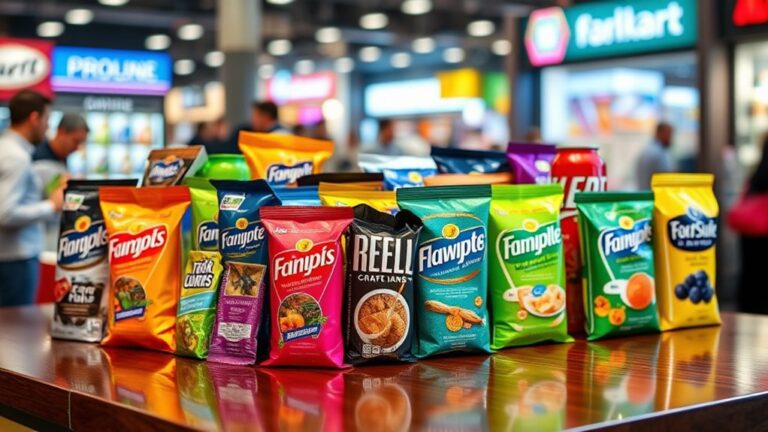
To make your packaging stand out on the shelves, it's essential to understand your target audience and create a design that resonates with them. Aesthetically pleasing packaging with bold colors, typography, and unique materials can capture consumers' attention and set your product apart. Uniqueness, whether through custom illustrations or innovative materials, drives consumer interest, with 70% trying new products due to packaging. By balancing function and aesthetics, using color strategically, and optimizing for shelf visibility, brands can effectively communicate their story and values, increasing recognition and loyalty. There's more to learn about crafting packaging that truly stands out.
Know Your Target Audience
They need to understand who their ideal customer is, as this knowledge lays the foundation for creating packaging that resonates with them. This isn't about making assumptions; it's about gathering concrete data to inform design decisions. By conducting market research, businesses can develop detailed customer personas that outline demographics, preferences, and pain points. This information is essential in crafting packaging that speaks directly to their target audience.
For instance, a company selling eco-friendly cleaning products might discover that their ideal customer is a health-conscious, environmentally-aware individual between 25-45 years old. With this knowledge, they can design packaging that features calming colors, clear labeling, and prominent displays of eco-certifications. By doing so, they'll create an instant connection with their target audience, increasing the likelihood of a sale.
Moreover, understanding the target audience's shopping habits and behaviors is critical. Do they prioritize convenience, sustainability, or affordability? What are their pain points, and how can the packaging address them? By answering these questions, businesses can create packaging that not only stands out on the shelves but also provides a seamless brand experience. It's time to ditch the guessing game and get real about who's buying their products. With market research and customer personas, businesses can develop packaging that truly resonates with their target audience, driving loyalty and ultimately, revenue.
Make It Visually Appealing
An aesthetically pleasing package design is essential in capturing consumers' attention and setting a product apart from its competitors, as it's often the first point of interaction between the customer and the brand. A well-designed package can communicate a brand's values, personality, and messaging, making it a vital aspect of marketing strategy.
To create a visually appealing package, designers can employ various techniques to make their product stand out. One effective approach is to incorporate contrast elements, such as bold colors, typography, and imagery, to create visual interest. Additionally, mixing different textures, such as matte and glossy finishes, can add depth and sophistication to the design.
| Design Element | Visual Impact |
|---|---|
| Contrast Elements | Creates visual interest and grabs attention |
| Texture Mix | Adds depth and sophistication to the design |
| Clean Typography | Enhances readability and professionalism |
Stand Out With Uniqueness
Nearly 70% of consumers admit to trying new products solely because of unique packaging, making differentiation an essential factor in setting a brand apart from the competition. In a crowded market, it's important to stand out with packaging that not only catches the eye but also tells a story. One way to achieve this is through custom illustrations that add a personal touch to the product. By incorporating bespoke designs, brands can convey their values, personality, and tone, making a deeper connection with customers.
Another way to stand out is by using innovative materials that challenge the status quo. Eco-friendly packaging, for instance, has become increasingly popular as consumers become more environmentally conscious. Brands can experiment with biodegradable materials, recycled paper, or even edible packaging to reduce waste and appeal to the growing demographic of eco-aware shoppers. Additionally, unique materials can also add a tactile experience to the packaging, making it more memorable and shareable.
Communicate Brand Story Effectively
When it comes to making packaging stand out, effectively communicating a brand's story is essential. This involves conveying the brand's heritage, unique value proposition, and emotional connection to customers. By doing so, brands can create a lasting impression and differentiate themselves from competitors.
Brand Heritage Matters
By tapping into their rich history, brands can create a unique narrative that sets them apart from competitors and fosters a deep emotional connection with customers. A brand's heritage is a valuable asset that can be leveraged to build trust, credibility, and loyalty. For instance, highlighting vintage roots can evoke a sense of nostalgia and timelessness, while emphasizing a family legacy can convey a sense of tradition and authenticity. By communicating their brand story effectively, companies can create an emotional connection with their target audience, making them more likely to choose their product over others.
Effective storytelling can also help brands establish a unique personality and tone, making them more relatable and memorable. By sharing their history, values, and mission, brands can create a sense of community and shared values with their customers. This, in turn, can lead to increased brand loyalty and advocacy. By tapping into their heritage, brands can create a compelling narrative that sets them apart from the competition and drives business results.
Unique Value Proposition
Effective communication of a brand's unique value proposition is critical to differentiating itself in a crowded market and resonating with its target audience. By clearly articulating what sets their product apart, brands can establish a competitive advantage and justify premium pricing. A well-crafted unique value proposition should be concise, yet impactful, and communicated consistently across all touchpoints, including packaging. This is where innovative packaging design comes into play. By incorporating distinctive visual elements, clever messaging, or clever use of materials, brands can create a tangible representation of their unique value proposition. For instance, a sustainable packaging design can convey a brand's commitment to eco-friendliness, while a luxurious material can evoke a sense of high-end quality. By effectively communicating their unique value proposition through packaging innovation, brands can create an unforgettable brand experience that leaves a lasting impression on customers.
Emotional Connection Made
A brand's unique value proposition is only half the battle – to truly resonate with customers, it must also forge an emotional connection by communicating its story in a way that resonates. This is where the art of storytelling comes in. Brands that can weave a narrative that speaks to their target audience's values, desires, and pain points are more likely to form a lasting bond. To achieve this, brands must inject a personal touch into their packaging, conveying a sense of authenticity and humanity. By sharing their brand story, values, and mission, companies can create a human bond with their customers, fostering loyalty and advocacy. Effective storytelling can be as simple as highlighting the people behind the brand, sharing the inspiration behind a product, or showcasing the brand's commitment to social responsibility. By doing so, brands can transcend mere product descriptors and create an emotional connection that drives customer loyalty and ultimately, sales.
Use Color Strategically
Colors have a profound impact on consumer psychology, and selecting the right palette can make or break the success of your packaging design. When it comes to making your packaging stand out, using color strategically is vital. This means staying on top of current color trends, which can evoke emotions, convey values, and even influence purchasing decisions. For instance, in recent years, there's been a shift towards sustainable and eco-friendly products, with brands incorporating earthy tones like sage green and sandy beige into their packaging.
However, it's also essential to take into account the cultural significance of colors. What may be appealing in one market may be off-putting in another. For example, while white is often associated with purity and innocence in Western cultures, it's associated with mourning in many Asian cultures. By understanding these nuances, brands can avoid costly mistakes and create packaging that resonates with their target audience.
Balance Function and Aesthetics
When it comes to balancing function and aesthetics, packaging designers know that they can't compromise one for the other. They need to guarantee that their designs are both visually appealing and functional, which is why they follow the principle that form follows function. By establishing a clear visual hierarchy, they can create packaging that not only looks great but also effectively communicates its message.
Form Follows Function
By striking a balance between functionality and visual appeal, packaging designers can create products that not only serve their purpose but also capture consumers’ attention. This essential blend of form and function is vital in today’s competitive market, where packaging is often the first point of contact between a brand and its customers. A design evolution that prioritizes functionality guarantees that the product is easy to use, handle, and store, while also meeting the needs of the target audience. Functional minimalism is key, as it eliminates unnecessary elements, streamlining the design and enhancing its overall appeal. By embracing this approach, designers can create packaging that is both aesthetically pleasing and highly functional. This, in turn, can lead to increased brand recognition, customer loyalty, and ultimately, sales. By finding the perfect balance between form and function, packaging designers can create products that truly stand out on the shelves and leave a lasting impression on consumers. Minimalist packaging design not only enhances the visual appeal of a product but also contributes to sustainability by reducing excess materials and waste. By focusing on simplicity and clarity, brands can communicate their message more effectively while creating a more enjoyable unboxing experience for consumers. Ultimately, this strategic approach helps products stand out in a crowded market while reinforcing a brand’s commitment to both aesthetics and functionality.
Visual Hierarchy Matters
Visual Hierarchy Matters
Designers can orchestrate a vital visual hierarchy that effortlessly directs consumers' attention to key information, thereby striking a delicate balance between function and aesthetics. By doing so, they can create packaging that stands out on crowded shelves. A well-designed visual hierarchy guides the consumer's eye through the packaging, drawing attention to the most important elements. This is achieved through a combination of eye-catching typography, color, and imagery. Visual flow analysis is an essential step in this process, as it helps designers understand how consumers interact with the packaging. By analyzing how the eye moves through the design, designers can optimize the layout to maximize impact. A clear visual hierarchy not only enhances the aesthetic appeal of the packaging but also improves its functionality. It ensures that critical information, such as the brand name and product benefits, is communicated quickly and effectively. By mastering the art of visual hierarchy, designers can create packaging that commands attention and drives sales.
Optimize for Shelf Visibility
At the moment of truth, products compete for consumers' attention on crowded store shelves, making it essential that packaging stands out from the surrounding clutter. With so many options vying for attention, optimizing for shelf visibility is vital. This involves strategically designing packaging to grab consumers' attention and guide them towards making a purchase.
To achieve this, packaging designers should consider shelf architecture, taking into account the layout and design of the shelf itself. By understanding how products are displayed and how consumers navigate the shelf, designers can create packaging that stands out and commands attention.
Some key strategies for optimizing shelf visibility include:
- Eye-tracking studies: Conducting eye-tracking studies can help designers understand how consumers' eyes move when scanning a shelf, allowing them to strategically place key design elements and messaging.
- Contrasting colors: Using contrasting colors and bold graphics can help packaging stand out from the surrounding products and create visual interest.
- Shelf-friendly design: Designing packaging with shelf architecture in mind, such as creating a unique shape or size, can help products stand out and occupy more visual real estate on the shelf.
Frequently Asked Questions
How Do I Ensure Packaging Redesigns Don't Alienate Existing Customers?
The irony: redesigning packaging to attract new customers, only to risk alienating the loyal ones. She guarantees a smooth shift by upholding the essence of her brand's identity. She doesn't sacrifice customer trust for the sake of novelty. Instead, she incorporates feedback from loyal customers, safeguarding her brand loyalty remains intact. It's a delicate balance, but she's got it down pat.
Can I Use Custom Packaging for a Limited-Time Promotional Product?
She can leverage custom packaging for limited-time promotional products to create buzz around seasonal themes. By incorporating urgency messaging, such as "limited edition" or "while supplies last," she can create a sense of FOMO (fear of missing out) that drives sales. This strategic approach enables her to tap into the excitement of a limited-time offer, making the product feel exclusive and coveted.
Are Eco-Friendly Packaging Materials Really More Expensive?
The myth that eco-friendly packaging materials break the bank is just that – a myth. In reality, the cost comparison isn't always as stark as it seems. While sustainable materials might carry a slightly higher upfront cost, they often lead to long-term savings. By exploring material alternatives like recycled paper or bioplastics, companies can reduce waste and environmental impact without sacrificing their bottom line.
Do I Need to Conduct Market Research for Every Packaging Change?
She doesn't need to conduct market research for every packaging change, but it's important for significant updates. Before making a change, she should consider the cost analysis and timeline implications. If the change is minor, she might get away with skipping research, but for major overhauls, it's vital to understand her target audience's preferences to avoid costly mistakes and guarantee a smooth shift.
Can I Reuse Packaging Designs Across Different Product Lines?
Like a thread weaving through a tapestry, a unified packaging design can strengthen a brand's identity. She can indeed reuse designs across different product lines, but with care. Consistency is key to building brand recognition, yet evolution is essential to staying relevant. By striking a balance between brand consistency and design evolution, she can create a cohesive visual language that resonates with her audience and elevates her brand's power.